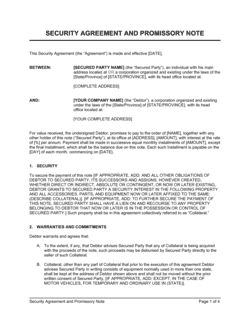
- Security Interest
- A creditor's legal right in a debtor's property — here, the copyright — that entitles the creditor to take or sell that property if the debtor defaults.
- Collateral
- The specific asset pledged to secure an obligation — in this agreement, one or more copyrighted works identified by title, registration number, or description.
- Perfection
- The legal process of making a security interest enforceable against third parties, typically by filing a UCC-1 financing statement and, for registered copyrights, recording with the U.S. Copyright Office.
- UCC Article 9
- The section of the Uniform Commercial Code governing secured transactions in personal property, including intellectual property, in the United States.
- Debtor
- The party that owns the copyright and pledges it as collateral in exchange for credit or another financial accommodation.
- Secured Party
- The lender or creditor who holds the security interest in the copyright collateral and has priority rights on default.
- Default
- A triggering event — such as failure to repay, insolvency, or breach of a covenant — that entitles the secured party to enforce its rights against the collateral.
- Foreclosure
- The legal process by which a secured party takes ownership of or sells the collateral to satisfy the outstanding debt after default.
- After-Acquired Property
- A clause extending the security interest to cover new copyrights the debtor creates or acquires after the agreement is signed.
- Work Made for Hire
- A copyright owned by the employer or commissioning party rather than the individual creator, under defined statutory conditions — relevant to confirming the debtor's ownership of pledged works.
- Copyright Registration
- A formal record of copyright ownership filed with the relevant national authority (e.g., U.S. Copyright Office) that strengthens enforcement and is required to perfect a security interest in registered works.