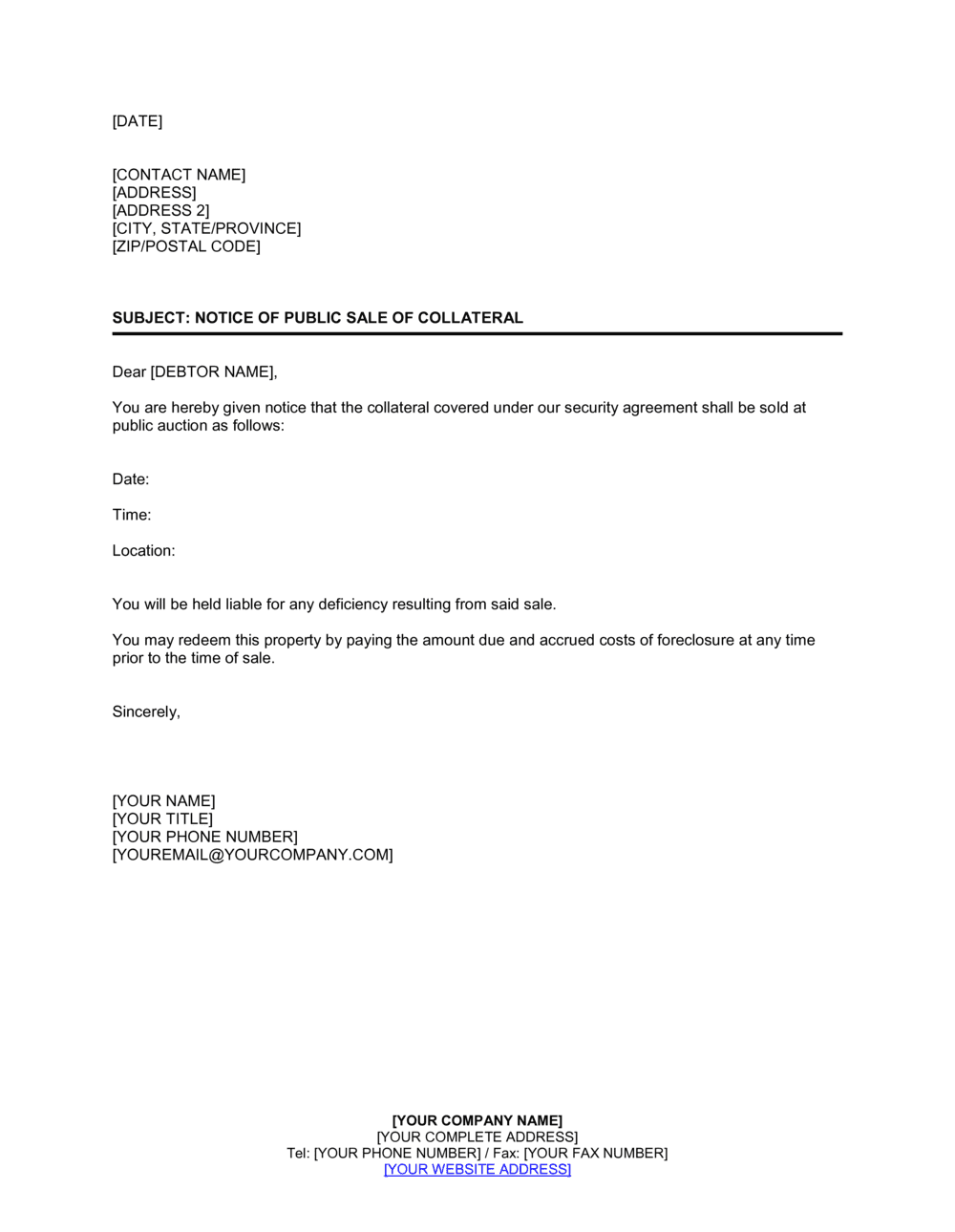
Notice of Public Sale of Collateral Template

Free Word download β€’ Edit online β€’ Save & share with Drive β€’ Export to PDF

1 pageβ€’15–25 min to fillβ€’Difficulty: Standard
Learn more ↓
FreeNotice of Public Sale of Collateral Template

At a glance

What it is
A Notice of Public Sale of Collateral is a formal written notice a secured creditor sends to a debtor informing them that pledged collateral will be sold at a public auction following a default on a secured obligation. This free Word download gives you a ready-to-edit letter you can complete in minutes and export as PDF to serve on the debtor by certified mail or personal delivery.
When you need it
Use it after a borrower or obligor has defaulted on a secured loan or agreement and you, as the secured party, intend to sell the collateral at a public auction to recover the outstanding balance. Most jurisdictions require this notice to be sent a minimum number of days before the sale date.
What's inside
Identification of the secured party and debtor, a description of the collateral subject to sale, the nature of the default, the date, time, and location of the public auction, and the debtor's right to redeem the collateral before the sale.

What is a Notice of Public Sale of Collateral?

A Notice of Public Sale of Collateral is a formal written notice that a secured creditor sends to a defaulting debtor to announce that pledged personal property will be sold at a public auction on a specific date, time, and location. It is a required procedural step under UCC Article 9 and equivalent statutes in most jurisdictions before a secured party may lawfully liquidate collateral and apply the proceeds toward an outstanding debt. The notice serves two functions simultaneously: it satisfies the statutory disclosure requirement that makes the sale legally defensible, and it gives the debtor a final opportunity to cure the default or exercise their right of redemption before the assets are sold.

Why You Need This Document

Skipping or improperly completing this notice has direct legal and financial consequences for the secured party. A defective notice can void the entire sale, expose the creditor to liability for wrongful conversion of the debtor's property, and β€” critically β€” eliminate the right to sue for any deficiency balance remaining after the sale proceeds are applied. Courts in most US states will bar a deficiency claim outright if the pre-sale notice did not meet statutory requirements, regardless of how clearly the debt is documented. Beyond legal compliance, a properly formatted notice establishes a clean paper trail that protects the secured party if the debtor challenges the sale in court. This template gives secured creditors a structured, professional starting point that covers every required element β€” parties, collateral description, sale details, redemption rights, and surplus and deficiency disclosures β€” so nothing critical is left out.

Which variant fits your situation?

If your situation is…Use this template
Selling collateral at a private sale rather than a public auctionNotice of Private Sale of Collateral
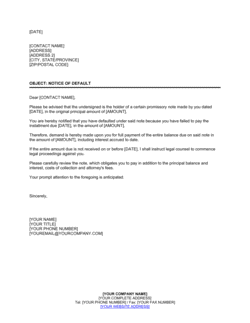
Notifying the debtor of the default before deciding on the sale methodNotice of Default Letter
Demanding payment of the full outstanding balance after accelerationDemand Letter for Payment
Documenting the security interest in personal propertySecurity Agreement
Settling the debt and releasing the security interest before saleRelease of Security Interest
Providing post-sale accounting of proceeds to the debtorPost-Sale Deficiency Notice

Common mistakes to avoid

❌ Sending the notice too close to the sale date

Why it matters: If the notice period falls short of the statutory minimum, the sale may be legally defective β€” allowing the debtor to void it and exposing the secured party to liability for conversion.

Fix: Calculate the notice period from the date of actual delivery, not the date the letter is written. Add a buffer of two to three days for mailed delivery.

❌ Omitting the debtor's right of redemption

Why it matters: Many jurisdictions require the notice to inform the debtor of their redemption right. Omitting it can void the sale and eliminate the secured party's right to collect a deficiency balance.

Fix: Include a dedicated paragraph stating the exact redemption amount, plus costs, and the name and address to whom payment must be made.

❌ Using a vague or incorrect collateral description

Why it matters: A description that does not match the collateral in possession β€” or that relies solely on catch-all language β€” gives the debtor grounds to challenge the sale in court.

Fix: Use the description from the security agreement and supplement it with serial numbers, VINs, or model numbers to identify the specific assets being sold.

❌ Failing to retain proof of delivery

Why it matters: If the debtor claims they never received the notice, you need a dated delivery record β€” certified mail receipt, process server affidavit, or equivalent β€” to defend the sale.

Fix: Always send by certified mail with return receipt requested and retain the signed return card with your sale file. File copies immediately after sending.

The 9 key clauses, explained

Heading and Date

In plain language: Identifies the document as a formal notice and records the date it was prepared, establishing the timeline for statutory notice periods.

Sample language
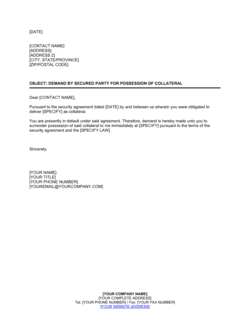
NOTICE OF PUBLIC SALE OF COLLATERAL Date: [DATE]

Common mistake: Dating the letter on the day it is prepared but failing to send it promptly β€” if delivery is delayed, the statutory notice period may not be satisfied.

Parties Identification

In plain language: States the full legal names and addresses of both the secured party issuing the notice and the debtor receiving it.

Sample language
To: [DEBTOR FULL LEGAL NAME], [DEBTOR ADDRESS] From: [SECURED PARTY FULL LEGAL NAME], [SECURED PARTY ADDRESS]

Common mistake: Using a trade name or informal name instead of the debtor's full legal entity name β€” this can undermine the notice's validity if challenged.

Statement of Default

In plain language: Briefly describes the nature and date of the debtor's default under the secured agreement.

Sample language
You are hereby notified that you are in default under the [AGREEMENT NAME] dated [DATE] as a result of [DESCRIPTION OF DEFAULT], which occurred on [DEFAULT DATE].

Common mistake: Being vague about the default β€” stating only 'non-payment' without referencing the specific installment amount and due date makes it harder to defend the notice if the debtor contests it.

Description of Collateral

In plain language: Identifies the specific personal property to be sold, including any serial numbers, model numbers, or other identifying details.

Sample language
The following collateral securing your obligations will be offered for sale: [DESCRIPTION OF COLLATERAL, INCLUDING MAKE, MODEL, SERIAL NUMBER, OR OTHER IDENTIFYING INFORMATION].

Common mistake: Using a generic description copied from the security agreement without confirming it matches the actual assets in possession β€” a mismatch creates grounds for a legal challenge.

Sale Method and Justification

In plain language: States that the sale will be conducted publicly and that the method is commercially reasonable.

Sample language
The above-described collateral will be sold at public sale in a commercially reasonable manner pursuant to [UCC ARTICLE 9 / APPLICABLE LAW].

Common mistake: Omitting any reference to commercial reasonableness β€” courts can void a sale and bar a deficiency claim if the sale method is not documented as commercially reasonable.

Date, Time, and Location of Sale

In plain language: Provides the exact date, time, and physical address where the public auction will take place.

Sample language
The public sale will be held on [DATE], at [TIME], at [FULL ADDRESS OF SALE LOCATION].

Common mistake: Providing a vague location such as 'our offices' without a full street address β€” parties entitled to attend cannot do so without specific location details.

Right of Redemption

In plain language: Informs the debtor of their right to redeem the collateral by paying the full outstanding amount plus reasonable costs before the sale.

Sample language
You have the right to redeem the collateral prior to the sale by paying in full the outstanding balance of $[AMOUNT], plus accrued interest and costs, to [SECURED PARTY NAME] at [ADDRESS].

Common mistake: Omitting the redemption right paragraph entirely β€” in many jurisdictions this is a required disclosure, and its absence can void the sale.

Surplus and Deficiency Notice

In plain language: Advises the debtor that any sale proceeds exceeding the debt will be returned to them, and that any shortfall may be pursued as a deficiency balance.

Sample language
Any proceeds from the sale in excess of the amounts owed will be remitted to you. If sale proceeds are insufficient to satisfy the full amount owed, you will remain liable for the deficiency balance.

Common mistake: Failing to include the deficiency language, which in some jurisdictions is required to preserve the right to sue for the remaining balance after the sale.

Closing and Contact Information

In plain language: Directs the debtor to contact the secured party for questions and provides a specific name, phone number, and address for inquiries.

Sample language
If you have any questions regarding this notice, please contact [NAME] at [PHONE NUMBER] or [EMAIL ADDRESS], or write to us at [ADDRESS].

Common mistake: Listing only a general company address with no named contact β€” debtors seeking to redeem collateral need a direct contact to act promptly before the sale date.

How to fill it out

  1. 1

    Confirm the statutory notice period for your jurisdiction

    Before completing the letter, verify how many days' advance notice your state or province requires. Under UCC Article 9, 10 days is the minimum in most US states, but many states require longer periods.

    πŸ’‘ Check the specific UCC Article 9 enactment in the debtor's state β€” notice periods and required contents vary by jurisdiction even within the US.

  2. 2

    Enter both parties' full legal names and addresses

    Use the debtor's full registered legal name exactly as it appears on the security agreement. Use your own full legal entity name as the secured party.

    πŸ’‘ Cross-reference the security agreement and any UCC financing statements filed against the debtor to ensure the names match precisely.

  3. 3

    Describe the default accurately

    State the specific obligation that was breached β€” for example, 'failure to remit the installment payment of $[AMOUNT] due on [DATE].' Reference the agreement name and date.

    πŸ’‘ Keep the default description factual and brief. Avoid inflammatory language that could complicate negotiations if the debtor seeks to cure the default.

  4. 4

    Describe the collateral with full identifying details

    List the collateral using the same description as the security agreement, but add any serial numbers, VINs, or model numbers that help identify the specific assets.

    πŸ’‘ Physically verify that the collateral in your possession matches the description before sending the notice β€” discrepancies are a common basis for legal challenge.

  5. 5

    Set the sale date at least the minimum notice period out

    Calculate the sale date by counting forward from the date of delivery β€” not the date of preparation. Allow extra days if delivering by mail.

    πŸ’‘ Build in two to three extra days beyond the statutory minimum to account for mail delivery delays, especially if sending to a P.O. box or rural address.

  6. 6

    State the redemption amount and contact details

    Insert the current outstanding balance, including all accrued interest and costs as of the date of the letter. Provide a direct phone number and name for redemption inquiries.

    πŸ’‘ Update the redemption amount at the time of sending β€” a stale figure from an earlier calculation can create disputes if the debtor attempts to redeem.

  7. 7

    Send by certified mail and retain proof of delivery

    Deliver the notice by certified mail with return receipt requested, or by another method that generates a dated delivery record. Keep copies of the letter and all delivery receipts.

    πŸ’‘ Some jurisdictions require delivery by a specific method β€” check whether certified mail satisfies the requirement or whether personal service is needed for the notice to be effective.

Frequently asked questions

What is a notice of public sale of collateral?

A notice of public sale of collateral is a formal written communication a secured creditor sends to a defaulting debtor to inform them that pledged assets will be auctioned at a public sale on a specified date. It identifies the collateral, states the default, provides sale logistics, and discloses the debtor's right to redeem the property before the sale. Providing this notice is typically a legal prerequisite to conducting a valid collateral sale under UCC Article 9 and equivalent statutes.

How much advance notice is required before a public collateral sale?

Under UCC Article 9 as enacted in most US states, the minimum notice period is 10 days before the sale. However, individual states have modified this minimum β€” some require 15 or 20 days. Notice periods in Canada, the UK, and other jurisdictions vary further. Always confirm the applicable statutory requirement in the debtor's jurisdiction before setting the sale date.

What is the difference between a public sale and a private sale of collateral?

A public sale is an auction open to any prospective buyer, held at a stated time and place β€” such as an auctioneer's facility or online auction platform. A private sale is conducted without a public auction, typically to a pre-identified buyer. Both are permitted under UCC Article 9, but the notice requirements differ: a public sale notice must state the date, time, and location; a private sale notice need only state the sale will occur after a specified date.

Can a debtor stop a public sale of collateral?

Yes β€” a debtor can prevent the sale by exercising their right of redemption, which means paying the full outstanding balance plus reasonable costs before the sale is completed. A debtor may also seek a court injunction if they believe the sale does not meet the commercially reasonable standard or if proper notice was not given. Once the sale is completed to a bona fide purchaser, the debtor's redemption right is extinguished.

What happens to any surplus proceeds after the sale?

If the sale generates more than the total amount owed β€” including the outstanding debt, accrued interest, and the secured party's reasonable sale costs β€” the surplus must be returned to the debtor or distributed to junior lienholders in order of priority. The secured party is not entitled to retain proceeds beyond what is owed under the security agreement.

Can the secured party still sue for the remaining balance if the sale doesn't cover the full debt?

In most US jurisdictions, yes β€” the secured party may pursue the debtor for the deficiency balance after applying net sale proceeds to the debt. However, the right to collect a deficiency can be forfeited if the sale was not conducted in a commercially reasonable manner or if required notices were not properly given. Some states impose additional procedural requirements before a deficiency judgment can be obtained.

Does this notice need to be notarized or signed by both parties?

No β€” a notice of public sale of collateral is a unilateral notice issued by the secured party and does not require notarization or the debtor's signature. However, the secured party or an authorized representative should sign the letter, and proof of delivery should be retained to establish that the statutory notice requirement was met.

Who else besides the debtor should receive this notice?

Under UCC Article 9, notice must also be sent to any other secured party or lienholder who has filed a financing statement against the same collateral, and to any guarantor or co-debtor. The secured party must search UCC records for competing filings and notify all parties with a recorded interest. Failing to notify known lienholders can affect the priority of distribution from sale proceeds.

Is this notice required for all types of collateral?

UCC Article 9 requires pre-sale notice for most categories of personal property collateral, but there are exceptions. Perishable goods, items that decline rapidly in value, and collateral customarily sold on a recognized market may be sold without advance notice in some circumstances. Confirm whether your specific collateral type qualifies for an exception before relying on one.

How this compares to alternatives

vs Notice of Private Sale of Collateral

A private sale notice informs the debtor that collateral will be sold to a specific buyer after a stated date, without a public auction. A public sale notice specifies an exact date, time, and open-bidding location. Public sales generally generate higher proceeds but require more logistical coordination; private sales are faster but face closer court scrutiny on commercial reasonableness.

vs Notice of Default Letter

A notice of default informs a debtor that they have breached the agreement and may provide a cure period before any enforcement action. A notice of public sale of collateral is issued after the default has not been cured and the secured party has elected to proceed with liquidation. The default notice precedes the sale notice chronologically.

vs Demand for Payment Letter

A demand letter requests payment of an outstanding balance and may or may not reference secured collateral. A notice of public sale of collateral is a formal statutory notice of an imminent auction β€” it represents a later stage in the enforcement timeline where the secured party has moved beyond requesting payment to actively liquidating assets.

vs Repossession Notice

A repossession notice informs the debtor that collateral has been or will be taken back by the secured party. A public sale notice follows repossession and communicates the specific next step β€” the auction date and terms. Both are required steps in a full enforcement sequence, with repossession typically preceding the sale notice.

Industry-specific considerations

Commercial Banking and Lending

Banks routinely send this notice after accelerating a secured commercial loan, typically covering equipment, vehicles, or business assets pledged under a blanket security agreement.

Equipment Finance and Leasing

Equipment finance companies use this notice to recover financed machinery, vehicles, or technology assets after a lessee defaults, with sale proceeds applied to the outstanding finance balance.

Wholesale and Distribution

Suppliers who extended credit secured by inventory use this notice to liquidate pledged stock at auction when a buyer defaults on payment obligations.

Professional Services and Collections

Collections attorneys and asset recovery firms issue this notice as a formal step in the enforcement process, ensuring the sale record is defensible against potential debtor challenges.

Template vs pro β€” what fits your needs?

PathBest forCostTime
Use the templateSecured creditors sending standard UCC-compliant notices for straightforward commercial collateralFree15–30 minutes
Template + professional reviewCreditors dealing with high-value collateral, multiple lienholders, or debtors likely to contest the sale$150–$400 for a one-hour attorney review1–2 business days
Custom draftedComplex multi-party security arrangements, cross-border collateral, or situations where a deficiency lawsuit is anticipated$500–$1,500+3–7 business days

Glossary

Secured Party
The lender or creditor who holds a security interest in the debtor's collateral as a condition of the loan or obligation.
Collateral
Specific personal property β€” equipment, inventory, vehicles, or receivables β€” pledged by a debtor to secure repayment of a debt.
Security Interest
A creditor's legal right to take possession of and sell specified collateral if the debtor defaults on the underlying obligation.
Default
A debtor's failure to meet the terms of a secured agreement β€” most commonly missing a scheduled payment or breaching a material covenant.
Public Sale
A collateral auction open to any bidder, conducted at a stated time and place, as distinguished from a private sale to a pre-identified buyer.
Right of Redemption
The debtor's right to reclaim the collateral by paying the full outstanding balance, plus costs, before the sale is completed.
Deficiency Balance
The remaining amount owed by the debtor after the sale proceeds are applied to the outstanding debt β€” the secured party may pursue this separately.
UCC Article 9
The Uniform Commercial Code article governing secured transactions in personal property in the United States, including notice requirements for collateral sales.
Surplus
The amount by which sale proceeds exceed the outstanding secured debt plus costs β€” typically required to be returned to the debtor or junior lienholders.
Commercially Reasonable Manner
The UCC standard requiring that every aspect of a collateral sale β€” method, timing, place, and terms β€” be conducted in a way that a reasonable creditor would approve.

Part of your Business Operating System

This document is one of 3,000+ business & legal templates included in Business in a Box.

  • Fill-in-the-blanks β€” ready in minutes
  • 100% customizable Word document
  • Compatible with all office suites
  • Export to PDF and share electronically

Create your document in 3 simple steps.

From template to signed document β€” all inside one Business Operating System.
1
Download or open template

Access over 3,000+ business and legal templates for any business task, project or initiative.

2
Edit and fill in the blanks with AI

Customize your ready-made business document template and save it in the cloud.

3
Save, Share, Send, Sign

Share your files and folders with your team. Create a space of seamless collaboration.

Save time, save money, and create top-quality documents.

β˜…β˜…β˜…β˜…β˜…

"Fantastic value! I'm not sure how I'd do without it. It's worth its weight in gold and paid back for itself many times."

Managing Director Β· Mall Farm
Robert Whalley
Managing Director, Mall Farm Proprietary Limited
β˜…β˜…β˜…β˜…β˜…

"I have been using Business in a Box for years. It has been the most useful source of templates I have encountered. I recommend it to anyone."

Business Owner Β· 4+ years
Dr Michael John Freestone
Business Owner
β˜…β˜…β˜…β˜…β˜…

"It has been a life saver so many times I have lost count. Business in a Box has saved me so much time and as you know, time is money."

Owner Β· Upstate Web
David G. Moore Jr.
Owner, Upstate Web

Run your business with a system β€” not scattered tools

Stop downloading documents. Start operating with clarity. Business in a Box gives you the Business Operating System used by over 250,000 companies worldwide to structure, run, and grow their business.

Start freeΒ Β·Β No credit card required