- Secured Party
- The lender, creditor, or entity that holds a security interest in the collateral as a result of a security agreement.
- Debtor
- The borrower or obligor who pledged the collateral as security for a loan or obligation and who has defaulted.
- Collateral
- The specific personal property — equipment, inventory, vehicles, receivables, or other assets — pledged to secure a debt.
- Security Interest
- A legal right granted by a debtor to a creditor over the debtor's property, giving the creditor recourse if the debtor defaults.
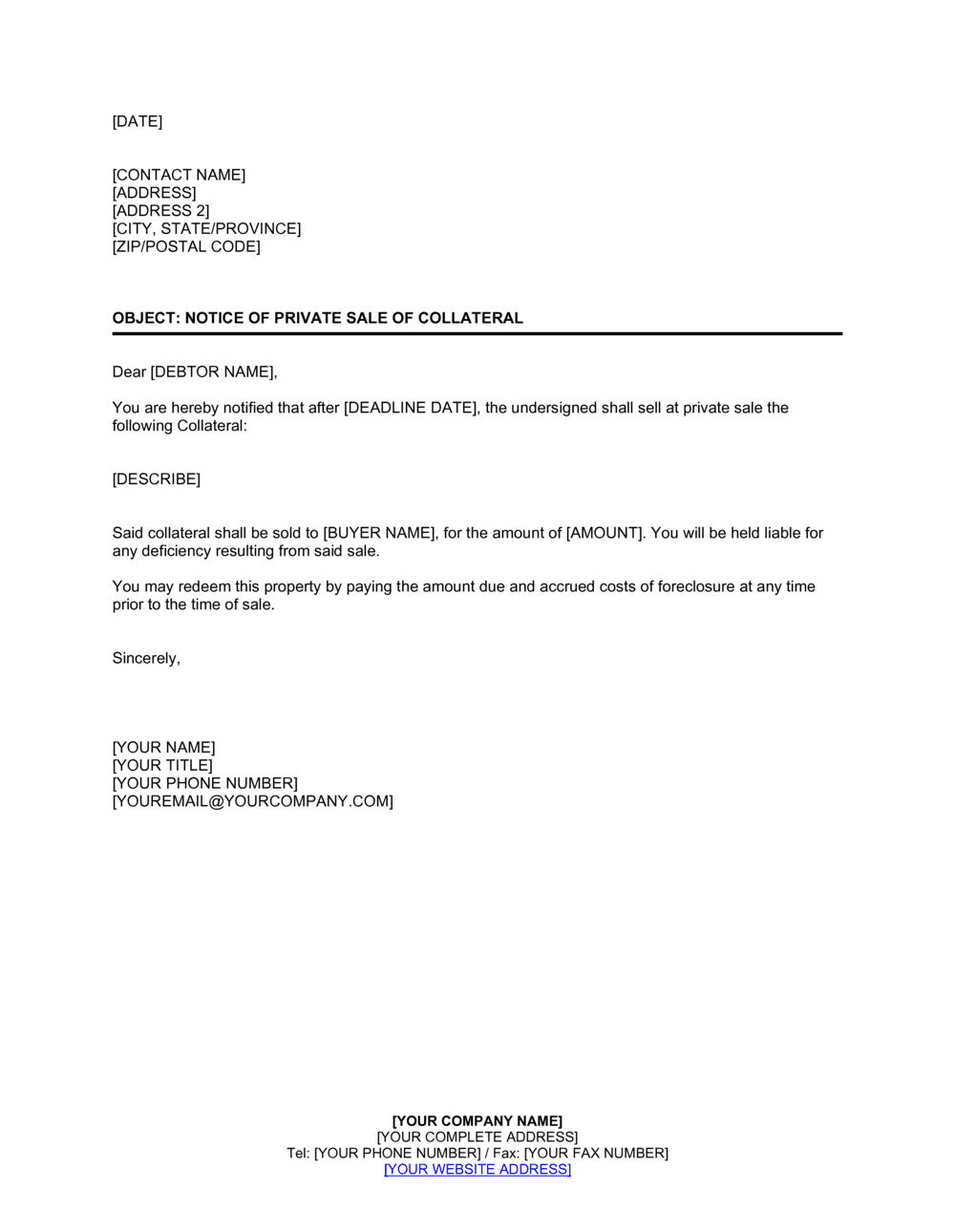
- Private Sale
- A disposition of collateral conducted without a public advertisement or auction, typically through direct negotiation with one or more prospective buyers.
- Commercially Reasonable
- A standard under the UCC and similar statutes requiring that the method, manner, time, and place of a collateral sale be conducted in a manner that a prudent creditor would use under the circumstances.
- Redemption Right
- The debtor's right to reclaim the collateral by paying the full outstanding debt — plus expenses — before the sale is completed.
- Deficiency
- The amount still owed by the debtor after sale proceeds are applied to the outstanding balance, costs of sale, and accrued fees.
- UCC Article 9
- The section of the Uniform Commercial Code governing secured transactions in personal property in the United States, including the rules for collateral disposition after default.
- Notice Period
- The minimum time that must elapse between sending the notice and the sale date; what constitutes sufficient notice is determined by the applicable statute or reasonableness standard.