Covid 19 Policy In The Workplace Template

Free Word download β€’ Edit online β€’ Save & share with Drive β€’ Export to PDF

2 pagesβ€’20–25 min to fillβ€’Difficulty: Standard
Learn more ↓
FreeCovid 19 Policy In The Workplace Template

At a glance

What it is
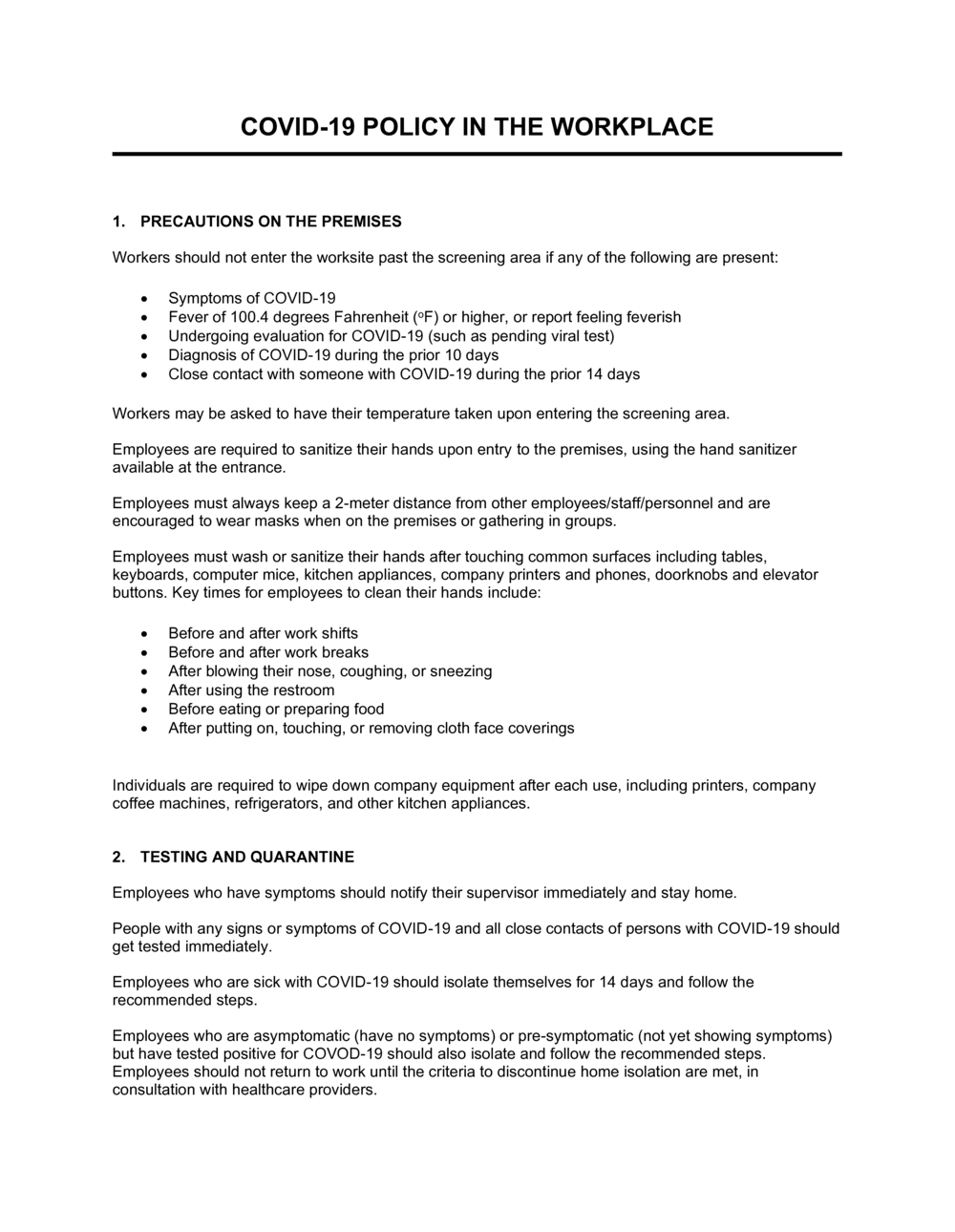
A Covid-19 Policy in the Workplace is a written operational document that defines how a business protects employees, customers, and visitors from Covid-19 transmission on its premises and during work activities. This free Word download gives you a structured, editable starting point covering everything from hygiene protocols and exposure response to remote work arrangements and return-to-office procedures.
When you need it
Use it when reopening an office, onboarding new staff who need to understand current protocols, responding to a confirmed workplace exposure, or updating existing health and safety documentation to reflect current public health guidance.
What's inside
The template covers purpose and scope, employee health screening, hygiene and sanitation standards, mask and PPE requirements, physical distancing protocols, exposure and isolation procedures, remote and hybrid work rules, and return-to-office criteria β€” plus a communication plan for rolling out the policy to staff.

What is a Covid-19 Policy in the Workplace?

A Covid-19 Policy in the Workplace is a formal operational document that defines how a business manages the health and safety risks of Covid-19 for everyone who enters or works in its facilities. It sets the rules for health screening, hygiene, physical distancing, mask and PPE use, exposure notification, isolation, and return-to-work criteria β€” and assigns clear accountability for each protocol. Beyond protecting people, a documented policy creates a defensible record of the company's duty-of-care obligations and gives employees an unambiguous reference point when health conditions change.

Why You Need This Document

Without a written Covid-19 policy, employees make inconsistent decisions about when to come in while symptomatic, how to report a positive test, and what the company expects when they have been exposed. That inconsistency increases transmission risk and exposes the business to workers' compensation claims and OSHA general-duty violations that are far harder to defend without documented protocols. A clear, distributed policy eliminates ambiguity β€” every employee knows the rules, every manager knows the enforcement steps, and every HR file has a signed acknowledgment as evidence that the policy was communicated. This template gives you a complete, customizable framework you can adapt to current public health guidance and distribute to your team in under two hours.

Which variant fits your situation?

If your situation is…Use this template
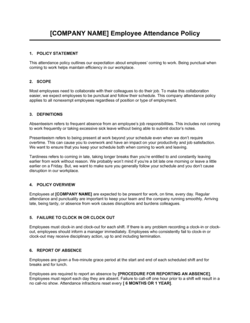
Office-based business reopening after a closure or surgeCovid-19 Policy in the Workplace
Retail or customer-facing business with high foot trafficHealth and Safety Policy
Construction site or field operations with outdoor workersWorkplace Health and Safety Plan
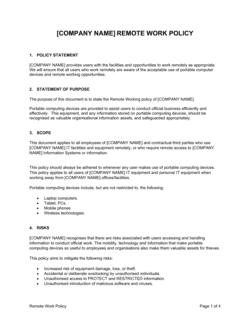
Employees requesting or transitioning to permanent remote workRemote Work Policy
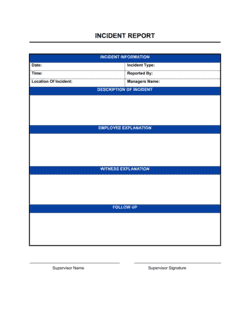
Documenting a specific confirmed exposure event and response stepsIncident Report
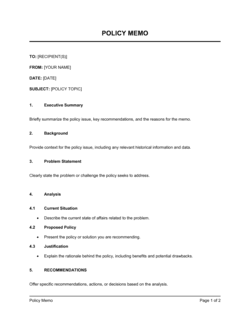
Communicating policy updates to all staff in a structured formatInternal Memo
Managing employee leave related to illness or quarantine requirementsEmployee Leave of Absence Policy

Common mistakes to avoid

❌ Using outdated isolation or quarantine durations

Why it matters: Covid-19 isolation guidance has been revised multiple times. A policy referencing a 10-day isolation period when current guidance recommends 5 days confuses employees and may result in unnecessary absenteeism.

Fix: Cite the specific guidance source and date for each time-based rule, and set a calendar reminder to review those figures every 90 days.

❌ No written acknowledgment process

Why it matters: Without a signed or digitally confirmed acknowledgment, the company cannot demonstrate that an employee was informed of the policy β€” which becomes critical if a workplace exposure leads to a workers' compensation or negligence claim.

Fix: Require every employee to sign or digitally confirm receipt before their next scheduled in-person shift, and store the records in HR files.

❌ Failing to assign named owners for each protocol

Why it matters: Policies that say 'the company will disinfect surfaces' without naming who is responsible for that task result in no one doing it, especially during busy periods.

Fix: Assign a named role β€” not a person's name, which changes β€” to every recurring task: sanitation checks, PPE restocking, screening log review, and exposure notification.

❌ Treating the policy as a one-time document

Why it matters: Public health guidance, local regulations, and company circumstances change. A policy last updated in 2021 creates liability and confusion if it conflicts with current rules.

Fix: Add an explicit review schedule (quarterly minimum) to the policy itself, and note the last-reviewed date in the header so readers can immediately assess its currency.

❌ Omitting visitor and contractor protocols

Why it matters: Employees are not the only people who transmit Covid-19 in a workplace. A policy that covers only employees leaves delivery personnel, clients, and contractors outside the safety framework.

Fix: Add a dedicated section for non-employees covering screening requirements at entry, mask rules, and the process for notifying a visitor who is later identified as a close contact.

❌ Using vague language for mask requirements

Why it matters: Phrases like 'masks encouraged' or 'masks where appropriate' are interpreted differently by every employee and are unenforceable in a disciplinary context.

Fix: State mask requirements as binary rules tied to specific locations or activities: required in all common areas, optional at individual workstations with 6-foot clearance. Ambiguous language produces inconsistent compliance.

The 9 key sections, explained

Purpose and scope

Employee health screening

Hygiene and sanitation standards

Mask and PPE requirements

Physical distancing protocols

Exposure, testing, and isolation procedures

Remote and hybrid work arrangements

Return-to-office criteria

Communication and training

How to fill it out

  1. 1

    Enter your company name, locations, and effective date

    Replace all [COMPANY NAME], [LOCATION], and [DATE] placeholders in the header and scope section. If the policy applies to multiple sites, list each by address.

    πŸ’‘ If different sites have different protocols due to varying local regulations, create a site-specific addendum rather than trying to fit all variations into one document.

  2. 2

    Check current public health guidance for your jurisdiction

    Review the CDC website and your state or local health department before filling in isolation periods, mask requirements, and testing thresholds. These figures have changed multiple times and vary by jurisdiction.

    πŸ’‘ Add a 'last reviewed' date and a named authority citation to each section where you insert specific numbers β€” this makes it clear when the policy was calibrated and to what guidance.

  3. 3

    Define your health screening process and assign accountability

    Choose between a digital attestation, a paper form, or a temperature check station. Name the specific role responsible for reviewing and logging screening results each day.

    πŸ’‘ A digital attestation tool that timestamps each submission is far easier to audit than paper forms, which are frequently lost before an exposure event is investigated.

  4. 4

    Set mask and PPE rules for each zone in your workplace

    Walk through your physical space and list every area β€” reception, open office, meeting rooms, break room, warehouse floor β€” and assign a mask rule to each based on ventilation and density.

    πŸ’‘ Attach a floor plan with zones marked as a policy appendix. Visual references reduce confusion and are easier to update than text descriptions when the floor plan changes.

  5. 5

    Write the exposure notification and contact tracing steps

    Specify who an employee calls first when they test positive, how quickly the company will notify close contacts, and what information will and will not be shared to protect employee privacy.

    πŸ’‘ Pre-draft the notification email template and store it with this policy β€” when an exposure happens, you will need to act within hours, not draft language from scratch.

  6. 6

    Document remote work eligibility and expectations

    List which roles can work remotely, the approval process, core availability hours, and the equipment the company provides versus what the employee supplies.

    πŸ’‘ Distinguish between emergency remote work (triggered by a public health order) and ongoing flexible work β€” using the same policy for both creates long-term expectations that are hard to walk back.

  7. 7

    Distribute, collect acknowledgments, and schedule a review date

    Send the policy to all employees with an acknowledgment requirement and a deadline. Set a calendar reminder to review the policy every 90 days or whenever public health guidance materially changes.

    πŸ’‘ Store signed acknowledgments in each employee's HR file β€” not in a shared folder that can be accidentally deleted or overwritten.

Frequently asked questions

What is a Covid-19 workplace policy?

A Covid-19 workplace policy is a written document that defines how a business manages Covid-19 health and safety for its employees, contractors, and visitors. It typically covers health screening, hygiene standards, mask and PPE requirements, physical distancing, exposure response, isolation and return-to-work procedures, and remote work arrangements. It serves as the authoritative reference for how the company handles any Covid-19 situation that arises in the workplace.

Do businesses still need a Covid-19 workplace policy?

Yes β€” even as emergency public health orders have ended in most jurisdictions, employers retain a general duty to provide a safe workplace under OSHA and equivalent legislation. A written Covid-19 policy documents the company's health and safety framework, supports workers' compensation and liability defense if an exposure claim arises, and provides clear guidance to employees if a new variant or surge prompts temporary protocol changes. Having a standing policy also means you don't have to draft one in a hurry during a surge.

Who is responsible for enforcing a Covid-19 workplace policy?

Responsibility is typically shared across HR, operations, and direct managers. HR owns policy drafting, distribution, and acknowledgment records. Operations or facilities manages physical controls β€” sanitation schedules, PPE stock, and signage. Direct managers are responsible for day-to-day compliance within their teams, including health screening oversight and escalating confirmed exposure cases to HR. Assigning named roles in the policy itself is essential β€” diffuse accountability produces inconsistent enforcement.

What should a Covid-19 policy say about remote work?

The remote work section should state which roles are eligible for remote work, the approval process, core availability hours, and the equipment the company provides versus the employee's responsibility. It should also distinguish between emergency remote work triggered by a public health situation and any ongoing flexible work arrangement, since conflating the two creates long-term expectations that are difficult to reverse once conditions normalize.

How often should a Covid-19 workplace policy be updated?

At minimum, review it quarterly and immediately following any material change in CDC, OSHA, or local health authority guidance. Key trigger points include changes to recommended isolation periods, mask mandates being imposed or lifted, and new variant-specific guidance. Add a 'last reviewed' date and a specific guidance citation to each time-sensitive section so employees can immediately assess whether the document reflects current rules.

Can an employer require employees to disclose a Covid-19 positive test result?

In most jurisdictions, yes β€” employers can require employees to disclose a positive Covid-19 test result when it affects workplace safety, as long as the information is kept confidential. The employer must notify close contacts of a potential exposure without revealing the infected employee's identity. Consult applicable employment and health privacy law in your jurisdiction, particularly where medical information protections (such as HIPAA in the US or PIPEDA in Canada) may apply to how the information is stored and shared.

What is the difference between isolation and quarantine in the workplace context?

Isolation applies to employees who have tested positive for Covid-19 β€” they must stay away from the workplace for a defined period regardless of whether they feel well. Quarantine applies to employees who have been identified as a close contact of a confirmed case but have not yet tested positive β€” they may need to monitor symptoms and test before returning, depending on current guidance. The required durations for each have been revised by public health authorities over time; always reference current CDC or local health department guidance for the specific numbers.

Does a Covid-19 workplace policy need to be reviewed by a lawyer?

For most small and mid-size businesses, a high-quality template calibrated to current public health guidance is sufficient. Legal review adds value when the policy includes disciplinary consequences for non-compliance, when the business operates in a heavily regulated industry (healthcare, food service, childcare), or when the policy intersects with collective bargaining agreements. An employment lawyer can also flag any conflict between the policy and applicable state or provincial employment standards.

How should a company handle an employee who refuses to follow the Covid-19 policy?

The policy itself should state the consequences of non-compliance β€” typically a progressive discipline framework aligned with the company's general conduct policy. For safety-critical breaches (entering the workplace while symptomatic, refusing required screening), immediate exclusion from the premises pending an HR conversation is standard practice. Document each incident with dates, witnesses, and the specific rule violated. Consistent, documented enforcement is essential β€” selective enforcement creates discrimination exposure and undermines the policy's credibility.

How this compares to alternatives

vs Remote Work Policy

A remote work policy governs the terms of ongoing flexible or permanent work-from-home arrangements β€” eligibility, equipment, availability, and performance expectations. A Covid-19 workplace policy is broader, covering on-site health protocols, exposure response, and sanitation alongside any remote work provisions triggered by health conditions. The two documents overlap but serve different primary purposes.

vs Health and Safety Policy

A general health and safety policy covers the full range of workplace hazards β€” fire safety, ergonomics, chemical handling, and injury reporting β€” across all circumstances. A Covid-19 workplace policy addresses a specific pathogen and the operational responses it requires. Businesses typically need both: the general policy as the standing framework and the Covid-19 policy as a specific addendum or supplement.

vs Employee Incident Report

An employee incident report documents a specific event β€” an injury, exposure, or safety breach β€” after it occurs. A Covid-19 workplace policy is a proactive framework that defines how to prevent and respond to exposure events before they happen. When an exposure does occur, the incident report captures the details; the policy defines the protocol the company should follow in response.

vs Business Continuity Plan

A business continuity plan addresses how the organization maintains operations across all types of disruption β€” natural disasters, cyberattacks, supply chain failures, and pandemics. A Covid-19 workplace policy is a narrower, people-focused document concerned with physical health and safety protocols. A business continuity plan that includes a pandemic scenario will typically reference the Covid-19 workplace policy as its on-site health and safety component.

Industry-specific considerations

Healthcare

Enhanced PPE tiers (N95 vs. surgical mask by patient contact level), mandatory testing schedules, and regulatory alignment with CDC healthcare infection control guidelines.

Retail and hospitality

Customer-facing screening and signage requirements, high-density queue management, and protocols for staff who cannot work remotely.

Manufacturing

Shift staggering to reduce locker room and break room density, shared equipment disinfection schedules between operators, and site-access controls for delivery drivers.

Professional services

Client meeting protocols (virtual default, in-person screening requirements), hybrid work scheduling by team, and office capacity management for open-plan floors.

Template vs pro β€” what fits your needs?

PathBest forCostTime
Use the templateSmall and mid-size businesses establishing or updating Covid-19 protocols for office, retail, or operational teamsFree1–2 hours
Template + professional reviewBusinesses in regulated industries (healthcare, childcare, food service) or those with collective bargaining agreements$200–$500 for an HR consultant or employment lawyer review2–5 days
Custom draftedLarge employers with multi-site operations, union workforces, or complex cross-jurisdictional health and safety obligations$1,000–$3,000+1–2 weeks

Glossary

Isolation
Separation of a person who has tested positive for Covid-19 from others to prevent transmission, typically for a defined number of days from symptom onset or positive test.
Quarantine
Separation of a person who has been exposed to Covid-19 but is not yet symptomatic, to monitor for illness before returning to the workplace.
Close Contact
A person who was within 6 feet of an infected individual for a cumulative total of 15 or more minutes over a 24-hour period, as defined by CDC guidance.
PPE (Personal Protective Equipment)
Wearable equipment β€” including masks, gloves, face shields, and gowns β€” used to create a barrier between the wearer and potential exposure.
Physical Distancing
Maintaining a minimum distance of 6 feet between individuals to reduce the risk of airborne or respiratory droplet transmission.
Health Screening
A pre-entry check β€” typically a symptom questionnaire or temperature check β€” used to identify potentially infected individuals before they enter a workplace.
Contact Tracing
The process of identifying and notifying individuals who may have been exposed to a confirmed Covid-19 case in the workplace.
Return-to-Work Protocol
A defined set of conditions an employee must meet β€” such as completing an isolation period and being symptom-free β€” before resuming in-person work duties.
High-Touch Surface
Frequently contacted surfaces β€” door handles, elevator buttons, shared equipment β€” that require more frequent disinfection to reduce transmission risk.
Hybrid Work Arrangement
A schedule that splits an employee's working time between a physical workplace and a remote location, used to reduce on-site density and exposure risk.

Part of your Business Operating System

This document is one of 3,000+ business & legal templates included in Business in a Box.

  • Fill-in-the-blanks β€” ready in minutes
  • 100% customizable Word document
  • Compatible with all office suites
  • Export to PDF and share electronically

Create your document in 3 simple steps.

From template to signed document β€” all inside one Business Operating System.
1
Download or open template

Access over 3,000+ business and legal templates for any business task, project or initiative.

2
Edit and fill in the blanks with AI

Customize your ready-made business document template and save it in the cloud.

3
Save, Share, Send, Sign

Share your files and folders with your team. Create a space of seamless collaboration.

Save time, save money, and create top-quality documents.

β˜…β˜…β˜…β˜…β˜…

"Fantastic value! I'm not sure how I'd do without it. It's worth its weight in gold and paid back for itself many times."

Managing Director Β· Mall Farm
Robert Whalley
Managing Director, Mall Farm Proprietary Limited
β˜…β˜…β˜…β˜…β˜…

"I have been using Business in a Box for years. It has been the most useful source of templates I have encountered. I recommend it to anyone."

Business Owner Β· 4+ years
Dr Michael John Freestone
Business Owner
β˜…β˜…β˜…β˜…β˜…

"It has been a life saver so many times I have lost count. Business in a Box has saved me so much time and as you know, time is money."

Owner Β· Upstate Web
David G. Moore Jr.
Owner, Upstate Web

Run your business with a system β€” not scattered tools

Stop downloading documents. Start operating with clarity. Business in a Box gives you the Business Operating System used by over 250,000 companies worldwide to structure, run, and grow their business.

Start freeΒ Β·Β No credit card required