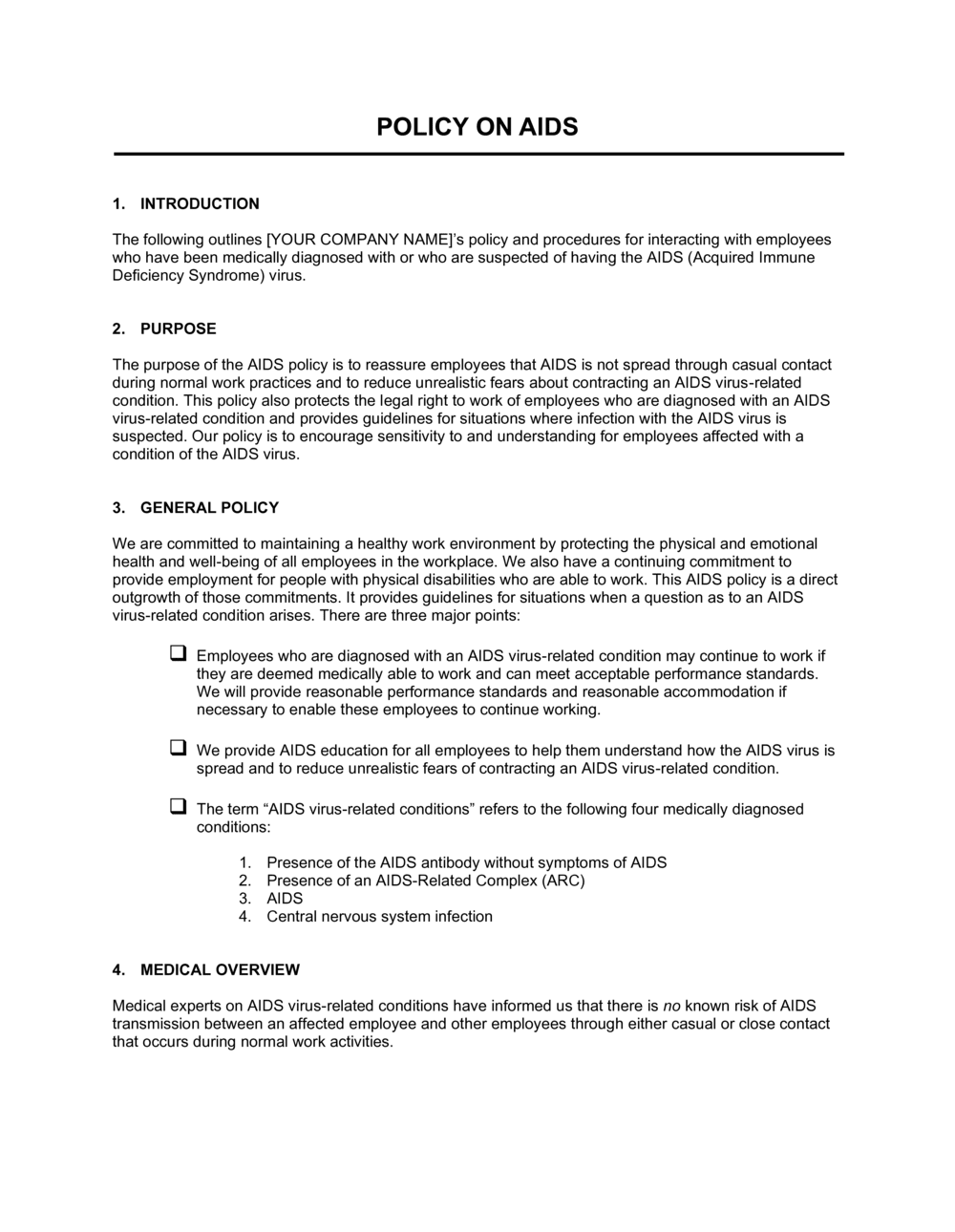
- HIV (Human Immunodeficiency Virus)
- A virus that attacks the immune system; without treatment, it can progress to AIDS — it is not casually transmissible in normal workplace settings.
- AIDS (Acquired Immunodeficiency Syndrome)
- The most advanced stage of HIV infection, characterized by a severely weakened immune system, considered a disability under the ADA and equivalent statutes.
- Reasonable Accommodation
- A modification to job duties, schedule, or environment that allows an employee with a disability or chronic condition to perform their essential functions without imposing undue hardship on the employer.
- Undue Hardship
- A standard used to assess whether a requested accommodation imposes significant difficulty or expense on the employer, taking into account organizational size and resources.
- Confidentiality (Medical)
- The obligation to restrict access to an employee's health information to only those individuals with a legitimate, need-to-know business reason.
- ADA (Americans with Disabilities Act)
- US federal legislation that prohibits discrimination against qualified individuals with disabilities, including HIV and AIDS, in all aspects of employment.
- Universal Precautions
- A set of infection-control practices that treat all blood and certain body fluids as potentially infectious, applied uniformly regardless of a person's known health status.
- Employee Assistance Program (EAP)
- An employer-sponsored benefit providing confidential counseling, referrals, and support services for employees dealing with personal or health-related challenges.
- Disclosure
- An employee's voluntary act of informing their employer about their HIV or AIDS status — disclosure is always the employee's choice and cannot be coerced.
- Stigma
- Negative social attitudes and stereotypes associated with HIV or AIDS that can lead to discrimination, isolation, or reluctance to seek treatment — a key driver of why explicit workplace policies matter.