Apology and Replacement of Damaged Goods Template

Free Word download β€’ Edit online β€’ Save & share with Drive β€’ Export to PDF

1 pageβ€’15–25 min to fillβ€’Difficulty: Standard
Learn more ↓
FreeApology and Replacement of Damaged Goods Template

At a glance

What it is
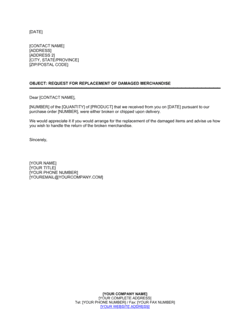
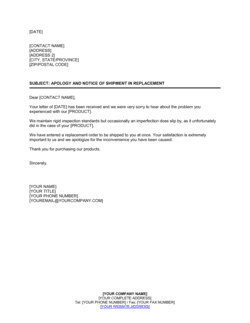
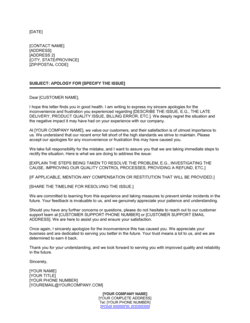
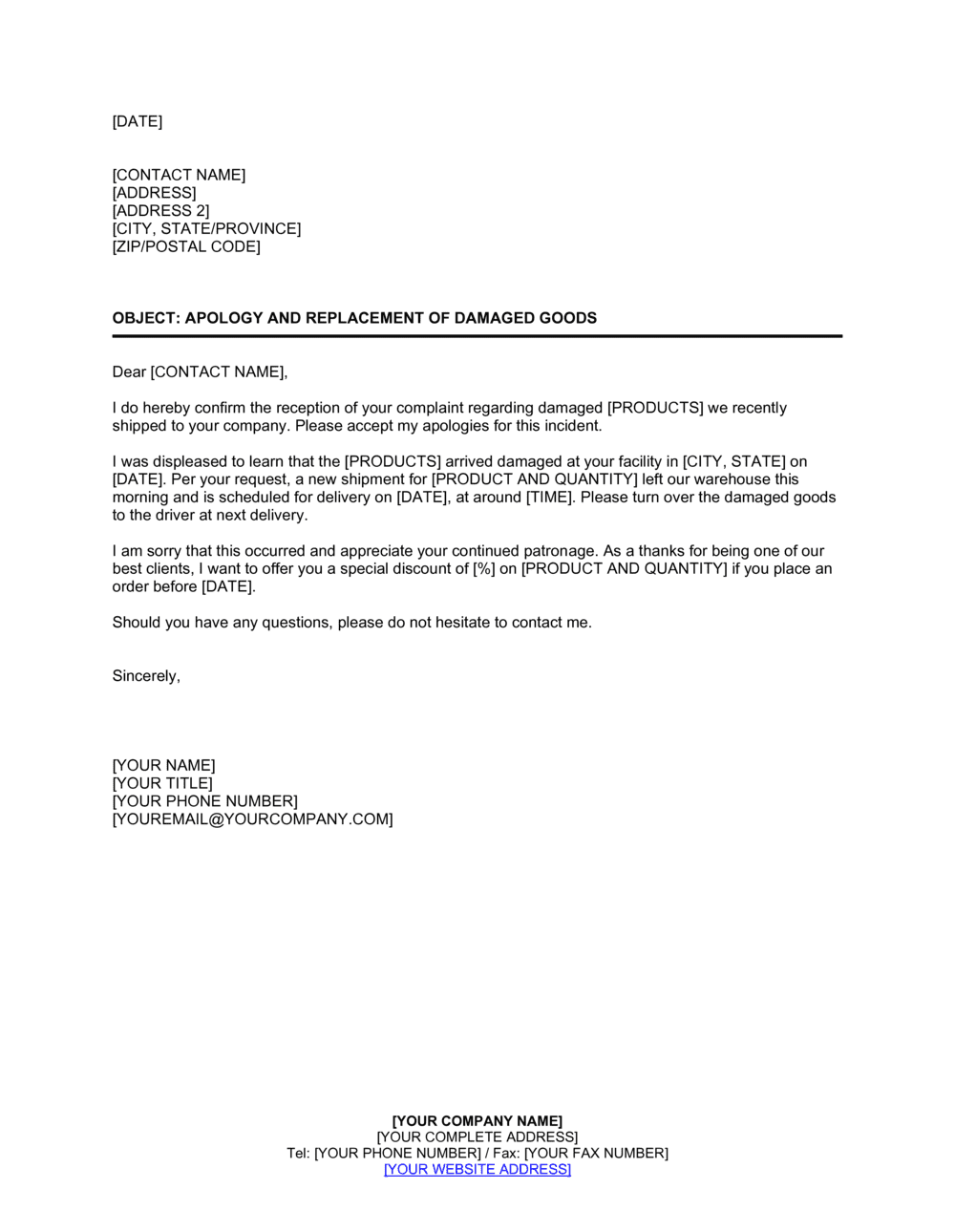
An Apology and Replacement of Damaged Goods letter is a formal business correspondence a seller or supplier sends to a customer or buyer to acknowledge that goods arrived damaged, apologize for the inconvenience, and confirm the terms under which replacement items will be dispatched. This free Word download is ready to edit online and export as PDF or send directly by email.
When you need it
Use it as soon as a customer or buyer reports receiving damaged goods β€” whether caused by faulty packaging, handling during transit, or a warehouse error. Sending this letter promptly preserves the business relationship and documents your remediation commitment in writing.
What's inside
A professional opening that references the original order, a clear acknowledgment of the damage and a sincere apology, an explanation of the cause where known, the specific replacement or remediation offer, a confirmed dispatch timeline, and a goodwill closing that invites further contact.

What is an Apology and Replacement of Damaged Goods Letter?

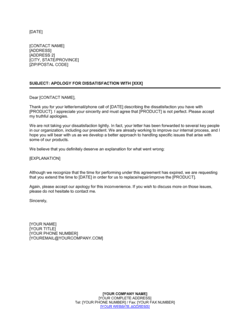
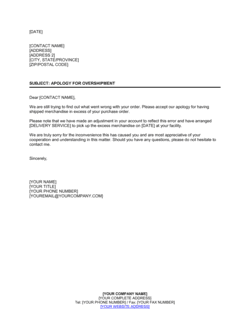
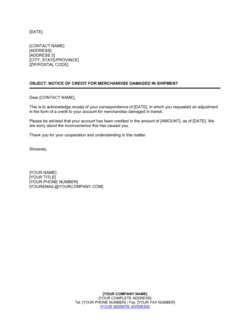
An Apology and Replacement of Damaged Goods Letter is a formal business correspondence sent by a seller, supplier, or distributor to a customer or trade buyer who has reported receiving physically damaged, broken, or unusable goods. The letter performs three functions in a single document: it acknowledges the specific damage on record, delivers a direct and professional apology, and confirms the precise terms of the replacement shipment β€” including product, quantity, dispatch date, and delivery method. Unlike an informal email, a properly structured letter creates a written remediation record that both parties can reference, supports any parallel freight or insurance claims, and signals the kind of accountability that retains customers after a supply-chain failure.

Why You Need This Document

When a customer receives damaged goods and you respond verbally or informally, you leave the remediation undocumented β€” meaning the customer has no written confirmation of what was promised, and you have no record of what you committed to. That gap leads directly to chargebacks, negative reviews, and lost accounts. A formal apology and replacement letter closes the gap immediately: it timestamps your acknowledgment, fixes the replacement terms in writing so there is no dispute about what was offered, and gives the customer a document they can pass to their accounts payable or procurement team to update their records. For wholesale and B2B relationships especially, buyers expect written confirmation before they will accept or pay for a replacement shipment. This template gives you a professionally worded, complete letter in under ten minutes β€” structured to de-escalate the complaint, restore confidence, and protect the business relationship.

Which variant fits your situation?

If your situation is…Use this template
Damage was caused by the carrier and a replacement is being sentApology and Replacement of Damaged Goods
Goods arrived damaged and a full refund is offered instead of replacementApology and Refund for Damaged Goods Letter
Wrong items were shipped rather than damaged itemsApology for Wrong Goods Delivered Letter
Goods were delayed rather than damagedApology for Delay in Delivery Letter
Customer is filing a formal damage claim with the carrierFreight Damage Claim Letter
Internal supplier caused the defect before shipmentSupplier Non-Conformance Notice
Damage is disputed and an investigation is underway before committing to replacementAcknowledgment of Complaint Letter

Common mistakes to avoid

❌ Leading with an excuse instead of an apology

Why it matters: Opening with 'the carrier was at fault' before acknowledging the customer's experience makes the letter feel defensive and can escalate the complaint.

Fix: State the apology in the first substantive paragraph. Cause and context belong in the second paragraph, after trust has been partially restored.

❌ Omitting a confirmed replacement dispatch date

Why it matters: A letter that promises a replacement but gives no timeline converts an apology into an unresolved open item, prompting follow-up calls and negative reviews.

Fix: Always include a specific dispatch date or, at minimum, a business-day window from the letter date β€” e.g., 'within 3 business days of this letter.'

❌ Using vague damage language

Why it matters: Phrases like 'we understand there may have been a concern' read as dismissive and suggest the complaint was not genuinely reviewed.

Fix: Reference the specific product, order number, and the nature of the damage as reported by the customer to show the issue was taken seriously.

❌ Requiring return of damaged goods without providing a prepaid label

Why it matters: Asking a customer to pay return postage for goods damaged in your supply chain adds cost and friction to an already negative experience.

Fix: Include a prepaid return label and RMA number in all cases where a return is required; for low-value items, waive the return requirement entirely.

The 9 key clauses, explained

Reference line and salutation

In plain language: Identifies the original order or invoice number, the date of complaint, and addresses the recipient by name β€” giving the letter a clear paper-trail anchor.

Sample language
Re: Order #[ORDER NUMBER] β€” Replacement for Damaged Goods Received [DATE] Dear [CUSTOMER NAME],

Common mistake: Using a generic 'Dear Customer' salutation. A named recipient reads as more personal and accountable, which is essential when repairing a trust breach.

Acknowledgment of the damage

In plain language: Explicitly confirms that the sender is aware of the specific damage reported, referencing the order or shipment details to show the complaint was reviewed.

Sample language
We have received your message dated [DATE] advising us that the [PRODUCT NAME(S)] included in Order #[ORDER NUMBER] arrived in a damaged condition.

Common mistake: Using vague language like 'we understand there may have been an issue.' Ambiguity signals defensiveness and undermines the apology.

Sincere apology

In plain language: Offers a direct, unconditional apology for the inconvenience caused, without deflecting blame onto the carrier before the customer relationship is acknowledged.

Sample language
We sincerely apologize for the inconvenience this has caused you. Delivering goods in perfect condition is our standard, and we regret that we fell short on this occasion.

Common mistake: Opening the apology with an excuse (e.g., 'Unfortunately the carrier…'). Lead with the apology β€” context can follow in the next paragraph.

Explanation of cause (where known)

In plain language: Briefly states the likely or confirmed cause of the damage β€” carrier mishandling, packaging failure, or warehouse error β€” without over-explaining or assigning blame in ways that could create liability.

Sample language
Upon reviewing the shipping records and your photographs, it appears the damage occurred during transit. We have notified [CARRIER NAME] and are filing the appropriate freight claim on your behalf.

Common mistake: Admitting specific fault in language that could be used in a legal or insurance dispute. Keep the explanation factual and concise.

Replacement offer and terms

In plain language: States clearly what will be sent as a replacement, including quantity and product description, and confirms it will be dispatched at no additional charge.

Sample language
We will dispatch a replacement shipment of [QUANTITY] [PRODUCT NAME(S)] to your address on file at no charge. The replacement goods will be identical in specification to your original order.

Common mistake: Leaving the replacement terms vague (e.g., 'we will look into sending a replacement'). Customers need a firm commitment in writing to restore confidence.

Confirmed dispatch timeline

In plain language: Gives a specific expected dispatch date or delivery window for the replacement shipment, setting clear expectations.

Sample language
Your replacement order is scheduled for dispatch on [DATE] via [CARRIER / SERVICE LEVEL] and is expected to arrive within [X] business days.

Common mistake: Omitting a timeline entirely. No date converts a sincere apology into an unresolved complaint and invites a follow-up call or escalation.

Return instructions for damaged items (if required)

In plain language: Tells the customer whether they need to return the damaged goods and, if so, how β€” including any prepaid label or RMA number.

Sample language
You are not required to return the damaged items. Please dispose of them at your convenience. If a return is required for insurance purposes, a prepaid return label with RMA #[RMA NUMBER] is enclosed.

Common mistake: Requiring a return without providing a prepaid label. Asking a customer to pay return postage for goods damaged through no fault of theirs further damages the relationship.

Goodwill gesture (optional)

In plain language: Offers a discount, store credit, or complimentary item as a gesture beyond the strict replacement β€” calibrated to the order size and customer value.

Sample language
As a gesture of goodwill, we have applied a [X]% credit of $[AMOUNT] to your account, valid on your next order placed within 90 days.

Common mistake: Making the goodwill gesture conditional on the customer not leaving a negative review. Conditional gestures are widely regarded as coercive and can backfire publicly.

Closing and contact invitation

In plain language: Closes on a positive, forward-looking note and provides a direct contact name or channel for any follow-up questions.

Sample language
We value your business and are committed to making this right. Should you have any questions regarding your replacement order, please contact [NAME] directly at [EMAIL] or [PHONE NUMBER].

Common mistake: Closing with a generic 'please contact customer service.' A named contact signals personal accountability and reduces the chance of the customer escalating to a review platform.

How to fill it out

  1. 1

    Enter the reference details at the top

    Add the original order or invoice number and the date the damage complaint was received. These references anchor the letter to a specific transaction and simplify internal tracking.

    πŸ’‘ Match the order number format exactly as it appears on the original invoice β€” mismatches create confusion for accounts payable and support teams.

  2. 2

    Address the customer by name

    Replace the salutation placeholder with the customer's or buyer's full name or the accounts payable contact at their company.

    πŸ’‘ For B2B letters, use the name of the individual who submitted the complaint β€” not the company name alone.

  3. 3

    Confirm the specific damage in the acknowledgment paragraph

    Reference the product name, order number, and the type of damage reported. Pull this directly from the complaint email or photos submitted by the customer.

    πŸ’‘ If photographs were provided, note that you have reviewed them β€” it signals that the complaint was taken seriously before responding.

  4. 4

    State the cause briefly and factually

    Insert the confirmed or probable cause of damage β€” transit mishandling, inadequate packaging, or a warehouse error. Keep this to one or two sentences.

    πŸ’‘ If the cause is still under investigation, say so β€” 'We are currently reviewing the circumstances' is more credible than silence or speculation.

  5. 5

    Complete the replacement offer with specifics

    Fill in the product name, quantity, and dispatch date. Confirm the delivery method and expected arrival window.

    πŸ’‘ Use the fastest available service level for the replacement, even if the original order used standard shipping β€” speed of resolution matters more than cost at this stage.

  6. 6

    Add return instructions or omit them explicitly

    Decide whether a return is required for insurance or inventory purposes. If not, state that clearly. If yes, include the RMA number and a prepaid return label.

    πŸ’‘ Defaulting to 'no return required' for low-value items saves both parties time and signals customer-first thinking.

  7. 7

    Add a goodwill gesture if appropriate

    For high-value orders or repeat customers, insert a credit amount or discount percentage. For first-time or one-off transactions, a sincere apology and fast replacement may be sufficient.

    πŸ’‘ Calibrate the gesture to the order value β€” a 10% credit on a $5,000 order is meaningful; on a $20 order it risks looking like a token gesture.

  8. 8

    Sign off with a named contact

    Replace the generic closing with the name, title, email, and direct phone number of the person handling the case β€” not a support queue.

    πŸ’‘ If you use a CRM, log the letter against the complaint ticket so the named contact can retrieve the full context when the customer follows up.

Frequently asked questions

What is an apology and replacement of damaged goods letter?

It is a formal business letter sent by a seller or supplier to a customer who received damaged goods. The letter acknowledges the damage, apologizes for the inconvenience, explains the cause where known, and confirms the specific terms of the replacement β€” including the product, quantity, and expected dispatch date. It serves as both a customer relations tool and a written record of the remediation commitment.

When should I send an apology letter for damaged goods?

Send it as soon as the damage complaint is confirmed β€” ideally within 24–48 hours of receiving the report. Delays in responding increase the likelihood of a chargeback, a negative review, or the customer contacting their bank directly. A fast, professional written response is the single most effective way to retain the customer after a delivery failure.

Do I need to sign an apology and replacement letter?

A formal handwritten signature is not required for this type of letter to be effective, though including a named signatory with a title adds credibility. For high-value B2B transactions, a PDF with a digital signature from a customer success manager or account executive reinforces accountability.

What should I do if the customer's goods were damaged by the carrier?

Acknowledge the damage and commit to replacement in the letter regardless of who was at fault β€” your relationship is with the customer, not the carrier. Simultaneously, file a freight damage claim with the carrier using the bill of lading and the customer's photographs as evidence. Inform the customer in the letter that you are handling the carrier claim on their behalf so they do not need to pursue it independently.

Should I offer a refund or a replacement?

A replacement is generally preferred when the customer still wants the product and the item can be re-dispatched quickly. A refund is more appropriate when the product is out of stock, the customer has lost confidence in the delivery, or the damage was severe. Where possible, give the customer the choice β€” framing it as their decision rather than yours improves satisfaction outcomes.

Is a goodwill gesture required in an apology letter?

It is not required, but it is recommended for orders above a moderate value threshold or for repeat customers. A 10–15% credit on the next order or a small discount code costs little relative to the value of retaining a customer. For very low-value or one-time transactions, a sincere apology and prompt replacement typically suffice.

Can I use this letter template for international shipments?

Yes. The template structure applies regardless of origin or destination. For international shipments, add a reference to the relevant shipping document (commercial invoice, bill of lading, or airway bill) and note which party will handle any customs re-clearance costs for the replacement shipment. Confirm whether the replacement is subject to import duties in the destination country so the customer is not surprised by additional charges on arrival.

How does an apology letter differ from a freight damage claim?

An apology letter is customer-facing β€” it manages the relationship and commits to a remedy. A freight damage claim is a formal document filed with the carrier or insurer to recover the cost of the damaged goods. Both may be triggered by the same incident, but they serve different purposes and go to different recipients. This template covers the customer-facing letter; a separate freight claim form is needed for the carrier.

How this compares to alternatives

vs Apology for Delay in Delivery Letter

A delay letter addresses goods that have not yet arrived by the expected date but are still intact. An apology and replacement letter addresses goods that arrived on time but in a damaged state. The delay letter focuses on revised timeline expectations; this letter focuses on remediation and a new shipment.

vs Freight Damage Claim Letter

A freight damage claim is filed with the carrier or insurer to recover costs and is a formal legal document. The apology and replacement letter is sent to the customer to preserve the relationship. They address the same incident from opposite directions and are typically both needed.

vs Refund Confirmation Letter

A refund letter confirms that a monetary reimbursement has been processed in lieu of a replacement. This template is used when the customer still wants the product and a replacement is the preferred remedy. The choice between the two depends on stock availability and customer preference.

vs Acknowledgment of Complaint Letter

A complaint acknowledgment letter is sent when the investigation is still underway and no replacement commitment can yet be made. This apology and replacement letter is the follow-up once the remedy is confirmed. Use the acknowledgment letter first if the cause is disputed; use this template once the decision to replace is final.

Industry-specific considerations

Retail and E-commerce

High volume of parcel shipments means a standardized apology letter template cuts response time and ensures consistent tone across hundreds of monthly damage complaints.

Manufacturing

B2B buyers expect formal written confirmation of replacement shipments, often needed to update purchase orders and accounts payable records before the replacement is accepted.

Food and Beverage

Perishable or fragile goods have high damage rates; the letter often references whether the replacement will be expedited via temperature-controlled freight and includes food safety disposal instructions for the damaged items.

Wholesale and Distribution

Trade buyers require written proof of replacement commitment to reconcile inventory shortfalls and may attach the letter to their own supplier non-conformance records.

Template vs pro β€” what fits your needs?

PathBest forCostTime
Use the templateAny business that needs to respond quickly and professionally to a damaged goods complaintFree5–10 minutes per letter
Template + professional reviewHigh-value B2B claims where the replacement commitment may affect ongoing contracts or insurance filings$50–$150 (brief legal or commercial review)1–2 hours
Custom draftedLarge enterprise disputes, regulated goods (pharmaceuticals, hazardous materials), or multi-party logistics claims$300–$8001–3 days

Glossary

Damaged Goods
Products that have been physically harmed, broken, or rendered unfit for use during manufacturing, warehousing, or transit.
Replacement Shipment
A new dispatch of goods sent to substitute for items that arrived damaged, defective, or otherwise unacceptable.
Freight Damage Claim
A formal request filed with a carrier or insurer to recover the cost of goods damaged while in transit.
Remediation
The corrective action taken by a seller to resolve a customer's complaint β€” such as replacement, repair, or refund.
Proof of Delivery (POD)
A document or electronic record confirming that goods were received by the buyer, used as a reference point in damage disputes.
Return Merchandise Authorization (RMA)
A reference number issued by a seller that authorizes the customer to return damaged or defective goods before a replacement or refund is processed.
Goodwill Gesture
A voluntary concession β€” discount, credit, or free item β€” offered by a business beyond the strict remedy owed, to preserve customer satisfaction.
Bill of Lading (BOL)
A shipping document that records the condition and quantity of goods at the time of handover to a carrier, used as evidence in damage claims.
Net 30 Credit
A credit applied to a customer's account that reduces the next invoice by the agreed amount, usable within 30 days of issue.
Carrier Liability
The legal responsibility of a shipping carrier for loss or damage that occurs while goods are in its custody, typically limited to a declared or statutory value.

Part of your Business Operating System

This document is one of 3,000+ business & legal templates included in Business in a Box.

  • Fill-in-the-blanks β€” ready in minutes
  • 100% customizable Word document
  • Compatible with all office suites
  • Export to PDF and share electronically

Create your document in 3 simple steps.

From template to signed document β€” all inside one Business Operating System.
1
Download or open template

Access over 3,000+ business and legal templates for any business task, project or initiative.

2
Edit and fill in the blanks with AI

Customize your ready-made business document template and save it in the cloud.

3
Save, Share, Send, Sign

Share your files and folders with your team. Create a space of seamless collaboration.

Save time, save money, and create top-quality documents.

β˜…β˜…β˜…β˜…β˜…

"Fantastic value! I'm not sure how I'd do without it. It's worth its weight in gold and paid back for itself many times."

Managing Director Β· Mall Farm
Robert Whalley
Managing Director, Mall Farm Proprietary Limited
β˜…β˜…β˜…β˜…β˜…

"I have been using Business in a Box for years. It has been the most useful source of templates I have encountered. I recommend it to anyone."

Business Owner Β· 4+ years
Dr Michael John Freestone
Business Owner
β˜…β˜…β˜…β˜…β˜…

"It has been a life saver so many times I have lost count. Business in a Box has saved me so much time and as you know, time is money."

Owner Β· Upstate Web
David G. Moore Jr.
Owner, Upstate Web

Run your business with a system β€” not scattered tools

Stop downloading documents. Start operating with clarity. Business in a Box gives you the Business Operating System used by over 250,000 companies worldwide to structure, run, and grow their business.

Start freeΒ Β·Β No credit card required