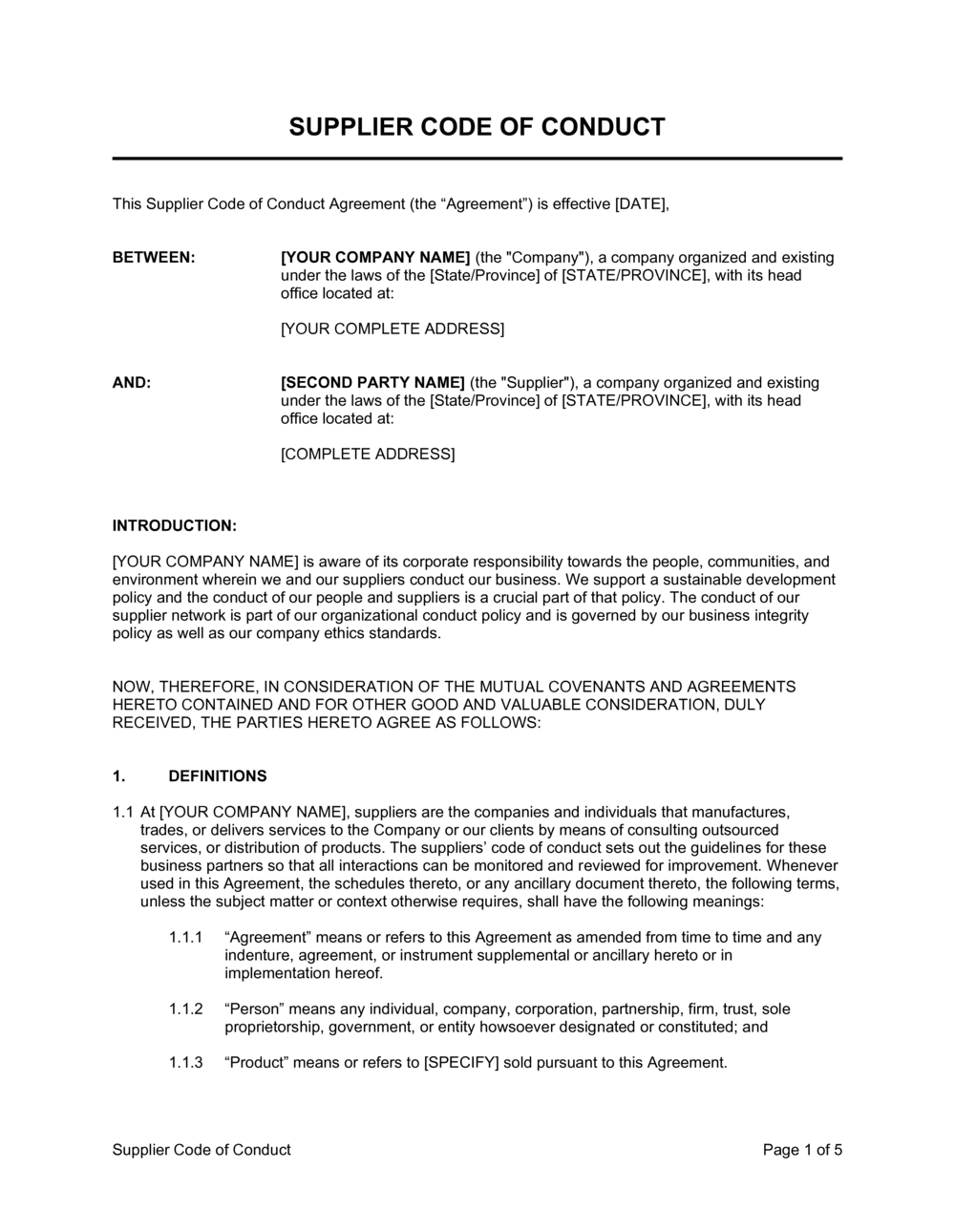
Supplier Code Of Conduct Template

Free Word download β€’ Edit online β€’ Save & share with Drive β€’ Export to PDF

5 pagesβ€’20–30 min to fillβ€’Difficulty: Standard
Learn more ↓
FreeSupplier Code Of Conduct Template

At a glance

What it is
A Supplier Code of Conduct is a formal policy document that sets out the ethical, legal, environmental, and labor standards a company requires all of its suppliers, vendors, and sub-contractors to meet. This free Word download gives you a structured, audit-ready starting point you can edit online and export as PDF to share with your supply chain partners during onboarding or contract renewal.
When you need it
Use it when onboarding new suppliers, responding to customer or investor ESG due-diligence requests, or formalizing supply chain compliance requirements that have previously been handled informally or inconsistently.
What's inside
Labor and human rights standards, anti-corruption and anti-bribery obligations, environmental compliance requirements, health and safety expectations, data privacy rules, sub-contractor flow-down requirements, and audit and monitoring rights β€” all organized into clearly numbered sections your procurement team can reference and enforce.

What is a Supplier Code of Conduct?

A Supplier Code of Conduct is a formal policy document that sets out the minimum ethical, labor, environmental, health and safety, and compliance standards a company requires all of its suppliers, vendors, and sub-contractors to meet as a condition of doing business. Unlike a supplier contract β€” which governs the commercial terms of a specific transaction β€” a code of conduct defines how a supplier must operate its business across every aspect of the relationship. It covers issues ranging from the prohibition of forced and child labor to anti-bribery controls, data security obligations, and the company's right to audit compliance at any time.

Why You Need This Document

Without a written supplier code of conduct, your business has no documented standard against which to measure, audit, or terminate a supplier for ethical or compliance failures. Regulatory exposure is growing: the UK Modern Slavery Act, the California Transparency in Supply Chains Act, and the EU Corporate Sustainability Due Diligence Directive all create legal obligations tied directly to what standards you have communicated to your supply chain. Enterprise and government buyers increasingly require a written code as a condition of onboarding; without one, bids are disqualified before they are read. Beyond regulation, reputational damage from a supplier-side labor or corruption scandal falls on the buying company β€” documented standards and audit rights are the primary mechanism for limiting that exposure. This template gives you a complete, enforceable starting point in hours rather than weeks.

Which variant fits your situation?

If your situation is…Use this template
Setting minimum standards for all direct suppliersSupplier Code of Conduct
Governing the behavior of independent service contractorsContractor Code of Conduct
Internal employee ethics standardsCode of Business Conduct and Ethics
Detailed environmental obligations for high-impact suppliersEnvironmental Policy Statement
Managing the full supplier onboarding workflowSupplier Onboarding Checklist
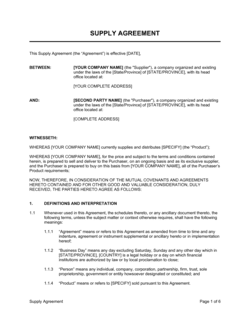
Formal contractual terms with a key supplierSupplier Agreement
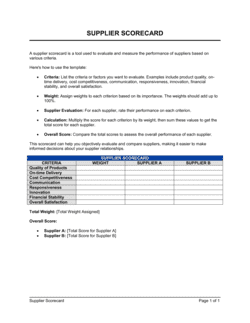
Tracking ongoing supplier compliance and performance scoresVendor Evaluation Form

Common mistakes to avoid

❌ Scoping the code only to direct (Tier 1) suppliers

Why it matters: The majority of modern slavery, forced labor, and environmental violations occur at Tier 2 and Tier 3 levels. A code that stops at Tier 1 provides no visibility into the highest-risk parts of the supply chain.

Fix: Include an explicit flow-down clause requiring Tier 1 suppliers to impose equivalent standards on their own sub-contractors, and require notification when material sub-contracting arrangements change.

❌ Referencing only local legal minimums for labor standards

Why it matters: Local law in some jurisdictions permits working hours, wage rates, and freedom-of-association restrictions that violate ILO core labor conventions and expose the buying company to reputational and regulatory risk.

Fix: Set a floor by referencing ILO conventions 87, 98, 138, and 182 explicitly, and state that the higher of local law or ILO standards applies.

❌ Setting a single corrective action timeline for all violation types

Why it matters: A 60-day corrective action window for a child labor finding or an imminent safety hazard is indefensible to regulators, customers, and the media.

Fix: Define at least two severity categories with separate timelines: critical violations requiring immediate containment within 48–72 hours, and standard non-conformances requiring a remediation plan within 30–60 days.

❌ Issuing the code without a supplier acknowledgment process

Why it matters: A code distributed by email without a signed acknowledgment is difficult to enforce and creates uncertainty about whether the supplier ever received or agreed to the standards.

Fix: Attach a one-page acknowledgment form to every supplier onboarding package and require re-signing on each annual renewal or material code revision.

The 10 key sections, explained

Purpose and scope

Labor and human rights

Health and safety

Environmental standards

Anti-corruption and business ethics

Data privacy and information security

Sub-contractor and flow-down requirements

Monitoring, audits, and corrective action

Reporting and whistleblower protection

Consequences of non-compliance and termination

How to fill it out

  1. 1

    Define the scope and covered entities

    In the Purpose and Scope section, insert your company's legal name and specify exactly which supply chain tiers are covered β€” at minimum Tier 1 suppliers and their direct sub-contractors. List any categories explicitly excluded.

    πŸ’‘ If you source from high-risk countries or commodity categories, call them out explicitly so the scope is unambiguous to auditors and investors.

  2. 2

    Set your labor and environmental baselines

    Replace generic references to 'applicable local law' with specific international standards β€” ILO core conventions for labor, ISO 14001 or equivalent for environmental management β€” so the floor is consistent regardless of where the supplier operates.

    πŸ’‘ Cross-reference your existing supplier contracts to confirm these standards are consistent with the obligations you've already contracted for.

  3. 3

    Specify the audit rights and notice periods

    Fill in the notice period for scheduled audits (typically 30 days) and confirm that zero-notice audits are permitted for serious suspected violations. Name the third-party audit bodies you recognize.

    πŸ’‘ If your industry uses a shared audit framework β€” such as SMETA or Higg Index β€” reference it by name to reduce duplicate audit requests on your suppliers.

  4. 4

    Set corrective action timelines by severity

    Define at least two severity tiers: critical violations (forced labor, child labor, imminent safety hazard) requiring a response within 48–72 hours, and standard non-conformances requiring a corrective action plan within 60 days.

    πŸ’‘ Align these timelines with any customer contracts you are subject to β€” if your buyer expects a 30-day CAP, your supplier code should require no more than 21 days to give you a buffer.

  5. 5

    Add the reporting channel contact details

    Insert the ethics hotline number or URL, the name of the internal contact responsible for receiving reports, and the language(s) in which reports can be submitted.

    πŸ’‘ If you don't have a dedicated ethics hotline, a monitored email inbox with a documented response procedure is a credible alternative for small and mid-size businesses.

  6. 6

    Insert your branding and effective date

    Add your company logo to the header, update the document version number, and enter the effective date in the footer. Version control matters β€” suppliers need to know which edition governs their relationship.

    πŸ’‘ Store the signed acknowledgment alongside the supplier contract so the code is enforceable as part of the overall commercial relationship.

  7. 7

    Attach the supplier acknowledgment form

    Append a one-page acknowledgment that the supplier representative signs and returns, confirming they have read, understood, and committed to the code.

    πŸ’‘ Require re-acknowledgment annually and whenever you issue a materially revised version of the code.

Frequently asked questions

What is a supplier code of conduct?

A supplier code of conduct is a policy document a company issues to its vendors, suppliers, and sub-contractors that defines the minimum ethical, labor, environmental, and compliance standards they must meet to do business with that company. It typically covers human rights, anti-corruption, health and safety, environmental management, data privacy, and audit rights. It is distinct from a supplier contract in that it sets behavioral standards rather than commercial terms.

Is a supplier code of conduct legally binding?

On its own, a supplier code of conduct is generally not a binding legal document unless it is incorporated by reference into the supplier's contract or purchase order. To make it enforceable, include language in your supplier agreement stating that the code forms part of the commercial relationship, and require the supplier to sign an acknowledgment. Once incorporated, breach of the code can constitute a breach of contract.

Who should sign a supplier code of conduct?

A senior representative of the supplier organization with authority to commit the business β€” typically a director, VP of operations, or owner β€” should sign the acknowledgment form. For large multi-site suppliers, consider requiring site-level acknowledgments as well. The signed acknowledgment should be retained alongside the supplier contract for the duration of the relationship plus at least five years.

How often should a supplier code of conduct be updated?

Review the code at least annually and update it whenever there is a material change in applicable law (such as new modern slavery reporting requirements), a significant shift in your company's ESG commitments, or a pattern of audit findings that reveals a gap in the current standards. Require suppliers to re-acknowledge any materially revised version within 30 days of issuance.

What is the difference between a supplier code of conduct and a vendor agreement?

A vendor agreement sets out the commercial terms of a specific transaction β€” price, delivery, payment, warranties, and liability. A supplier code of conduct sets out the behavioral and ethical standards that govern how the supplier operates its business. The two documents work together: the code defines the standards, and the agreement makes compliance with the code a contractual condition. Having one without the other creates either unenforceable standards or a commercial agreement with no ethical floor.

What labor standards should a supplier code of conduct reference?

At minimum, reference the ILO's eight core labor conventions: freedom of association (87 and 98), elimination of forced labor (29 and 105), abolition of child labor (138 and 182), and elimination of discrimination (100 and 111). These provide a consistent international floor regardless of where the supplier operates. Supplement with local legal requirements where they are stricter. For high-risk supply chains, also reference the UN Guiding Principles on Business and Human Rights.

How do I enforce a supplier code of conduct?

Enforcement works on three levels. First, audit rights β€” scheduled third-party audits and the right to conduct unannounced inspections for serious suspected violations. Second, corrective action β€” a tiered process with defined timelines and escalation steps for non-conformances. Third, commercial consequences β€” suspension from the approved vendor list, withholding of payment, or termination for material or repeated violations. All three must be documented in the code to be credible.

Do small businesses need a supplier code of conduct?

Small businesses that supply to large corporate or government buyers increasingly need one β€” procurement teams at enterprise companies routinely require a written code as a condition of onboarding. Even for businesses that sell primarily to other small businesses, a supplier code reduces the risk of reputational damage from a supplier-side scandal and provides a defensible compliance record if regulatory scrutiny increases. A template makes the investment minimal.

What is a flow-down clause in a supplier code of conduct?

A flow-down clause requires your direct (Tier 1) suppliers to impose the same code of conduct standards on their own sub-contractors and material vendors (Tier 2 and beyond). Without it, a supplier can outsource the most problematic work to an unmonitored sub-contractor and remain technically compliant at the surface level. Flow-down clauses are a core requirement of modern slavery legislation in the UK and Australia and are increasingly expected by ESG-focused investors.

How this compares to alternatives

vs Code of Business Conduct and Ethics

A code of business conduct and ethics governs the behavior of a company's own employees and directors β€” covering conflicts of interest, gifts, insider trading, and workplace conduct. A supplier code of conduct extends similar ethical standards outward to third-party vendors. Both documents are needed for a complete compliance program; they should cross-reference each other but not be merged into a single document.

vs Supplier Agreement

A supplier agreement sets out the commercial terms of a specific transaction β€” price, delivery, payment, warranties, and liability. A supplier code of conduct sets behavioral and ethical standards that apply across the entire relationship regardless of which specific purchase orders are active. The two work together: incorporate the code by reference into the agreement to make compliance a contractual condition.

vs Non-Disclosure Agreement

An NDA protects confidential information exchanged between a company and a supplier. A supplier code of conduct addresses how the supplier conducts its broader business operations. Both are typically signed during onboarding, but they address completely different risk categories and should never be combined.

vs Vendor Evaluation Form

A vendor evaluation form is a periodic scoring tool used to measure a supplier's performance against defined criteria β€” quality, delivery, price, and compliance. A supplier code of conduct is the foundational standard those scores are measured against. Issue the code at onboarding; use the evaluation form quarterly or annually to track ongoing compliance.

Industry-specific considerations

Manufacturing

Multi-tier supply chains with high forced-labor and conflict-minerals risk require flow-down clauses, factory audit programs, and conflict-minerals disclosure aligned to Dodd-Frank Section 1502.

Retail and E-commerce

Fast-moving product sourcing from multiple low-cost countries demands a code that explicitly references ILO child-labor conventions and requires quarterly self-assessments from key suppliers.

Technology / SaaS

Hardware and component procurement from high-risk regions, combined with software vendor data-handling obligations, means the code must address both conflict minerals and ISO 27001-equivalent data security standards.

Food and Beverage

Agricultural supply chains carry significant seasonal and migrant labor risks; the code should address recruitment fee prohibitions, living wage commitments, and GLOBALG.A.P. or equivalent certification requirements.

Template vs pro β€” what fits your needs?

PathBest forCostTime
Use the templateSmall and mid-size businesses formalizing supplier standards for the first time or responding to a buyer's onboarding requirementFree2–4 hours to customize and issue
Template + professional reviewCompanies with supply chains in high-risk countries, those subject to UK Modern Slavery Act or California Transparency in Supply Chains Act reporting, or businesses preparing for ISO 20400 alignment$500–$2,000 for a legal or ESG consultant review3–5 business days
Custom draftedPublicly listed companies, regulated industries, or businesses with complex multi-tier global supply chains requiring bespoke audit frameworks and regulatory cross-referencing$3,000–$10,000+3–6 weeks

Glossary

Supply Chain Due Diligence
The process of identifying, assessing, and addressing human rights, environmental, and ethical risks across a company's network of suppliers and sub-contractors.
Flow-Down Clause
A requirement that a supplier imposes the same code of conduct standards on its own sub-contractors, extending compliance obligations down the supply chain.
ESG (Environmental, Social, and Governance)
A framework investors and regulators use to evaluate a company's exposure to sustainability and ethical risks, increasingly applied to supply chain practices.
Anti-Bribery Compliance
Policies and controls that prohibit offering, giving, or receiving anything of value to improperly influence a business decision or government action.
Corrective Action Plan (CAP)
A documented set of steps a supplier must take within a defined timeframe to remedy a specific compliance failure identified during an audit.
Third-Party Audit
An independent inspection of a supplier's facilities, records, and practices by an external organization to verify compliance with stated standards.
Conflict Minerals
Minerals β€” typically tin, tantalum, tungsten, and gold β€” whose extraction may fund armed conflict, subject to disclosure requirements under regulations such as the US Dodd-Frank Act Section 1502.
Forced Labor
Work performed involuntarily under threat of penalty, including debt bondage, retention of identity documents, and recruitment fees β€” prohibited by the ILO's core labor conventions.
Modern Slavery
An umbrella term covering forced labor, human trafficking, debt bondage, and child labor, addressed by legislation in the UK, Australia, and Canada that requires supply chain disclosures.
Whistleblower Protection
Policies that shield individuals who report misconduct β€” including supplier violations β€” from retaliation, required to make reporting mechanisms credible.

Part of your Business Operating System

This document is one of 3,000+ business & legal templates included in Business in a Box.

  • Fill-in-the-blanks β€” ready in minutes
  • 100% customizable Word document
  • Compatible with all office suites
  • Export to PDF and share electronically

Create your document in 3 simple steps.

From template to signed document β€” all inside one Business Operating System.
1
Download or open template

Access over 3,000+ business and legal templates for any business task, project or initiative.

2
Edit and fill in the blanks with AI

Customize your ready-made business document template and save it in the cloud.

3
Save, Share, Send, Sign

Share your files and folders with your team. Create a space of seamless collaboration.

Save time, save money, and create top-quality documents.

β˜…β˜…β˜…β˜…β˜…

"Fantastic value! I'm not sure how I'd do without it. It's worth its weight in gold and paid back for itself many times."

Managing Director Β· Mall Farm
Robert Whalley
Managing Director, Mall Farm Proprietary Limited
β˜…β˜…β˜…β˜…β˜…

"I have been using Business in a Box for years. It has been the most useful source of templates I have encountered. I recommend it to anyone."

Business Owner Β· 4+ years
Dr Michael John Freestone
Business Owner
β˜…β˜…β˜…β˜…β˜…

"It has been a life saver so many times I have lost count. Business in a Box has saved me so much time and as you know, time is money."

Owner Β· Upstate Web
David G. Moore Jr.
Owner, Upstate Web

Run your business with a system β€” not scattered tools

Stop downloading documents. Start operating with clarity. Business in a Box gives you the Business Operating System used by over 250,000 companies worldwide to structure, run, and grow their business.

Start freeΒ Β·Β No credit card required