Apology and Request for Extension of Time to Deliver Goods Template

Free Word download β€’ Edit online β€’ Save & share with Drive β€’ Export to PDF

1 pageβ€’15–20 min to fillβ€’Difficulty: Standard
Learn more ↓
FreeApology and Request for Extension of Time to Deliver Goods Template

At a glance

What it is
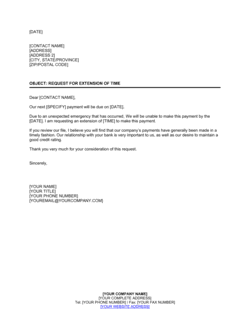
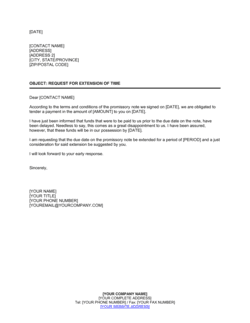
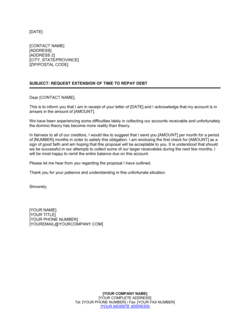
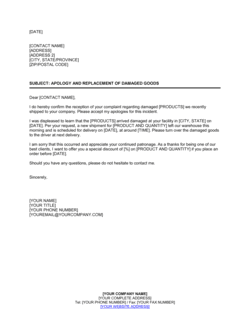
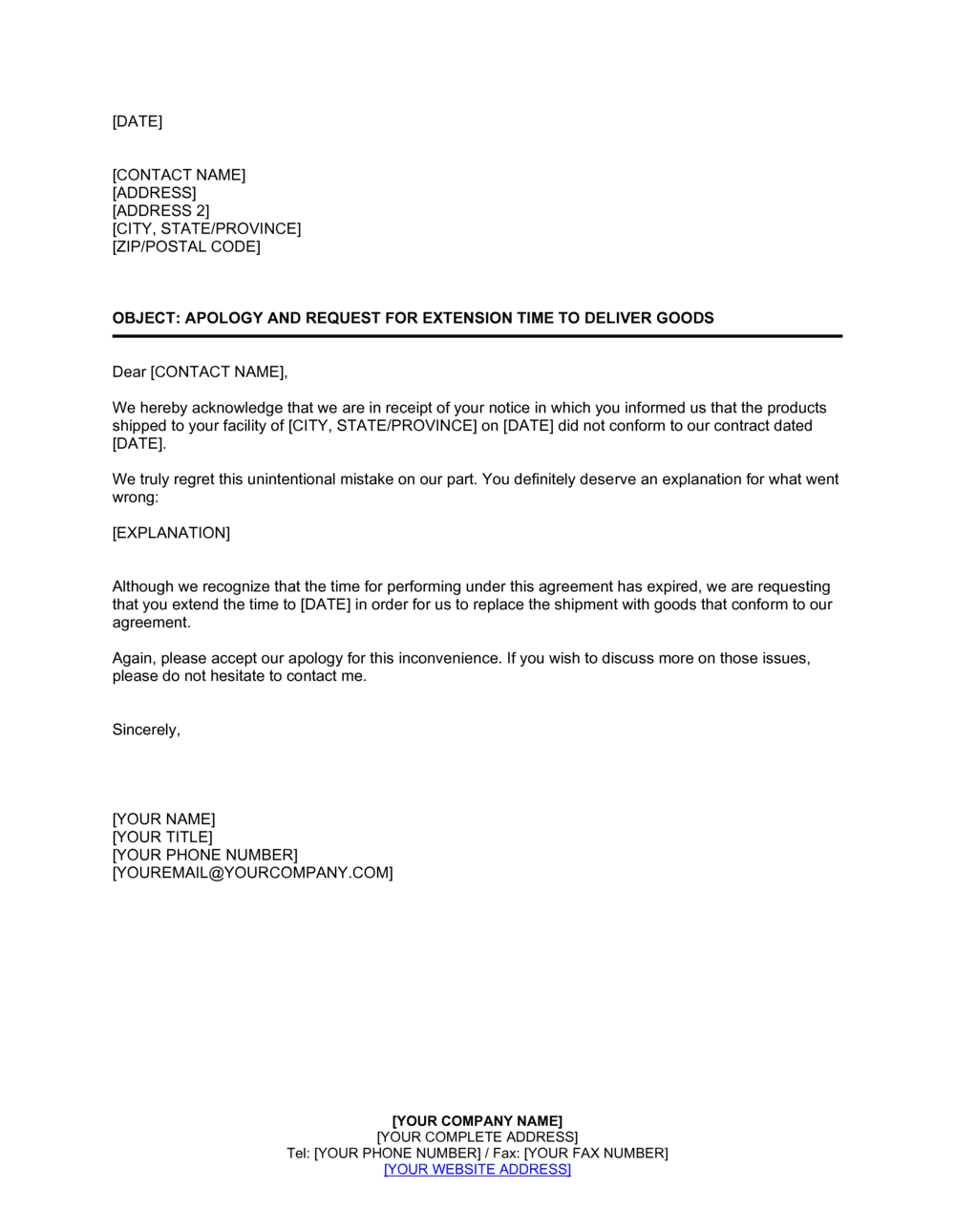
An Apology and Request for Extension of Time to Deliver Goods is a formal business letter a supplier sends to a buyer when it cannot meet the originally agreed delivery date. This free Word download gives you a ready-to-edit structure that acknowledges the delay, explains its cause, proposes a revised delivery date, and offers any compensating concessions β€” all in a single professional letter you can export as PDF and send immediately.
When you need it
Use it as soon as you know a committed delivery date will be missed β€” whether due to a supply chain disruption, production setback, shipping carrier failure, or force majeure event. Sending a proactive, written explanation before the deadline passes preserves the buyer relationship far more effectively than waiting for a complaint.
What's inside
Opening apology and acknowledgment of the original delivery date, a clear explanation of the root cause of the delay, a firm new committed delivery date, any goodwill concessions offered (discount, priority shipment, or partial delivery), and a professional closing with contact details for follow-up.

What is an Apology and Request for Extension of Time to Deliver Goods?

An Apology and Request for Extension of Time to Deliver Goods is a formal business letter sent by a supplier to a buyer when a committed delivery date cannot be met. It serves three functions in a single document: it acknowledges the failure to deliver on time, explains the specific cause of the delay in factual terms, and proposes a new firm delivery date with a clear request for the buyer's written acceptance. Unlike a casual email update, this letter creates a written record of the revised commitment that both parties can reference if the contract or the relationship comes under pressure.

Why You Need This Document

A missed delivery date without formal written notice exposes the supplier to contract penalties, cancellation, and lasting reputational damage β€” none of which are inevitable if the buyer is informed early and professionally. Buyers who receive a proactive, specific extension letter before a deadline passes have the information they need to adjust their own operations, and they are far less likely to invoke penalty clauses or cancel outright. Conversely, a silence that forces the buyer to chase the supplier signals unreliability more than the delay itself. This template gives suppliers the structure to communicate quickly and credibly β€” covering the cause, the corrective action taken, the new delivery date, and any goodwill concession β€” without starting from a blank page under pressure.

Which variant fits your situation?

If your situation is…Use this template
Apologizing for a delay caused by a production or manufacturing setbackApology and Request for Extension of Time to Deliver Goods
Notifying a buyer of partial delivery with remaining goods on backorderNotice of Partial Delivery and Backorder
Formally agreeing to a new delivery date already negotiated verballyAmendment to Purchase Agreement
Acknowledging complete failure to deliver and proposing cancellation termsNotice of Inability to Deliver Goods
Responding to a buyer's complaint about goods already received lateResponse to Customer Complaint Letter
Requesting a price adjustment due to increased costs driving the delayRequest for Price Adjustment Letter

Common mistakes to avoid

❌ Waiting until after the missed deadline to send the letter

Why it matters: Sending an apology only after the buyer has already noticed the non-delivery damages trust more than the delay itself and removes any chance of proactive goodwill.

Fix: Send the letter as soon as the delay is confirmed internally β€” even if delivery is still days away. Early notice allows the buyer to adjust their own operations.
❌ Giving a vague cause with no supporting detail

Why it matters: Phrases like 'unforeseen circumstances' or 'logistics issues' are interpreted by buyers as evasion, not explanation, and invite follow-up demands for information.

Fix: Name the specific cause β€” carrier, material, or production failure β€” and the date it was identified. One factual sentence does more to preserve trust than a paragraph of apologies.

❌ Proposing a delivery date range instead of a single committed date

Why it matters: A range prevents the buyer from rescheduling their receiving operations and signals that the supplier still does not have the situation under control.

Fix: Commit to one date you are confident you can meet. If you are genuinely uncertain, build a conservative buffer into the single date you name.

❌ Omitting a response deadline for the buyer's acceptance

Why it matters: Without a deadline, the extension is legally ambiguous β€” if the buyer never formally accepts and later claims breach, the original date may still govern the contract.

Fix: Always include a specific date by which the buyer should confirm acceptance in writing. Three to five business days is standard for B2B correspondence.

The 8 key clauses, explained

Header and reference line

In plain language: Identifies the buyer, the relevant purchase order or contract number, and the date β€” establishing the formal record of the communication.

Sample language
[SUPPLIER NAME] | [DATE] | Re: Purchase Order [PO NUMBER] β€” Delivery Extension Request

Common mistake: Omitting the PO or contract number. Without it, the buyer's AP or procurement team cannot match the letter to the correct order, slowing down any approval.

Opening apology and acknowledgment

In plain language: Opens with a direct, sincere apology and explicitly states the original agreed delivery date that will not be met.

Sample language
We sincerely apologize for the delay in fulfilling your order dated [ORDER DATE], originally scheduled for delivery on [ORIGINAL DELIVERY DATE]. We understand the inconvenience this causes and take full responsibility for the situation.

Common mistake: Burying the apology after several lines of explanation. The buyer needs to see accountability in the first sentence β€” placing it later reads as deflection.

Cause of delay

In plain language: Explains the specific, factual reason for the delay in plain terms β€” without over-qualifying or making unverifiable claims.

Sample language
This delay has been caused by [SPECIFIC CAUSE β€” e.g., an unexpected shortage of raw material [MATERIAL NAME] at our primary supplier, [SUPPLIER NAME], which has affected production output since [DATE]].

Common mistake: Using vague language like 'unforeseen circumstances' without any detail. Buyers interpret vagueness as evasiveness β€” a specific, factual cause builds more trust, not less.

Revised delivery date commitment

In plain language: States the new, firm delivery date the supplier commits to β€” this is the core of the extension request.

Sample language
We are now able to confirm that your order will be ready for dispatch by [NEW DISPATCH DATE] and delivered to [DELIVERY ADDRESS] no later than [NEW DELIVERY DATE].

Common mistake: Giving a range ('between the 10th and 20th') instead of a single committed date. A range signals uncertainty and gives the buyer no firm anchor to plan around.

Steps taken to resolve the issue

In plain language: Briefly describes the corrective actions the supplier has taken to close the gap and prevent recurrence.

Sample language
To expedite fulfillment, we have [sourced alternative materials from [ALTERNATIVE SUPPLIER] / authorized overtime production at our facility / arranged priority freight with [CARRIER NAME]] to ensure delivery by the date stated above.

Common mistake: Skipping this section entirely. Buyers want evidence the supplier is actively managing the problem, not simply reporting it.

Goodwill concession offer

In plain language: Offers a tangible, specific concession to offset the buyer's inconvenience β€” discount, free shipping, priority handling, or a partial delivery.

Sample language
As a gesture of goodwill for the inconvenience caused, we would like to offer you [a [X]% discount on this order / complimentary priority shipping on your next order / partial delivery of [QUANTITY] units by [INTERIM DATE]].

Common mistake: Offering a vague 'goodwill gesture' without specifying what it is. An undefined offer has no value and may come across as insincere.

Acceptance request and response deadline

In plain language: Asks the buyer to confirm in writing whether they accept the revised delivery date, and sets a clear deadline for their response.

Sample language
We kindly request that you confirm your acceptance of the revised delivery date by [RESPONSE DEADLINE DATE]. If you have any concerns or require a different arrangement, please contact [CONTACT NAME] at [EMAIL / PHONE].

Common mistake: Not including a response deadline. Without one, the extension remains unconfirmed indefinitely, creating ambiguity about whether the original date still governs the contract.

Closing and signatory block

In plain language: Closes with a reaffirmation of the business relationship and the sender's full name, title, company, and contact details.

Sample language
We value our relationship with [BUYER COMPANY NAME] and are committed to ensuring this matter is resolved to your satisfaction. Yours sincerely, [SENDER FULL NAME] | [TITLE] | [COMPANY NAME] | [EMAIL] | [PHONE]

Common mistake: Signing with only a first name or a generic 'The Team' sign-off. A full name and title are required for the letter to serve as a traceable, accountable business record.

How to fill it out

  1. 1

    Enter the buyer's details and the PO reference

    Address the letter to the correct buyer contact β€” use the name of the procurement manager or accounts payable contact, not a generic department. Include the purchase order number and original order date in the reference line.

    πŸ’‘ If the buyer issued a formal PO, use their PO number as the primary reference β€” it's the number their system tracks, not your internal order number.

  2. 2

    State the original delivery date clearly

    In the opening paragraph, quote the exact delivery date from the purchase order or contract. This establishes the factual baseline and demonstrates you are aware of your commitment.

    πŸ’‘ Match the date format used in the original PO β€” using a different format (e.g., MM/DD vs. DD/MM) can create confusion in international correspondence.

  3. 3

    Describe the cause of delay specifically

    Write one to two sentences explaining what happened and when it was identified. Name the specific factor β€” a raw material shortage, a carrier failure, a customs hold β€” rather than using umbrella phrases.

    πŸ’‘ If the cause is a force majeure event, note it explicitly. This matters if the supply contract includes a force majeure clause that limits liability.

  4. 4

    Commit to a single revised delivery date

    Enter one firm date for the new delivery β€” not a range. If you need a buffer, build it into the date you commit to rather than hedging in the letter.

    πŸ’‘ Add two to three business days to your internal production target before committing β€” a second miss is far more damaging to the relationship than a conservative first extension.

  5. 5

    List the corrective steps you have taken

    Describe in one or two sentences what you have done to accelerate fulfillment β€” alternative sourcing, overtime production, expedited freight, or escalated carrier priority.

    πŸ’‘ Be specific: 'arranged priority air freight with DHL for dispatch on [DATE]' is more reassuring than 'arranged faster shipping.'

  6. 6

    Specify your goodwill concession

    Decide on a concrete concession and fill in the exact terms β€” percentage discount, free shipping credit, or interim partial delivery quantity and date. Ensure the concession is something you can actually deliver.

    πŸ’‘ A discount of 5–10% on the delayed order is the most commonly accepted goodwill gesture in B2B supply relationships and rarely requires management escalation to approve.

  7. 7

    Set a response deadline and add your contact details

    Enter a response deadline of three to five business days from the letter date. Add the full name, title, email, and direct phone number of the person the buyer should contact to confirm.

    πŸ’‘ Send the letter by email with a read receipt and follow up with a phone call the same day β€” a written letter alone can sit unread in a busy buyer's inbox.

Frequently asked questions

What should an apology letter for a delivery delay include?

It should include a direct apology referencing the original delivery date, a specific explanation of the cause, a single firm revised delivery date, the corrective steps the supplier has taken, any goodwill concession being offered, and a request for the buyer to confirm acceptance by a stated deadline. Missing any of these elements leaves the buyer without the information they need to respond or replant their operations.

When should a supplier send a delivery extension request letter?

Send it as soon as the delay is confirmed internally β€” ideally before the original delivery date has passed. Proactive notification gives the buyer time to adjust their own production schedule, inventory, or customer commitments. Waiting until after the missed deadline turns a manageable situation into a relationship-damaging failure.

Does a delivery extension letter change the original contract?

It can, if the buyer accepts it in writing. A signed or written acceptance of the revised delivery date typically constitutes a variation to the original supply agreement, replacing the original date with the new one. If the original contract requires formal amendments in a specific form, a separate amendment document may also be needed alongside this letter.

What goodwill concessions are typical in a delivery delay apology?

The most common concessions in B2B supply relationships are a percentage discount on the delayed order (typically 5–10%), complimentary priority shipping on the delayed or next order, a partial delivery of available units by an earlier date, or an extended payment term. Whatever you offer should be specific and genuinely deliverable β€” a vague promise of compensation creates more friction than no offer at all.

Can a buyer cancel an order if the supplier requests a delivery extension?

Yes, in most cases. If the supply contract specifies a firm delivery date as a condition of the contract, a missed deadline may entitle the buyer to cancel and claim damages, depending on the contract terms and applicable law. Sending a proactive extension request β€” before the deadline β€” gives the buyer the option to accept the new date rather than defaulting to cancellation, which is why early communication is critical.

What is the difference between a delivery extension letter and a notice of inability to deliver?

A delivery extension letter proposes a new, committed delivery date and asks the buyer to accept it β€” the supplier still intends to fulfill the order. A notice of inability to deliver communicates that the supplier cannot fulfill the order at all and initiates a conversation about cancellation, refund, or alternative sourcing. Use the extension letter when you have a firm revised date; use the inability notice when fulfillment is no longer possible.

Should I include the purchase order number in the extension letter?

Yes β€” always. The purchase order number is the primary reference the buyer's procurement and accounts payable teams use to match correspondence to the correct order. A letter without a PO number can be misrouted, delayed in processing, or generate a separate inquiry, adding unnecessary back-and-forth before the extension is even considered.

Is this letter appropriate for international supply relationships?

Yes, with minor adjustments. For international buyers, state the currency of any concession explicitly, use unambiguous date formats (e.g., 15 June 2026 rather than 06/15/26), and note whether any customs, duty, or freight regulatory factor contributed to the delay. If the original contract specifies a governing law, the letter should be consistent with the notice requirements of that jurisdiction.

How this compares to alternatives

vs Notice of Inability to Deliver Goods

A notice of inability to deliver communicates that the supplier cannot fulfill the order at all and opens a discussion about cancellation or replacement sourcing. A delivery extension letter proposes a new date and asks the buyer to accept it, keeping the order alive. Use the extension letter when you have a firm revised commitment; use the inability notice when fulfillment is impossible.

vs Amendment to Purchase Agreement

A purchase agreement amendment is a bilateral contract variation that formally changes the delivery date (and potentially price or quantity) within the original contract framework β€” typically requiring both parties to sign. A delivery extension letter is a less formal, faster option suitable when the buyer can confirm acceptance by reply email or short written note.

vs Force Majeure Notice

A force majeure notice invokes a specific contract clause to suspend or excuse performance due to an extraordinary event outside the supplier's control, potentially limiting liability for damages. A delivery extension letter does not invoke any clause β€” it simply apologizes, explains, and proposes a new date. Use a force majeure notice when the contract has such a clause and the event qualifies; use this letter for everyday operational delays.

vs Customer Complaint Response Letter

A complaint response letter is reactive β€” it responds to a grievance the buyer has already filed after a problem has occurred. A delivery extension letter is proactive β€” it communicates before or at the point of the missed deadline to give the buyer advance notice and a clear path forward. Proactive communication consistently produces better outcomes than reactive apologies.

Industry-specific considerations

Manufacturing

Production delays caused by raw material shortages, equipment failure, or labor disruptions require a formal extension letter to industrial buyers with tight assembly-line schedules.

Retail and E-commerce

Wholesale suppliers sending delayed seasonal inventory to retailers need to communicate early and offer partial delivery options to protect shelf-space commitments.

Construction

Suppliers of building materials, fixtures, or equipment must document delays formally, as construction contracts often include liquidated damages clauses triggered by late deliveries.

Food and Beverage

Perishable goods and tight food-service delivery windows make timely extension notices critical; letters must propose revised dates that respect shelf-life and kitchen scheduling constraints.

Template vs pro β€” what fits your needs?

PathBest forCostTime
Use the templateSuppliers of any size communicating a standard delivery delay to a B2B buyerFree10–15 minutes
Template + professional reviewHigh-value orders where the original contract includes liquidated damages or strict notice requirements$100–$300 (brief legal or commercial review)Same day
Custom draftedInternational supply contracts, regulated industries, or situations where legal liability for the delay is disputed$300–$8001–2 business days

Glossary

Delivery Extension
A mutually agreed postponement of the original delivery date, documented in writing and accepted by the buyer.
Force Majeure
An unforeseeable event beyond a party's control β€” such as a natural disaster, strike, or pandemic β€” that excuses or delays contractual performance.
Purchase Order (PO)
A buyer-issued document authorizing a specific purchase; the PO number is the primary reference for tracking a delayed order.
Lead Time
The total time between a buyer placing an order and the supplier completing delivery β€” the figure affected when an extension is requested.
Goodwill Concession
A voluntary benefit offered by the supplier to offset the inconvenience of a delay β€” such as a discount, free shipping, or priority handling on the next order.
Partial Delivery
Shipping a portion of an order by the original date while the remainder arrives later, used when the delay affects only part of the goods.
Revised Delivery Date
The new firm commitment date proposed by the supplier, which β€” if accepted in writing β€” replaces the original contractual delivery date.
Liquidated Damages
A pre-agreed financial penalty specified in a supply contract for each day or week a delivery is late β€” relevant when the buyer holds the right to invoke this clause.
Acknowledgment of Receipt
Written confirmation from the buyer that they have received the supplier's delay notice and either accept or reject the proposed extension.
Supply Chain Disruption
An interruption at any point in the sourcing, production, or logistics chain that prevents on-time fulfillment of an order.

Part of your Business Operating System

This document is one of 3,000+ business & legal templates included in Business in a Box.

  • Fill-in-the-blanks β€” ready in minutes
  • 100% customizable Word document
  • Compatible with all office suites
  • Export to PDF and share electronically

Create your document in 3 simple steps.

From template to signed document β€” all inside one Business Operating System.
1
Download or open template

Access over 3,000+ business and legal templates for any business task, project or initiative.

2
Edit and fill in the blanks with AI

Customize your ready-made business document template and save it in the cloud.

3
Save, Share, Send, Sign

Share your files and folders with your team. Create a space of seamless collaboration.

Save time, save money, and create top-quality documents.

β˜…β˜…β˜…β˜…β˜…

"Fantastic value! I'm not sure how I'd do without it. It's worth its weight in gold and paid back for itself many times."

Managing Director Β· Mall Farm
Robert Whalley
Managing Director, Mall Farm Proprietary Limited
β˜…β˜…β˜…β˜…β˜…

"I have been using Business in a Box for years. It has been the most useful source of templates I have encountered. I recommend it to anyone."

Business Owner Β· 4+ years
Dr Michael John Freestone
Business Owner
β˜…β˜…β˜…β˜…β˜…

"It has been a life saver so many times I have lost count. Business in a Box has saved me so much time and as you know, time is money."

Owner Β· Upstate Web
David G. Moore Jr.
Owner, Upstate Web

Run your business with a system β€” not scattered tools

Stop downloading documents. Start operating with clarity. Business in a Box gives you the Business Operating System used by over 250,000 companies worldwide to structure, run, and grow their business.

Start freeΒ Β·Β No credit card required