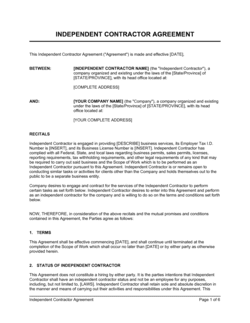
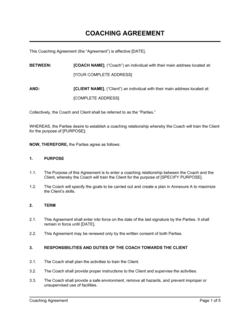
Act Now - Why You Should Never Wait Until Later To Follow Your Dreams Template

Free Word download β€’ Edit online β€’ Save & share with Drive β€’ Export to PDF

3 pagesβ€’25–30 min to fillβ€’Difficulty: Standardβ€’Signature requiredβ€’Legal review recommended
Learn more ↓
FreeAct Now - Why You Should Never Wait Until Later To Follow Your Dreams Template

At a glance

What it is
The Act Now: Why You Should Never Wait Until Later To Follow Your Dreams template is a structured personal commitment and accountability document that formalizes an individual's dedication to pursuing a defined goal, venture, or life ambition. This free Word download lets you articulate your vision, set binding milestones, name accountability partners, and create an enforceable framework for follow-through β€” all in a single document you can edit online and export as PDF.
When you need it
Use it when you are ready to move from intention to committed action on a significant personal or professional goal β€” launching a business, changing careers, relocating, or pursuing a long-deferred ambition. It is especially useful when involving a coach, mentor, or accountability partner who needs a written record of your commitments.
What's inside
A vision statement, defined goals with measurable milestones, a timeline with specific deadlines, accountability partner terms, consequence clauses for inaction, review and amendment provisions, and a binding signature block for all parties involved.

What is the Act Now Commitment Template?

The Act Now: Why You Should Never Wait Until Later To Follow Your Dreams template is a structured personal commitment and accountability document that converts a deferred aspiration into a binding, milestone-driven plan. It identifies the committing individual and their accountability partner, defines the goal in measurable terms, sets a series of time-bound checkpoints, establishes consequence terms for inaction, and closes with a formal signature block. Unlike a journal entry or a verbal promise, a signed commitment document creates a durable external record of what you agreed to do and by when β€” closing the gap between intention and follow-through that causes most meaningful goals to remain permanently "someday" projects.

Why You Need This Document

The cost of not formalizing your commitment is invisible until years have passed. Without a signed document, goals remain negotiable in your own mind β€” easily rescheduled when discomfort arrives and quietly abandoned when life crowds in. Research on commitment devices consistently shows that public, signed, consequence-backed commitments are executed at significantly higher rates than private intentions. This template provides that structure: a named accountability partner with defined responsibilities, milestones with dates that cannot drift without a formal amendment, and consequence terms you pre-agreed when your motivation was high. Whether you are launching a business, changing careers, or pursuing a goal you have deferred for years, this document turns resolve into a trackable obligation β€” and gives you, and everyone who signs alongside you, a clear record of exactly what you committed to and when.

Which variant fits your situation?

If your situation is…Use this template
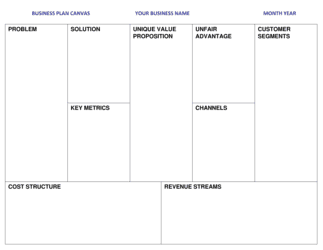
Committing to launch a new business ventureBusiness Plan Template
Formalizing a coaching engagement with milestonesCoaching Services Agreement
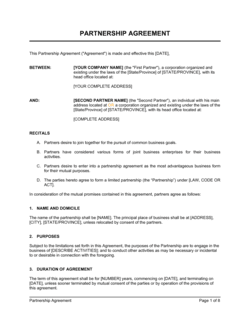
Partnering with a co-founder on a shared goalPartnership Agreement
Documenting a career development plan with an employerEmployee Development Plan
Setting annual personal and professional goals with review datesOne-Page Business Plan
Creating a joint accountability pact between two individualsMutual Accountability Agreement
Committing to a freelance or consulting practice launchIndependent Contractor Agreement

Common mistakes to avoid

❌ Vague goal language with no measurable outcome

Why it matters: Goals written as feelings or states β€” 'be happier', 'pursue my passion' β€” cannot be reviewed at milestones and give the committing party an easy escape from accountability.

Fix: Rewrite the goal as a concrete, observable outcome: 'Launch a live e-commerce store generating at least $1,000 in sales by [DATE].' The outcome must be falsifiable.

❌ No written consent from the accountability partner

Why it matters: An accountability partner named in a document they never signed has no obligation to show up, conduct check-ins, or invoke consequence terms β€” removing the document's core function.

Fix: Require the accountability partner's signature before the agreement is executed. Verbal agreement to participate is insufficient and typically fades within 30 days.

❌ Consequence clauses that are too mild to motivate

Why it matters: A consequence the committing party can dismiss without emotional or financial discomfort provides no real pressure to follow through on difficult days.

Fix: Select a consequence that genuinely stings β€” a meaningful financial amount, public disclosure to a specific audience, or forfeiture of a valued privilege. Test it by asking: 'Would I do almost anything to avoid this?'

❌ No amendment process, leading to verbal renegotiation

Why it matters: When milestones are adjusted verbally and informally, the agreement loses enforceability and both parties lose track of what was actually committed. The original deadlines quietly disappear.

Fix: Include an explicit amendment clause requiring written addenda signed by both parties. Date and number each addendum sequentially to maintain a clean revision trail.

❌ Setting the expiry date too far in the future

Why it matters: An agreement that runs 5 or 10 years without a sunset review becomes background noise β€” parties stop treating it as a live document well before it expires.

Fix: Cap the initial term at 12–24 months. If the goal requires longer, build in a mandatory renewal step that forces both parties to recommit with fresh signatures.

❌ Signing the agreement after the first milestone period has already begun

Why it matters: Backdating or late execution undermines the psychological and legal weight of the document β€” the committing party has already established a pattern of non-urgency before the ink is dry.

Fix: Execute the agreement before the first milestone date. If that window has passed, restart the milestone calendar from the date of actual execution.

The 10 key clauses, explained

Parties and Recitals

In plain language: Identifies the individual making the commitment and any accountability partners or witnesses, and explains the purpose and motivation behind the agreement.

Sample language
This Commitment Agreement is entered into on [DATE] by [FULL NAME] ('Dreamer') of [CITY, STATE/PROVINCE], with [ACCOUNTABILITY PARTNER NAME] ('Partner') serving as witness and accountability holder. The parties enter this agreement to formalize [DREAMER]'s commitment to [GOAL SUMMARY].

Common mistake: Omitting the accountability partner's full legal name and contact details β€” making the document unenforceable and the partner easy to sideline when resolve weakens.

Vision Statement and Goal Definition

In plain language: Sets out the specific dream or goal in clear, measurable terms β€” not a vague aspiration but a defined outcome with success criteria.

Sample language
[DREAMER] commits to achieving the following goal: [SPECIFIC GOAL], defined as [MEASURABLE SUCCESS CRITERIA] by no later than [TARGET DATE].

Common mistake: Writing the goal in vague language like 'pursue my passion' instead of a concrete, verifiable outcome. Vague goals cannot be reviewed, enforced, or celebrated meaningfully.

Milestones and Deadlines

In plain language: Breaks the overall goal into numbered, time-bound checkpoints that create a progress trail and enable early course correction.

Sample language
Milestone 1: [SPECIFIC ACTION] completed by [DATE]. Milestone 2: [SPECIFIC ACTION] completed by [DATE]. Milestone 3: [SPECIFIC ACTION] completed by [DATE].

Common mistake: Setting milestones so far apart β€” quarterly or annual β€” that the agreement loses its motivational function. Monthly checkpoints are more effective for most personal goals.

Accountability Partner Terms

In plain language: Defines the accountability partner's role, frequency of check-ins, and what they are authorized to do if milestones are missed.

Sample language
[PARTNER NAME] agrees to conduct monthly check-ins with [DREAMER] on or before the [DAY] of each month, review evidence of milestone completion, and invoke consequence terms if [DREAMER] fails to meet two consecutive milestones.

Common mistake: Assigning accountability partner responsibilities without their written consent β€” meaning the partner can walk away with no obligation when the arrangement becomes inconvenient.

Consequence Clause

In plain language: States the pre-agreed consequence the committing party accepts if they fail to meet a milestone without a documented force-majeure excuse.

Sample language
In the event [DREAMER] fails to complete [MILESTONE] by [DATE] without a qualifying force-majeure event, [DREAMER] agrees to [CONSEQUENCE β€” e.g., donate $[AMOUNT] to [CHARITY], complete [ALTERNATIVE ACTION], or notify [SPECIFIED PERSONS] of the missed commitment].

Common mistake: Setting consequences that are either too trivial to motivate action or so severe they become psychologically paralyzing. Effective consequences are uncomfortable but survivable.

Review and Amendment Provision

In plain language: Sets the schedule for formal progress reviews and the process for amending milestones or deadlines by mutual written agreement.

Sample language
The parties shall conduct a formal review on [DATE] and every [INTERVAL] thereafter. Any amendment to this Agreement requires written consent signed by both parties and shall be attached as a numbered addendum.

Common mistake: Allowing verbal amendments without documentation. Oral adjustments to deadlines are consistently forgotten or disputed β€” they must be written and signed to count.

Force Majeure and Excuse of Performance

In plain language: Identifies the categories of events that excuse missed milestones without triggering consequences, and sets the notice requirement for invoking this clause.

Sample language
Performance under this Agreement shall be excused for events beyond [DREAMER]'s reasonable control, including serious illness, family emergency, or legal prohibition, provided [DREAMER] notifies [PARTNER] in writing within [5] days of the triggering event.

Common mistake: Defining force majeure so broadly that it swallows the agreement β€” allowing 'stress' or 'change of priorities' to excuse non-performance. Limit the clause to genuine external events.

Confidentiality of Goal and Progress

In plain language: Optionally restricts disclosure of the goal and progress reports to named parties, particularly useful when the dream involves sensitive career or personal plans.

Sample language
The parties agree to keep the terms of this Agreement and all progress reports confidential, except as disclosed to [NAMED EXCEPTIONS]. Disclosure to third parties requires written consent of [DREAMER].

Common mistake: Omitting confidentiality terms when the goal involves a planned career move or business launch that, if disclosed prematurely, could harm existing relationships or employment.

Sunset and Renewal Clause

In plain language: Sets a final expiry date for the agreement and establishes whether and how it can be renewed if the goal requires more time than originally planned.

Sample language
This Agreement shall expire on [EXPIRY DATE] unless renewed by written mutual agreement. Upon expiry, all consequence provisions shall terminate regardless of milestone completion status.

Common mistake: Leaving the agreement open-ended with no expiry β€” which means parties remain technically bound long after the goal is irrelevant or has been superseded by changed circumstances.

Governing Law and Dispute Resolution

In plain language: Specifies which jurisdiction's law governs the agreement and how disagreements between parties will be resolved β€” typically mediation given the personal nature of the commitment.

Sample language
This Agreement is governed by the laws of [STATE / PROVINCE / COUNTRY]. Any dispute between the parties shall first be submitted to good-faith mediation before any legal proceeding is initiated.

Common mistake: Choosing governing law in a jurisdiction where neither party lives or operates β€” making enforcement practically impossible and the clause meaningless.

How to fill it out

  1. 1

    Identify all parties and their roles

    Enter your full legal name as the Dreamer and your accountability partner's full name and contact details. Confirm the partner's willingness to co-sign before proceeding.

    πŸ’‘ Choose an accountability partner who is willing to have uncomfortable conversations β€” a supportive friend who will never invoke consequences is not an effective accountability partner.

  2. 2

    Write a specific, measurable vision statement

    Describe your goal in concrete terms: what the outcome looks like, how you will know it is achieved, and the final target date. Avoid aspirational language without a measurable endpoint.

    πŸ’‘ Test your goal statement by asking: 'Could a stranger read this and tell definitively whether I succeeded?' If not, it is too vague.

  3. 3

    Break the goal into monthly milestones

    Divide the total timeline into monthly or bimonthly checkpoints. Assign a specific action or deliverable to each β€” not a state of mind, but a concrete output.

    πŸ’‘ Front-load the early milestones with visible, confidence-building actions. Momentum in Month 1 and 2 predicts follow-through more reliably than any other factor.

  4. 4

    Define the accountability partner's responsibilities

    Specify check-in frequency, the format of progress evidence the partner will review, and exactly what the partner is authorized to do when milestones are missed.

    πŸ’‘ Monthly video or in-person check-ins are significantly more effective than text-based updates β€” the social accountability of a real conversation is harder to avoid.

  5. 5

    Set consequence terms you will actually feel

    Choose a consequence that is personally meaningful β€” financial donation to a cause you dislike, public announcement, or a forfeited privilege β€” and specify the trigger condition precisely.

    πŸ’‘ Research on commitment devices consistently shows that financial consequences are more motivating than social ones. Even $50–$100 to an anti-charity is highly effective.

  6. 6

    Add force majeure and amendment provisions

    Define which events qualify as genuine force majeure, set a notice window for invoking the clause, and state that all other amendments require written sign-off from both parties.

    πŸ’‘ Keep the force majeure list short and objective β€” illness requiring medical care, family bereavement, or legal prohibition. Subjective events ('I was overwhelmed') should not qualify.

  7. 7

    Set the sunset date and sign before the start date

    Enter a realistic expiry date no more than 24 months from signing. Both parties must sign and date the agreement before the first milestone period begins.

    πŸ’‘ Signing in person with a witness β€” even informally β€” significantly increases the psychological weight of the commitment compared to an unsigned digital draft.

  8. 8

    Store a copy with each party and calendar all review dates

    Distribute a signed copy to every signatory and immediately add all review dates and milestone deadlines to a shared calendar. The document is inert without a follow-up system.

    πŸ’‘ Set a calendar reminder 72 hours before each review date so neither party is caught unprepared β€” preparation is what makes review meetings productive rather than performative.

Frequently asked questions

What is the Act Now commitment template?

The Act Now template is a structured personal commitment and accountability document that formalizes an individual's dedication to pursuing a specific goal or dream. It defines the vision, sets measurable milestones with deadlines, names an accountability partner, establishes consequence terms for inaction, and includes a binding signature block. It bridges the gap between intention and enforceable action.

Is a personal commitment agreement legally binding?

A personal commitment agreement can be generally enforceable when it involves consideration β€” something of value exchanged between parties, such as a coach's services in return for the client's commitment β€” and is signed by all parties with capacity. Without consideration and mutual obligations, it functions primarily as a moral and psychological contract rather than a legally enforceable one. Consider consulting a lawyer if financial consequences or third-party obligations are involved.

Who should be my accountability partner?

Your accountability partner should be someone with no personal interest in softening your commitments β€” a coach, mentor, or trusted peer who will conduct genuine check-ins and invoke consequence terms when warranted. Avoid choosing close friends or family members whose loyalty to you overrides their willingness to hold you to your word. The partner must co-sign the agreement to have any obligation under it.

What makes a good consequence clause?

An effective consequence is specific, immediately actionable, and personally meaningful enough to create genuine motivation. Common formats include a financial donation to a cause the committing party dislikes, a public announcement to a defined audience, or forfeiture of a valued privilege. The trigger condition must also be precise β€” 'missing two consecutive monthly milestones without a documented force-majeure event' is enforceable; 'not trying hard enough' is not.

Can I amend the agreement after signing?

Yes, but only through the written amendment process specified in the agreement β€” typically a signed addendum dated and numbered sequentially. Verbal adjustments to milestones or deadlines are not binding and routinely result in both parties losing track of current commitments. Each amendment should be attached to the original document so the full history is preserved.

What events qualify as force majeure under this agreement?

Force majeure typically covers events entirely outside the committing party's control: serious illness requiring medical care, the death of an immediate family member, natural disaster, or a legal prohibition on the planned activity. Subjective states β€” stress, loss of motivation, or changed priorities β€” do not qualify. The committing party must notify the accountability partner in writing within the notice window specified in the agreement to invoke the clause validly.

How long should the agreement run?

An initial term of 12 to 24 months is appropriate for most personal goals. Longer terms tend to lose motivational force as parties stop treating the document as a live commitment. Build a mandatory renewal step into any goal requiring more than 24 months β€” requiring both parties to recommit with fresh signatures keeps the agreement active and intentional rather than a forgotten file.

Do I need a lawyer to create a commitment agreement?

For most personal goals and coaching arrangements, a well-completed template is sufficient. Engage a lawyer when the agreement involves significant financial consequences, business assets, shared ownership, or obligations that could be litigated if either party defaults. A one-hour legal review typically costs $150–$300 and is worthwhile when real money or formal business interests are at stake.

What happens if the accountability partner stops participating?

If the accountability partner withdraws without invoking any agreed exit provision, the committing party should document the withdrawal in writing and either name a replacement partner through a written addendum or treat the agreement as suspended until a new partner is identified. An agreement without a functioning accountability partner loses most of its practical enforcement mechanism, though the committing party's personal obligations remain.

How this compares to alternatives

vs Coaching Services Agreement

A coaching services agreement defines the commercial relationship between a coach and client β€” fees, session frequency, scope of service, and liability. This commitment template focuses on the client's personal obligations to their goal rather than the coach's service delivery. Both documents are typically used together at the start of a coaching engagement.

vs Partnership Agreement

A partnership agreement governs a shared business venture between two or more parties, covering profit sharing, decision-making, and dissolution. A personal commitment agreement governs an individual's obligation to their own goals, with an accountability partner rather than a co-owner. The two documents are appropriate for different stages of a business dream β€” commitment first, then partnership once the venture is live.

vs Employee Development Plan

An employee development plan is a workplace document co-created by an employee and their manager, focused on professional skills and role performance within an existing employment relationship. A personal commitment agreement is self-directed, covers goals beyond the workplace, and is executed between the individual and a chosen accountability partner rather than an employer.

vs Letter of Intent

A letter of intent signals a party's intention to enter a future agreement or transaction β€” it is typically non-binding and business-facing. A personal commitment agreement is a binding personal document focused on individual goals and actions. A letter of intent describes what you plan to do with others; a commitment agreement describes what you commit to do for yourself.

Industry-specific considerations

Professional Coaching and Mentoring

Coaches use this document to formalize client commitments at program start, creating a signed record of goals and milestones that structures every subsequent session.

Education and Career Development

Career advisors and academic coaches use commitment agreements to hold students and graduates accountable to job-search milestones, application deadlines, and skill-development targets.

Entrepreneurship and Startup

Aspiring founders use the document to commit to a launch timeline, with consequence clauses and milestone reviews that replicate the accountability structure of an investor relationship before funding exists.

Human Resources and Talent Development

HR teams use structured commitment documents in performance improvement plans and leadership development programs where individual goal-setting needs formal accountability and review dates.

Jurisdictional notes

United States

Personal commitment agreements are generally enforceable in the US when they include mutual consideration and are signed by parties with legal capacity. Consequence clauses involving financial transfers should be reviewed for compliance with state usury, penalty, and liquidated-damages rules β€” California and New York courts scrutinize punitive-seeming clauses closely. Without consideration, the document functions as a moral commitment only.

Canada

Canadian contract law requires consideration for an agreement to be binding. Personal commitment documents that involve a coach's services as consideration are generally enforceable under common-law provinces; Quebec's civil law framework applies different principles and may require additional formalities. Consequence clauses that function as penalties rather than pre-estimated damages may be unenforceable in Ontario and BC courts.

United Kingdom

In England and Wales, a personal commitment agreement requires consideration and intention to create legal relations to be enforceable β€” courts are skeptical of purely domestic or social agreements. Adding a coach or mentor as a party with defined obligations strengthens enforceability significantly. Consequence clauses must represent a genuine pre-estimate of loss rather than a penalty to survive scrutiny under established UK contract law principles.

European Union

Enforceability of personal commitment agreements varies significantly across EU member states β€” German and Dutch courts apply strict consideration and formality requirements, while French law recognizes unilateral promises in some contexts. GDPR applies to any personal data β€” including goal details and progress reports β€” shared between parties electronically. Consider data processing terms if a digital platform or third-party coach is involved.

Template vs lawyer β€” what fits your deal?

PathBest forCostTime
Use the templateIndividuals formalizing personal goals with a coach, mentor, or peer accountability partnerFree30–60 minutes
Template + legal reviewCommitments involving financial consequences over $500, shared business assets, or a formal coaching contract$150–$300 for a one-hour legal review1–3 days
Custom draftedComplex multi-party accountability arrangements, significant financial stakes, or integration with a formal business or investment structure$500–$1,500+1–2 weeks

Glossary

Vision Statement
A concise declaration of the long-term goal or dream the committing party intends to pursue, written in present-tense affirmative language.
Milestone
A specific, measurable checkpoint within the overall goal timeline that confirms progress is on track.
Accountability Partner
A named individual who co-signs the agreement, monitors progress, and is authorized to enforce consequence clauses when deadlines are missed.
Consequence Clause
A pre-agreed penalty or action β€” financial, behavioral, or reputational β€” that the committing party accepts if they fail to meet a defined milestone.
Review Period
A scheduled interval β€” typically monthly or quarterly β€” at which both parties formally assess progress against milestones and amend the plan if warranted.
Force Majeure
A clause excusing non-performance when circumstances entirely outside a party's control β€” illness, natural disaster, or legal prohibition β€” prevent fulfillment.
Amendment Provision
A clause specifying how and when the terms of the commitment document may be modified, requiring written consent of all signatories.
Binding Commitment
A promise supported by consideration and executed by signature, creating a moral and potentially legal obligation to perform the stated actions.
Consideration
Something of value exchanged between parties that makes a signed agreement more than a unilateral promise β€” such as a coach's services in exchange for the client's commitment.
Sunset Clause
A provision that automatically terminates the agreement on a defined future date, releasing all parties from further obligation if the goal has not been achieved or renewed.
Good Faith
An obligation to act honestly and with genuine effort toward fulfilling commitments, even when the agreement does not specify every detail of how to proceed.

Part of your Business Operating System

This document is one of 3,000+ business & legal templates included in Business in a Box.

  • Fill-in-the-blanks β€” ready in minutes
  • 100% customizable Word document
  • Compatible with all office suites
  • Export to PDF and share electronically

Create your document in 3 simple steps.

From template to signed document β€” all inside one Business Operating System.
1
Download or open template

Access over 3,000+ business and legal templates for any business task, project or initiative.

2
Edit and fill in the blanks with AI

Customize your ready-made business document template and save it in the cloud.

3
Save, Share, Send, Sign

Share your files and folders with your team. Create a space of seamless collaboration.

Save time, save money, and create top-quality documents.

β˜…β˜…β˜…β˜…β˜…

"Fantastic value! I'm not sure how I'd do without it. It's worth its weight in gold and paid back for itself many times."

Managing Director Β· Mall Farm
Robert Whalley
Managing Director, Mall Farm Proprietary Limited
β˜…β˜…β˜…β˜…β˜…

"I have been using Business in a Box for years. It has been the most useful source of templates I have encountered. I recommend it to anyone."

Business Owner Β· 4+ years
Dr Michael John Freestone
Business Owner
β˜…β˜…β˜…β˜…β˜…

"It has been a life saver so many times I have lost count. Business in a Box has saved me so much time and as you know, time is money."

Owner Β· Upstate Web
David G. Moore Jr.
Owner, Upstate Web

Run your business with a system β€” not scattered tools

Stop downloading documents. Start operating with clarity. Business in a Box gives you the Business Operating System used by over 250,000 companies worldwide to structure, run, and grow their business.

Free Forever PlanΒ Β·Β No credit card required