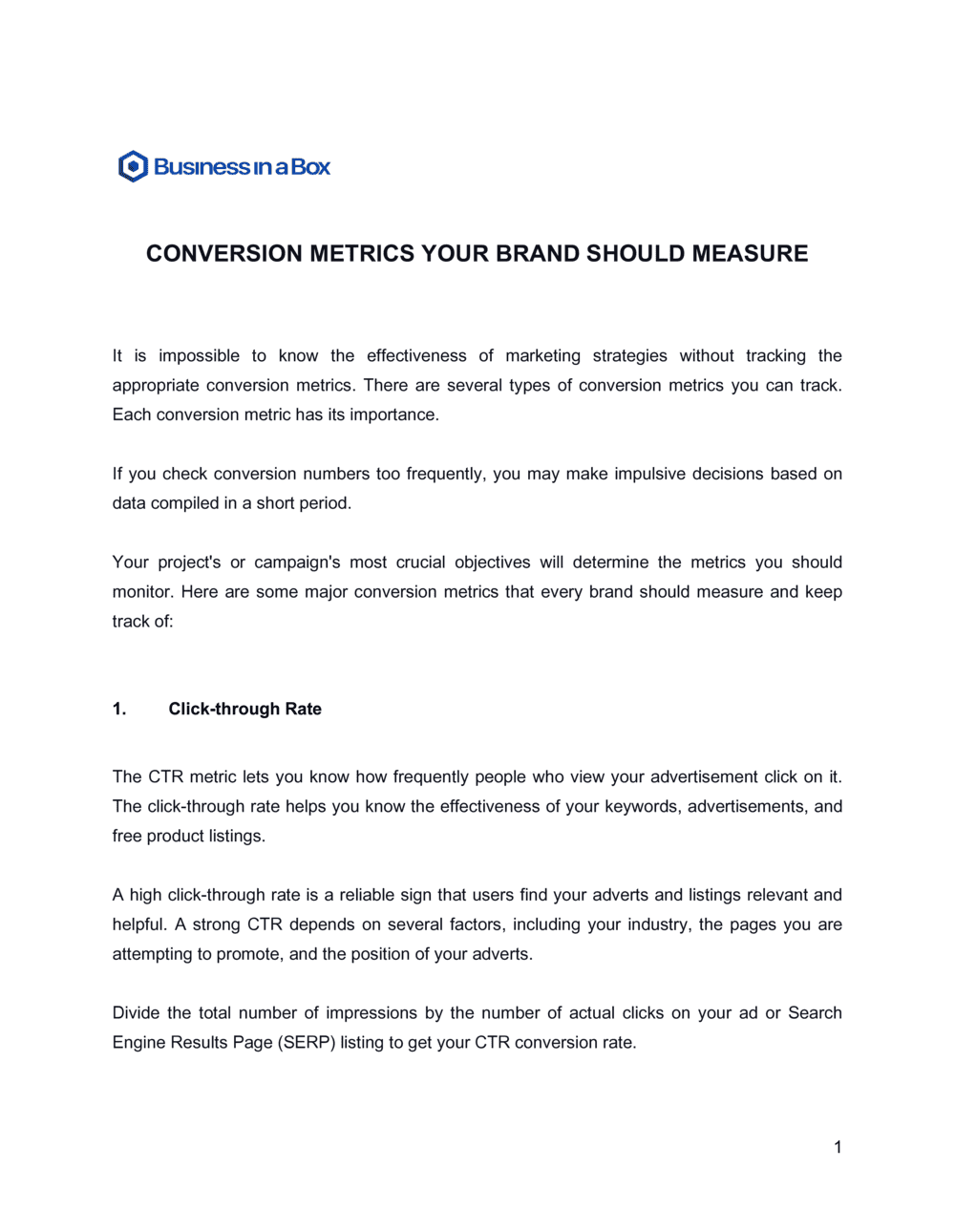
Conversion Metrics Your Brand Should Measure Template

Free Word download • Edit online • Save & share with Drive • Export to PDF

3 pages25–30 min to fillDifficulty: StandardSignature requiredLegal review recommended
Learn more ↓
FreeConversion Metrics Your Brand Should Measure Template

At a glance

What it is
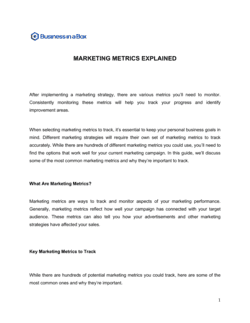
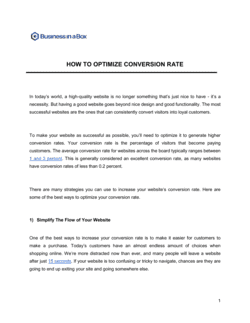
The Conversion Metrics Your Brand Should Measure template is a structured Word document that formalizes the selection, definition, and reporting framework for the key conversion indicators a brand tracks across its marketing funnel. This free Word download gives marketing teams, agencies, and brand managers a signed, agreed-upon reference document that establishes which metrics are authoritative, how they are calculated, and who is accountable for reporting them — eliminating disputes over definitions and attribution across stakeholders.
When you need it
Use it when onboarding a new marketing agency, aligning internal teams on a shared measurement framework, or formalizing performance benchmarks within a brand partnership or service agreement. It is also essential when a client or executive team requires a documented, signed record of which conversion KPIs govern campaign evaluation and budget decisions.
What's inside
Defined metric taxonomy covering top-of-funnel to bottom-of-funnel conversions, calculation methodologies, attribution model selection, reporting cadence and ownership, benchmark targets, data source identification, and escalation procedures for underperformance. The document also includes signature blocks for all accountable parties and a governing law clause.

What is a Conversion Metrics Framework Document?

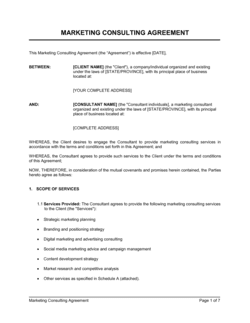
A Conversion Metrics Framework Document is a formally signed agreement that establishes the authoritative set of conversion key performance indicators a brand and its marketing partners agree to measure, how each metric is defined and calculated, which platform serves as the single source of truth, and what obligations arise when performance falls below agreed benchmarks. Unlike an informal dashboard or a slide deck of KPIs, this document creates enforceable obligations on both sides — freezing metric definitions, attribution models, and reporting cadences in writing before any campaign spend is committed. It covers every layer of the conversion funnel, from top-of-funnel click-through rates through mid-funnel micro-conversions to bottom-of-funnel customer acquisition cost and return on ad spend.

Why You Need This Document

Without a signed conversion metrics framework, every performance review becomes a negotiation over definitions rather than a review of results. Agencies and brands routinely disagree over which attribution model applies, which platform's numbers are correct, and whether a target was actually missed — because none of those parameters were agreed in writing before the campaign started. The financial consequences are material: retainers are renewed or cancelled, bonuses are paid or withheld, and budgets are reallocated based on conversion data that neither party defined in advance. A properly executed framework eliminates that ambiguity entirely, giving both sides a neutral, contractually binding reference point for every performance conversation. This template gives brand managers, agency directors, and growth marketers a complete, ready-to-sign document that takes 1–2 hours to complete and provides the measurement clarity that protects both the brand's investment and the agency's accountability.

Which variant fits your situation?

If your situation is…Use this template
Tracking conversion metrics for a paid media agency retainerMarketing Agency Retainer Agreement
Measuring e-commerce funnel performance end-to-endE-commerce Marketing Metrics Report
Reporting SaaS product activation and trial conversion KPIsSaaS Growth Metrics Dashboard Template
Aligning brand and performance metrics for an affiliate programAffiliate Marketing Agreement
Documenting conversion benchmarks for an influencer campaignInfluencer Marketing Agreement
Formalizing KPIs within a broader digital marketing services contractDigital Marketing Services Agreement
Setting performance benchmarks for a new product launchProduct Launch Plan

Common mistakes to avoid

❌ Leaving attribution model undefined

Why it matters: Google Ads, Meta, and GA4 each report conversions differently under their default attribution models. Without a named model, the same campaign can show a 2× difference in reported CVR depending on which platform the reviewer opens first.

Fix: Name the attribution model, the platform it is configured in, and the account ID in the agreement. Require written mutual consent before any model change takes effect.

❌ Setting benchmarks without a historical baseline

Why it matters: Aspirational targets set without data produce either chronic underperformance or targets so easy they create false confidence. Both outcomes damage the client-agency relationship.

Fix: Require a minimum of 90 days of historical data to set each benchmark. Where historical data is unavailable, label the target provisional and schedule a 60-day recalibration.

❌ No defined escalation procedure for underperformance

Why it matters: Without an escalation clause, underperformance continues indefinitely — there is no contractual trigger for a remediation conversation, and termination for cause becomes legally ambiguous.

Fix: Include a precise underperformance threshold (e.g., 20% below benchmark for two consecutive periods), a written notice requirement, a cure period, and an explicit termination right if the cure fails.

❌ Using informal metric names without formulas

Why it matters: 'Engagement rate' means different things on Instagram, LinkedIn, and in email marketing. Metric names without formulas are a guaranteed source of disputes at performance review time.

Fix: Write the complete formula — numerator, denominator, filters, and time window — for every metric in the taxonomy section. If the platform calculates it automatically, cite the platform's own documentation.

❌ Failing to specify a single authoritative data source

Why it matters: When GA4 shows 500 conversions and the CRM shows 320, both parties claim their number is correct. The meeting becomes a platform debate rather than a performance discussion.

Fix: Designate one platform as the single source of truth for each metric category and state explicitly that it takes precedence over all other platforms in the event of a discrepancy.

❌ Signing after the campaign has already launched

Why it matters: Metrics, benchmarks, and attribution settings may have already been changed or optimized before the framework is signed — making it impossible to apply consistently from the start date.

Fix: Execute the agreement before any campaign activity begins. If circumstances require a retroactive signature, add a clause specifying the earliest date the framework applies.

The 10 key clauses, explained

Parties and purpose

In plain language: Identifies the brand owner and any agency, partner, or internal team bound by the framework, and states the document's purpose as a shared measurement standard.

Sample language
This Conversion Metrics Framework ('Agreement') is entered into as of [DATE] between [BRAND LEGAL NAME] ('Brand') and [AGENCY / PARTNER NAME] ('Partner'). The purpose of this Agreement is to establish the authoritative conversion metrics, calculation methodologies, and reporting obligations governing [CAMPAIGN / RETAINER / PROGRAM NAME].

Common mistake: Using informal team names or brand aliases instead of legal entity names. If a dispute arises over missed KPIs, courts need to identify the contracting parties precisely.

Metric taxonomy and definitions

In plain language: Lists every conversion metric covered by the agreement, with a plain-language definition and the exact formula used to calculate it.

Sample language
The following metrics are incorporated by reference: (a) Conversion Rate: [CONVERSIONS] / [SESSIONS] × 100; (b) Click-Through Rate: [CLICKS] / [IMPRESSIONS] × 100; (c) Customer Acquisition Cost: [TOTAL SPEND] / [NEW CUSTOMERS ACQUIRED]. All formulas apply to the reporting period defined in Section [X].

Common mistake: Defining metrics without specifying the denominator. 'Conversion rate' means different things if the denominator is sessions, unique visitors, or ad impressions — ambiguity causes disputes at review time.

Attribution model selection

In plain language: Specifies which attribution model — last click, first click, linear, data-driven, or custom — applies to each metric, and which platform is the source of truth.

Sample language
All conversion events shall be attributed using a [LAST CLICK / LINEAR / DATA-DRIVEN] attribution model as configured in [GOOGLE ANALYTICS 4 / PLATFORM NAME] under account ID [ACCOUNT ID]. Any change to the attribution model requires 14 days' written notice and mutual written agreement.

Common mistake: Leaving the attribution model unspecified. Different platforms report wildly different conversion numbers for the same campaign depending on model — without agreement, every performance review becomes a dispute.

Benchmark targets and performance thresholds

In plain language: Sets the agreed numeric targets for each metric and defines the thresholds that trigger a performance review or remediation process.

Sample language
The Parties agree to the following benchmark targets for [PERIOD]: CVR ≥ [X]%; CTR ≥ [X]%; CAC ≤ $[X]; ROAS ≥ [X]:1. Performance falling below [Y]% of any benchmark for two consecutive reporting periods constitutes an Underperformance Event as defined in Section [X].

Common mistake: Setting aspirational targets without defining what happens when they are missed. Without a consequence or escalation clause, benchmarks are unenforceable suggestions.

Data sources and platform access

In plain language: Names the specific platforms and accounts designated as the authoritative data source for each metric, and records the access rights granted to each party.

Sample language
The authoritative data source for all conversion metrics is [PLATFORM NAME], Account ID [ACCOUNT ID]. Brand shall maintain [AGENCY / PARTNER] access at the [VIEWER / ANALYST / ADMIN] permission level throughout the Term. Brand may revoke access upon [30] days' written notice.

Common mistake: Failing to name a single authoritative data source per metric. When two platforms show different numbers, parties argue about which is correct — name one source in writing before the campaign starts.

Reporting cadence and deliverables

In plain language: Defines how often conversion reports are delivered, the required format, who prepares them, and the delivery deadline within each reporting period.

Sample language
Partner shall deliver a Conversion Metrics Report to Brand by [DAY] of each [WEEK / MONTH] covering the prior [PERIOD]. Reports shall include all metrics defined in Section [X], variance to benchmark, and a written commentary of no fewer than [150] words explaining material variances.

Common mistake: No defined delivery deadline for reports. An agency that delivers a monthly report on day 28 of a 30-day period gives the client no time to act before the next cycle begins.

Underperformance escalation procedure

In plain language: Describes the step-by-step process triggered when conversion performance falls below a defined threshold — notice, response period, remediation plan, and termination right.

Sample language
Upon an Underperformance Event, Brand shall issue written notice within [5] business days. Partner shall submit a written remediation plan within [10] business days of notice. If performance does not recover to benchmark within [60] days of plan submission, Brand may terminate this Agreement with [30] days' written notice without penalty.

Common mistake: No defined cure period. Without a cure window, a single bad month could trigger immediate termination claims — or, conversely, sustained underperformance continues indefinitely because the contract provides no clear exit.

Confidentiality of metric data

In plain language: Prohibits either party from disclosing the brand's conversion data, benchmark results, or proprietary attribution methodology to third parties without consent.

Sample language
All conversion data, benchmark targets, and attribution configurations shared under this Agreement constitute Confidential Information. Neither Party shall disclose such information to any third party without prior written consent, except as required by applicable law or regulation.

Common mistake: No confidentiality clause on metric data. Agencies that work with competitor brands can inadvertently — or intentionally — use one client's benchmark data to inform another client's strategy.

Amendments and metric governance

In plain language: Establishes the process for adding, removing, or redefining metrics during the term, including the required notice period and approval method.

Sample language
Any change to the metric definitions, benchmark targets, attribution model, or reporting cadence requires a written amendment signed by authorized representatives of both Parties. Proposed changes must be submitted in writing at least [14] days before the intended effective date.

Common mistake: Allowing verbal or email-only metric changes. Mid-campaign shifts to definitions or targets — even well-intentioned ones — create retroactive disputes about whether earlier performance was on-target.

Governing law and dispute resolution

In plain language: Specifies which jurisdiction's law governs the agreement and the mechanism — arbitration, mediation, or litigation — for resolving disputes.

Sample language
This Agreement shall be governed by the laws of [STATE / PROVINCE / COUNTRY], without regard to its conflict-of-law provisions. Any dispute arising under this Agreement shall be resolved by [binding arbitration / mediation / litigation] in [CITY, JURISDICTION].

Common mistake: Choosing a governing law with no connection to either party's operations. Courts in several jurisdictions have set aside governing-law clauses that appear designed solely to disadvantage one party.

How to fill it out

  1. 1

    Enter the parties' legal names and effective date

    Insert the brand's full registered legal name and the agency's or partner's registered name. Add the agreement's effective date — the date both parties intend to be bound, which should precede any campaign activity.

    💡 Cross-check both entity names against company registry filings before execution — a mismatch between the contract name and the legal entity can complicate enforcement.

  2. 2

    Define every metric with its exact calculation formula

    List each metric in the taxonomy section and write out the precise formula — numerator, denominator, and any filters applied. Avoid shorthand like 'standard CVR'; specify exactly which events and sessions are counted.

    💡 Paste the formula directly from your analytics platform's documentation so both parties are working from the same definition the tool uses.

  3. 3

    Select and document the attribution model

    Choose the attribution model that best fits your funnel length and channel mix. Record the model name, the platform where it is configured, and the account ID. Note the date the configuration was last verified.

    💡 For funnels longer than 30 days, last-click attribution systematically undervalues upper-funnel activity — data-driven or linear models are generally more accurate.

  4. 4

    Set benchmark targets for each metric

    Enter the agreed numeric threshold for every metric. Derive benchmarks from at least 90 days of historical data where available, and flag any metric where benchmarks are set without a historical baseline.

    💡 Add a 'confidence level' note next to benchmarks based on fewer than 1,000 conversion events — small samples produce unreliable baselines and should be treated as provisional.

  5. 5

    Name the authoritative data source for each metric

    Identify the specific platform, account, and view or property that will serve as the single source of truth for each metric. Record access permissions and the process for granting or revoking access.

    💡 If you use multiple analytics platforms, designate one as primary and note that it takes precedence over all others in any discrepancy.

  6. 6

    Define the reporting cadence and deliverable format

    Specify the reporting frequency, the delivery deadline, the required format (PDF dashboard, spreadsheet, or presentation deck), and the distribution list. Include a minimum commentary requirement to prevent data-dump reports.

    💡 Weekly cadences suit paid media campaigns; monthly cadences suit brand awareness programs. Mismatched cadence and campaign type leads to either data overload or blind spots.

  7. 7

    Complete the underperformance escalation procedure

    Fill in the underperformance threshold, the notice timeline, the remediation plan deadline, the cure period, and the termination right. Ensure the cure period is realistic given the channel's typical optimization lag.

    💡 Paid search campaigns typically show optimization results within 2–4 weeks; SEO and content programs may need 90 days — calibrate the cure period to the channel.

  8. 8

    Execute with authorized signatures before the campaign starts

    Both parties must sign before any campaign activity begins. Collect signatures from individuals with actual authority to bind each entity — not just the day-to-day campaign contact.

    💡 Use an e-signature tool that timestamps execution and stores the completed document automatically — an unsigned or undated framework is unenforceable.

Frequently asked questions

What is a conversion metrics framework document?

A conversion metrics framework document is a signed agreement that formalizes which marketing KPIs govern a campaign or brand relationship, how each metric is defined and calculated, which platform serves as the authoritative data source, and what happens when performance falls below agreed benchmarks. It transforms informal metric discussions into enforceable, documented standards that both the brand and its partners are bound to.

Why do brands need a signed conversion metrics document?

Without a signed framework, metric definitions and attribution models are set informally and can shift mid-campaign — often in ways that conveniently favor the party reporting performance. A signed document freezes the rules before any spend is committed, giving both sides a neutral reference point for every performance conversation and a clear contractual basis for escalation if targets are missed.

What conversion metrics should most brands track?

At minimum, brands should track click-through rate, conversion rate, customer acquisition cost, cost per acquisition, and return on ad spend across their primary channels. E-commerce brands add cart abandonment rate and average order value. SaaS brands add trial-to-paid conversion rate and activation rate. The right set depends on the funnel structure and business model, which is exactly why the taxonomy section of this document should be customized before signing.

What is the difference between a micro-conversion and a macro-conversion?

A macro-conversion is the primary goal — a purchase, a signed contract, or a completed lead form. A micro-conversion is an intermediate step that signals intent — a newsletter subscription, a video completion, or a product page visit. Tracking micro-conversions lets brands identify where prospects stall before reaching the macro goal, enabling targeted optimization of specific funnel stages rather than broad spending changes.

What attribution model should a brand use?

The right attribution model depends on the average customer journey length and the number of touchpoints before conversion. Last-click attribution is simple but overvalues bottom-of-funnel channels like branded search. Data-driven attribution (available in GA4 and Google Ads) distributes credit based on statistical analysis of actual conversion paths and is generally more accurate for funnels with four or more touchpoints. For brand awareness programs or funnels longer than 30 days, linear or time-decay models often reflect true influence more accurately than last-click.

How often should conversion metrics be reviewed?

Paid media campaigns warrant weekly reporting given the speed at which budget is deployed and results appear. Brand awareness programs, SEO campaigns, and content marketing initiatives typically follow monthly reporting cadences because their effects accumulate over longer periods. Executive and board-level reviews are typically quarterly. The reporting cadence should be agreed in writing before the campaign starts and tied to the channel type — not defaulted to 'monthly' for everything.

Is this document legally binding?

A properly executed conversion metrics framework — signed by authorized representatives of both parties, with clear definitions, measurable targets, and an escalation procedure — is generally enforceable as a binding contract in most jurisdictions. As with any business agreement, enforceability depends on the parties having legal capacity to contract, offer and acceptance, and consideration. Consider having a lawyer review the document if it governs a high-value retainer or brand partnership.

What happens when the two parties disagree on reported conversion numbers?

When both parties have agreed in writing on a single authoritative data source, discrepancies are resolved by reference to that platform's data — the debate ends. Without a designated source, disputes typically require pulling raw data exports from multiple platforms, reconciling attribution differences, and often arbitration. The data source clause in this template exists specifically to prevent that outcome.

Can conversion benchmarks be changed after the agreement is signed?

Yes — but only through the written amendment process defined in the amendments clause. Both parties must sign any change to metric definitions, benchmark targets, attribution models, or reporting cadence. Verbal or email-only changes create retroactive ambiguity about whether prior performance was on-target, which is one of the most common sources of disputes in agency-client relationships.

How this compares to alternatives

vs Marketing agency retainer agreement

A marketing agency retainer agreement defines the scope of services, fees, and general performance obligations. A conversion metrics framework is a more specific document that formalizes exactly which KPIs govern success, how they are calculated, and what happens when targets are missed. The two documents work together — the retainer creates the relationship; the metrics framework makes performance evaluation objective and enforceable.

vs Digital marketing services agreement

A digital marketing services agreement covers deliverables, timelines, IP ownership, and payment terms for a defined project or ongoing engagement. A conversion metrics framework focuses exclusively on measurement — defining the KPIs, attribution models, and reporting obligations that determine whether the services agreement's performance standards are met. Use both together for any engagement where performance is a basis for payment or renewal.

vs Influencer marketing agreement

An influencer marketing agreement governs the relationship, content deliverables, and compensation between a brand and an individual creator. A conversion metrics framework governs how the brand measures whether those deliverables generated meaningful funnel activity — click-through rate, promo code redemption rate, or traffic-to-purchase conversion. Brands running influencer programs at scale benefit from both documents operating in parallel.

vs Affiliate marketing agreement

An affiliate agreement sets commission structures and tracking requirements for performance-based partnerships. A conversion metrics framework is a broader document that covers all brand conversion KPIs across all channels — not just affiliate-driven events. Where an affiliate agreement defines payment triggers, a metrics framework defines the full measurement ecosystem within which affiliate performance is evaluated alongside other channels.

Industry-specific considerations

E-commerce and retail

Cart-to-purchase CVR, post-click revenue, and ROAS by channel are the primary metrics; attribution disputes between paid social and organic search are especially common and require explicit source-of-truth designation.

SaaS and technology

Trial-to-paid conversion rate, activation rate by feature, and MQL-to-SQL conversion are the critical funnel metrics; attribution across long B2B sales cycles requires multi-touch models rather than last-click.

Financial services

Lead-to-application and application-to-approval conversion rates are tightly regulated; metric frameworks must align with compliance reporting requirements and may not expose customer-level data to third-party agencies.

Healthcare and wellness

Patient acquisition cost, appointment booking conversion rate, and telehealth trial-to-subscription CVR are the key metrics; HIPAA and equivalent regulations restrict the data that can be shared with marketing partners in a metrics framework.

Jurisdictional notes

United States

No federal law specifically governs marketing metric agreements, but general contract law, FTC advertising standards, and state consumer protection statutes apply. California's CCPA and similar state privacy laws restrict how customer-level conversion data can be shared with agencies or third-party measurement partners. Arbitration clauses are generally enforceable in commercial contracts between businesses, though California courts apply heightened scrutiny to class arbitration waivers.

Canada

PIPEDA and provincial privacy laws — particularly Quebec's Law 25 — impose strict obligations on sharing customer-level data with third-party analytics or agency partners. Any metrics framework that involves sharing identifiable conversion event data with an agency must include a data processing addendum compliant with the applicable provincial standard. Quebec-based parties should ensure the agreement is available in French as required for provincially regulated commercial contracts.

United Kingdom

Post-Brexit, the UK GDPR and Data Protection Act 2018 govern the sharing of any conversion data that may include personal identifiers. Agencies receiving UK customer conversion data from a brand must be designated as data processors under a formal Data Processing Agreement, which should be referenced in or appended to the metrics framework. Unfair contract terms protections under the Consumer Rights Act 2015 do not typically apply to B2B commercial agreements, but proportionality of penalty clauses is still assessed by courts.

European Union

GDPR applies to any conversion data that can be linked — directly or indirectly — to an identified or identifiable natural person. Brands sharing campaign conversion data with agencies across EU member states must establish a lawful basis for processing and execute a Data Processing Agreement compliant with GDPR Article 28. Cookie-based conversion tracking is additionally subject to ePrivacy Directive requirements, which vary in implementation across member states. Penalty clauses that are disproportionate to the harm caused may be reduced by courts in several member states.

Template vs lawyer — what fits your deal?

PathBest forCostTime
Use the templateBrand managers and agencies formalizing metric standards for campaigns under $100K in managed spendFree1–2 hours
Template + legal reviewAgency retainers above $100K, multi-party brand partnerships, or frameworks governing performance-based compensation$300–$7002–4 days
Custom draftedEnterprise brand programs with complex multi-jurisdiction data privacy obligations, regulated industries, or material financial penalties tied to metric performance$1,500–$4,000+1–3 weeks

Glossary

Conversion Rate (CVR)
The percentage of users who complete a defined desired action — such as a purchase, signup, or form submission — out of the total who had the opportunity to do so.
Click-Through Rate (CTR)
The ratio of users who click on a specific link or ad to the total number who were exposed to it, expressed as a percentage.
Customer Acquisition Cost (CAC)
Total sales and marketing spend divided by the number of new customers acquired in the same period — a primary measure of channel efficiency.
Attribution Model
The rule or algorithm that determines how credit for a conversion is assigned across the multiple touchpoints a customer interacted with before converting.
Micro-Conversion
A smaller, intermediate action — such as newsletter signup, video view, or wishlist addition — that signals progression toward a primary conversion goal.
Macro-Conversion
The primary desired outcome of a marketing campaign, such as a completed purchase, submitted lead form, or signed contract.
Cost Per Acquisition (CPA)
The total spend required to generate one conversion event, calculated as total ad spend divided by the number of conversions in the same period.
Funnel Drop-Off Rate
The percentage of users who exit the conversion funnel at a specific stage without completing the next step — used to identify friction points.
Return on Ad Spend (ROAS)
Revenue generated directly attributed to advertising spend, divided by that spend — expressed as a ratio (e.g., 4:1 means $4 revenue per $1 spent).
Reporting Cadence
The agreed frequency at which conversion metrics are compiled, reviewed, and delivered to stakeholders — typically weekly, monthly, or quarterly.
Benchmark Target
A pre-agreed numeric threshold for a given metric — such as a 3.5% CVR or a $45 CAC — against which actual performance is evaluated.
Data Source
The specific platform, tool, or system — such as Google Analytics 4, HubSpot, or Shopify — designated as the authoritative source for a given metric's measurement.

Part of your Business Operating System

This document is one of 3,000+ business & legal templates included in Business in a Box.

  • Fill-in-the-blanks — ready in minutes
  • 100% customizable Word document
  • Compatible with all office suites
  • Export to PDF and share electronically

Create your document in 3 simple steps.

From template to signed document — all inside one Business Operating System.
1
Download or open template

Access over 3,000+ business and legal templates for any business task, project or initiative.

2
Edit and fill in the blanks with AI

Customize your ready-made business document template and save it in the cloud.

3
Save, Share, Send, Sign

Share your files and folders with your team. Create a space of seamless collaboration.

Save time, save money, and create top-quality documents.

★★★★★

"Fantastic value! I'm not sure how I'd do without it. It's worth its weight in gold and paid back for itself many times."

Managing Director · Mall Farm
Robert Whalley
Managing Director, Mall Farm Proprietary Limited
★★★★★

"I have been using Business in a Box for years. It has been the most useful source of templates I have encountered. I recommend it to anyone."

Business Owner · 4+ years
Dr Michael John Freestone
Business Owner
★★★★★

"It has been a life saver so many times I have lost count. Business in a Box has saved me so much time and as you know, time is money."

Owner · Upstate Web
David G. Moore Jr.
Owner, Upstate Web

Run your business with a system — not scattered tools

Stop downloading documents. Start operating with clarity. Business in a Box gives you the Business Operating System used by over 250,000 companies worldwide to structure, run, and grow their business.

Start free · No credit card required