Your Input is Needed on a New Product Now Being Developed Template

Free Word download • Edit online • Save & share with Drive • Export to PDF

1 page20–30 min to fillDifficulty: StandardSignature requiredLegal review recommended
Learn more ↓
FreeYour Input is Needed on a New Product Now Being Developed Template

At a glance

What it is
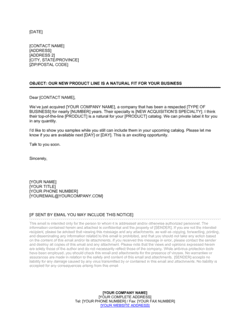
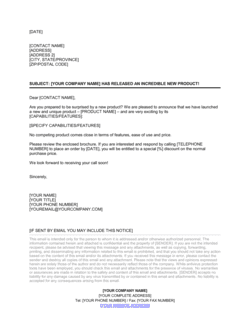
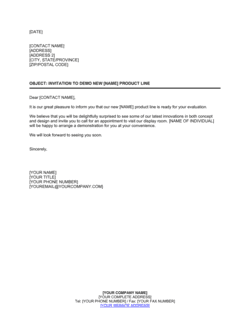
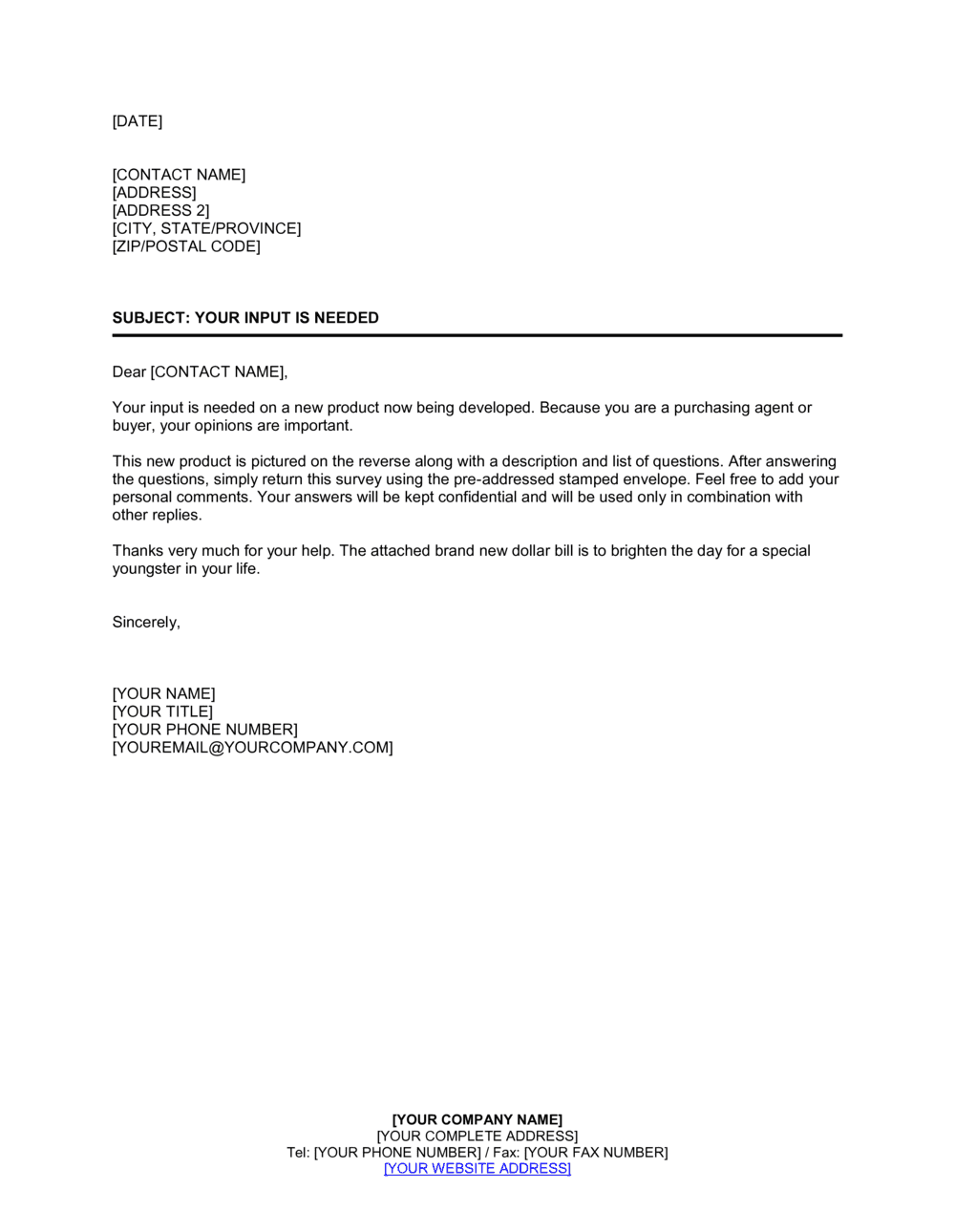
A "Your Input Is Needed on a New Product Now Being Developed" letter is a formal, binding document sent by a company to selected customers, partners, or expert stakeholders to solicit structured feedback on a product in development. It combines a targeted feedback request with confidentiality obligations, ensuring that product details shared during the process remain protected. This free Word download is editable online and exportable as PDF, ready to dispatch as part of a formal product-development or market-research process.
When you need it
Use it when you are ready to expose a new product concept, prototype, or feature set to external parties for input — before public launch — and you need their feedback commitments and confidentiality obligations in writing. It is particularly important when the product concept is commercially sensitive or when you intend to rely on the collected input for go-to-market decisions.
What's inside
The document covers the purpose of the outreach, a description of the product or concept being evaluated, a structured set of feedback questions or criteria, confidentiality obligations binding the recipient, a timeline and response instructions, an acknowledgment of voluntary participation, and a signature block confirming the recipient's agreement to the terms.

What is a "Your Input Is Needed on a New Product Now Being Developed" Letter?

A "Your Input Is Needed on a New Product Now Being Developed" letter is a formal, binding document used by companies to invite selected customers, partners, or subject-matter experts to provide structured feedback on a product concept that has not yet been publicly released. It does two things simultaneously: it frames a specific set of feedback questions to guide the recipient's response, and it binds the recipient to confidentiality obligations that protect the product details shared during the process. Because the letter includes a signature block and explicit IP assignment language, it functions as a lightweight legal agreement — not merely a courtesy request — ensuring that any ideas submitted remain the company's property and that sensitive development information does not reach competitors.

Why You Need This Document

Collecting external feedback on a product in development without a signed agreement in place is a significant legal and commercial risk. A recipient who has not committed to confidentiality in writing has no enforceable obligation to keep your concept private — and any distinctive suggestion they contribute could later become the basis for an IP dispute. Without structured feedback criteria, the responses you receive are anecdotal and difficult to act on. Without a clear deadline and submission method, the feedback cycle drags on, delaying product decisions. This template closes all four gaps at once: it protects your concept under a defined confidentiality obligation, assigns any submitted ideas to your company, structures the feedback for aggregation, and sets a firm response deadline — giving you actionable market intelligence without sacrificing the IP you've invested in developing.

Which variant fits your situation?

If your situation is…Use this template
Sharing detailed technical specifications requiring a full mutual NDAMutual Non-Disclosure Agreement
Engaging a paid external advisory panel for product validationConsulting Agreement
Running a formal structured survey with no confidentiality requirementCustomer Satisfaction Survey
Inviting a partner to co-develop a product under shared IP termsJoint Venture Agreement
Collecting beta-tester feedback under a software license frameworkBeta Tester Agreement
Requesting feedback from employees on an internal product initiativeEmployee Feedback Form
Formalizing ongoing advisory input from a named product advisorAdvisory Board Agreement

Common mistakes to avoid

❌ Sharing product materials before receiving a signed letter

Why it matters: Without a signed confidentiality agreement in place, the recipient has no legal obligation to keep the product concept private. A competitor or loose-lipped contact can legitimately share what you disclosed.

Fix: Send the letter, obtain a countersigned copy, and only then release the product description, mock-ups, or supporting materials referenced in the document.

❌ No IP ownership clause

Why it matters: A recipient who submits a distinctive feature suggestion may later assert co-inventor or joint-author rights under patent or copyright law — particularly if no written assignment exists.

Fix: Include an explicit clause stating that all feedback becomes the sole property of the company and that submission creates no ownership rights in the product.

❌ Open-ended feedback with no structured criteria

Why it matters: Unstructured responses are nearly impossible to aggregate across multiple respondents, and the insights produced are anecdotal rather than actionable data for product decisions.

Fix: Replace generic prompts with four to eight specific, structured questions — rating scales, feature-ranking exercises, or yes/no decision tests — alongside one open-ended question.

❌ No response deadline

Why it matters: Open-ended feedback requests are routinely deprioritized by busy recipients. Without a deadline, follow-up is awkward and the feedback cycle extends indefinitely, delaying product decisions.

Fix: Set a specific calendar deadline in the document — typically two to three weeks from dispatch — and include a follow-up instruction if the deadline passes without a response.

❌ Perpetual or undefined confidentiality term

Why it matters: Courts in most jurisdictions consider indefinite confidentiality obligations unreasonable and may strike them down entirely, leaving the company with no enforceable protection.

Fix: Set a defined term of two to five years from the date of execution, calibrated to the likely commercial sensitivity period of the product concept.

❌ Sending to an unqualified list without defining the recipient's role

Why it matters: Sending a confidentiality-backed product letter to an unvetted list exposes the concept broadly and creates enforcement complexity — the more signatories, the harder it is to identify the source of any leak.

Fix: Limit the feedback cohort to a small, identified group of qualified respondents (customers, partners, or experts) whose feedback is genuinely representative of the target market.

The 10 key clauses, explained

Parties and purpose

In plain language: Identifies the company sending the request and the individual or organization receiving it, and states the specific purpose of the outreach — soliciting structured input on a named product in development.

Sample language
This letter is addressed by [COMPANY NAME], a [STATE] [ENTITY TYPE] ('Company'), to [RECIPIENT NAME / ORGANIZATION] ('Participant'). The purpose of this communication is to invite Participant to review and provide feedback on [PRODUCT NAME / DESCRIPTION], a new product currently under development by the Company.

Common mistake: Addressing the letter to a job title rather than a named individual or legal entity. A letter addressed to 'Valued Customer' creates ambiguity about who is bound by the confidentiality terms.

Product description

In plain language: Describes the product or concept being developed at the level of detail necessary for the recipient to provide meaningful feedback — without disclosing more than is required.

Sample language
[PRODUCT NAME] is a [BRIEF DESCRIPTION] designed to [PRIMARY FUNCTION] for [TARGET USER]. The product is currently at [STAGE: concept / prototype / beta] and is expected to launch in [TIMEFRAME]. The information shared in this document and any accompanying materials constitutes Confidential Information.

Common mistake: Including full technical specifications or source-level details in the initial request letter. Share only what is necessary to elicit feedback; deeper materials should be covered under a separate mutual NDA.

Feedback criteria and questions

In plain language: Sets out the specific questions, dimensions, or evaluation criteria the company wants the recipient to address, giving the feedback process structure and making responses comparable across recipients.

Sample language
Participant is requested to provide feedback on the following: (a) overall product concept appeal on a scale of 1–10; (b) the three features most and least valuable to Participant's use case; (c) suggested pricing tolerance; and (d) any identified gaps compared to existing alternatives.

Common mistake: Using open-ended questions exclusively with no structured criteria. Unstructured feedback is difficult to aggregate across multiple respondents and often produces anecdote rather than actionable data.

Confidentiality obligation

In plain language: Binds the recipient to keep all product information shared in connection with this letter strictly confidential, prohibits disclosure to third parties, and restricts use of the information to the sole purpose of providing feedback.

Sample language
Participant agrees to hold all Confidential Information in strict confidence and not to disclose it to any third party without the prior written consent of the Company. Participant shall use the Confidential Information solely for the purpose of providing feedback under this letter and for no other purpose.

Common mistake: Omitting a definition of what constitutes 'Confidential Information.' Courts apply a reasonableness standard — without a definition, the scope of the obligation is unpredictable and may be narrowed by a court.

IP ownership and assignment

In plain language: Clarifies that any ideas, suggestions, or feedback submitted by the recipient do not create any ownership interest in the product, and that the company retains all rights to use the feedback without compensation.

Sample language
Any feedback, suggestions, or ideas submitted by Participant ('Feedback') shall be the sole property of the Company. Participant acknowledges that submission of Feedback does not create any ownership interest in [PRODUCT NAME] or any related intellectual property, and that the Company may use, modify, or incorporate Feedback without obligation or compensation to Participant.

Common mistake: No IP ownership clause at all. Without it, a recipient who contributes a distinctive feature suggestion may later assert co-inventor or joint-author rights — particularly in jurisdictions that recognize unsolicited-contribution claims.

Voluntary participation and no obligation

In plain language: Confirms that the recipient's participation is entirely voluntary, that declining to participate or provide feedback carries no consequence, and that the company is not obligated to proceed with the product or adopt any feedback received.

Sample language
Participation in this feedback process is entirely voluntary. Participant may decline to provide any or all feedback without consequence. The Company is under no obligation to proceed with the development of [PRODUCT NAME] or to incorporate any Feedback received.

Common mistake: Omitting this clause when sending to customers who are also under a separate commercial agreement. Without it, a customer may argue that providing feedback was an implied contractual obligation.

Feedback submission and deadline

In plain language: States how, where, and by when the recipient should submit their completed feedback — whether by email, online form, or written response — and what happens if no feedback is received by the deadline.

Sample language
Participant is requested to submit completed feedback by [RESPONSE DEADLINE DATE] via [EMAIL ADDRESS / ONLINE FORM LINK / WRITTEN RESPONSE]. Feedback received after this date may not be considered in the current development cycle. If no response is received by the deadline, the Company will assume Participant has declined to participate.

Common mistake: No deadline at all. Open-ended requests are routinely deprioritized; a specific date creates accountability and makes follow-up easier.

Term and return of materials

In plain language: Sets the duration of the confidentiality obligation and, where applicable, requires the recipient to return or destroy any product materials provided at the end of the feedback period.

Sample language
The confidentiality obligations in this letter shall remain in effect for [X] years from the date of execution. Upon request by the Company, or upon expiration of the Feedback Period, Participant shall promptly return or certifiably destroy all Confidential Information and any copies thereof.

Common mistake: Setting no expiration on the confidentiality term. Perpetual confidentiality obligations are routinely challenged as unreasonable; two to five years is the enforceable standard for most product concepts.

Governing law and dispute resolution

In plain language: Specifies the jurisdiction whose law governs the letter and how disputes about its terms will be resolved — typically by negotiation, then arbitration or court proceedings.

Sample language
This letter is governed by the laws of [STATE / PROVINCE / COUNTRY]. Any dispute arising from this letter shall first be addressed through good-faith negotiation. If unresolved within [30] days, the dispute shall be submitted to binding arbitration administered by [AAA / JAMS] in [CITY].

Common mistake: Choosing a governing law with no connection to either party. Several jurisdictions — including California and Ontario — apply local law regardless of a contractual choice-of-law clause when the local party is a consumer or employee.

Acknowledgment and signature block

In plain language: Confirms that the recipient has read and understood the terms, agrees to be bound by the confidentiality and IP obligations, and provides a dated signature line for both parties.

Sample language
By signing below, Participant acknowledges that they have read, understood, and agree to the terms of this letter. Participant: ________________________ Name: [PARTICIPANT NAME] Date: [DATE]. Company Representative: ________________________ Name: [NAME] Title: [TITLE] Date: [DATE].

Common mistake: Collecting only the recipient's signature without a countersignature from an authorized company representative. A single-party signature may not create a binding mutual obligation in all jurisdictions.

How to fill it out

  1. 1

    Identify and name the recipient

    Enter the full legal name of the individual or organization you are inviting to participate. For individuals, use their name as it appears on official identification. For organizations, use the registered entity name and include an attention line for the relevant contact person.

    💡 Confirm the legal entity name before sending — a letter addressed to a trade name rather than a registered entity may create enforceability gaps on the confidentiality clause.

  2. 2

    Describe the product at the right level of detail

    Fill in the product name, a two-to-three sentence functional description, the current development stage, and the anticipated launch window. Share enough for meaningful feedback — but do not include proprietary technical specifications, source code, or unpatented formulas.

    💡 If the product is at a stage where deeper technical disclosure is necessary, execute a separate mutual NDA before sharing additional materials.

  3. 3

    Set specific feedback criteria

    Replace the placeholder feedback questions with the specific dimensions you want evaluated — pricing tolerance, feature ranking, usability gaps, or competitive comparison. Aim for four to eight structured questions that produce comparable responses across all recipients.

    💡 Include at least one open-ended question ('What would stop you from using this product?') alongside structured rating questions — open responses often surface issues the questionnaire designer didn't anticipate.

  4. 4

    Define the confidentiality scope

    In the confidentiality clause, insert a clear definition of what constitutes Confidential Information for this specific product — the concept description, any mock-ups, pricing models, or feature roadmaps shared as attachments.

    💡 Mark all physical or digital attachments 'CONFIDENTIAL — Product Development' so recipients cannot later claim they were unaware of the sensitive nature of the materials.

  5. 5

    Set the feedback deadline and submission method

    Enter a specific calendar date as the response deadline and a clear submission method — email address, form URL, or mailing address. Calculate the deadline to give recipients at least two weeks from receipt.

    💡 Build in a three-day buffer between your response deadline and your internal analysis date. Stragglers who respond within 72 hours of the deadline are common.

  6. 6

    Set the confidentiality term

    Insert the duration of the confidentiality obligation in years — typically two to five years for product concepts. Match the term to how long the competitive sensitivity of the concept is likely to persist.

    💡 For fast-moving technology categories, a two-year term is often sufficient. For pharmaceutical, biotech, or hardware products with long development cycles, three to five years is more appropriate.

  7. 7

    Enter governing law and your company representative details

    Specify the jurisdiction governing the document — use the state or province where your business is registered unless the recipient is in a jurisdiction with mandatory consumer-protection overrides. Fill in the authorized company representative's name and title for the countersignature block.

    💡 If you are sending to recipients in the EU, ensure the governing law clause does not attempt to override applicable EU consumer or data-protection rights — a choice-of-law clause cannot displace GDPR obligations.

  8. 8

    Obtain signatures before sharing product materials

    Send the letter for signature first. Release product descriptions, mock-ups, or prototypes only after receiving a fully executed copy with both signatures and a confirmed date.

    💡 Use a tracked e-signature tool so you have a timestamped audit trail — this is critical if a confidentiality dispute arises later.

Frequently asked questions

What is a product development feedback request letter?

A product development feedback request letter is a formal document a company sends to selected customers, partners, or experts to solicit structured input on a product that is still in development. It combines a description of the concept with specific feedback questions and binding confidentiality terms, so the company can collect meaningful market intelligence while protecting sensitive product details from disclosure.

Is this document legally binding?

Yes, when properly executed with signatures from both parties, the confidentiality and IP assignment provisions in this document are generally enforceable as a binding contractual agreement. The recipient's obligation to keep the product concept confidential and to assign any submitted ideas to the company takes effect from the date of signing. Consult a lawyer if you are sending to recipients in jurisdictions with specific restrictions on confidentiality agreements.

Do I need a separate NDA if I use this letter?

For most product feedback scenarios, this letter's confidentiality clause is sufficient. However, if you plan to share detailed technical specifications, source code, financial projections, or trade secrets beyond a high-level product description, a standalone mutual NDA executed before disclosure provides broader and more enforceable protection. Use this letter for the feedback process itself, and the NDA for any deeper materials exchange.

Who should sign this letter?

Both the recipient (the person or organization providing feedback) and an authorized representative of the company sending the letter should sign. A single-party signature from the recipient alone may not create a mutual contractual obligation in all jurisdictions. Ensure the company representative has actual authority to bind the organization — typically a founder, director, or officer.

What happens if the recipient shares the product concept with a third party?

A recipient who breaches the confidentiality clause is in breach of contract. Depending on the jurisdiction and the nature of the disclosure, the company may seek injunctive relief to stop further disclosure, damages for any harm caused, or both. In practice, the existence of a signed letter dramatically reduces the risk of casual disclosure — recipients who have signed are far less likely to share the information informally.

Can I use this letter with international recipients?

Yes, but the governing-law clause should be reviewed carefully for cross-border use. In the EU, recipients retain data-protection rights under GDPR regardless of a contractual choice-of-law clause. In Canada, provincial consumer-protection laws may affect enforceability for individual (non-corporate) recipients. Including the governing law most favorable to enforcement — typically the company's home jurisdiction — is advisable, but a local-law review is recommended for key recipients in regulated markets.

Does submitting feedback give the recipient any rights to the product?

No. The IP ownership clause in this letter explicitly states that any feedback, suggestions, or ideas submitted by the recipient become the sole property of the company and do not create any ownership interest in the product or its underlying intellectual property. The company may use, incorporate, or discard the feedback without compensation or obligation to the recipient.

How many people should receive this letter?

There is no fixed limit, but smaller, targeted cohorts produce better results and are easier to manage from an enforcement standpoint. A typical structured product-feedback panel runs 10–30 respondents selected to represent the core target market. Sending to more than 100 recipients significantly increases the risk of inadvertent disclosure and makes it harder to identify the source of any leak if one occurs.

What should I do if a recipient refuses to sign?

A refusal to sign is a signal to withhold the product details described in the letter. You can offer to discuss general product direction without sharing confidential specifics, or negotiate a narrower confidentiality scope the recipient finds acceptable. Do not share product materials with an unsigned recipient under any circumstances, as doing so eliminates your legal protection retroactively.

How this compares to alternatives

vs Non-Disclosure Agreement (NDA)

An NDA is a standalone confidentiality contract that covers all information exchanged between two parties over an ongoing relationship. This product feedback letter is narrower — it governs a single, time-limited feedback process and adds structured feedback criteria and IP assignment provisions that a standard NDA does not include. Use an NDA for ongoing relationships; use this letter for a defined feedback engagement.

vs Customer Satisfaction Survey

A customer satisfaction survey collects feedback on existing products or services with no confidentiality requirement. This product feedback letter is used specifically for products not yet launched, where disclosure protection and IP assignment are critical. A satisfaction survey is appropriate post-launch; this letter governs pre-launch intelligence gathering.

vs Beta Tester Agreement

A beta tester agreement governs access to a working software build for functional testing, typically including bug-reporting obligations, liability waivers, and license terms. This product feedback letter is used earlier in the development cycle — at the concept or prototype stage — and does not grant access to a functional product. Use a beta agreement when the product is testable; use this letter when it is still conceptual.

vs Consulting Agreement

A consulting agreement engages an external expert for paid advisory work with defined deliverables, payment terms, and scope. This product feedback letter invites voluntary, typically unpaid input from customers or stakeholders with no deliverable obligation. Use a consulting agreement when paying for expert analysis; use this letter for informal customer or partner input panels.

Industry-specific considerations

Technology / SaaS

Used during closed beta phases to collect feature-priority feedback from enterprise design partners while preventing competitive intelligence leaks before a product launch.

Consumer Goods / Retail

Sent to a curated panel of loyal customers to test packaging, pricing, and concept appeal for a new SKU before committing to manufacturing tooling.

Healthcare / MedTech

Used to gather clinical feedback from practitioners on a device concept under development, with confidentiality terms aligned to FDA pre-submission disclosure protocols.

Manufacturing

Distributed to key OEM or distribution partners to assess demand and identify specification gaps for a new product line before finalizing production investment.

Professional Services

Sent to existing clients to evaluate a new advisory service or software tool under development, with feedback criteria focused on pricing tolerance and workflow integration.

Food & Beverage

Used to run a confidential tasting panel or concept test with selected retail buyers before a product is submitted for formal category review.

Jurisdictional notes

United States

Confidentiality agreements are generally enforceable across US states, but courts apply a reasonableness standard to scope and duration. California courts scrutinize restraints on individuals particularly closely. The Defend Trade Secrets Act (DTSA) provides a federal cause of action for misappropriation of trade secrets, including product concepts disclosed under a confidentiality obligation — having a signed letter strengthens any DTSA claim significantly.

Canada

Confidentiality obligations in feedback letters are enforceable across Canadian provinces, but courts will not enforce terms that are unreasonably broad in scope or duration. In Quebec, civil law principles apply and contracts must meet specific formation requirements; a French-language version may be required for provincially regulated Quebec entities. The IP assignment clause should be reviewed to ensure it complies with provincial IP laws applicable to individual contributors.

United Kingdom

Confidentiality agreements are enforceable under English contract law provided the information is genuinely confidential and the obligation is reasonable. Post-Brexit, UK courts apply domestic law rather than EU rules, but the practical standard is similar. If the recipient is a consumer rather than a business, the Unfair Terms in Consumer Contracts Regulations may limit the enforceability of broadly drafted IP assignment and confidentiality clauses.

European Union

EU recipients retain rights under GDPR regardless of what the letter's governing-law clause specifies — any personal data collected as part of the feedback process must comply with GDPR data-minimization and consent requirements. The EU Trade Secrets Directive harmonizes protection for confidential business information across member states, supporting enforceability of the confidentiality clause. IP assignment terms should be reviewed for compliance with local employment and inventor-rights laws if the recipient is an individual professional.

Template vs lawyer — what fits your deal?

PathBest forCostTime
Use the templateProduct managers and founders collecting concept feedback from existing customers or known partners in a single domestic jurisdictionFree30–45 minutes to customize and send
Template + legal reviewCompanies sending to recipients in multiple jurisdictions, or where the product concept is a core trade secret$200–$500 for a one-hour lawyer review1–3 days
Custom draftedPharmaceutical, biotech, or defense companies where pre-disclosure IP protection is mission-critical and regulatory constraints apply$1,000–$3,000+1–2 weeks

Glossary

Confidential Information
Non-public details about the product, concept, or business disclosed to the recipient solely for the purpose of providing feedback.
Feedback Period
The defined window of time during which the recipient is expected to review the product and submit their input.
Voluntary Participation
A clause confirming the recipient is not obligated to provide feedback and may decline without penalty or consequence.
Non-Disclosure Obligation
A binding commitment by the recipient not to share or use the disclosed product information outside the scope of this feedback process.
Product Concept
A description of the product, feature set, or service under development that is shared with the recipient for evaluation purposes.
Feedback Criteria
The specific questions, rating dimensions, or evaluation prompts the sender wants the recipient to address in their response.
Acknowledgment Block
A section of the document the recipient signs to confirm they have read, understood, and agreed to the terms governing their participation.
IP Ownership
A clause clarifying that any suggestions or ideas submitted by the recipient do not transfer ownership of the underlying product concept to the recipient.
Response Deadline
The specific date by which the recipient must submit their feedback for it to be considered in the development process.
Governing Law
The jurisdiction whose laws apply to this document in the event of a dispute about its terms or obligations.

Part of your Business Operating System

This document is one of 3,000+ business & legal templates included in Business in a Box.

  • Fill-in-the-blanks — ready in minutes
  • 100% customizable Word document
  • Compatible with all office suites
  • Export to PDF and share electronically

Create your document in 3 simple steps.

From template to signed document — all inside one Business Operating System.
1
Download or open template

Access over 3,000+ business and legal templates for any business task, project or initiative.

2
Edit and fill in the blanks with AI

Customize your ready-made business document template and save it in the cloud.

3
Save, Share, Send, Sign

Share your files and folders with your team. Create a space of seamless collaboration.

Save time, save money, and create top-quality documents.

★★★★★

"Fantastic value! I'm not sure how I'd do without it. It's worth its weight in gold and paid back for itself many times."

Managing Director · Mall Farm
Robert Whalley
Managing Director, Mall Farm Proprietary Limited
★★★★★

"I have been using Business in a Box for years. It has been the most useful source of templates I have encountered. I recommend it to anyone."

Business Owner · 4+ years
Dr Michael John Freestone
Business Owner
★★★★★

"It has been a life saver so many times I have lost count. Business in a Box has saved me so much time and as you know, time is money."

Owner · Upstate Web
David G. Moore Jr.
Owner, Upstate Web

Run your business with a system — not scattered tools

Stop downloading documents. Start operating with clarity. Business in a Box gives you the Business Operating System used by over 250,000 companies worldwide to structure, run, and grow their business.

Free Forever Plan · No credit card required