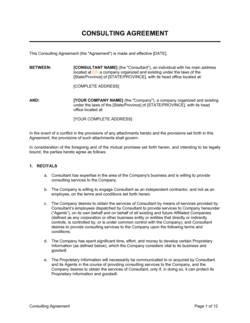
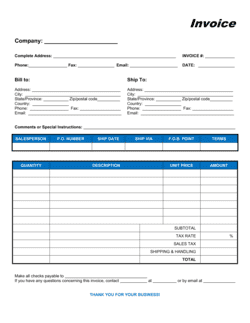
Why You Should Hire A Coach Template

Free Word download • Edit online • Save & share with Drive • Export to PDF

4 pages25–30 min to fillDifficulty: ComplexSignature requiredLegal review recommended
Learn more ↓
FreeWhy You Should Hire A Coach Template

At a glance

What it is
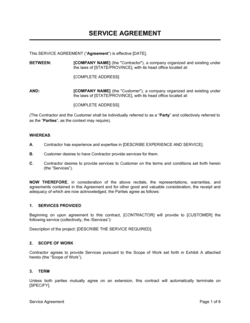
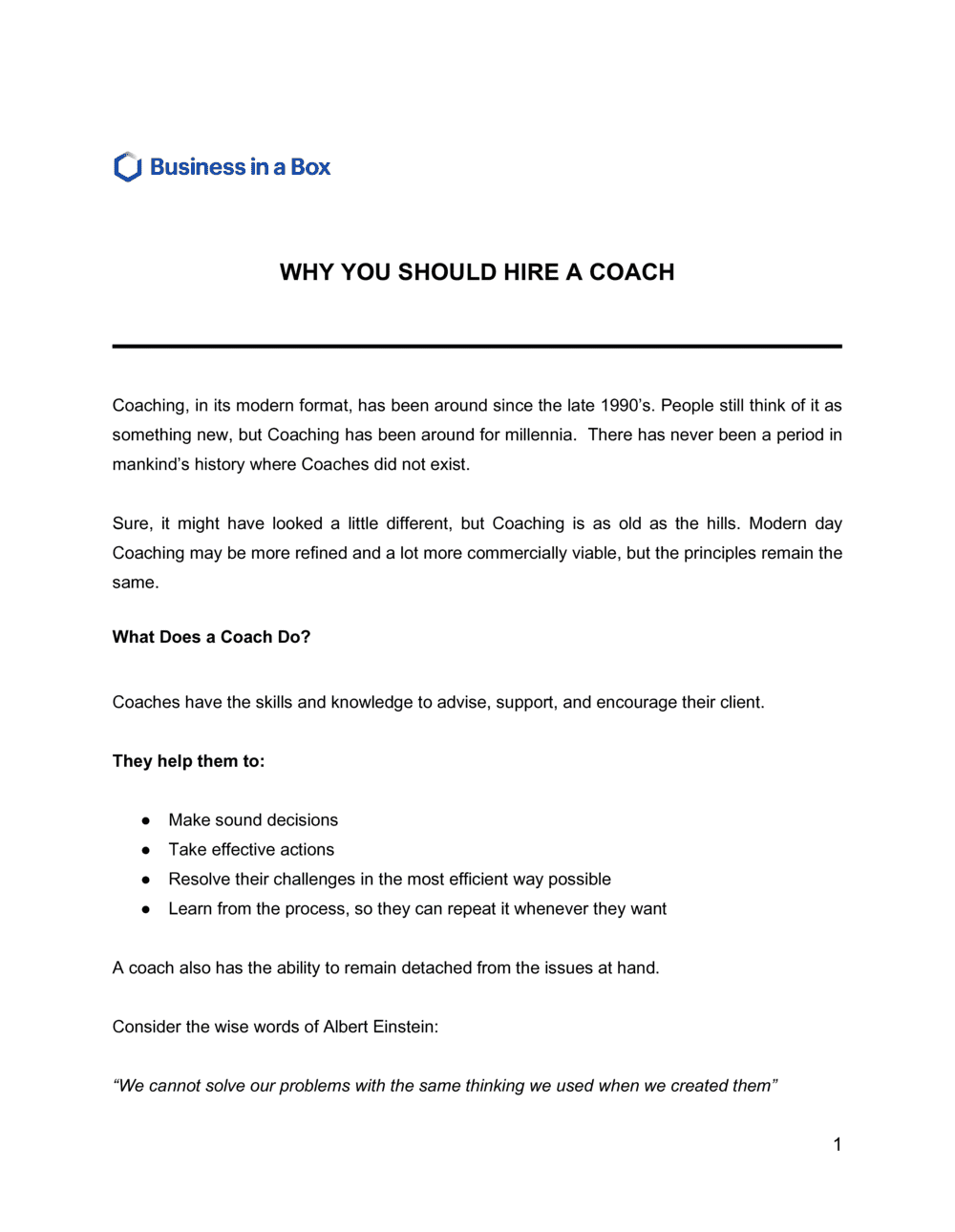
A "Why You Should Hire A Coach" document is a formal coaching engagement agreement that outlines the professional case for retaining a coach and establishes the binding terms of the coaching relationship. This free Word download gives coaches and clients a clear, editable framework covering the scope of services, fees, confidentiality, intellectual property, and termination — ready to export as PDF and sign before sessions begin.
When you need it
Use it when a coach is being engaged by an individual professional, executive, or business to provide structured coaching services over a defined period. It is equally useful when a company retains an external coach to work with employees or leadership teams.
What's inside
Parties and engagement scope, coaching objectives and deliverables, fees and payment schedule, session structure, confidentiality obligations, intellectual property assignment, liability limitations, and termination provisions — all in a single governed document.

What is a Why You Should Hire A Coach Document?

A Why You Should Hire A Coach document is a formal coaching engagement agreement that articulates the professional rationale for retaining a coach and establishes the legally binding terms of the coaching relationship. It defines the scope of services, session structure, fees, confidentiality obligations, intellectual property ownership, liability limitations, and termination rights in a single signed document. Unlike an informal arrangement or a simple email exchange, this agreement creates enforceable obligations on both the coach and the client — clarifying exactly what is being delivered, what it costs, and what happens when either party needs to end the engagement early.

Why You Need This Document

Coaches who operate without a signed agreement routinely face the same four problems: clients who dispute fees after sessions have been delivered, clients who share proprietary coaching frameworks with their teams without permission, requests for unlimited between-session support that was never agreed to, and no-show sessions with no contractual basis to charge for them. Each of these problems is entirely preventable with a properly drafted agreement executed before the first session begins. Beyond protecting the coach, a formal agreement also builds client confidence — it signals that the coach is a professional running a serious practice, not an informal arrangement. For the client, the agreement documents their investment, their expected outcomes, and their right to a refund if pre-paid fees go unused. This template gives coaches and clients a complete, editable starting point that covers every material term of the engagement, reducing the time to a signed agreement to under 30 minutes.

Which variant fits your situation?

If your situation is…Use this template
One-on-one executive or leadership coaching engagementExecutive Coaching Agreement
Group coaching program with multiple participantsGroup Coaching Agreement
Life or personal development coaching for an individualLife Coaching Agreement
Corporate engagement where the employer pays for employee coachingCorporate Coaching Services Agreement
Short-term single-session or workshop coaching arrangementCoaching Session Agreement
Online or virtual coaching program delivered via a platformOnline Coaching Program Agreement
Mentoring relationship rather than structured coachingMentoring Agreement

Common mistakes to avoid

❌ No written agreement at all

Why it matters: Without a contract, the coach has no documented basis to enforce fees, protect IP, or limit liability. Verbal agreements are nearly impossible to enforce in small claims disputes.

Fix: Execute a signed coaching agreement before the first session. Even a simple one-page agreement is better than none.

❌ Vague scope with no session count or communication limits

Why it matters: Clients interpret unlimited access as exactly that — resulting in daily messages, off-topic requests, and session overruns that erode the coach's time and profitability.

Fix: Specify session frequency, duration, format, and any between-session contact allowance in writing. Include a clause stating that additional sessions beyond the agreed count are billed at the standard rate.

❌ Omitting the coaching-vs-therapy disclaimer

Why it matters: A client experiencing a mental health crisis who claims the coach's advice worsened their situation can pursue significant damages if the contract does not clearly distinguish coaching from therapy.

Fix: Include an explicit statement that coaching is not a substitute for mental health, medical, legal, or financial professional advice, and that the client takes responsibility for their own decisions.

❌ No refund clause for pre-paid retainers

Why it matters: Clients who pay for a multi-month package and then terminate expect a pro-rated refund. A silent contract leaves the refund policy entirely to negotiation or litigation.

Fix: State the refund formula explicitly: for example, pre-paid fees for undelivered sessions will be refunded within 14 days of written termination notice.

❌ One-sided confidentiality binding only the client

Why it matters: Executives and business owners share sensitive competitive, personal, and organizational information in coaching. A clause that only binds the client signals to sophisticated clients that their confidentiality is not protected.

Fix: Make the confidentiality clause mutual. Both the coach and the client agree not to disclose the other party's information to third parties without consent.

❌ Selecting a governing jurisdiction with no connection to either party

Why it matters: A coach in Ontario and a client in California governed by 'the laws of Delaware' creates an enforcement nightmare for both parties if a dispute escalates.

Fix: Choose the coach's home jurisdiction or the client's location, whichever is more practical for the coach to enforce. Note any cross-jurisdictional carve-outs in the governing law clause.

The 10 key clauses, explained

Parties and engagement description

In plain language: Identifies the coach and the client as legal entities or individuals, describes the nature of the engagement, and states when it begins.

Sample language
This Coaching Agreement is entered into as of [DATE] between [COACH FULL NAME / BUSINESS NAME] ('Coach') and [CLIENT FULL NAME / COMPANY NAME] ('Client'). Coach agrees to provide professional coaching services as described herein, commencing [START DATE].

Common mistake: Using a business trade name instead of the registered legal entity name. If the contracting party and the billing entity differ, enforcing payment obligations or IP terms becomes complicated.

Scope of coaching services

In plain language: Describes what the coach will do — session format, frequency, duration, communication channels, and any materials or tools to be provided.

Sample language
Coach shall provide [X] coaching sessions per month, each approximately [Y] minutes in duration, delivered via [VIDEO CALL / IN PERSON / PHONE]. Sessions will focus on [AGREED OBJECTIVES]. Additional support via email shall be limited to [Z] messages per week.

Common mistake: Leaving the scope open-ended to allow flexibility. Vague scope clauses lead to scope creep, boundary disputes, and unpaid extra work — all of which are avoidable with specific session counts and communication limits.

Coaching objectives and client responsibilities

In plain language: States the agreed goals of the engagement and places responsibility on the client to engage actively, complete exercises, and do the work between sessions.

Sample language
The parties agree that the primary objectives of this engagement are [LIST OBJECTIVES]. Client acknowledges that coaching outcomes depend substantially on Client's active participation, completion of agreed exercises, and implementation of insights between sessions.

Common mistake: Omitting the client's responsibilities entirely. When a client claims the coaching 'didn't work,' a clause documenting the client's reciprocal obligations is the coach's primary defense.

Fees, payment schedule, and late payment

In plain language: States the total fee or monthly retainer, the payment due date, the method of payment, and the consequences of late or missed payment including interest or suspension of services.

Sample language
Client shall pay Coach a monthly retainer of $[AMOUNT], due on the [DAY] of each month. Late payments accrue interest at [X]% per month. Coach reserves the right to suspend services if any payment remains outstanding for more than [10] days.

Common mistake: No late-payment mechanism. A client who stops paying mid-engagement leaves the coach with no contractual basis to suspend sessions or charge interest without a clause explicitly authorizing both.

Session rescheduling and cancellation policy

In plain language: Sets the notice period required to reschedule or cancel a session without forfeiture, and states what happens to the session fee if the client cancels late or fails to appear.

Sample language
Client must provide at least [48] hours' notice to reschedule a session. Sessions cancelled with less than [48] hours' notice or missed without notice will be forfeited and charged at the full session rate.

Common mistake: No cancellation clause at all. Without it, the coach has no contractual right to charge for no-shows or last-minute cancellations — a significant revenue risk for high-frequency engagements.

Confidentiality and privacy

In plain language: Obligates both parties to keep the content of coaching sessions, shared personal information, and business details confidential during and after the engagement.

Sample language
Both parties agree to hold in strict confidence all information shared during coaching sessions. Coach shall not disclose Client's identity, personal details, or session content to any third party without Client's prior written consent, except as required by law.

Common mistake: A one-sided confidentiality clause binding only the client. Clients — especially executives — often require mutual confidentiality before they will share sensitive information candidly. A mutual clause builds trust and accelerates the work.

Intellectual property and proprietary materials

In plain language: Clarifies that the coach's frameworks, exercises, assessments, and materials remain the coach's property, and grants the client a limited license to use them personally during the engagement.

Sample language
All materials, frameworks, assessments, and tools provided by Coach remain the sole intellectual property of Coach. Client is granted a non-exclusive, non-transferable license to use such materials for personal development purposes only during the term of this Agreement.

Common mistake: No IP clause at all. A client who distributes the coach's proprietary frameworks to colleagues or incorporates them into commercial training programs can do so without restriction if the agreement is silent on IP ownership.

Limitation of liability and disclaimer

In plain language: Caps the coach's financial exposure to the client and clarifies that coaching is not a substitute for medical, legal, financial, or therapeutic advice.

Sample language
Coach's aggregate liability to Client under this Agreement shall not exceed the total fees paid by Client in the [3] months preceding the claim. Coaching is not therapy, medical advice, legal counsel, or financial planning. Client assumes full responsibility for decisions made based on coaching sessions.

Common mistake: No liability cap combined with a missing coaching-vs-therapy disclaimer. Without both, a client who claims a mental health or financial outcome from the coaching advice may seek damages well beyond the engagement fee.

Term and termination

In plain language: States the initial engagement period, the notice required for either party to end early, and what happens to pre-paid fees if the agreement is terminated before the term expires.

Sample language
This Agreement commences on [START DATE] and continues for [X] months ('Initial Term'). Either party may terminate this Agreement with [30] days' written notice. Upon termination, Coach shall refund any pre-paid fees for sessions not yet delivered within [14] days.

Common mistake: No refund policy on pre-paid retainers. Clients who pay months in advance and then terminate expect a pro-rated refund. Without a clause specifying the formula, disputes go to small claims court.

Governing law and dispute resolution

In plain language: Specifies which jurisdiction's law governs the agreement and how disputes will be resolved — typically mediation first, then arbitration or litigation.

Sample language
This Agreement is governed by the laws of [STATE / PROVINCE / COUNTRY]. Any dispute arising hereunder shall first be submitted to mediation. If unresolved within [30] days, the dispute shall be referred to binding arbitration in [CITY] under the rules of [AAA / JAMS / applicable body].

Common mistake: Selecting a governing law with no connection to where the coach or client operates. Cross-jurisdictional coaching is common; an inconvenient forum clause can make enforcement practically impossible for the party that needs it most.

How to fill it out

  1. 1

    Identify both parties with full legal names

    Enter the coach's registered business name or full legal name and the client's legal name or company name. If the client is a corporation paying for an employee's coaching, name the employer as the contracting party, not the individual being coached.

    💡 Confirm whether the client or their employer is the contracting and paying party before the first session — billing disputes often trace back to this ambiguity.

  2. 2

    Define the scope of services precisely

    Specify the number of sessions per month, session duration, delivery format (video, phone, in-person), and any between-session support (email, messaging app). Attach a separate schedule if the scope is detailed.

    💡 A specific session count also protects the client — they know exactly what they are buying, which reduces buyer's remorse and cancellations.

  3. 3

    Document the agreed coaching objectives

    List two to four specific, measurable objectives the client wants to achieve by the end of the engagement. These become the benchmark for evaluating progress and the coach's defense if outcomes are disputed.

    💡 Vague objectives like 'improve leadership' create dissatisfied clients. Specific objectives like 'develop a 90-day onboarding plan for the new VP role' keep both parties focused.

  4. 4

    Set fees, payment dates, and the late-payment policy

    Enter the monthly retainer or per-session fee, the exact due date each month, accepted payment methods, and the interest rate or service suspension trigger for late payment.

    💡 Requiring a credit card on file with auto-charge authorization reduces late payment rates significantly for monthly retainer arrangements.

  5. 5

    Write the cancellation and no-show policy

    State the minimum advance notice required to reschedule without penalty — typically 24 to 48 hours — and confirm that late cancellations or no-shows are charged at the full session rate.

    💡 Include a maximum number of reschedules per month to prevent chronic reschedulers from disrupting the coaching cadence.

  6. 6

    Add the confidentiality and IP clauses

    Confirm that both parties' confidentiality obligations are mutual, and specify that the coach's frameworks, assessments, and materials remain the coach's intellectual property with only a personal-use license granted to the client.

    💡 If the coach uses proprietary assessments or branded programs (e.g., a certified methodology), name those tools explicitly to put the client on notice of their restricted use.

  7. 7

    Confirm the liability cap and coaching disclaimer

    Set the liability cap at the fees paid in the preceding 90 days and include the standard coaching-vs-therapy disclaimer. Confirm the client's acknowledgment that they are responsible for their own decisions.

    💡 Some jurisdictions require specific language for health-adjacent coaching (wellness, nutrition, mindset). Check local requirements before finalizing this clause.

  8. 8

    Execute before the first session

    Both parties must sign before the first coaching session begins. A signed agreement also triggers the client's psychological commitment — coaches who send the contract after sessions have started report higher cancellation rates.

    💡 Use electronic signature with a timestamp to eliminate disputes about whether the agreement was actually signed and when.

Frequently asked questions

What is a coaching agreement and why do coaches need one?

A coaching agreement is a legally binding contract between a coach and a client that defines the scope of services, fees, confidentiality obligations, intellectual property ownership, liability limits, and termination terms. Coaches need one to protect their fees against non-payment, prevent clients from distributing proprietary frameworks, limit liability for coaching outcomes, and establish a professional standard that builds client trust from the first interaction.

What should be included in a coaching agreement?

At minimum, a coaching agreement should cover: the parties' legal names, the scope and format of sessions, fees and payment terms, a cancellation and no-show policy, mutual confidentiality, IP ownership of the coach's materials, a liability cap, a coaching-vs-therapy disclaimer, the engagement term, termination notice requirements, and governing law. Missing any of these creates enforceable gaps that courts will fill using jurisdiction-specific defaults.

Is a coaching agreement legally binding?

Yes — a coaching agreement is generally enforceable as a binding contract when it includes an offer, acceptance, and consideration (the exchange of services for fees). Both parties must sign, and the terms must be sufficiently definite. A well-drafted agreement is enforceable in small claims court for unpaid fees or in civil court for IP or confidentiality breaches. Having a lawyer review it ensures jurisdiction-specific enforceability.

What is the difference between a coaching agreement and a service agreement?

A service agreement is a general-purpose contract for any professional service. A coaching agreement is a specialized variant that adds clauses specific to the coaching relationship: coaching-vs-therapy disclaimers, client responsibility for outcomes, session rescheduling and no-show policies, and IP protections for proprietary frameworks and assessments. Using a generic service agreement for coaching leaves these critical gaps unaddressed.

Can a coach work without a signed agreement?

Legally, a coach can work without a written contract — oral agreements are technically binding in most jurisdictions. In practice, operating without a signed agreement exposes the coach to unpaid fees, IP infringement, unlimited liability for outcomes, and no cancellation policy to enforce. The risk is almost entirely on the coach. A signed agreement takes 20 minutes to prepare and protects every engagement that follows.

How should coaching fees be structured in the agreement?

Coaching fees are typically structured as a monthly retainer covering a fixed number of sessions, a per-session flat fee, or a program fee for a defined multi-month package. The agreement should state the amount, the due date, the accepted payment method, and the interest rate or service suspension trigger for late payment. For multi-month packages, include a pro-rated refund formula in case of early termination.

Does a coaching agreement need to be reviewed by a lawyer?

For straightforward domestic coaching engagements, a high-quality template is sufficient for most coaches. Legal review is recommended when the coach works with corporate clients under master service agreements, operates across jurisdictions with different consumer protection laws, uses proprietary methodology worth protecting aggressively, or the engagement involves significant fees where the cost of a dispute exceeds the cost of a review.

What happens if a client refuses to sign the coaching agreement?

A client who refuses to sign before sessions begin is a significant commercial and legal risk. Without a signed agreement, the coach has no enforceable basis to collect fees, protect IP, or limit liability. The appropriate response is to postpone the first session until the agreement is executed. Coaches who proceed without a signature typically do so once — a dispute over fees or a confidentiality breach quickly changes the practice.

What is the coaching-vs-therapy disclaimer and why is it important?

A coaching-vs-therapy disclaimer is a clause stating that coaching is not a substitute for licensed mental health, medical, legal, or financial professional advice, and that the client takes full responsibility for decisions made based on coaching sessions. It is important because coaching and therapy can overlap in scope, and without a clear disclaimer, a client experiencing a negative personal or financial outcome may attempt to hold the coach liable as if they were a licensed professional. Most coaching bodies and insurers recommend including this clause in every agreement.

How this compares to alternatives

vs Service Agreement

A service agreement is a general contract for delivering any professional service. A coaching agreement adds session-specific clauses — coaching-vs-therapy disclaimers, client outcome responsibility, no-show policies, and IP protections for proprietary frameworks — that a generic service agreement does not cover. Use a coaching-specific agreement for any coaching engagement rather than adapting a general services contract.

vs Independent Contractor Agreement

An independent contractor agreement governs a business-to-business relationship where the contractor delivers work product or services for a client's operations. A coaching agreement governs a developmental relationship where the coach facilitates the client's personal or professional growth. The two documents differ significantly in scope definition, IP treatment, and liability framing — using a contractor agreement for coaching leaves critical coaching-specific protections absent.

vs Consulting Agreement

A consulting agreement is designed for engagements where the professional delivers expert analysis, recommendations, or solutions to a defined business problem. A coaching agreement governs a facilitative relationship where the coach asks questions, holds the client accountable, and supports self-directed growth rather than providing direct answers. The distinction matters legally — consulting creates a higher duty of care and expertise liability than coaching.

vs Mentoring Agreement

A mentoring agreement covers an informal or semi-formal knowledge-transfer relationship, often unpaid or within an organization. A coaching agreement governs a paid professional service with defined deliverables, fee schedules, cancellation terms, and liability protections. When a coach is being paid for structured sessions with accountability frameworks, a full coaching agreement is required — a mentoring agreement is not sufficient.

Industry-specific considerations

Professional Services

Law firms, accounting firms, and consulting practices retaining executive coaches for partner-track professionals require confidentiality clauses covering client matters and firm strategy.

Technology / SaaS

Startup founders and engineering leaders engaging coaches for leadership development need IP clauses that clearly separate the coach's methodology from the company's proprietary technology.

Healthcare

Wellness and health coaches operating in a regulated environment require robust coaching-vs-therapy disclaimers and liability caps that explicitly exclude clinical outcomes from the coach's responsibility.

Financial Services

Financial services professionals being coached on performance or leadership need confidentiality clauses covering client data and trading information, aligned with FINRA or FCA obligations.

Jurisdictional notes

United States

Coaching agreements are generally enforceable as service contracts under state law. Non-compete clauses within coaching agreements are subject to state-level enforceability rules — California, for example, prohibits most post-engagement restrictions. Consumer protection laws in states like California and New York impose specific disclosure requirements for wellness and life coaching services, including cooling-off periods for contracts signed in certain contexts.

Canada

In Canada, coaching agreements are governed by provincial contract law. Ontario and British Columbia have consumer protection legislation that may require specific cancellation rights and refund provisions for prepaid service contracts. Quebec requires consumer-facing contracts to be in French for provincially regulated services. Coaches working with clients across provinces should specify the governing province explicitly.

United Kingdom

In the UK, coaching agreements must comply with the Consumer Rights Act 2015 when the client is a consumer rather than a business. Terms that are considered unfair — such as asymmetric cancellation policies or blanket liability exclusions — may be unenforceable. GDPR applies to any personal data shared during sessions, requiring a lawful basis for processing and appropriate data retention limits. The ICF UK chapter recommends including a GDPR-aligned data processing clause.

European Union

GDPR compliance is mandatory for coaching agreements involving EU residents, requiring explicit disclosure of how session notes and personal data are stored, processed, and deleted. EU consumer protection directives require a 14-day right of withdrawal for services contracted online or off-premises. Liability limitation clauses must comply with the Unfair Contract Terms Directive — blanket exclusions of all liability are generally unenforceable against consumers in EU member states.

Template vs lawyer — what fits your deal?

PathBest forCostTime
Use the templateIndependent coaches and life coaches running straightforward one-on-one engagements with individual clientsFree20–30 minutes
Template + legal reviewCoaches working with corporate clients, high-fee executive engagements, or clients in regulated industries$200–$5001–3 days
Custom draftedCoaching agencies, multi-coach businesses, or coaches with proprietary frameworks requiring aggressive IP protection$800–$2,500+1–2 weeks

Glossary

Coaching Engagement
The formal, contracted relationship between a coach and a client that defines the scope, duration, and objectives of the coaching services.
Scope of Services
The specific activities, session formats, frequency, and deliverables the coach agrees to provide during the engagement.
Retainer
A fixed monthly or periodic fee paid by the client to secure the coach's availability for an agreed number of sessions or hours.
Confidentiality Obligation
A binding duty on both parties not to disclose the content of coaching sessions or any sensitive information shared during the engagement.
Professional Liability
The coach's potential legal responsibility if a client suffers a measurable loss claimed to result from the coach's advice or services.
Limitation of Liability Clause
A contract provision capping the maximum financial exposure of the coach to a defined amount — typically the fees paid in the preceding period.
Session Notes
Records of the topics discussed, goals set, and progress made during coaching sessions, whose ownership should be specified in the agreement.
Termination for Convenience
A contract right allowing either party to end the engagement early with a defined notice period, without requiring a specific reason or breach.
Non-Disparagement Clause
A mutual restriction preventing either party from making negative public statements about the other after the engagement ends.
Coaching vs. Therapy Disclaimer
A statement clarifying that coaching is not a substitute for licensed mental health, medical, or legal advice — limiting the coach's liability for outcomes in those domains.
Intellectual Property (IP)
Original materials, frameworks, tools, and methodologies created by the coach, which typically remain the coach's property even when shared with the client during sessions.

Part of your Business Operating System

This document is one of 3,000+ business & legal templates included in Business in a Box.

  • Fill-in-the-blanks — ready in minutes
  • 100% customizable Word document
  • Compatible with all office suites
  • Export to PDF and share electronically

Create your document in 3 simple steps.

From template to signed document — all inside one Business Operating System.
1
Download or open template

Access over 3,000+ business and legal templates for any business task, project or initiative.

2
Edit and fill in the blanks with AI

Customize your ready-made business document template and save it in the cloud.

3
Save, Share, Send, Sign

Share your files and folders with your team. Create a space of seamless collaboration.

Save time, save money, and create top-quality documents.

★★★★★

"Fantastic value! I'm not sure how I'd do without it. It's worth its weight in gold and paid back for itself many times."

Managing Director · Mall Farm
Robert Whalley
Managing Director, Mall Farm Proprietary Limited
★★★★★

"I have been using Business in a Box for years. It has been the most useful source of templates I have encountered. I recommend it to anyone."

Business Owner · 4+ years
Dr Michael John Freestone
Business Owner
★★★★★

"It has been a life saver so many times I have lost count. Business in a Box has saved me so much time and as you know, time is money."

Owner · Upstate Web
David G. Moore Jr.
Owner, Upstate Web

Run your business with a system — not scattered tools

Stop downloading documents. Start operating with clarity. Business in a Box gives you the Business Operating System used by over 250,000 companies worldwide to structure, run, and grow their business.

Free Forever Plan · No credit card required