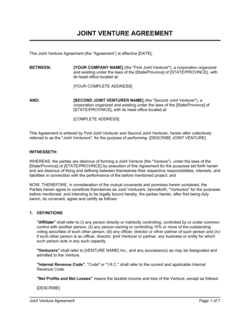
Mutual Confidentiality Agreement Template

Free Word download • Edit online • Save & share with Drive • Export to PDF

3 pages25–30 min to fillDifficulty: ComplexSignature requiredLegal review recommended
Learn more ↓
FreeMutual Confidentiality Agreement Template

At a glance

What it is
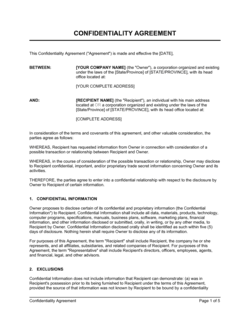
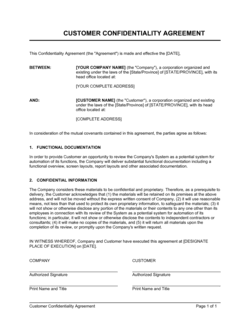
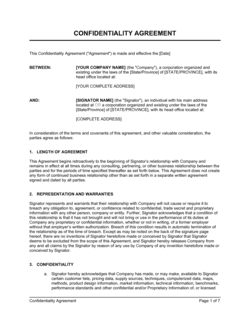
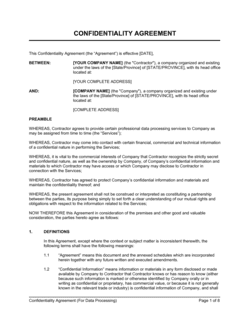
A Mutual Confidentiality Agreement (also called a bilateral NDA) is a legally binding contract in which two parties agree to protect each other's confidential information — trade secrets, financial data, product roadmaps, and proprietary processes — from unauthorized disclosure or use. This free Word download covers definitions, permitted disclosures, obligations, exclusions, term, and remedies in a single balanced document you can edit online and export as PDF in minutes.
When you need it
Use it whenever two businesses are exploring a partnership, merger, acquisition, joint venture, or integration where both sides will share sensitive information with each other before a formal deal is signed.
What's inside
Parties and recitals, definition of confidential information, mutual obligations of confidentiality and non-use, permitted disclosures, standard exclusions (publicly available, independently developed, rightfully received), term and termination, return or destruction of information, remedies and injunctive relief, and governing law.

What is a Mutual Confidentiality Agreement?

A Mutual Confidentiality Agreement — also called a bilateral NDA or mutual non-disclosure agreement — is a legally binding contract in which two parties agree to protect each other's confidential information from unauthorized disclosure or use. Unlike a one-way NDA, the obligations run symmetrically: each party is simultaneously a disclosing party and a receiving party, and each owes the other the same duties of protection and restricted use. The agreement defines what qualifies as confidential, sets the permitted purposes for which it can be used, establishes standard exclusions, and provides remedies — including injunctive relief — when the obligations are breached. It is the standard instrument parties reach for before sharing trade secrets, financial data, product roadmaps, or proprietary processes in the context of a potential partnership, acquisition, integration, or joint venture.

Why You Need This Document

Without a mutual confidentiality agreement in place, information shared during early-stage business discussions is legally exposed from the moment it leaves your possession. A competitor who learns your pricing model, product roadmap, or customer list in the context of an exploratory meeting owes you no contractual duty of silence unless an NDA was signed first — and the common-law duty of confidence, while real, is significantly harder to enforce than a clear written obligation. The practical consequences are concrete: trade secrets can migrate to competitors, acquisition targets can walk away with your strategic plans, and technology partners can reverse-engineer proprietary processes without any clear contractual remedy. A properly executed mutual NDA closes those gaps in 20 minutes, gives both parties an enforceable non-use obligation tied to the specific transaction, and preserves your right to seek immediate injunctive relief — the only remedy fast enough to matter when sensitive information is about to be misused.

Which variant fits your situation?

If your situation is…Use this template
Only one party is sharing sensitive informationOne-Way Non-Disclosure Agreement
Covering an employee who will access company secretsEmployee Confidentiality Agreement
Protecting information shared with an independent contractorContractor NDA
Covering confidentiality during formal M&A due diligenceM&A Non-Disclosure Agreement
Sharing proprietary technology for a licensing evaluationTechnology Non-Disclosure Agreement
Exploring a potential joint venture with defined IP contributionsJoint Venture Agreement
Covering a vendor with access to customer data subject to privacy lawData Processing Agreement

Common mistakes to avoid

❌ Sharing information before the agreement is signed

Why it matters: Information disclosed before the agreement is executed is generally not covered by it, even if the parties intended it to be. A single introductory meeting where financials are shared informally can fall outside the agreement's protections.

Fix: Execute the agreement before the first substantive discussion. If information was shared at an initial meeting, add a clause explicitly covering pre-agreement disclosures made on or after a specified date.

❌ Using a one-way NDA when both parties are sharing secrets

Why it matters: A one-way NDA only protects the disclosing party. In a partnership or acquisition exploration, both parties typically share sensitive data — using a one-way agreement leaves one side legally unprotected.

Fix: Use a mutual NDA any time both parties will share confidential information, regardless of whether the volumes shared are equal.

❌ No defined purpose clause

Why it matters: Without a stated purpose, the scope of permitted use is ambiguous. The receiving party may argue it was entitled to use confidential information for any internal business purpose, not just the specific transaction contemplated.

Fix: Draft a one-to-two sentence purpose clause that names the specific transaction or discussion — then tie the non-use obligation expressly to that purpose.

❌ Setting a fixed term that expires for trade secrets

Why it matters: Trade secrets qualify for indefinite legal protection under the Defend Trade Secrets Act (US), equivalent provincial and federal statutes in Canada, and comparable laws elsewhere. A 2-year NDA term that expires leaves trade secrets unprotected regardless of how sensitive they are.

Fix: Include express language that obligations with respect to trade secrets survive the agreement's general term indefinitely, separate from the standard 2–5 year term for other confidential information.

❌ Omitting the injunctive-relief clause

Why it matters: Proving monetary damages for a confidentiality breach is notoriously difficult — courts often require a bond and quantified harm before granting emergency relief. Without an express injunctive-relief provision, stopping a breach in real time is significantly harder.

Fix: Include the standard acknowledgment that breach causes irreparable harm and that each party is entitled to seek injunctive relief without bond — this is a market-standard clause that no reasonable counterparty should object to.

❌ No carve-out for legally compelled disclosures

Why it matters: A party served with a government subpoena or court order has no practical choice but to produce the information. Without a compelled-disclosure clause, complying with the legal process technically breaches the NDA — exposing an innocent party to liability.

Fix: Add a compelled-disclosure provision requiring prompt notice to the other party (to the extent permitted by law), cooperation in seeking a protective order, and disclosure of only the minimum amount required.

The 10 key clauses, explained

Parties and purpose

In plain language: Identifies both parties by legal name and states the specific business purpose for which information will be shared — the reason both parties are entering the agreement.

Sample language
This Mutual Confidentiality Agreement is entered into as of [DATE] between [PARTY A LEGAL NAME], a [STATE] [ENTITY TYPE] ('Party A'), and [PARTY B LEGAL NAME], a [STATE] [ENTITY TYPE] ('Party B'), in connection with the parties' exploration of a potential [BUSINESS RELATIONSHIP/TRANSACTION] (the 'Purpose').

Common mistake: Stating the purpose too broadly (e.g., 'any future business') rather than the specific transaction. An overly broad purpose can extend protections beyond what either party intended and create obligations that outlast the relevant relationship.

Definition of confidential information

In plain language: Specifies exactly what types of information are covered — the broader and more precise this definition, the stronger the protection. It should include written, oral, electronic, and visual disclosures.

Sample language
'Confidential Information' means any non-public information disclosed by one party to the other in connection with the Purpose, including but not limited to trade secrets, financial data, customer lists, technical specifications, product roadmaps, pricing, and business strategies, whether disclosed in writing, orally, visually, or by any other means.

Common mistake: Requiring confidential information to be marked 'CONFIDENTIAL' in writing to qualify. Oral disclosures are common in business discussions, and a marking requirement leaves them unprotected unless a written summary is provided within a set follow-up period.

Mutual confidentiality and non-use obligations

In plain language: The core operative clause — each party promises to keep the other's confidential information secret and to use it only for the stated purpose, applying at least the same care they apply to their own confidential information (and no less than reasonable care).

Sample language
Each party agrees to: (a) hold the other party's Confidential Information in strict confidence; (b) use the other party's Confidential Information solely for the Purpose; and (c) protect such information using at least the same degree of care it uses to protect its own confidential information, but in no event less than reasonable care.

Common mistake: Omitting the non-use obligation and only prohibiting disclosure. A party that internally uses confidential information to compete — without ever disclosing it to a third party — technically complies with a disclosure-only clause while causing real harm.

Permitted disclosures to representatives

In plain language: Allows each party to share confidential information with its own employees, officers, attorneys, accountants, and advisors who have a genuine need to know it for the stated purpose — and makes the disclosing party responsible for ensuring those representatives comply.

Sample language
Each party may disclose the other party's Confidential Information to its directors, officers, employees, legal counsel, and financial advisors ('Representatives') who need to know such information for the Purpose, provided that such Representatives are bound by confidentiality obligations no less restrictive than those in this Agreement, and each party remains liable for any breach by its Representatives.

Common mistake: Failing to specify that Representatives must be bound by obligations at least as protective as the agreement itself. Without this, a party can share trade secrets with a consultant or agent who owes no independent duty of confidentiality.

Exclusions from confidentiality

In plain language: Carves out four standard categories that cannot be protected: information already public, information the receiving party already knew, information independently developed without reference to the disclosing party's data, and information lawfully received from a third party with no restriction on disclosure.

Sample language
The obligations in this Agreement do not apply to information that: (a) is or becomes publicly available through no breach of this Agreement; (b) was rightfully known to the receiving party before disclosure; (c) is independently developed by the receiving party without use of the Confidential Information; or (d) is rightfully received from a third party without restriction on disclosure.

Common mistake: Drafting exclusions that are too narrow — for example, only excluding information that is 'in the public domain' without covering information that later becomes publicly available. Courts will enforce the literal text, leaving parties arguing over technicalities.

Compelled disclosure

In plain language: Addresses what happens if a court or regulator requires a party to disclose the other's confidential information — typically requiring the receiving party to give prompt notice so the disclosing party can seek a protective order.

Sample language
If a receiving party is required by law, regulation, or court order to disclose Confidential Information, it shall: (a) provide the disclosing party with prompt written notice of such requirement to the extent permitted by law; (b) cooperate with the disclosing party in seeking a protective order or other appropriate relief; and (c) disclose only the minimum amount required.

Common mistake: Omitting this clause entirely. Without it, a receiving party served with a subpoena has no contractual obligation to notify the disclosing party — who then has no opportunity to intervene and protect its trade secrets.

Term and termination

In plain language: Sets the duration of the agreement and each party's confidentiality obligations, and clarifies that obligations survive termination for a defined period — or indefinitely for trade secrets.

Sample language
This Agreement shall commence on the date first signed and continue for [TWO (2)] years unless earlier terminated by either party on [THIRTY (30)] days' written notice. Confidentiality obligations shall survive termination for [THREE (3)] years; obligations with respect to trade secrets shall survive indefinitely.

Common mistake: Setting the same fixed term for all confidential information, including trade secrets. Trade secrets have indefinite legal protection under the Defend Trade Secrets Act and equivalent statutes — a 2-year term cap effectively hands over trade secrets at expiration.

Return or destruction of information

In plain language: Requires each party, upon request or at termination, to return or permanently destroy the other's confidential information — including copies in all formats — and to certify in writing that it has done so.

Sample language
Upon the disclosing party's request or upon termination of this Agreement, the receiving party shall promptly return or, at the disclosing party's election, permanently destroy all Confidential Information (including all copies, notes, and derivatives thereof) and provide written certification of such return or destruction within [TEN (10)] business days.

Common mistake: No carve-out for information retained in routine system backups or required to be kept by law. Without it, the return-or-destroy obligation is technically breached every time an automated backup runs — which courts generally find impractical to enforce.

Remedies and injunctive relief

In plain language: Acknowledges that monetary damages may be inadequate for an NDA breach and expressly authorizes the disclosing party to seek an injunction without posting a bond — removing a procedural hurdle that could delay emergency court relief.

Sample language
Each party acknowledges that breach of this Agreement would cause irreparable harm for which monetary damages would be an inadequate remedy, and that the disclosing party shall be entitled to seek injunctive or other equitable relief without the requirement of posting bond or other security, in addition to all other remedies available at law or equity.

Common mistake: Omitting this clause and relying on a general damages claim. Proving the dollar value of a trade secret disclosure is notoriously difficult — without the express injunctive-relief provision, a court may require the injured party to post a bond and demonstrate specific monetary harm before granting emergency relief.

Governing law and dispute resolution

In plain language: Specifies which jurisdiction's law governs the agreement and how disputes will be resolved — typically litigation in a named court, or arbitration for parties that prefer confidential proceedings.

Sample language
This Agreement is governed by the laws of the State of [STATE], without regard to its conflict-of-laws principles. Any dispute arising under this Agreement shall be resolved exclusively in the state or federal courts located in [CITY, STATE], and each party consents to the personal jurisdiction of such courts.

Common mistake: Choosing a governing-law jurisdiction with no connection to either party's business. Courts in some states — California in particular — apply local law to disputes involving California-based employees or operations regardless of what the contract states.

How to fill it out

  1. 1

    Identify both parties with full legal names

    Enter each party's registered legal entity name, state or country of formation, and principal address. Do not use trade names or brand names as the party designations.

    💡 Verify the exact legal name against each party's state corporate registry before signing — a misspelled entity name can complicate enforcement.

  2. 2

    Define the specific business purpose

    Describe the transaction or discussion the agreement covers — for example, 'evaluation of a potential acquisition of Party B by Party A' or 'scoping of a technology integration between the parties.' Keep it narrow enough to be meaningful but broad enough to cover all related discussions.

    💡 A purpose clause that is too vague ('any future business dealings') makes it harder to argue that information shared five years later is outside scope.

  3. 3

    Tailor the definition of confidential information

    Review the standard definition and add any specific categories critical to your situation — source code, customer data, clinical trial results, pricing models. Confirm whether oral disclosures are covered and whether any marking requirement applies.

    💡 If oral disclosures will be common, add a clause requiring a written summary within five business days — this creates a clean record without a strict marking obligation.

  4. 4

    Set the term and survival period

    Choose a mutual term of 2–5 years depending on the sensitivity of the information and the expected length of the relationship. Set a longer or indefinite survival period for trade secrets specifically.

    💡 For technology companies sharing source code, consider an indefinite survival period for that specific category, even if the general term is two years.

  5. 5

    Confirm the permitted-disclosure list

    Review who each party's Representatives may include and confirm that all listed categories — employees, counsel, accountants, advisors — are actually needed. Remove categories that are not relevant to reduce your exposure.

    💡 Add a requirement that Representatives be identified in writing upon request if the information is particularly sensitive — this gives you a record of everyone who accessed it.

  6. 6

    Review the return-or-destroy clause and add a backup carve-out

    Confirm the timeframe for return or destruction (10 business days is standard) and add language exempting information stored in routine automated backups that cannot practicably be deleted, subject to continued confidentiality obligations.

    💡 Request a written certification of destruction — a simple email confirmation is sufficient for most situations but should be retained in your contract file.

  7. 7

    Choose governing law tied to a real connection

    Select the state or country whose law will govern the agreement — typically where the transaction is centered or where both parties maintain operations. Confirm there is a genuine nexus to avoid a court disregarding the choice-of-law provision.

    💡 If parties are in different countries, consider arbitration under ICC or AAA rules instead of court litigation — arbitration awards are enforceable in more than 170 countries under the New York Convention.

  8. 8

    Sign before sharing any confidential information

    Both parties must execute the agreement before any sensitive information changes hands. A signed copy should be delivered to each party and stored in a secure contract management system.

    💡 Use Business in a Box eSign to timestamp execution and create a tamper-evident record — this is critical if you ever need to establish the exact date obligations began.

Frequently asked questions

What is a mutual confidentiality agreement?

A mutual confidentiality agreement — also called a bilateral NDA or mutual non-disclosure agreement — is a legally binding contract in which two parties agree to protect each other's confidential information from unauthorized disclosure and use. Unlike a one-way NDA, the obligations run in both directions: each party is simultaneously a disclosing party and a receiving party. It is typically used when both sides will share sensitive information during a business negotiation, partnership exploration, or due diligence process.

What is the difference between a mutual NDA and a one-way NDA?

A one-way NDA protects only the disclosing party's information — the receiving party has obligations but the disclosing party does not. A mutual NDA creates symmetrical obligations: both parties are bound to protect what they receive. Use a one-way NDA when only one party is sharing sensitive data (for example, a vendor learning a client's processes). Use a mutual NDA whenever both parties will share confidential information, regardless of whether the volumes exchanged are equal.

How long should a mutual confidentiality agreement last?

Two to five years is the standard range for general confidential information in most business contexts. The appropriate term depends on how long the underlying negotiation is likely to run and how quickly the information will become commercially stale. Trade secrets should be covered by an indefinitely surviving obligation — not capped at the agreement's general term — because they retain legal protection for as long as they remain secret. A two-year cap on trade-secret obligations effectively surrenders protection at expiration.

Is a mutual confidentiality agreement legally enforceable?

A mutual confidentiality agreement is generally enforceable when it meets the basic requirements of a valid contract — offer, acceptance, and consideration (the mutual exchange of confidentiality obligations itself constitutes consideration in a bilateral NDA). Courts in the US, Canada, the UK, and the EU routinely enforce mutual NDAs. Enforceability can be weakened by an overly broad definition of confidential information, an unreasonably long term, or a governing-law clause with no connection to either party.

Does a mutual confidentiality agreement need to be notarized?

No. In the vast majority of jurisdictions, a mutual confidentiality agreement does not require notarization to be valid or enforceable. Both parties' wet or electronic signatures are sufficient. Notarization may be required in certain international contexts or if the agreement will be used in a jurisdiction with specific formality requirements — consult local counsel if the transaction crosses into a civil-law country where notarial acts carry greater legal significance.

What happens if one party breaches the mutual NDA?

The non-breaching party can pursue monetary damages for losses caused by the breach and, critically, seek injunctive relief to stop further disclosure — which is often more valuable than damages because it acts immediately. Most mutual NDAs include an express injunctive-relief clause acknowledging irreparable harm and waiving the bond requirement, which lowers the procedural burden for obtaining emergency court relief. In some jurisdictions, willful misappropriation of trade secrets can also trigger exemplary damages and attorney fee awards.

Can a mutual NDA cover information shared before it was signed?

Not automatically. Information disclosed before signing is generally outside the agreement's scope. To cover pre-agreement disclosures, add a clause that expressly brings within scope any information shared between the parties on or after a specified prior date. This is particularly important when a preliminary conversation included financials or technical details before the parties formalized the relationship.

Do mutual NDAs protect against employees misusing confidential information?

A mutual NDA binds the corporate entity and its representatives who receive information under the agreement, but it does not replace a direct employee confidentiality obligation. For robust protection, each employee who accesses the other party's information should be subject to their own employment confidentiality agreement or a separate acknowledgment. The permitted-disclosure clause in the mutual NDA should require that Representatives be bound by obligations no less restrictive than the agreement itself.

What is the residuals clause and should I accept it?

A residuals clause allows a receiving party's employees to use, in their unaided memory, information absorbed during the relationship — even after the NDA is in effect. It is a carve-out frequently pushed by large technology companies in B2B negotiations. For most businesses sharing standard commercial information, residuals clauses are relatively benign. For companies sharing source code, specific formulas, or detailed technical architecture, accepting a residuals clause significantly weakens protection and should generally be resisted or narrowly scoped.

How this compares to alternatives

vs One-Way Non-Disclosure Agreement

A one-way NDA creates obligations only on the receiving party, protecting only the disclosing party's information. A mutual NDA runs in both directions, protecting both parties simultaneously. Use a one-way NDA when only a single party is sharing sensitive data; use a mutual NDA any time both parties will exchange confidential information during negotiations or due diligence.

vs Employee Confidentiality Agreement

An employee confidentiality agreement binds an individual employee to protect company information during and after employment and typically includes IP assignment and non-solicitation provisions. A mutual NDA binds two separate legal entities exploring a business relationship. For protecting company secrets from employees, use the employee agreement — the mutual NDA is designed for B2B transactions.

vs Joint Venture Agreement

A joint venture agreement governs the full terms of an ongoing collaborative business — profit sharing, governance, contributions, and exit — and typically contains its own confidentiality provisions. A mutual NDA is used at the pre-deal stage before the parties commit to a joint venture, covering the exploratory conversations and due diligence. The NDA precedes and is usually superseded by the joint venture agreement.

vs Data Processing Agreement

A data processing agreement addresses obligations under GDPR, CCPA, and similar privacy laws when one party processes personal data on behalf of another — it is a regulatory compliance document. A mutual NDA protects commercially sensitive business information between two parties, independent of personal data or privacy law. Businesses sharing both customer data and proprietary business information may need both documents.

Industry-specific considerations

Technology / SaaS

Covers API specifications, source code samples, and product roadmaps shared during integration scoping or acquisition discussions, often with an indefinite term for source code.

Financial Services

Protects financial models, client data, and proprietary trading strategies shared during partnership or data-sharing negotiations, with GLBA and securities-law compliance considerations.

Healthcare / Life Sciences

Covers clinical trial data, compound formulas, and patient information shared during licensing or co-development discussions, typically requiring HIPAA-compliant handling obligations.

Manufacturing

Protects production processes, supplier pricing, and product specifications shared during supply-chain partnership or joint-development negotiations, often with a longer 5-year term.

Jurisdictional notes

United States

Trade secrets are protected federally under the Defend Trade Secrets Act of 2016 (DTSA) and at the state level under the Uniform Trade Secrets Act, adopted by 48 states. A mutual NDA supplements but does not replace these statutory protections. California courts apply strict scrutiny to non-use and non-compete provisions in NDAs — keep obligations limited to confidentiality and non-use for the specific purpose. Note that the FTC's proposed rule on non-competes, blocked in 2025, does not affect standard mutual NDA confidentiality obligations.

Canada

Trade secret protection in Canada is primarily common-law based (no single federal statute equivalent to the DTSA), reinforced by the federal Trade-marks Act for marks and the Copyright Act for expression. Mutual NDAs are fully enforceable under federal and provincial contract law. Quebec law requires that contracts be available in French for provincially-regulated transactions — bilingual execution is recommended for parties operating in Quebec. Provincial privacy statutes (PIPEDA federally, and provincial equivalents in Quebec, BC, and Alberta) impose additional obligations when personal data is included in the information exchanged.

United Kingdom

Mutual NDAs are commonly used and fully enforceable in England and Wales under contract law principles. The common law of confidence provides additional independent protection for confidential information regardless of an NDA. Post-Brexit, UK GDPR applies when personal data is included in disclosures — ensure the NDA references appropriate data handling obligations or is paired with a data sharing agreement. Scotland follows Scots law, which is substantially similar for NDA purposes but has its own procedural rules for seeking interdict (the Scottish equivalent of an injunction).

European Union

The EU Trade Secrets Directive (2016/943) harmonizes trade secret protection across member states, providing a statutory floor that complements contractual NDAs. GDPR applies whenever personal data is included in confidential information shared between the parties — a mutual NDA alone does not satisfy GDPR obligations, and a separate data processing or data sharing agreement is typically required. French and German courts both enforce mutual NDAs but apply local reasonableness standards; German courts in particular have a strong tradition of enforcing interim injunctions (einstweilige Verfügung) to stop imminent trade secret misappropriation.

Template vs lawyer — what fits your deal?

PathBest forCostTime
Use the templateStandard business-to-business exploratory discussions, partnership scoping, and vendor evaluations where both parties share general commercial informationFree15–20 minutes
Template + legal reviewTechnology licensing discussions involving source code, pre-acquisition due diligence, or transactions where trade secrets are at the core of the business$300–$7001–2 days
Custom draftedComplex M&A transactions, cross-border deals with multiple jurisdictions, or situations where one party's entire competitive advantage rests on the information being shared$1,500–$5,000+1–2 weeks

Glossary

Confidential Information
Any non-public information one party discloses to the other, including trade secrets, financials, customer lists, product plans, and technical data, as defined in the agreement.
Disclosing Party
The party sharing confidential information with the other side — in a mutual NDA, each party is simultaneously a disclosing and a receiving party.
Receiving Party
The party receiving confidential information and accepting the obligation to protect and not misuse it.
Non-Use Obligation
The requirement that the receiving party use confidential information only for the agreed purpose and not to gain a competitive advantage.
Permitted Disclosure
A situation where a receiving party is legally allowed to share confidential information — typically to employees or advisors who need to know it, or when compelled by a court order.
Exclusions from Confidentiality
Categories of information that fall outside the agreement's protections — most commonly information that is already public, independently developed, or lawfully received from a third party.
Term
The period during which the confidentiality obligations are active — typically 2–5 years from signing, with some provisions (particularly for trade secrets) surviving indefinitely.
Injunctive Relief
A court order requiring a party to stop a specific action — the standard remedy for NDA breaches because monetary damages are often difficult to quantify once confidential information has been disclosed.
Trade Secret
Information that derives economic value from not being generally known and is subject to reasonable efforts to maintain its secrecy — protected indefinitely under applicable law independent of any NDA.
Residuals Clause
An optional provision allowing a receiving party's employees to use in their unaided memory information absorbed during the relationship — commonly negotiated out by technology companies protecting source code.

Part of your Business Operating System

This document is one of 3,000+ business & legal templates included in Business in a Box.

  • Fill-in-the-blanks — ready in minutes
  • 100% customizable Word document
  • Compatible with all office suites
  • Export to PDF and share electronically

Create your document in 3 simple steps.

From template to signed document — all inside one Business Operating System.
1
Download or open template

Access over 3,000+ business and legal templates for any business task, project or initiative.

2
Edit and fill in the blanks with AI

Customize your ready-made business document template and save it in the cloud.

3
Save, Share, Send, Sign

Share your files and folders with your team. Create a space of seamless collaboration.

Save time, save money, and create top-quality documents.

★★★★★

"Fantastic value! I'm not sure how I'd do without it. It's worth its weight in gold and paid back for itself many times."

Managing Director · Mall Farm
Robert Whalley
Managing Director, Mall Farm Proprietary Limited
★★★★★

"I have been using Business in a Box for years. It has been the most useful source of templates I have encountered. I recommend it to anyone."

Business Owner · 4+ years
Dr Michael John Freestone
Business Owner
★★★★★

"It has been a life saver so many times I have lost count. Business in a Box has saved me so much time and as you know, time is money."

Owner · Upstate Web
David G. Moore Jr.
Owner, Upstate Web

Run your business with a system — not scattered tools

Stop downloading documents. Start operating with clarity. Business in a Box gives you the Business Operating System used by over 250,000 companies worldwide to structure, run, and grow their business.

Free Forever Plan · No credit card required