Team Culture and Engagement Templates

4.7from 280+ reviews Trusted by 20M+ businesses

Build a cohesive, motivated team with ready-to-use templates for culture, engagement, and collaboration.

WordEditable onlinePDF26+ team culture and engagement templates

Other Human Resources categories

250K+Clients
20M+Free users
20+Years
190+Countries
10,000+Law firms
50M+Downloads

Trusted across review platforms

  • Capterra★★★★☆4.649 reviews
  • G2★★★★☆4.713 reviews
  • GetApp★★★★☆4.649 reviews
  • Google Play★★★★☆4.6179 ratings
  • Google Reviews★★★★☆4.567 reviews

Related categories

Frequently asked questions

What is a team charter and when should I use one?
A team charter is a document that establishes a team's purpose, membership, decision-making authority, and operating norms before work begins. Use one any time you launch a new team, form a cross-functional task force, or restructure an existing group. Teams with a written charter typically align faster, escalate less, and produce clearer outcomes than those without one.
How is employee engagement different from employee satisfaction?
Employee satisfaction measures whether someone is content with their current conditions — pay, benefits, environment. Employee engagement measures whether someone is motivated, committed, and emotionally invested in the organization's success. Satisfied employees may still be disengaged; engaged employees are more likely to go beyond their job description. Engagement is the stronger predictor of retention, productivity, and customer outcomes.
What should a team work agreement include?
A team work agreement should cover communication channels and response expectations, meeting norms, decision-making processes, how the team handles disagreement, definitions of quality and 'done', and how performance feedback is exchanged. Keep it short — one to two pages — so it stays actionable rather than becoming a document no one reads.
How do I build team culture with a remote team?
Start by making the implicit explicit: document norms that would naturally emerge in a shared office — communication cadences, working hours, availability signals, and how informal recognition happens. Schedule regular synchronous touchpoints even if most work is async. Run virtual team-building activities on a predictable schedule rather than one-offs. A Remote Team Management template provides a structured starting framework for all of these.
How often should a team charter or work agreement be updated?
Most teams review these documents every 6–12 months, or whenever the team experiences a significant change: a new member joins, the team's scope shifts, or a recurring conflict suggests the current norms aren't working. Schedule the review date in the document itself so it doesn't get deferred indefinitely.
What is a stakeholder engagement plan?
A stakeholder engagement plan maps out which stakeholders have an interest in a project or initiative, what their concerns are, and how and when the team will communicate with them. It prevents surprises late in a project by ensuring key voices are involved at the right stages. It's most commonly used for organizational change initiatives, product launches, or community- facing programs.
Can team building exercises work for virtual teams?
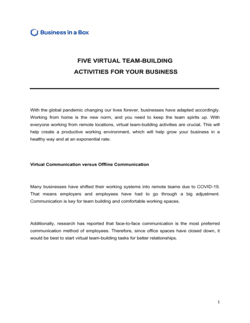
Yes. Virtual team building activities are specifically designed for distributed groups and can be run over video conferencing tools with no special equipment. The most effective ones are short (20–40 minutes), repeatable, and structured so that quieter team members are drawn in rather than dominated by more vocal colleagues.
What makes a workplace culture document effective rather than decorative?
Effective culture documents name specific behaviors, not abstract values. 'We respond to internal messages within four business hours' is enforceable; 'we value responsiveness' is not. They also assign ownership, set review dates, and are created with input from the people they govern — not handed down from leadership as a finished product.

Team Culture and Engagement vs. related documents

Team Charter vs. Team Agreement

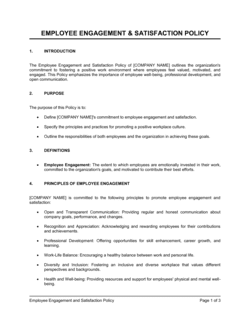
A team charter is a foundational document created when a team forms, establishing its purpose, scope, membership, and operating principles. A team agreement — or team work agreement — focuses more narrowly on day-to-day behavioral norms: how the team communicates, handles conflict, and makes decisions. Use a charter at launch; use an agreement to manage ongoing working relationships. Many teams benefit from having both.

Employee engagement policy vs. workplace culture guide

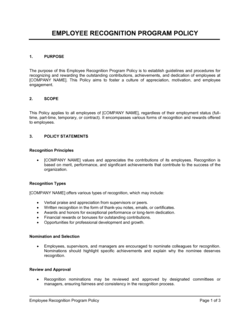
An employee engagement policy is a formal HR document that sets measurable standards and responsibilities for maintaining workforce engagement — often tied to performance reviews or compliance requirements. A workplace culture guide is a practical playbook that helps leaders diagnose culture gaps and take deliberate action to close them. Policies set obligations; guides provide the tools to meet them.

Team building guide vs. team building exercises

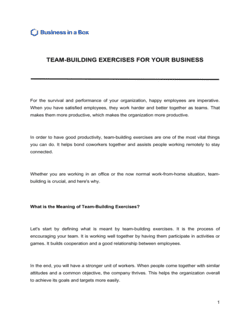
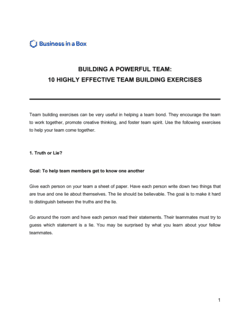
A team building guide provides strategic context — why team building matters, how to identify the right approach, and how to measure results. Team building exercises are specific, ready-to-run activities that a manager or facilitator can use in a meeting or offsite. Start with the guide to set the strategy, then pick exercises that match your team's needs.

Community engagement plan vs. stakeholder engagement plan

A community engagement plan focuses on an organization's relationship with the broader public, local communities, or civic groups — often relevant for CSR, municipal projects, or social enterprises. A stakeholder engagement plan addresses specific internal and external stakeholders with a direct interest in a project or decision. Both require structured outreach, but their audiences and objectives differ significantly.

Key clauses every Team Culture and Engagement contains

Whether it's a policy, a charter, or a guide, effective team culture and engagement documents share the same core structural elements.

  • Purpose and scope. States why the document exists, which teams or roles it applies to, and what it is intended to achieve.
  • Roles and responsibilities. Identifies who is accountable for implementing, maintaining, and reviewing the document's commitments.
  • Expected behaviors and norms. Describes the specific conduct, communication styles, or working practices the team agrees to follow.
  • Goals and success metrics. Defines what good looks like — measurable targets or observable outcomes that indicate healthy engagement or culture.
  • Communication protocols. Specifies how the team communicates: channels, response time expectations, meeting cadences, and escalation paths.
  • Conflict resolution process. Outlines how disagreements are raised and resolved, preventing small tensions from becoming organizational problems.
  • Review and update cadence. Sets how often the document is revisited — typically quarterly or annually — and who triggers the review.
  • Acknowledgement and sign-off. Confirms that all team members or stakeholders have read and agreed to the document's contents.

How to write a team culture and engagement document

The format varies — charter, policy, guide, or agreement — but the drafting process follows the same sequence regardless of which document you're creating.

  1. 1

    Identify the audience and purpose

    Clarify who the document is for — a single team, a department, or the whole organization — and what specific problem it solves.

  2. 2

    Diagnose the current state

    Gather data through surveys, one-on-ones, or a structured worksheet to understand existing culture gaps or engagement pain points before writing.

  3. 3

    Define the desired outcomes

    Write 2–4 measurable goals the document should help the team achieve — for example, reduced turnover, higher eNPS scores, or faster conflict resolution.

  4. 4

    Draft the norms and expectations

    Translate desired outcomes into concrete behaviors: how the team will communicate, make decisions, handle disagreements, and recognize contributions.

  5. 5

    Assign ownership and accountability

    Name a person or role responsible for each commitment so that the document drives action rather than sitting on a shared drive.

  6. 6

    Review with the team

    Share the draft with the people it affects before finalizing — input from team members improves buy-in and catches gaps the author missed.

  7. 7

    Set a review date and communicate it

    Schedule the first review before you publish the document — most teams revisit culture and engagement documents every 6–12 months.

At a glance

What it is
Team culture and engagement documents are structured frameworks, policies, and guides that help organizations define how teams work together, set shared expectations, and foster an environment where people are motivated to contribute. They range from formal policies and charters to practical worksheets and activity guides.
When you need one
Any time you're onboarding a new team, restructuring a department, managing remote workers, or seeing signs of disengagement — a written culture and engagement document gives everyone a shared reference point and a clear path forward.

Which Team Culture and Engagement do I need?

The right template depends on whether you're establishing team norms, setting policy, running structured activities, or improving how a specific group works together. Use the scenarios below to find the closest match.

Your situation
Recommended template

Launching a new team and need to set shared norms and goals

Defines a team's purpose, roles, operating norms, and success metrics in one document.

HR needs a formal policy on employee engagement and satisfaction

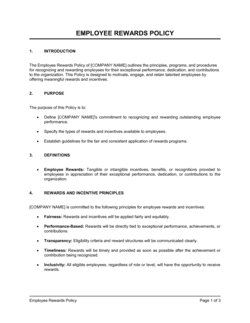
Provides an official framework for measuring and improving workforce engagement.

Managing a distributed or fully remote workforce

Covers communication cadences, accountability structures, and remote work expectations.

Running a sprint team or cross-functional agile squad

Sets agile-specific norms around ceremonies, definition of done, and collaboration.

Planning team-building activities for an in-person group

Provides a structured set of exercises proven to strengthen interpersonal trust.

Building team cohesion for employees working from home

Addresses the specific engagement challenges of remote-only teams.

Defining how a team will collaborate and resolve conflict day-to-day

Documents agreed-upon working norms, communication preferences, and conflict protocols.

Shaping overall workplace culture from the ground up

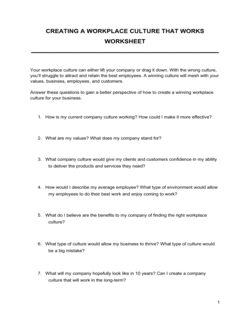
Provides a step-by-step guide to diagnosing and deliberately designing company culture.

Glossary

Employee engagement
The degree to which employees are emotionally committed to their organization's goals and willing to put in discretionary effort.
Team charter
A written document that establishes a team's purpose, membership, decision-making authority, and operating norms at formation.
Team work agreement
A shorter, behavioral document that records how a specific team agrees to communicate, collaborate, and resolve conflict day-to-day.
Workplace culture
The shared values, behaviors, and unwritten rules that shape how work gets done inside an organization.
eNPS (Employee Net Promoter Score)
A single-question survey metric that measures how likely employees are to recommend their organization as a place to work.
Psychological safety
A team climate where members feel safe to speak up, ask questions, and flag mistakes without fear of embarrassment or punishment.
Agile team agreement
A team agreement tailored to agile working environments, covering sprint ceremonies, definitions of done, and iterative feedback norms.
Stakeholder engagement
The structured process of identifying, communicating with, and involving parties who have an interest in a project or organizational decision.
Community engagement
An organization's deliberate efforts to build relationships with and respond to the needs of the communities it operates in or affects.
Delegation
The assignment of responsibility and authority for a task or decision to another person, freeing leaders to focus on higher-priority work.
Distributed team
A team whose members work from different physical locations, whether across a city, a country, or multiple time zones.

What is a team culture and engagement document?

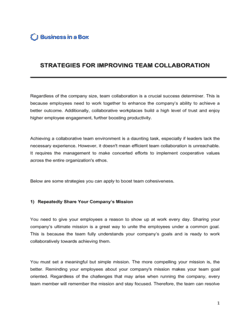
A team culture and engagement document is any structured template, policy, guide, or agreement that helps an organization define how its people work together, what they value, and how they stay motivated and aligned. The category spans a wide range — from a formal employee engagement policy that HR enforces across a company, to a lightweight team work agreement that a six-person squad writes for itself on a Friday afternoon. What these documents share is a commitment to making the implicit explicit: putting shared expectations in writing so that everyone works from the same understanding.

Culture and engagement documents operate at two levels. At the organizational level, they establish policy: what leadership commits to, how engagement is measured, and what standards apply across departments. At the team level, they translate those policies into day-to-day behavior: how this specific team communicates, makes decisions, handles disagreement, and recognizes each other's contributions. Both levels matter — organizations that have strong culture policies but no team-level norms often see inconsistent execution; teams with strong internal agreements but no organizational backing struggle to sustain engagement through change.

When you need a team culture and engagement template

Most teams need these documents at a predictable set of inflection points: when a team forms, when its composition changes significantly, when engagement metrics decline, or when leadership decides to address a cultural problem that has been visible for some time but never formally tackled.

Common triggers:

  • A new team is launched and needs a charter to align on purpose, roles, and norms before work begins
  • A company is scaling and informal culture is breaking down as headcount grows
  • A manager notices rising turnover, declining survey scores, or recurring interpersonal conflict
  • A previously co-located team moves to a hybrid or fully remote model
  • An HR leader needs a formal, auditable policy for employee engagement to satisfy a compliance review
  • A leadership team wants to run a structured team-building program rather than ad hoc activities
  • A cross-functional project team needs a shared work agreement before a high-stakes initiative starts
  • An organization commits to a community or social responsibility program and needs a formal engagement plan

Skipping these documents doesn't mean the problems go away — it means they persist without a shared language to name them or a process to resolve them. A written culture or engagement document gives leaders and teams a durable reference point, a built-in review cycle, and clear ownership so that commitments don't fade when attention moves elsewhere.

Award-winning platform

  • Great Place to Work 2025
  • BIG Award — Product of the Year 2025
  • Smartest Companies 2025
  • Global 100 Excellence 2026
  • Best of the Best 2025

Create your document in 3 simple steps.

From template to signed document — all inside one Business Operating System.
1
Download or open template

Access over 3,000+ business and legal templates for any business task, project or initiative.

2
Edit and fill in the blanks with AI

Customize your ready-made business document template and save it in the cloud.

3
Save, Share, Send, Sign

Share your files and folders with your team. Create a space of seamless collaboration.

Save time, save money, and create top-quality documents.

★★★★★

"Fantastic value! I'm not sure how I'd do without it. It's worth its weight in gold and paid back for itself many times."

Managing Director · Mall Farm
Robert Whalley
Managing Director, Mall Farm Proprietary Limited
★★★★★

"I have been using Business in a Box for years. It has been the most useful source of templates I have encountered. I recommend it to anyone."

Business Owner · 4+ years
Dr Michael John Freestone
Business Owner
★★★★★

"It has been a life saver so many times I have lost count. Business in a Box has saved me so much time and as you know, time is money."

Owner · Upstate Web
David G. Moore Jr.
Owner, Upstate Web

Run your business with a system — not scattered tools

Stop downloading documents. Start operating with clarity. Business in a Box gives you the Business Operating System used by over 250,000 companies worldwide to structure, run, and grow their business.

Free Forever Plan · No credit card required