10 Highly Effective Team Building Exercises Template

Free to read β€’ Save or share with one click

Free10 Highly Effective Team Building Exercises Template

At a glance

What it is
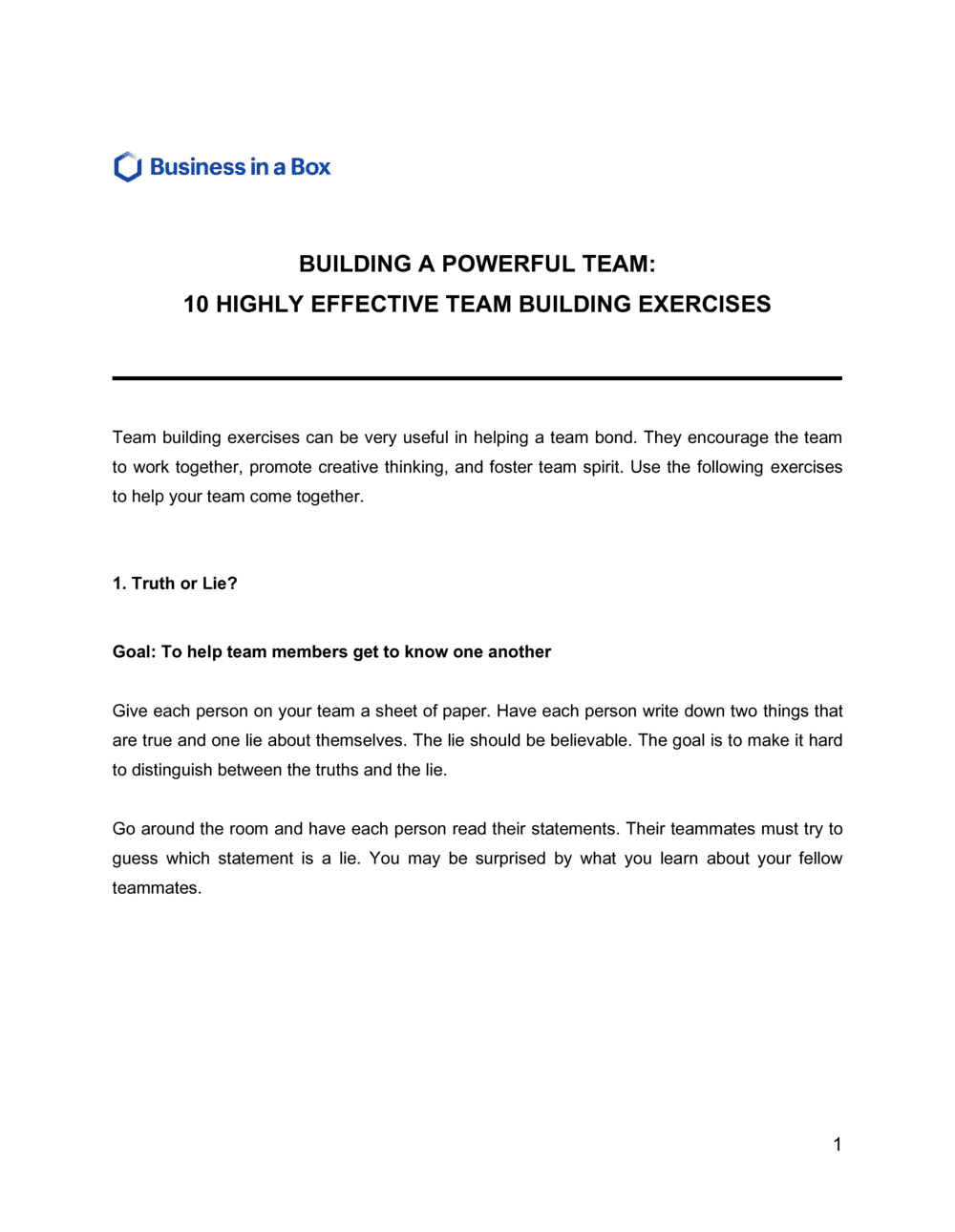
The 10 Highly Effective Team Building Exercises template is a free Word download that gives managers and HR professionals a structured, ready-to-run collection of ten facilitated activities designed to improve communication, trust, and collaboration within workplace teams. Each exercise includes an objective, step-by-step instructions, time requirements, and a debrief guide β€” so facilitators can run a session with minimal preparation.
When you need it
Use it when onboarding a new team, after a merger or reorganization that has mixed previously separate groups, before a major project kick-off, or when a manager notices declining morale, communication breakdowns, or cross-functional friction. It works equally well for in-person and remote teams.
What's inside
Ten fully detailed exercises covering icebreakers, communication challenges, problem-solving tasks, trust-building activities, and collaborative reflection exercises. Each exercise entry specifies group size, duration, materials needed, facilitator notes, and a structured debrief with discussion prompts to anchor learning.

What is a 10 Highly Effective Team Building Exercises document?

A 10 Highly Effective Team Building Exercises document is a structured facilitation guide that provides managers, HR professionals, and team leads with ten ready-to-run workplace activities designed to build communication, trust, and collaboration within a team. Each exercise entry covers the objective, group size, time requirements, step-by-step facilitation instructions, facilitator watch-outs, and a structured debrief guide with open-ended discussion prompts. Unlike a generic list of activity ideas, this template gives the facilitator everything needed to run a purposeful session and connect the experience directly to on-the-job behavior change.

Why You Need This Document

Without a structured facilitation guide, team building sessions default to entertainment β€” activities that feel good in the moment but produce no measurable change in how the team communicates or collaborates. Managers who run ad hoc exercises without debriefs consistently report that their teams enjoyed the day but returned to the same patterns within a week. This template closes that gap by pairing every activity with a debrief sequence that surfaces real insights and commits the team to specific behavioral changes. It also eliminates the preparation time that stops many managers from running sessions at all β€” instead of building a session from scratch, a facilitator can go from template to a fully prepared three-hour session in under two hours. For HR teams, distributed copies ensure consistent session quality across departments and locations, whether teams are in-person, remote, or hybrid.

Which variant fits your situation?

If your situation is…Use this template
Running a half-day onboarding event for new hires10 Highly Effective Team Building Exercises
Planning a full annual company retreat with structured programmingCorporate Retreat Agenda
Addressing specific communication breakdowns between two teamsConflict Resolution Plan
Tracking ongoing employee engagement and moraleEmployee Satisfaction Survey
Structuring performance conversations after the team sessionEmployee Performance Review
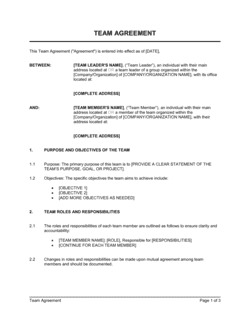
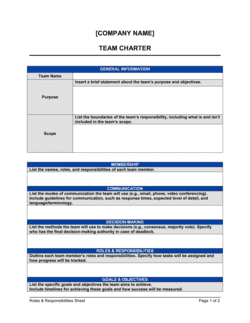
Rolling out team norms and behavioral expectationsTeam Charter
Delivering exercises as part of a formal training curriculumTraining Plan Template

Common mistakes to avoid

❌ Skipping the debrief to save time

Why it matters: The activity creates the experience; the debrief creates the learning. Without it, participants have a fun hour but carry nothing back to how they actually work together.

Fix: Build debrief time into every exercise's time block as non-negotiable. If you are running short, shorten the activity β€” never the debrief.

❌ Choosing exercises based on entertainment value rather than development need

Why it matters: Exercises selected because they sound fun β€” not because they target a specific gap β€” produce good memories and no behavior change, eroding team trust in future development sessions.

Fix: Diagnose the team's specific communication or trust gap before selecting exercises. Match each activity to a named outcome that the team's manager is already trying to develop.

❌ Running in-person exercises unchanged for virtual teams

Why it matters: Physical activities on a video call exclude remote participants, create awkward silence, and reinforce the perception that the organization does not consider remote workers equally.

Fix: Use the virtual adaptation notes for every exercise. Test digital tools β€” Miro, Jamboard, Mentimeter β€” at least 30 minutes before the session starts.

❌ No follow-up after the session

Why it matters: Research on training transfer consistently shows that without post-session reinforcement, 70% of learned behaviors revert within a week. A single team building day without follow-up produces no measurable long-term change.

Fix: Document the two or three specific commitments the team made during the debrief, assign owners and dates, and schedule a four-week check-in before participants leave the room.

The 9 key sections, explained

Exercise overview and objectives

Group size and time requirements

Materials and preparation checklist

Step-by-step activity instructions

Facilitator notes and watch-outs

Debrief questions and discussion guide

Virtual and hybrid adaptation notes

Difficulty and energy level rating

Learning outcome and workplace connection

How to fill it out

  1. 1

    Identify the team's primary development need

    Before selecting exercises, diagnose what the team actually needs β€” improved communication, stronger trust, better cross-functional collaboration, or post-conflict rebuilding. Talk to two or three team members and the manager before the session.

    πŸ’‘ A one-question pre-session pulse check ('What is the one thing that would make this team more effective?') takes five minutes and surfaces themes the manager may not have named.

  2. 2

    Select and sequence four to six exercises

    Choose exercises that build progressively β€” start with a low-risk icebreaker, move to communication or problem-solving challenges, and close with a reflective or collaborative exercise. Avoid stacking competitive exercises consecutively.

    πŸ’‘ A 3-hour session typically fits three to four exercises with full debriefs. Four to five hours allows five to six. Cutting exercises is better than cutting debriefs.

  3. 3

    Customize group size and time blocks for your team

    Fill in the participant count, group size for breakouts, and total time available for each selected exercise. Adjust the step-by-step instructions if your group is larger or smaller than the template default.

    πŸ’‘ For groups over 20, designate a co-facilitator for breakout rooms or tables so no sub-group is unsupervised during the activity.

  4. 4

    Prepare materials and logistics 24 hours in advance

    Print the materials checklist for each exercise and gather or order every item the day before. For virtual sessions, test all tools β€” Miro boards, breakout rooms, shared timers β€” with a five-minute technical check the morning of the session.

    πŸ’‘ Create a facilitator one-pager for each exercise with the objective, timing, and debrief questions on a single printed sheet. This frees you from scrolling the template during the session.

  5. 5

    Run the session and track group dynamics

    Follow the step-by-step instructions and use the facilitator watch-outs to intervene if one voice dominates or the group goes quiet. Note specific behaviors you observe β€” who collaborates, who withdraws, where communication breaks down.

    πŸ’‘ Take brief notes during activities, not during the debrief. Active facilitation during the debrief is more valuable than documentation.

  6. 6

    Complete the debrief for every exercise

    Run the full debrief question sequence after each exercise, not just at the end of the session. Use the open-ended questions as written and resist the urge to answer them yourself if the group is slow to respond.

    πŸ’‘ A 5-second silence after a debrief question is normal and productive. Wait it out before rephrasing β€” groups almost always respond if you hold the pause.

  7. 7

    Document outcomes and share follow-up commitments

    After the session, write a one-page summary of what each team committed to doing differently, and share it with participants and their manager within 48 hours. Assign a person and a date to each commitment.

    πŸ’‘ Schedule a 15-minute check-in four weeks after the session to review which commitments were kept. This one step converts a one-day event into a sustained behavior change.

Frequently asked questions

What are team building exercises?

Team building exercises are structured activities facilitated in a group setting to develop specific workplace skills β€” communication, trust, problem-solving, and collaboration. Unlike casual social events, effective team building exercises pair the activity with a structured debrief that connects the experience to on-the-job behaviors. The goal is measurable improvement in how the team functions together, not just a positive day out.

How often should a team do team building exercises?

Most teams benefit from a structured team building session two to four times per year β€” typically at the start of a new project, after a major organizational change, or as part of an annual offsite. Ad hoc sessions can be run more frequently for new teams or high-conflict situations. Monthly low-stakes activities (a short icebreaker at the start of a team meeting) can sustain the cohesion built in full sessions.

Do team building exercises work for remote teams?

Yes, with adaptation. Many of the most effective communication and problem-solving exercises translate directly to virtual settings using tools like Miro, Zoom breakout rooms, or Mentimeter. The key adjustments are shortening activity blocks by 20% to account for digital fatigue, appointing a co-facilitator to monitor the chat, and testing all tools in advance. Exercises that require physical presence β€” trust falls, outdoor challenges β€” need full redesign for remote use.

What makes a team building exercise effective?

Three factors consistently distinguish effective exercises from recreational ones: a clear, named behavioral objective linked to a real team gap; a structured debrief that draws explicit connections to on-the-job behavior; and a documented follow-up with named commitments and a check-in date. Exercises that lack any one of these elements tend to be remembered positively but produce no lasting change.

What is the right group size for team building exercises?

Most exercises in this template work best with groups of 8 to 20 participants. Groups under 8 can feel under-resourced for activities requiring role diversity. Groups over 20 require breakout sub-groups of 4 to 6, a co-facilitator, and more structured debrief management. For all-company sessions over 50 people, exercises should be run simultaneously in parallel breakout groups with a single whole-group debrief at the end.

How long should a team building session last?

A focused half-day session (3–4 hours) typically accommodates three to four exercises with full debriefs. A full-day session (6–7 hours) allows five to six exercises with breaks and a closing reflection. Avoid compressing more than four exercises into a half-day β€” the debrief time is always the first casualty of an overloaded agenda, and it is the most important part of each activity.

Who should facilitate team building exercises?

An internal facilitator β€” an HR manager, L&D specialist, or team leader not part of the team being developed β€” works well for standard sessions. Hire an external facilitator when the team has significant interpersonal conflict that requires a neutral party, when senior leadership is participating in the session alongside their reports, or when the outcome needs to be documented for a formal culture or OD initiative.

How do I measure whether team building exercises worked?

Track two types of indicators: behavioral (did the team adopt the specific communication or collaboration behaviors named in the debrief commitments?) and outcome-based (did project delivery speed, meeting effectiveness, or employee survey scores improve in the four to eight weeks following the session?). A simple pre/post pulse survey β€” three questions on communication quality, trust, and collaboration β€” takes five minutes and gives you a defensible before-and-after comparison.

Can team building exercises fix a toxic team culture?

Team building exercises improve communication skills and interpersonal awareness in functional teams, but they are not a substitute for addressing structural issues β€” poor management, unclear roles, pay inequity, or persistent interpersonal conflict. If the underlying problems are systemic, exercises may temporarily improve surface dynamics while deeper issues remain. In toxic team situations, address root causes first and use team building as a reinforcement tool, not the primary intervention.

How this compares to alternatives

vs Employee Satisfaction Survey

An employee satisfaction survey measures how employees feel about their work environment β€” it is a diagnostic tool, not an intervention. Team building exercises are the intervention. Use the survey first to identify the specific gaps, then select exercises that directly address the lowest-scoring areas.

vs Team Charter

A team charter documents agreed norms, roles, and working practices β€” the output of alignment work. Team building exercises create the shared experiences and conversations that make a charter authentic rather than aspirational. Run the exercises first, then codify what the team agreed in a charter.

vs Training Plan Template

A training plan structures the delivery of knowledge and skill content across a curriculum, typically over weeks or months. Team building exercises are single-session experiential activities, not a curriculum. They can be embedded within a training plan as a module but serve a distinct interpersonal development purpose.

vs Performance Review Template

A performance review evaluates an individual's contribution against defined goals β€” it is a manager-to-employee conversation. Team building exercises develop the interpersonal dynamics that make individual performance possible. Both are necessary; neither substitutes for the other.

Industry-specific considerations

Technology / SaaS

Cross-functional sprint teams and remote-first cultures make structured trust and communication exercises especially high-value before major product launches or engineering re-orgs.

Healthcare

High-stakes communication failures between clinical and administrative teams drive patient safety risks β€” exercises focused on active listening and closed-loop communication address a documented operational need.

Professional Services

Client-facing teams assembled around individual engagements benefit from rapid cohesion exercises run during project kick-off weeks before client work begins.

Manufacturing

Shift-based teams with limited overlap use structured activities during safety training days or quarterly all-hands to build cross-shift communication and surface operational friction.

Template vs pro β€” what fits your needs?

PathBest forCostTime
Use the templateHR managers, team leaders, and office managers running internal sessions for functional teamsFree2–4 hours of preparation per session
Template + professional reviewTeams with known interpersonal friction or a facilitator running their first structured session$200–$500 for a single session debrief with an HR consultantHalf-day session plus 1 hour of pre-session consultation
Custom draftedLarge all-company events, post-conflict team rebuilds, or L&D programs requiring custom exercises tied to company values$1,500–$8,000 for an external organizational development facilitator2–6 weeks of design and facilitation

Glossary

Facilitation
The act of guiding a group through an activity or discussion in a neutral, structured way that keeps participants on task and ensures everyone contributes.
Debrief
A structured discussion held immediately after an exercise to surface what participants learned, how they felt, and how the experience connects to real work situations.
Psychological Safety
A team climate in which members feel safe to speak up, ask questions, admit mistakes, and take interpersonal risks without fear of embarrassment or punishment.
Icebreaker
A short, low-stakes opening activity designed to reduce social tension and help participants feel comfortable before a longer session begins.
Trust Fall Exercise
A physical or metaphorical activity in which one participant relies entirely on others, used to demonstrate dependence and build interpersonal trust.
Cross-functional Team
A group made up of members from different departments or disciplines who work together on a shared goal, requiring intentional communication norms.
Active Listening
A communication practice in which the listener fully concentrates, acknowledges, and responds to what is being said rather than passively hearing words.
Team Charter
A written agreement that defines a team's purpose, roles, working norms, and decision-making process β€” often created as a follow-on to team building sessions.
Retrospective
A structured reflection meeting β€” borrowed from agile methodology β€” in which a team discusses what went well, what didn't, and what to change going forward.
Engagement
The degree to which employees are emotionally invested in their work and their team, measured through participation, discretionary effort, and retention indicators.

Part of your Business Operating System

This document is one of 3,000+ business & legal templates included in Business in a Box.

  • Fill-in-the-blanks β€” ready in minutes
  • Compatible with all office suites
  • Export to PDF and share electronically

Create your document in 3 simple steps.

From template to signed document β€” all inside one Business Operating System.
1
Download or open template

Access over 3,000+ business and legal templates for any business task, project or initiative.

2
Edit and fill in the blanks with AI

Customize your ready-made business document template and save it in the cloud.

3
Save, Share, Send, Sign

Share your files and folders with your team. Create a space of seamless collaboration.

Save time, save money, and create top-quality documents.

β˜…β˜…β˜…β˜…β˜…

"Fantastic value! I'm not sure how I'd do without it. It's worth its weight in gold and paid back for itself many times."

Managing Director Β· Mall Farm
Robert Whalley
Managing Director, Mall Farm Proprietary Limited
β˜…β˜…β˜…β˜…β˜…

"I have been using Business in a Box for years. It has been the most useful source of templates I have encountered. I recommend it to anyone."

Business Owner Β· 4+ years
Dr Michael John Freestone
Business Owner
β˜…β˜…β˜…β˜…β˜…

"It has been a life saver so many times I have lost count. Business in a Box has saved me so much time and as you know, time is money."

Owner Β· Upstate Web
David G. Moore Jr.
Owner, Upstate Web

Run your business with a system β€” not scattered tools

Stop downloading documents. Start operating with clarity. Business in a Box gives you the Business Operating System used by over 250,000 companies worldwide to structure, run, and grow their business.

Free Forever PlanΒ Β·Β No credit card required