Compliance and Audits Templates

4.7from 280+ reviews Trusted by 20M+ businesses

Keep your business audit-ready with policies, checklists, and agreements for every compliance obligation.

WordEditable onlinePDF16+ compliance and audit templates

Other Administration categories

250K+Clients
20M+Free users
20+Years
190+Countries
10,000+Law firms
50M+Downloads

Trusted across review platforms

  • Capterra★★★★☆4.649 reviews
  • G2★★★★☆4.713 reviews
  • GetApp★★★★☆4.649 reviews
  • Google Play★★★★☆4.6179 ratings
  • Google Reviews★★★★☆4.567 reviews

Related categories

Frequently asked questions

What is a compliance policy?
A compliance policy is a formal internal document that defines how a business will meet a specific legal or regulatory obligation. It names the rules that apply, assigns responsibility for following them, and describes the procedures the organization will use to stay compliant. Most businesses maintain separate policies for areas like tax, IT, trade, and employment law.
Do small businesses need compliance documents?
Yes. Small businesses face many of the same legal obligations as large ones — tax filing requirements, employment law, data protection, and industry-specific regulations — but with fewer internal resources to manage them. Written compliance documents reduce the risk of overlooked obligations and provide documentation that auditors and regulators expect to see.
How often should compliance policies be reviewed?
At minimum once per year, and immediately after any relevant change in law, regulation, or internal business structure. High-risk areas like export control, data protection, and tax compliance may warrant more frequent reviews given how often the underlying rules change.
What does a compliance checklist do that a policy doesn't?
A policy sets the standard; a checklist verifies that the standard is being met in practice. Checklists are point-in-time audit tools that walk through each requirement and confirm it has been satisfied. Running a checklist before an external audit helps identify and close gaps before a regulator does.
Who should be responsible for compliance in a small business?
In small businesses, compliance responsibility often sits with the owner, CFO, or office manager rather than a dedicated compliance officer. As the business grows, it becomes practical to designate or hire a compliance officer — a role with specific duties and qualifications that should be documented in a job description to avoid ambiguity.
What is the difference between a compliance agreement and a policy?
A compliance policy is an organizational-level document that applies broadly. A compliance agreement is signed by a specific individual — typically an employee or vendor — to confirm they understand and accept their personal obligations. The agreement creates individual accountability and a signed record that is useful if a dispute arises later.
Can a compliance document protect a business during an audit?
Having written, current compliance documents is generally one of the first things auditors and regulators look for. They demonstrate that the organization has a deliberate compliance program rather than ad hoc practices. No document guarantees a clean audit, but the absence of documentation is itself a finding in most regulatory frameworks.
What is trade compliance?
Trade compliance refers to a company's adherence to the laws and regulations governing international trade — including import duties, export controls, customs procedures, sanctions lists, and trade agreements. Companies that import or export goods, technology, or services typically need a written trade compliance policy to manage these obligations consistently.

Compliance And Audit vs. related documents

Compliance policy vs. compliance checklist

A compliance policy is a standing document that defines rules, responsibilities, and procedures for meeting an obligation on an ongoing basis. A compliance checklist is a point-in-time tool used to verify that those rules are actually being followed. Policies set the standard; checklists confirm adherence. Most businesses need both — the policy to govern and the checklist to audit.

Compliance agreement vs. compliance policy

A compliance policy is an internal document the organization enforces broadly. A compliance agreement is a signed acknowledgment from a specific individual — an employee, vendor, or partner — that they understand and accept the obligations set out in a policy. The agreement creates individual accountability; the policy creates the framework.

Internal audit vs. external audit

An internal audit is conducted by the organization itself (or an internal team) to identify gaps and improve controls before problems escalate. An external audit is conducted by a third party — a regulator, CPA firm, or certifying body — and produces findings that may carry legal or contractual consequences. Internal compliance checklists and policies help you prepare for and pass external audits.

Trade compliance policy vs. export control policy

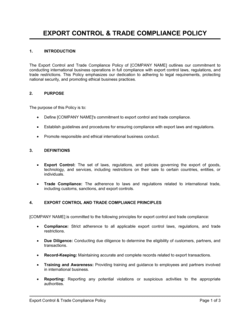
A trade compliance policy covers the full spectrum of international trade regulations, including import duties, customs procedures, and trade agreements. An export control policy focuses specifically on the laws governing what goods, technology, and information may be sent to foreign parties, and to whom. Companies with complex international operations often maintain both documents.

Key clauses every Compliance And Audit contains

Compliance documents vary by type, but the following structural elements appear — in some form — across policies, checklists, and agreements in this category.

  • Scope and applicability. Defines which employees, departments, locations, or transactions the document covers.
  • Regulatory reference. Identifies the specific laws, standards, or regulations the document is designed to satisfy.
  • Roles and responsibilities. Names who owns each compliance obligation — the compliance officer, department heads, or individual employees.
  • Procedures and controls. Describes the specific actions required to remain compliant, such as filing deadlines, approval workflows, or access controls.
  • Monitoring and review. Specifies how often the policy or checklist will be reviewed and updated to stay current with regulatory changes.
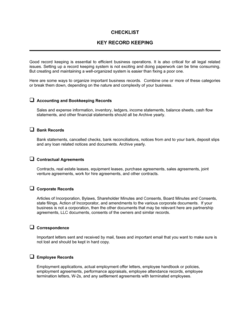
  • Recordkeeping requirements. States which records must be kept, in what format, and for how long to satisfy audit requirements.
  • Breach and escalation procedures. Explains what happens when a compliance gap or violation is identified — who is notified and what corrective steps follow.
  • Acknowledgment or sign-off. In agreements and some policies, requires a signature confirming the individual has read and understood their obligations.

How to write a compliance policy or audit document

Effective compliance documents are specific, actionable, and tied directly to the regulations they address — vague statements don't protect you during an audit.

  1. 1

    Identify the regulatory requirement

    Name the specific law, regulation, or standard (e.g., IRS rules, GDPR, export control law) the document is designed to address.

  2. 2

    Define the scope

    Specify exactly which people, processes, systems, or business units the policy or checklist applies to.

  3. 3

    Assign clear ownership

    Name a responsible individual or role — typically a compliance officer or department head — for each obligation.

  4. 4

    Write specific procedures

    Replace general language like 'follow all applicable laws' with step-by-step actions, deadlines, and approval requirements.

  5. 5

    Set monitoring and review cycles

    Schedule regular reviews — at minimum annually — to update the document when regulations change.

  6. 6

    Define recordkeeping requirements

    State what documentation must be retained, in what format, and for how long to satisfy auditors and regulators.

  7. 7

    Obtain sign-off and distribute

    Have authorized leadership approve the document, then distribute it to all affected employees with a signed acknowledgment.

At a glance

What it is
Compliance and audit documents are the formal policies, checklists, and agreements a business uses to demonstrate that it meets legal, regulatory, and internal requirements. Together they create a paper trail that protects the organization during external audits and internal reviews.
When you need one
Any time a regulator, auditor, investor, or new hire asks how your business manages its legal obligations, these documents provide the structured answer.

Which Compliance And Audit do I need?

The right compliance document depends on which obligation you're addressing and whether you need a policy, a checklist, or an operational agreement. Match your situation below.

Your situation
Recommended template

Setting rules for how your business meets tax obligations

Defines internal procedures for tax filing, reporting, and record-keeping.

Managing cross-border trade and import/export rules

Covers export licensing, restricted parties, and trade-law obligations.

Establishing IT governance and data compliance standards

Sets expectations for data handling, system access, and IT regulatory compliance.

Running a quick compliance review across the whole business

A broad-scope checklist that surfaces gaps across multiple compliance areas.

Conducting a structured compliance check for a specific area

Focused checklist format for auditing compliance in a defined function or process.

Hiring someone to own compliance obligations inside the organization

Defines responsibilities, qualifications, and reporting lines for a compliance role.

Getting employees or vendors to formally acknowledge compliance obligations

Creates a signed record that individuals understand and accept their obligations.

Measuring how well employees understand and follow internal compliance rules

Captures employee awareness and identifies training or policy gaps.

Glossary

Compliance
The state of meeting all applicable legal, regulatory, and internal requirements relevant to a business's operations.
Audit
A systematic review of records, processes, or controls to verify that obligations are being met.
Compliance officer
The individual responsible for overseeing a company's compliance program, identifying risks, and ensuring obligations are met.
Regulatory requirement
A specific rule imposed by a government body or industry regulator that a business must satisfy to operate lawfully.
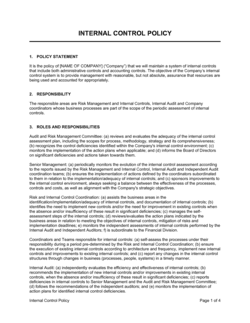
Internal control
A process or procedure put in place to prevent errors, fraud, or regulatory violations within an organization.
Export control
Laws and regulations governing what goods, software, technology, and information can be sent to foreign recipients, and under what conditions.
Trade compliance
Adherence to the full set of laws governing international trade, including customs, import duties, sanctions, and export controls.
IT governance
The framework of policies and controls that ensures an organization's IT systems, data, and processes meet legal and business requirements.
Recordkeeping
The organized retention of business documents and data for a required period so they can be produced during an audit or legal proceeding.
Compliance gap
A specific area where current business practice falls short of a legal, regulatory, or policy requirement.
Due diligence
The process of investigating a business's operations or obligations before a transaction, audit, or regulatory review.

What is a compliance and audit document?

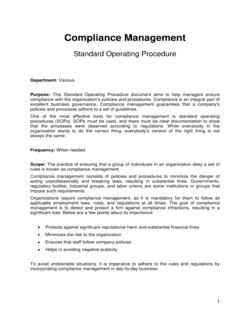
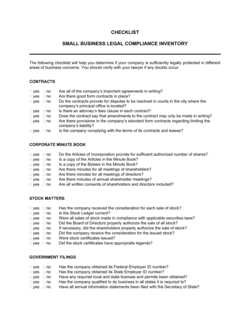
A compliance and audit document is any formal policy, checklist, agreement, or operational tool that a business uses to demonstrate it is meeting its legal, regulatory, and internal obligations. These documents form the backbone of a compliance program — they define the rules the organization follows, assign responsibility for following them, and create the paper trail that auditors and regulators expect to find when they review how a business operates.

Compliance documents fall into a few distinct types. Policies establish the rules and procedures for a specific obligation — tax filing, trade controls, or IT governance. Checklists are point-in-time tools used to verify that those rules are actively being followed. Agreements capture signed acknowledgments from employees or vendors confirming they understand their individual obligations. Management frameworks provide the broader operational structure for running a compliance program across multiple areas simultaneously.

Together, these documents reduce legal exposure, support internal accountability, and demonstrate good faith to external auditors — factors that matter whether your business is a two-person startup or a mid-market enterprise.

When you need a compliance and audit document

Most businesses need compliance documents before a problem arises, not after. Regulators and auditors assess whether an organization has a deliberate, structured approach to its obligations — improvised answers are rarely sufficient. Common triggers for building or formalizing compliance documentation include:

  • A new business is registering and needs to establish baseline legal compliance across tax, employment, and industry-specific rules
  • A company is preparing for an external audit by a tax authority, industry regulator, or certifying body
  • An IT team is formalizing data handling and system-access controls to meet privacy or security regulations
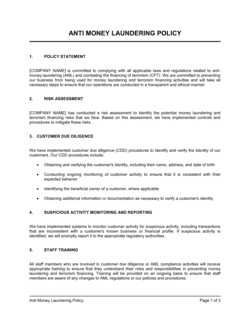
  • A business begins importing or exporting goods and needs to document its trade compliance procedures
  • Leadership is hiring a dedicated compliance officer and needs to define the role's responsibilities clearly
  • Employees are onboarded into roles with regulatory exposure and need to formally acknowledge their obligations
  • A compliance review has uncovered gaps and the business needs documentation to track remediation

Operating without written compliance documents doesn't eliminate legal obligations — it just makes them harder to manage and harder to prove. A well-structured set of compliance templates gives your organization a consistent, defensible foundation that scales as regulations evolve and your business grows.

Award-winning platform

  • Great Place to Work 2025
  • BIG Award — Product of the Year 2025
  • Smartest Companies 2025
  • Global 100 Excellence 2026
  • Best of the Best 2025

Create your document in 3 simple steps.

From template to signed document — all inside one Business Operating System.
1
Download or open template

Access over 3,000+ business and legal templates for any business task, project or initiative.

2
Edit and fill in the blanks with AI

Customize your ready-made business document template and save it in the cloud.

3
Save, Share, Send, Sign

Share your files and folders with your team. Create a space of seamless collaboration.

Save time, save money, and create top-quality documents.

★★★★★

"Fantastic value! I'm not sure how I'd do without it. It's worth its weight in gold and paid back for itself many times."

Managing Director · Mall Farm
Robert Whalley
Managing Director, Mall Farm Proprietary Limited
★★★★★

"I have been using Business in a Box for years. It has been the most useful source of templates I have encountered. I recommend it to anyone."

Business Owner · 4+ years
Dr Michael John Freestone
Business Owner
★★★★★

"It has been a life saver so many times I have lost count. Business in a Box has saved me so much time and as you know, time is money."

Owner · Upstate Web
David G. Moore Jr.
Owner, Upstate Web

Run your business with a system — not scattered tools

Stop downloading documents. Start operating with clarity. Business in a Box gives you the Business Operating System used by over 250,000 companies worldwide to structure, run, and grow their business.

Free Forever Plan · No credit card required