Worksheet Email Subscriber Engagement Strategy

Free download β€’ Use as a template β€’ Print or share

5 pagesβ€’20–30 min to useβ€’Difficulty: Standard
Learn more ↓
FreeWorksheet Email Subscriber Engagement Strategy Template

At a glance

What it is
A Worksheet Email Subscriber Engagement Strategy is a structured planning document that maps every element of your email program β€” from audience segmentation and content themes to send cadence, automation triggers, and performance benchmarks β€” into a single actionable reference. This free Word download lets you fill in your own data, edit online, and share with your marketing team or agency in minutes.
When you need it
Use it when building a new email program from scratch, auditing a stagnating list with declining open rates, or aligning a marketing team around a consistent sending strategy before a product launch or seasonal campaign.
What's inside
Audience segmentation matrix, content pillar mapping, send frequency and timing plan, automation and trigger workflow outline, re-engagement sequence design, KPI targets, A/B testing log, and a quarterly review checkpoint β€” all organized into labeled worksheet sections you complete with your own program data.

What is a Worksheet Email Subscriber Engagement Strategy?

A Worksheet Email Subscriber Engagement Strategy is a structured operational document that organizes every decision governing your email program β€” audience segmentation, content themes, send frequency, automation trigger logic, re-engagement sequences, KPI targets, and A/B testing schedules β€” into a single fillable reference. Rather than a high-level strategic overview, it functions as the working document your marketing team uses to make daily execution decisions and track results against defined benchmarks. The worksheet format means each section prompts you to enter your own program data, turning a blank framework into a living operational guide specific to your list and business goals.

Why You Need This Document

Without a documented engagement strategy, email programs drift into a pattern of full-list blasts sent on no fixed cadence with no defined audience logic β€” the single fastest route to declining open rates, rising unsubscribes, and eventual deliverability damage that affects every future send. The cost is measurable: undocumented programs consistently underperform segmented, strategy-driven programs on every engagement metric. Teams without a shared strategy document also make inconsistent decisions about send frequency and content, creating subscriber experiences that vary by whoever drafted the last campaign. This worksheet eliminates that inconsistency by giving every team member β€” and any agency or contractor you bring in β€” a single source of truth for how your list is managed, what each segment receives, and what success looks like at the next quarterly review.

Which variant fits your situation?

If your situation is…Use this template
Planning a full email marketing program for the first timeEmail Marketing Strategy Worksheet
Designing a drip sequence for new subscriber onboardingEmail Drip Campaign Planner
Recovering disengaged subscribers before a list purgeRe-Engagement Email Campaign Template
Planning a product launch email sequenceProduct Launch Email Plan
Documenting monthly newsletter content and scheduleContent Calendar Template
Tracking email campaign performance against benchmarksMarketing KPI Dashboard
Building a complete multi-channel marketing planMarketing Plan

Common mistakes to avoid

❌ Sending the same content to the entire list

Why it matters: Unsegmented sends consistently underperform segmented ones on open rate and CTOR. Subscribers at different lifecycle stages have different information needs, and irrelevant emails increase unsubscribe rates.

Fix: Define at minimum two segments β€” new subscribers and active subscribers β€” and tailor subject lines and body content to each before your next send.

❌ Setting send frequency by gut feeling rather than data

Why it matters: Too-frequent sends to disengaged subscribers accelerate list churn and damage sender reputation scores, reducing deliverability for all segments including active ones.

Fix: Analyze unsubscribe rates by send frequency for each segment over the past 90 days and adjust cadence to the frequency where churn is lowest.

❌ Building automation sequences without exit conditions

Why it matters: A subscriber who converts on Day 2 of a seven-email onboarding sequence receives five more irrelevant emails β€” damaging trust and increasing unsubscribes at the point of highest engagement.

Fix: Add a goal-completion trigger to every automated sequence that immediately removes converted subscribers and enrolls them in the appropriate next-stage sequence.

❌ Skipping the quarterly review and treating the worksheet as a one-time document

Why it matters: An email strategy built on 90-day-old assumptions produces declining results because subscriber behavior, seasonal patterns, and content preferences shift continuously.

Fix: Assign a specific owner and calendar date to each quarterly review checkpoint in the worksheet before it is published to the team.

The 9 key sections, explained

Audience segmentation matrix

Content pillar mapping

Send cadence and timing plan

Automation and trigger workflow outline

Re-engagement sequence design

KPI targets and benchmarks

A/B testing log and roadmap

Compliance and list hygiene checklist

Quarterly review and optimization checkpoint

How to fill it out

  1. 1

    Audit your current list before filling in any section

    Pull a full export from your email service provider showing subscriber count, last-open date, and acquisition source for every contact. Classify each subscriber into a lifecycle stage before defining segments.

    πŸ’‘ If more than 30% of your list has not opened an email in 90 days, prioritize the re-engagement sequence section before setting send cadence targets.

  2. 2

    Define your segments in the audience segmentation matrix

    Identify two to four meaningful segments based on behavior or lifecycle stage β€” for example, new subscribers (under 30 days), active engagers, at-risk (60–90 days inactive), and past customers. Record the criteria and current list size for each.

    πŸ’‘ Use behavioral criteria β€” opens and clicks β€” rather than demographic guesses when you are starting out. Behavioral segments produce measurably higher engagement within the first 60 days.

  3. 3

    Map content pillars to each segment's primary goal

    For each segment, assign one or two content pillars that align with what the subscriber needs at that stage. New subscribers need education and welcome content; active customers need product tips and loyalty offers.

    πŸ’‘ Limit yourself to four content pillars maximum. More than four typically means the strategy lacks focus and content production will fall behind send frequency.

  4. 4

    Set send cadence and timing for each segment

    Enter a specific send frequency and day-and-time target for each segment. For new data, use industry benchmarks as a starting point and note that you will update after 60 days of actual send data.

    πŸ’‘ Tuesday through Thursday, 10 a.m.–2 p.m. local time, is a reliable starting benchmark for B2B lists. B2C lists, especially e-commerce, often perform better on weekends and evenings.

  5. 5

    Document every automation sequence and its trigger

    List each automated workflow by name, the trigger event, the number of emails and their delay schedule, and the conversion goal. Include exit conditions that remove subscribers who complete the goal before the sequence ends.

    πŸ’‘ Draw a simple flowchart for sequences with more than three emails before entering them in the worksheet β€” logic errors in delay timing are much easier to catch visually.

  6. 6

    Design the re-engagement sequence

    Set your inactivity threshold, plan a two-to-three-email sequence with distinct messaging angles for each email, and define the final removal trigger for subscribers who remain unresponsive.

    πŸ’‘ Email two in the re-engagement sequence should be the most direct β€” a plain-text-style message with a single question like 'Still want to hear from us?' consistently outperforms image-heavy designs.

  7. 7

    Enter KPI targets and baseline metrics

    Record your current baseline open rate, CTOR, and unsubscribe rate from the last 90 days of sends. Set targets for the next quarter that represent a realistic improvement β€” typically 10–15% above baseline for an optimized program.

    πŸ’‘ Do not use published industry averages as your targets unless you have no historical data. Your baseline is the only honest starting point for goal-setting.

  8. 8

    Schedule the quarterly review checkpoint

    Set a calendar date for your first quarterly review before completing the worksheet. Enter the review date in the checkpoint section and assign it to a specific owner.

    πŸ’‘ Block two hours for the quarterly review β€” one hour to analyze performance data and one hour to update the worksheet with revised targets and strategy changes.

Frequently asked questions

What is an email subscriber engagement strategy?

An email subscriber engagement strategy is a documented plan that defines how a business communicates with its email list β€” covering audience segmentation, content themes, send frequency, automation triggers, and performance targets. It ensures every email sent has a defined purpose and audience rather than being sent to the full list as a generic blast. A worksheet format organizes these decisions into fillable sections that a marketing team can complete, review, and update each quarter.

Why does email engagement decline over time?

Engagement declines when subscribers stop finding value in the emails they receive β€” usually because content is too generic, send frequency is too high, or the subscriber's needs have changed since they signed up. Algorithm changes at major email clients like Gmail can also shift inbox placement without any change in sender behavior. A documented engagement strategy addresses all three causes by enforcing segmentation, testing cadence, and scheduling regular content audits.

How often should I email my subscribers?

There is no universal answer β€” optimal frequency depends on your industry, list composition, and content quality. B2B lists typically perform best at one to two emails per week; B2C and e-commerce lists can sustain three to five. The most reliable method is to test two frequencies on split segments and compare unsubscribe rates over 60 days. Document the winning cadence in your engagement strategy worksheet and revisit it each quarter.

What open rate should I target for my email program?

Industry benchmarks for average open rates range from 20–25% for B2B and 15–20% for B2C as of 2025, but these figures vary significantly by sector and list quality. A more useful target is 10–15% above your own 90-day baseline β€” that gives you a realistic, data-grounded improvement goal. Note that Apple Mail Privacy Protection has inflated raw open rates for lists with high iOS usage; CTOR is a more reliable engagement indicator for those lists.

What is a re-engagement sequence and when should I use one?

A re-engagement sequence is a series of two to four emails sent to subscribers who have not opened or clicked in a defined window β€” typically 60 to 90 days β€” before they are removed from active sends. Use it whenever your list contains more than 20% inactive subscribers or before a major campaign to ensure your deliverability is not dragged down by a large dormant segment. Subscribers who do not respond after the full sequence should be suppressed, not deleted, so you retain a record of the contact.

How is this worksheet different from an email marketing plan?

An email marketing plan is a strategic document that defines channels, budgets, campaign calendars, and business objectives at a high level. This worksheet is an operational companion that translates those decisions into executable rules β€” specific segments, trigger logic, KPI targets, and test schedules. You typically complete the marketing plan first, then use this worksheet to operationalize the email component.

Do I need separate strategies for different subscriber segments?

Yes. New subscribers, active customers, at-risk contacts, and dormant subscribers each have different engagement histories and information needs. Sending the same content at the same frequency to all four groups is the single most common cause of preventable list churn. The segmentation matrix section of this worksheet is designed to document a tailored approach for each group without requiring separate documents.

How do I measure whether my engagement strategy is working?

Track four core metrics over a rolling 90-day window: open rate, CTOR, unsubscribe rate per send, and list growth rate. Enter baseline values before launching the new strategy and compare actuals at the quarterly review checkpoint. A successful strategy typically shows a 10–20% improvement in CTOR and a measurable reduction in unsubscribe rate within the first two quarters of consistent execution.

What compliance requirements affect email subscriber engagement?

In the United States, CAN-SPAM requires a physical mailing address and a functioning unsubscribe mechanism honored within 10 business days. In Canada, CASL requires express or implied consent before sending commercial messages, with express consent required after a two-year implied-consent window. In the EU and UK, GDPR requires a lawful basis for processing subscriber data and clear consent records. The compliance checklist section of this worksheet prompts you to confirm each of these requirements is met before you begin sending.

How this compares to alternatives

vs Marketing Plan

A marketing plan covers all channels β€” paid, organic, social, email, and events β€” at a strategic level with budgets and campaign calendars. This worksheet focuses exclusively on the email channel and translates marketing plan decisions into operational rules: segmentation logic, trigger schedules, and KPI targets. Use the marketing plan first, then this worksheet to operationalize the email component.

vs Content Calendar Template

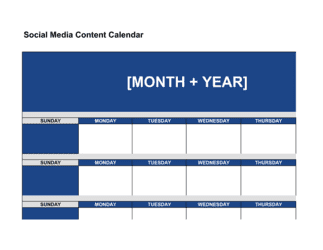
A content calendar schedules specific pieces of content by date across channels. This worksheet defines the strategic rules that the calendar executes β€” which segments receive which content themes at what frequency. The two documents work together: strategy first, calendar second.

vs Product Launch Plan

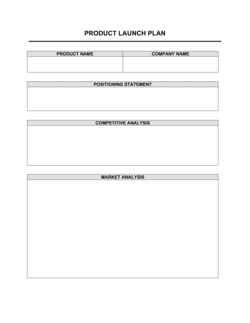
A product launch plan coordinates marketing, sales, and operations activities for a single launch event. This engagement strategy worksheet governs the ongoing email program that runs before, during, and after any launch. The launch plan defines the campaign; the engagement worksheet defines the list management and sequencing rules that support it.

vs Customer Retention Plan

A customer retention plan addresses all touchpoints β€” support, loyalty programs, account management, and email β€” to reduce churn across the full customer lifecycle. This worksheet focuses specifically on the email channel's role in retention, covering re-engagement sequences and at-risk segment strategies in operational detail that a broader retention plan does not include.

Industry-specific considerations

E-commerce and retail

Triggered sequences for cart abandonment, post-purchase follow-up, and win-back campaigns are the highest-ROI applications of a structured engagement strategy in e-commerce.

SaaS and technology

Onboarding drip sequences, feature-adoption nudges, and churn-prevention emails timed to usage drop-off signals require detailed trigger logic that this worksheet is designed to document.

Professional services

Low send frequency with high-value educational content β€” typically one to two sends per month β€” demands tight content pillar discipline and careful list segmentation by service line or client stage.

Media and publishing

Daily or weekly newsletter programs require explicit send cadence management across multiple list segments with strong open-rate monitoring to protect sender domain reputation.

Template vs pro β€” what fits your needs?

PathBest forCostTime
Use the templateSmall business owners and solo marketers building or auditing an email program without an agencyFree2–4 hours to complete the worksheet
Template + professional reviewMarketing teams launching a new program or recovering a declining list who want an email specialist to validate the strategy$300–$1,000 for a consultant or email strategist review session3–5 days
Custom draftedEnterprise email programs with complex automation stacks, multiple brand lines, or compliance requirements across more than two jurisdictions$2,000–$8,000 for a full email strategy engagement2–6 weeks

Glossary

Open Rate
The percentage of delivered emails that recipients open β€” a primary indicator of subject line effectiveness and sender reputation.
Click-to-Open Rate (CTOR)
The percentage of email openers who click at least one link β€” measures how well the email body converts readers who already opened.
List Segmentation
Dividing an email list into smaller groups based on shared attributes β€” purchase history, engagement level, geography, or lifecycle stage β€” so each group receives relevant content.
Send Cadence
How frequently emails are sent to a list or segment β€” daily, weekly, biweekly, or monthly β€” and the day and time of each send.
Automation Trigger
A subscriber action or inaction β€” such as a sign-up, purchase, or 30 days of silence β€” that automatically initiates a specific email sequence.
Re-Engagement Sequence
A series of emails sent to inactive subscribers to prompt renewed interaction before they are removed from the active list.
Deliverability
The ability of an email to reach a subscriber's inbox rather than a spam or junk folder, influenced by sender reputation, domain authentication, and list hygiene.
Churn Rate (Email)
The percentage of subscribers who unsubscribe or become permanently inactive over a given period β€” used to measure list health over time.
Subscriber Lifecycle Stage
A classification of where a subscriber sits in their relationship with the sender β€” new, active, at-risk, dormant, or churned β€” used to determine which content and sequence to send.
A/B Test
A controlled experiment that sends two variants of an email β€” differing in subject line, send time, or content β€” to split portions of a segment to identify which performs better.

Part of your Business Operating System

This document is one of 3,000+ business & legal templates included in Business in a Box.

  • Fill-in-the-blanks β€” ready in minutes
  • 100% customizable Word document
  • Compatible with all office suites
  • Export to PDF and share electronically

Create your document in 3 simple steps.

From template to signed document β€” all inside one Business Operating System.
1
Download or open template

Access over 3,000+ business and legal templates for any business task, project or initiative.

2
Edit and fill in the blanks with AI

Customize your ready-made business document template and save it in the cloud.

3
Save, Share, Send, Sign

Share your files and folders with your team. Create a space of seamless collaboration.

Save time, save money, and create top-quality documents.

β˜…β˜…β˜…β˜…β˜…

"Fantastic value! I'm not sure how I'd do without it. It's worth its weight in gold and paid back for itself many times."

Managing Director Β· Mall Farm
Robert Whalley
Managing Director, Mall Farm Proprietary Limited
β˜…β˜…β˜…β˜…β˜…

"I have been using Business in a Box for years. It has been the most useful source of templates I have encountered. I recommend it to anyone."

Business Owner Β· 4+ years
Dr Michael John Freestone
Business Owner
β˜…β˜…β˜…β˜…β˜…

"It has been a life saver so many times I have lost count. Business in a Box has saved me so much time and as you know, time is money."

Owner Β· Upstate Web
David G. Moore Jr.
Owner, Upstate Web

Run your business with a system β€” not scattered tools

Stop downloading documents. Start operating with clarity. Business in a Box gives you the Business Operating System used by over 250,000 companies worldwide to structure, run, and grow their business.

Free Forever PlanΒ Β·Β No credit card required