Product Strategy Sheet

Free download β€’ Use as a template β€’ Print or share

2 pagesβ€’20–25 min to useβ€’Difficulty: Standard
Learn more ↓
FreeProduct Strategy Sheet Template

At a glance

What it is
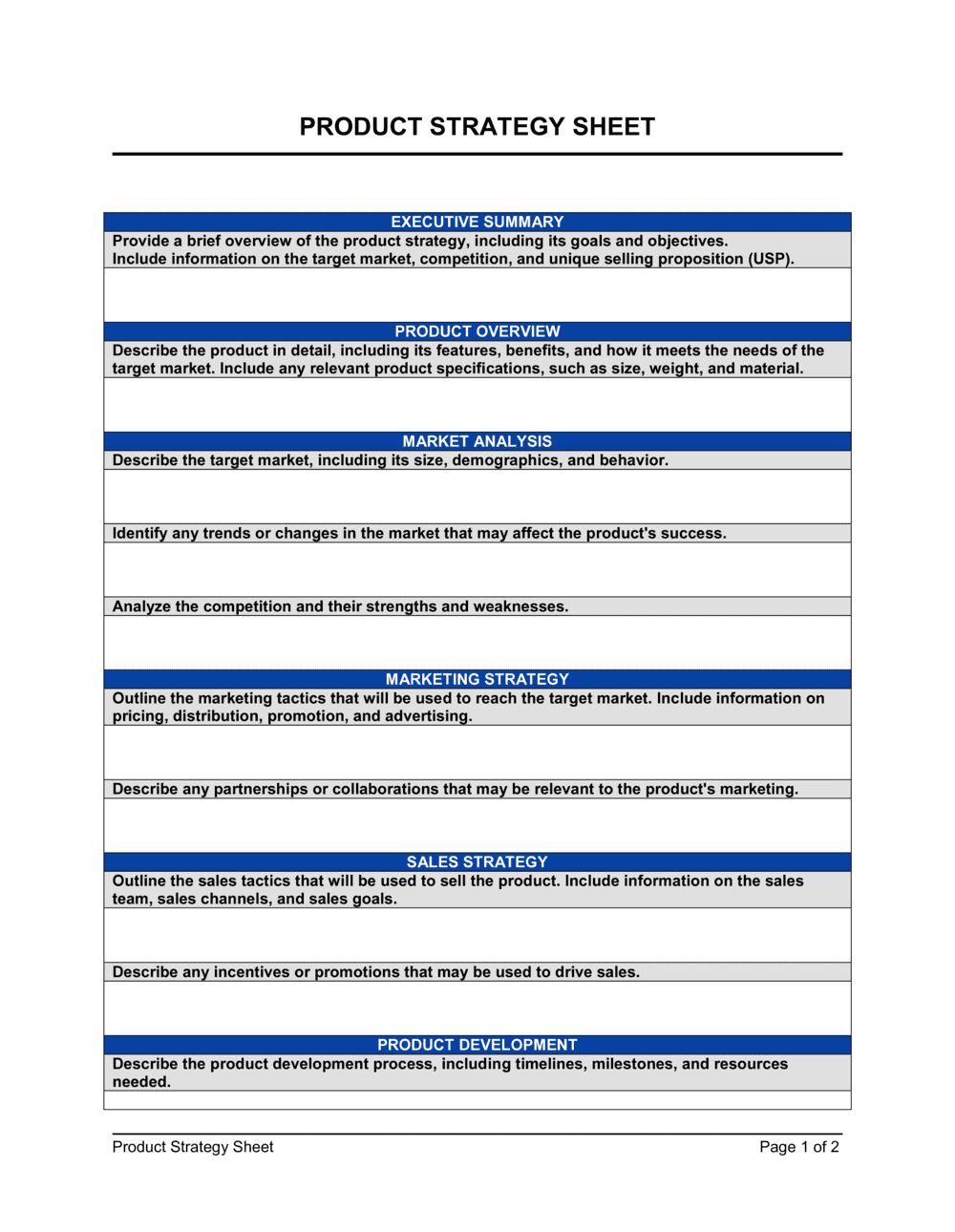
A Product Strategy Sheet is a concise operational document that captures a product's vision, target market, competitive positioning, strategic objectives, and key performance indicators in a single reference page. This free Word download gives product managers and founders a structured starting point they can edit online and export as PDF to align teams, brief stakeholders, or anchor a product roadmap.
When you need it
Use it when launching a new product, repositioning an existing one, or kicking off a planning cycle that requires cross-functional alignment on goals and priorities. It is also useful before building or updating a product roadmap to ensure strategic intent is documented before execution begins.
What's inside
Product vision and mission, target customer segments, market opportunity, competitive positioning, strategic objectives with measurable outcomes, key initiatives, success metrics, and risk assumptions. Together these sections give every stakeholder β€” from engineering to sales β€” a shared understanding of what the product is trying to achieve and why.

What is a Product Strategy Sheet?

A Product Strategy Sheet is a concise operational document that defines a product's vision, target customer segments, competitive positioning, strategic objectives, key initiatives, and success metrics in a single structured reference β€” typically one to three pages. It bridges the gap between high-level business strategy and the tactical product roadmap, giving every stakeholder β€” from engineering to sales to the executive team β€” a shared, written answer to the questions: what is this product trying to achieve, for whom, and why now? Unlike a roadmap, which tracks features and timelines, the strategy sheet captures intent and criteria so that every downstream planning decision can be evaluated against a consistent strategic frame.

Why You Need This Document

Without a documented product strategy, roadmap decisions default to whoever has the most influence in the room that week β€” and the product drifts toward a patchwork of features that satisfies individual requests without advancing any coherent goal. The cost is measurable: teams that cannot point to an agreed positioning statement rebuild features that do not differentiate; teams that skip the market opportunity section commit development resources to segments too small to sustain growth; teams that omit assumptions discover mid-quarter that the market condition they were counting on was never real. A completed product strategy sheet forces those decisions to be made explicitly, in writing, before a single sprint is planned β€” turning strategic ambiguity into documented trade-offs the entire organization can act on.

Which variant fits your situation?

If your situation is…Use this template
Defining a multi-quarter product roadmap with feature timelinesProduct Roadmap
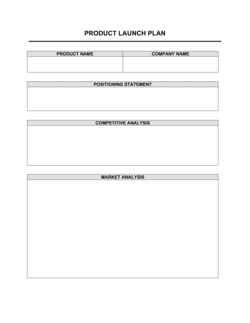
Launching a specific new product or feature to marketProduct Launch Plan
Evaluating whether a new product idea is worth pursuingBusiness Case
Mapping out the full business model alongside product strategyBusiness Plan
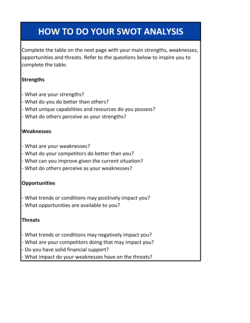
Assessing strengths and risks before committing to a strategySWOT Analysis
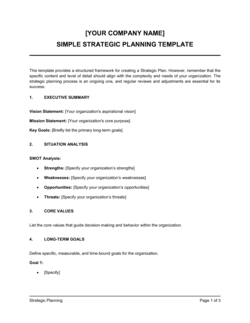
Aligning the full organization around a 3-year strategic directionStrategic Plan
Communicating product value and differentiation to customersProduct Marketing Plan

Common mistakes to avoid

❌ Objectives written as activities, not outcomes

Why it matters: Activity-based objectives ('launch three features this quarter') measure output, not impact. They can be fully achieved while the product loses market share or fails to retain users.

Fix: Rewrite each objective as an outcome with a metric and deadline β€” 'increase 30-day retention from 42% to 55% by Q3' is actionable and unambiguous.

❌ Skipping the assumptions and risks section

Why it matters: A strategy with no documented assumptions will be executed as if its premises are facts. When a key assumption fails, the team has no early-warning mechanism and loses weeks responding reactively.

Fix: Log every unverified belief that the strategy depends on, assign a risk level, and specify how each will be tested within the first 60 days of execution.

❌ Listing too many strategic initiatives without prioritization

Why it matters: A sheet with eight equally weighted initiatives tells the team nothing about what to do first when resources are constrained β€” which they always are.

Fix: Cap initiatives at four and rank them explicitly. For each one included, document one alternative that was evaluated and deprioritized.

❌ Using input metrics as primary KPIs

Why it matters: Measuring features shipped or experiments run rewards activity rather than customer outcomes. A team can hit every input metric and still fail to improve retention, revenue, or activation.

Fix: Choose outcome metrics β€” retention rate, revenue per user, time-to-value β€” as primary KPIs. Reserve input metrics for diagnostic or operational dashboards.

❌ Omitting resource requirements from the strategy sheet

Why it matters: Strategies approved without headcount and budget context often cannot be executed as written. Leadership approves the vision but not the means, leaving the product team short-staffed mid-quarter.

Fix: Include a one-row resource summary covering FTE needs by role, estimated budget by category, and any external dependencies requiring procurement or partnership approval.

❌ Writing the competitive positioning section without naming competitors

Why it matters: Vague differentiation claims ('faster, simpler, and more affordable') carry no meaning unless grounded in specific competitor comparisons. Stakeholders cannot evaluate the positioning without knowing what it is positioned against.

Fix: Name at least three competitors by name, describe their primary strength and weakness in one sentence each, and state your differentiated position using the same evaluative dimensions.

The 9 key sections, explained

Product vision and mission

Target customer and segments

Market opportunity

Competitive positioning

Strategic objectives

Key initiatives and bets

Success metrics and KPIs

Assumptions and risks

Resource requirements

How to fill it out

  1. 1

    Write the product vision and mission

    Draft a one-sentence vision focused on the long-term outcome for the target user, and a one-sentence mission describing how the product delivers it. Keep both free of technical jargon so any team member can repeat them.

    πŸ’‘ Test the vision statement by reading it to someone outside your team. If they cannot explain back what problem it solves, it is too abstract.

  2. 2

    Define and prioritize your target segments

    Identify your primary segment by specifying the job they need done, their main frustration with current solutions, and their buying behavior. Add one secondary segment only if resources allow parallel pursuit.

    πŸ’‘ Rank segments by revenue potential and accessibility β€” not by size alone. A $50M segment you can reach in 90 days beats a $500M segment that requires 18 months of partnership development.

  3. 3

    Quantify the market opportunity

    Pull at least two independent sources for the TAM figure. Then build a bottom-up SAM by multiplying the number of reachable customers by your expected average contract or transaction value. Cross-check both estimates and reconcile gaps.

    πŸ’‘ If your top-down and bottom-up SOM estimates differ by more than 30%, dig into the discrepancy β€” it usually reveals a flawed assumption about conversion rate or pricing.

  4. 4

    Map the competitive landscape

    List three to five competitors including indirect substitutes. For each, note one strength and one weakness. Then write a single positioning sentence that explains what you do better for your specific segment.

    πŸ’‘ A 2x2 positioning matrix with axes relevant to your market (e.g., price vs. depth of integration) makes this section immediately scannable for executives reviewing the sheet.

  5. 5

    Set three to five strategic objectives

    Write each objective as a measurable outcome with a deadline and an owner. Verify that achieving all five objectives would, in combination, constitute clear product success for the planning period.

    πŸ’‘ If you have more than five objectives, force-rank them and cut the bottom two β€” resource constraints make more than five meaningful objectives unexecutable for most teams.

  6. 6

    Select and describe key initiatives

    For each strategic objective, identify the one or two initiatives most likely to drive it. Describe each in one sentence, explain why it was chosen over alternatives, and note any cross-functional dependencies.

    πŸ’‘ For every initiative you include, name one initiative you explicitly decided not to pursue and why. This demonstrates strategic discipline and speeds up stakeholder alignment.

  7. 7

    Define success metrics with baselines and targets

    Choose one primary outcome metric per objective. Record the current baseline value, the target value, and the measurement date. Add up to two secondary metrics per objective that provide diagnostic signal.

    πŸ’‘ Avoid tracking more than seven total KPIs on a single strategy sheet β€” more than that and the team loses focus on what actually matters most.

  8. 8

    Document assumptions and resource needs

    List the three to five beliefs the strategy hinges on that have not yet been validated. For each, assign a risk level and a method for testing it. Then add the headcount and budget required to execute the initiatives.

    πŸ’‘ Revisit the assumptions log monthly during execution β€” when a key assumption is proven wrong early, it is far cheaper to adjust the strategy than to discover it at the end of a quarter.

Frequently asked questions

What is a product strategy sheet?

A product strategy sheet is a concise operational document β€” typically one to three pages β€” that captures a product's vision, target segments, competitive positioning, strategic objectives, key initiatives, and success metrics in a single structured reference. It is not a product roadmap or a business plan; instead, it serves as the strategic anchor that informs and aligns both of those documents.

What is the difference between a product strategy sheet and a product roadmap?

A product strategy sheet defines why the product exists, what it is trying to achieve, and for whom. A product roadmap defines when specific features or milestones will be delivered. The strategy sheet should be written and agreed upon before the roadmap is built β€” it sets the criteria for deciding what belongs on the roadmap and in what order.

How long should a product strategy sheet be?

One to three pages is the accepted range for most product teams. The goal is a document short enough to be read in a single sitting by a busy executive but complete enough to cover vision, segmentation, positioning, objectives, initiatives, metrics, assumptions, and resource needs. Detailed supporting analysis belongs in appendices or linked documents, not in the sheet itself.

Who should own the product strategy sheet?

The product manager or head of product typically owns and maintains the sheet, but its content should be developed collaboratively with representatives from marketing, sales, engineering, and executive leadership. Ownership means accountability for keeping it current β€” not unilateral authority over its contents.

How often should a product strategy sheet be updated?

Review it at every major planning cycle β€” typically quarterly for startups and semi-annually for growth-stage businesses. Trigger an out-of-cycle update whenever a key assumption is validated or invalidated, a significant competitor move changes the landscape, or the business strategy shifts materially. A strategy sheet more than six months old without any updates is likely no longer guiding actual decisions.

What is the difference between a product strategy sheet and a business case?

A business case evaluates whether a specific product or initiative is worth investing in β€” it presents a recommendation with supporting financial and market evidence. A product strategy sheet assumes the investment decision has already been made and focuses on how to execute the product successfully. The business case precedes approval; the strategy sheet governs execution.

Should a product strategy sheet include financial projections?

It should include market opportunity sizing and success metrics tied to revenue or growth outcomes, but detailed three-statement financial projections belong in a business plan or financial model rather than a strategy sheet. A high-level revenue target or ARR goal for the planning period is appropriate; a full P&L is not.

Can a product strategy sheet be used for internal products or tools?

Yes. Internal products β€” such as data platforms, developer tools, or operational systems β€” benefit from the same strategic clarity as customer-facing products. The target segment becomes internal users or teams, the competitive positioning addresses build-vs-buy tradeoffs, and the success metrics focus on adoption, efficiency gains, or cost reduction.

What happens if the team skips writing a product strategy sheet?

Without a documented strategy, roadmap decisions are made reactively β€” based on the loudest stakeholder request or the most recent customer complaint rather than strategic intent. Teams that skip the strategy sheet typically rebuild features that do not move key metrics, miss market windows by working on misaligned priorities, and struggle to explain to leadership why the product is or is not performing.

How this compares to alternatives

vs Product Launch Plan

A product launch plan is a tactical execution document covering go-to-market activities, launch timeline, messaging, and channel coordination for a specific release event. A product strategy sheet defines the strategic direction the product is pursuing over a planning horizon of one to three years. The strategy sheet should exist before the launch plan is written β€” it provides the why and the positioning that the launch plan executes against.

vs Business Case

A business case evaluates whether a proposed product or initiative is worth approving β€” it presents a financial and strategic argument for investment. A product strategy sheet assumes approval has already been granted and focuses on how the product will achieve its objectives. The business case precedes the decision; the strategy sheet governs execution after the decision is made.

vs Strategic Plan

A strategic plan covers the entire organization β€” its mission, competitive position, growth priorities, and resource allocation across all functions over a three- to five-year horizon. A product strategy sheet is scoped specifically to a single product or product line and typically covers a one- to two-year planning window. Larger organizations will have one strategic plan and multiple product strategy sheets nested beneath it.

vs SWOT Analysis

A SWOT analysis is a diagnostic tool that maps internal strengths and weaknesses against external opportunities and threats β€” it is an input to strategy formation, not a strategy itself. A product strategy sheet incorporates SWOT insights but goes further: it makes explicit choices about where to compete, what to build, and how to measure success. Run the SWOT analysis first; use its conclusions to populate the strategy sheet.

Industry-specific considerations

SaaS / Technology

Product strategy sheets in SaaS anchor quarterly OKR cycles, define activation and retention targets by cohort, and specify the competitive differentiation needed to reduce churn against category leaders.

E-commerce / Retail

Retail product teams use strategy sheets to align merchandising, UX, and logistics around seasonal objectives β€” mapping conversion rate, average order value, and repeat purchase rate to each initiative.

Healthcare / MedTech

In regulated healthcare environments, the strategy sheet documents clinical and regulatory milestones alongside commercial objectives, ensuring product, medical affairs, and compliance teams pursue a shared timeline.

Financial Services / Fintech

Fintech product strategies address regulatory constraints, partner API dependencies, and trust-building metrics β€” such as identity verification pass rates and fraud incident rates β€” that are unique to the sector.

Professional Services

Service firms use product strategy sheets to productize recurring engagements β€” defining scope boundaries, delivery metrics, and client segment fit to make service lines scalable and consistently priced.

Manufacturing

Manufacturers apply product strategy sheets to new product development initiatives, linking R&D milestones, supply chain constraints, and channel readiness targets within a single strategic reference document.

Template vs pro β€” what fits your needs?

PathBest forCostTime
Use the templateProduct managers and founders building a strategy sheet for internal alignment or roadmap planningFree3–6 hours
Template + professional reviewTeams preparing a strategy for board review, investor briefing, or cross-functional sign-off at a growth-stage company$500–$2,000 for a product strategy advisor or fractional CPO session1–2 weeks
Custom draftedEnterprise product organizations requiring a strategy framework built across multiple product lines with integrated financial modeling$5,000–$15,000 for a product strategy consultant engagement4–8 weeks

Glossary

Product Vision
A short, aspirational statement describing the long-term purpose of the product and the change it aims to create for its users.
Target Segment
A defined group of customers with shared characteristics, needs, or behaviors who represent the primary intended users of the product.
Positioning Statement
A concise internal declaration that explains how the product is differentiated from alternatives in the minds of a specific target audience.
Strategic Objective
A specific, time-bound goal the product must achieve to advance the company's broader business strategy β€” typically framed as an outcome, not an activity.
Key Result
A measurable indicator tied to a strategic objective that defines what success looks like in quantitative terms.
Product-Market Fit
The degree to which a product satisfies strong demand in a specific market, typically evidenced by retention, word-of-mouth, or willingness to pay.
Competitive Moat
A durable structural advantage β€” such as proprietary data, network effects, or switching costs β€” that makes the product's market position hard to replicate.
OKR (Objectives and Key Results)
A goal-setting framework pairing a qualitative objective with two to five quantitative key results used to measure progress.
TAM / SAM / SOM
Total Addressable Market, Serviceable Addressable Market, and Serviceable Obtainable Market β€” three nested estimates of market size and realistic reach.
Assumption Log
A documented list of unverified beliefs that the strategy depends on, along with the risk each assumption carries if proven wrong.
Differentiated Value Proposition
The specific combination of benefits a product delivers that alternatives do not, stated in terms meaningful to the target customer.

Part of your Business Operating System

This document is one of 3,000+ business & legal templates included in Business in a Box.

  • Fill-in-the-blanks β€” ready in minutes
  • 100% customizable Word document
  • Compatible with all office suites
  • Export to PDF and share electronically

Create your document in 3 simple steps.

From template to signed document β€” all inside one Business Operating System.
1
Download or open template

Access over 3,000+ business and legal templates for any business task, project or initiative.

2
Edit and fill in the blanks with AI

Customize your ready-made business document template and save it in the cloud.

3
Save, Share, Send, Sign

Share your files and folders with your team. Create a space of seamless collaboration.

Save time, save money, and create top-quality documents.

β˜…β˜…β˜…β˜…β˜…

"Fantastic value! I'm not sure how I'd do without it. It's worth its weight in gold and paid back for itself many times."

Managing Director Β· Mall Farm
Robert Whalley
Managing Director, Mall Farm Proprietary Limited
β˜…β˜…β˜…β˜…β˜…

"I have been using Business in a Box for years. It has been the most useful source of templates I have encountered. I recommend it to anyone."

Business Owner Β· 4+ years
Dr Michael John Freestone
Business Owner
β˜…β˜…β˜…β˜…β˜…

"It has been a life saver so many times I have lost count. Business in a Box has saved me so much time and as you know, time is money."

Owner Β· Upstate Web
David G. Moore Jr.
Owner, Upstate Web

Run your business with a system β€” not scattered tools

Stop downloading documents. Start operating with clarity. Business in a Box gives you the Business Operating System used by over 250,000 companies worldwide to structure, run, and grow their business.

Start freeΒ Β·Β No credit card required