1
Enter the new owner's full legal name and entity type
Use the exact legal name as it appears on the deed or title transfer documents — whether your personal name, an LLC, or a corporation. Include the entity type (e.g., 'a California limited liability company') to identify the legal person giving the notice.
💡 Cross-reference the grant deed or closing disclosure to confirm the exact vesting name before drafting the letter — a mismatch can invalidate the notice in some jurisdictions.
2
Record the closing date as the effective date
Enter the date title transferred — as shown on the settlement statement or deed — as the ownership effective date. This date controls when rent payment instructions change and when the new lease relationship begins.
💡 If closing occurs mid-month, include a sentence clarifying how pro-rated rent for that month was handled to prevent confusion on the first full-month payment.
3
Confirm the existing lease details
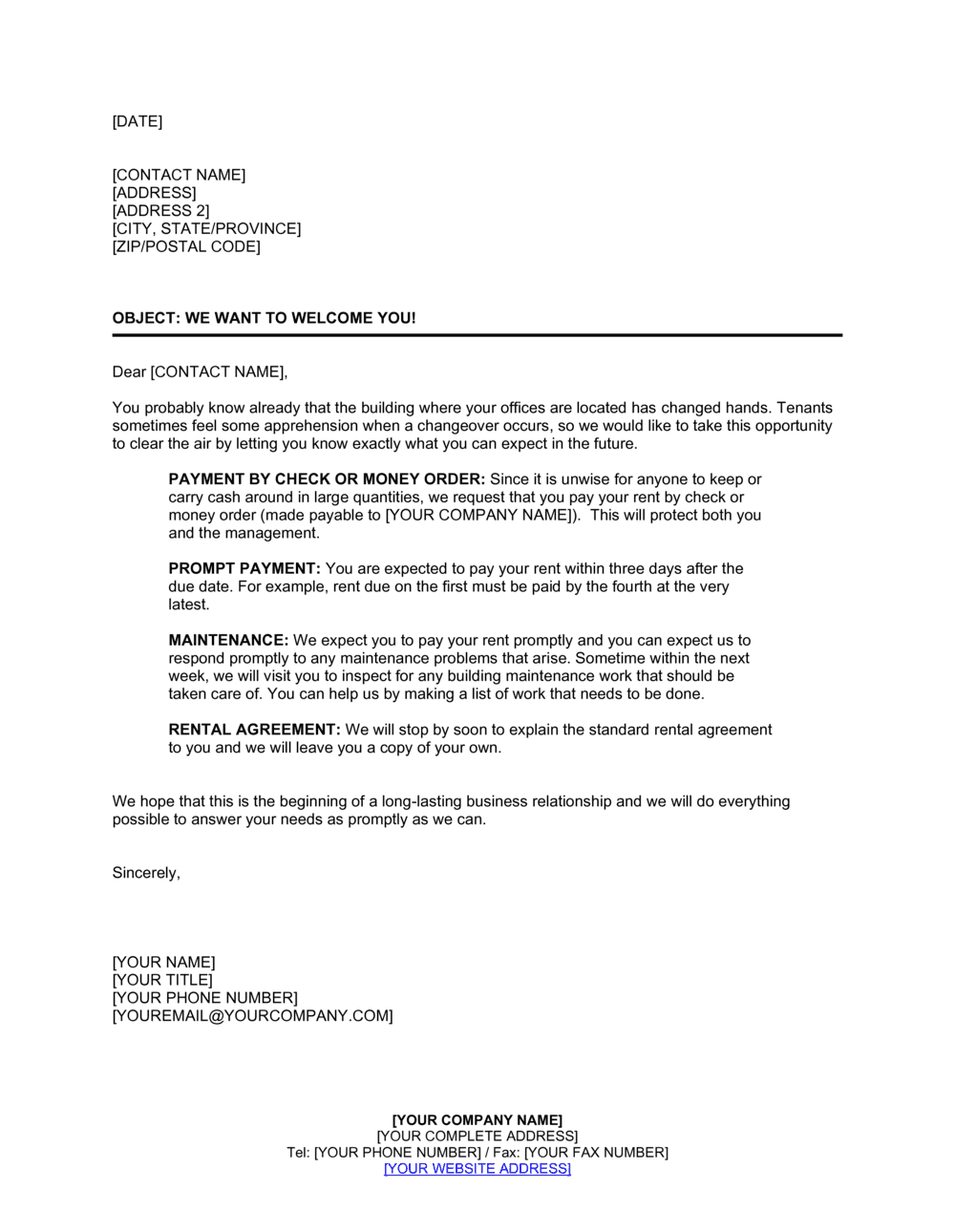
Reference the original lease by its date and the prior landlord's name so the tenant can identify which agreement is being confirmed. State explicitly that all terms, rent amount, due date, and end date remain unchanged.
💡 Review the lease before completing this section — if any default, amendment, or pending dispute exists, note it in the pending-matters clause rather than leaving it undisclosed.
4
Update rent payment instructions with full payee details
Specify the exact payee name, mailing address for checks, and any electronic payment portal or bank transfer details. State the first payment date under the new instructions clearly.
💡 If you use a property management platform for rent collection, include the portal URL and login instructions directly in this section — tenants who can pay online pay faster.
5
Acknowledge the security deposit with the correct amount
Enter the exact security deposit amount as transferred at closing and confirm where it is held. In jurisdictions that require separate trust accounts, include the account details or the institution name.
💡 If the prior landlord did not transfer the full deposit at closing, state what was received and note that the balance will follow — do not represent that you hold an amount you have not yet received.
6
Provide complete contact and notice information
List a phone number, email, and physical mailing address for routine correspondence and a separate physical address for formal legal notices. If you use a property management company, list both the manager's contact details and the owner's registered address.
💡 Match the legal-notice address to the address you have registered with your county or local housing authority — inconsistencies create service-of-notice problems.
7
Address pending maintenance or disputes
List any outstanding repair requests or unresolved issues carried over from the prior owner, or state explicitly that none are known. Invite the tenant to report any additional items within a defined window — typically 14 to 30 days.
💡 Conduct a property walk-through before sending the letter so you can list known issues accurately. Discovering problems after the fact is harder to manage once tenants have been told nothing is pending.
8
Sign, date, and deliver by the required method
Sign the letter with your full name and title, date it, and deliver it to each tenant by the method required in your jurisdiction — typically certified mail, personal delivery, or email with written consent. Retain proof of delivery for each unit.
💡 Send the letter on or immediately after the closing date — every day of delay increases the risk that a tenant pays rent to the prior landlord and creates a collection dispute.