1
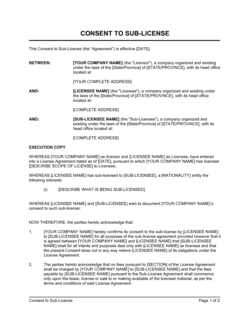
Identify all three parties by legal entity name
Enter the landlord's, original tenant's, and subtenant's full registered legal names. For corporate entities, confirm the exact name against the corporate registry or the head lease signature block.
💡 Cross-check each party's name against any existing leases or corporate documents — a mismatch between the consent and the head lease is the most common cause of enforceability disputes.
2
Reference the head lease precisely
Enter the exact title, date, and any amendment dates of the original lease. Describe the premises by full street address, suite or unit number, and square footage to avoid ambiguity.
💡 If the head lease has been amended, list each amendment by date — failing to reference amendments can lead to gaps in the consent's coverage of current lease obligations.
3
Define the approved sublease term and subtenant
State the specific start and end dates of the sublease and confirm the subtenant's identity. The sublease term must end on or before the head lease expiry date.
💡 If the head lease has renewal options, clarify whether the sublease consent extends to any exercised renewal period — most landlords require a separate consent for each renewal term.
4
Set the conditions of consent
List every condition the landlord requires before the sublease takes effect — insurance certificates, financial statements from the subtenant, payment of a consent fee, and any other requirements — along with the deadline for satisfying each.
💡 Attach insurance requirements as a schedule rather than embedding minimums in the body text; coverage limits may need to be updated annually without amending the consent.
5
Address sublease rent and any profit-sharing obligation
State the sublease rent, compare it to the head lease rent, and include the profit-sharing calculation if the head lease requires the landlord to share in above-market sublease income.
💡 Review the head lease's subletting clause carefully before completing this section — many commercial leases contain profit-sharing provisions that tenants overlook.
6
Confirm the original tenant's continuing liability
Include the no-release clause in clear, unambiguous language and have the original tenant initial or separately acknowledge this provision at signing.
💡 Some tenants push back on joint-and-several liability language — stand firm, as this protection is standard in well-drafted commercial consent documents.
7
Attach the subtenant acknowledgment and head lease copy
Attach a copy of the full head lease (and all amendments) for the subtenant to acknowledge receipt and review. Have the subtenant sign or initial the acknowledgment section before the sublease commences.
💡 Provide the subtenant with a redacted version if the head lease contains commercially sensitive rent terms — just ensure the permitted use, prohibited alterations, and term provisions are clearly visible.
8
Execute with all three parties before the sublease start date
Collect signatures from the landlord, original tenant, and subtenant — ideally before the sublease commencement date. All signatures should be dated, and each party should retain a fully executed copy.
💡 Use a digital signature platform to time-stamp execution and create an auditable record — especially important if any party is remote or the premises are in a jurisdiction with strict execution formalities.