1
Identify parties using full legal entity names
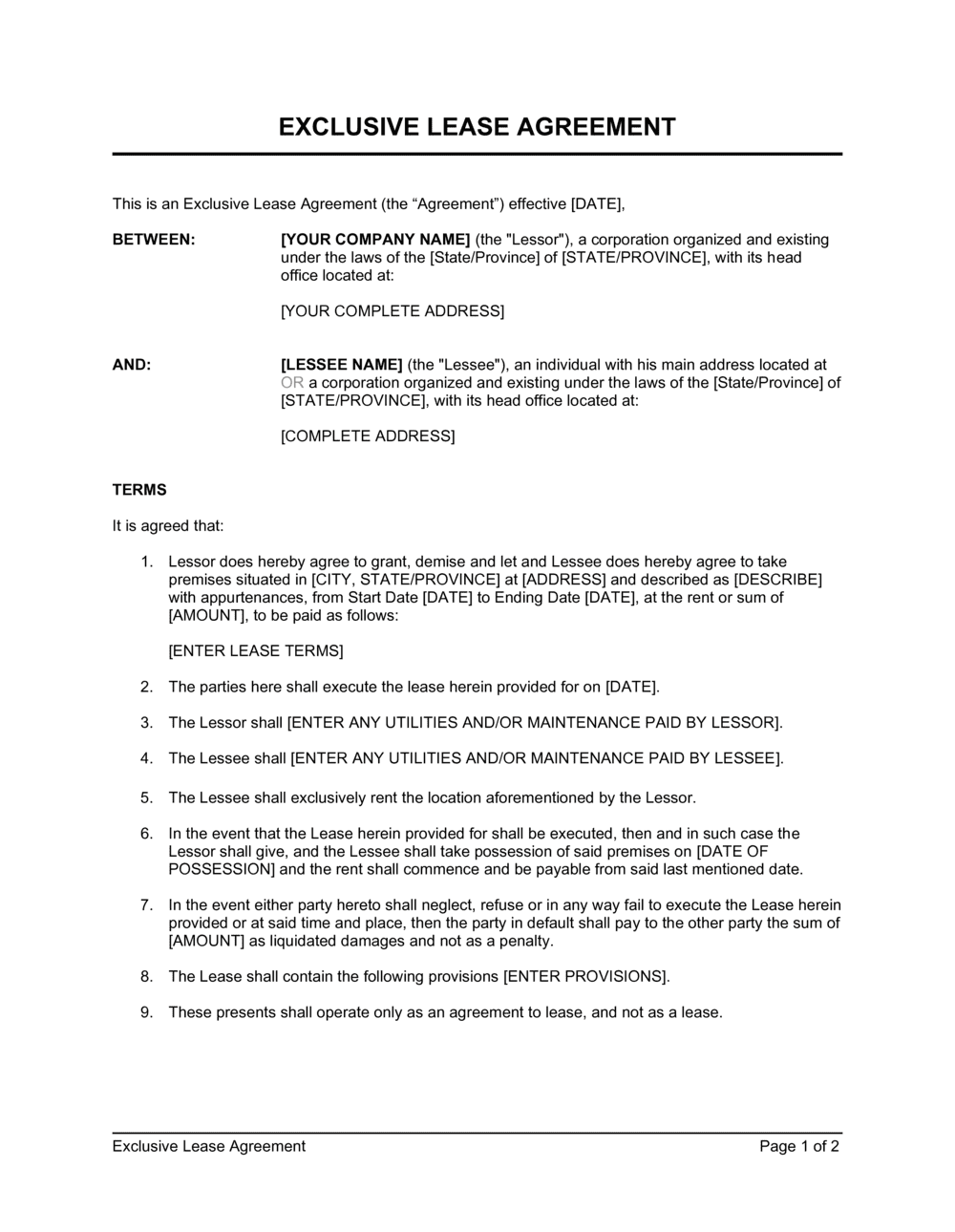
Enter the landlord's and tenant's registered legal names — not trade names — along with their entity types (LLC, corporation, partnership) and states of formation. Include notice addresses for both.
💡 Pull the exact entity name from the state corporate registry, not from a business card or website — a mismatch can create enforceability issues at the execution stage.
2
Describe the premises precisely
Include the full property address, unit or suite number, and the rentable square footage. Attach a floor plan as an exhibit if the space is part of a larger building — courts have rejected lease claims based on ambiguous space descriptions.
💡 Reference both the usable and rentable square footage if the lease includes a load factor — tenants in multi-tenant buildings often pay CAM on a rentable-area basis that exceeds the space they actually use.
3
Set the lease term and renewal option mechanics
Enter the commencement and expiration dates. For each renewal option, state the duration, the rent during the renewal period (or the formula for determining it), and the written notice deadline for exercising the option.
💡 Calendar a reminder 120 days before the option deadline — courts in most jurisdictions treat option notice deadlines as strict, and missing the window forfeits the right permanently.
4
Draft the exclusivity clause with a defined business category
Write a specific description of the tenant's business type that is broad enough to catch obvious competitors but narrow enough to be commercially reasonable. Define the geographic scope — entire property, center, or defined radius.
💡 Review every other tenant's permitted use in the property before finalizing the exclusivity category — existing uses are typically carved out of the new tenant's exclusivity rights.
5
Complete the rent and escalation schedule
Enter base rent, payment due date, grace period, and late fee. For escalation, choose between a fixed annual percentage (e.g., 3%) or CPI-based adjustment. If using CPI, add a floor and cap (e.g., minimum 2%, maximum 5%) to limit volatility.
💡 State rent in both numeric and written form — e.g., '$4,500.00 (four thousand five hundred dollars)' — to eliminate transcription disputes.
6
Allocate maintenance and repair responsibilities explicitly
List each building system — HVAC, plumbing, electrical, roof, structural — and assign clear responsibility to landlord or tenant. Include the threshold for tenant alterations requiring landlord approval.
💡 Address HVAC specifically: specify who maintains it, who replaces it when it reaches end of life, and whether a maintenance contract is required.
7
Insert insurance minimums and review trigger
Set coverage minimums for commercial general liability, property, and any required workers' compensation. Add a clause requiring both parties to review and update minimums every three to five years.
💡 Ask your commercial insurance broker for the current market-standard minimums for your property type and location — requirements vary significantly between retail, industrial, and office use.
8
Define default, cure periods, and remedies
Specify the monetary and non-monetary default definitions, cure periods (typically 5 days for rent, 30 days for other breaches), and the available remedies. Confirm the landlord's duty to mitigate is acknowledged in writing.
💡 For non-monetary defaults that cannot be cured in 30 days, add a 'diligent commencement' provision — the tenant has 30 days to begin curing and a reasonable additional period to complete — to avoid technical defaults on complex repairs.