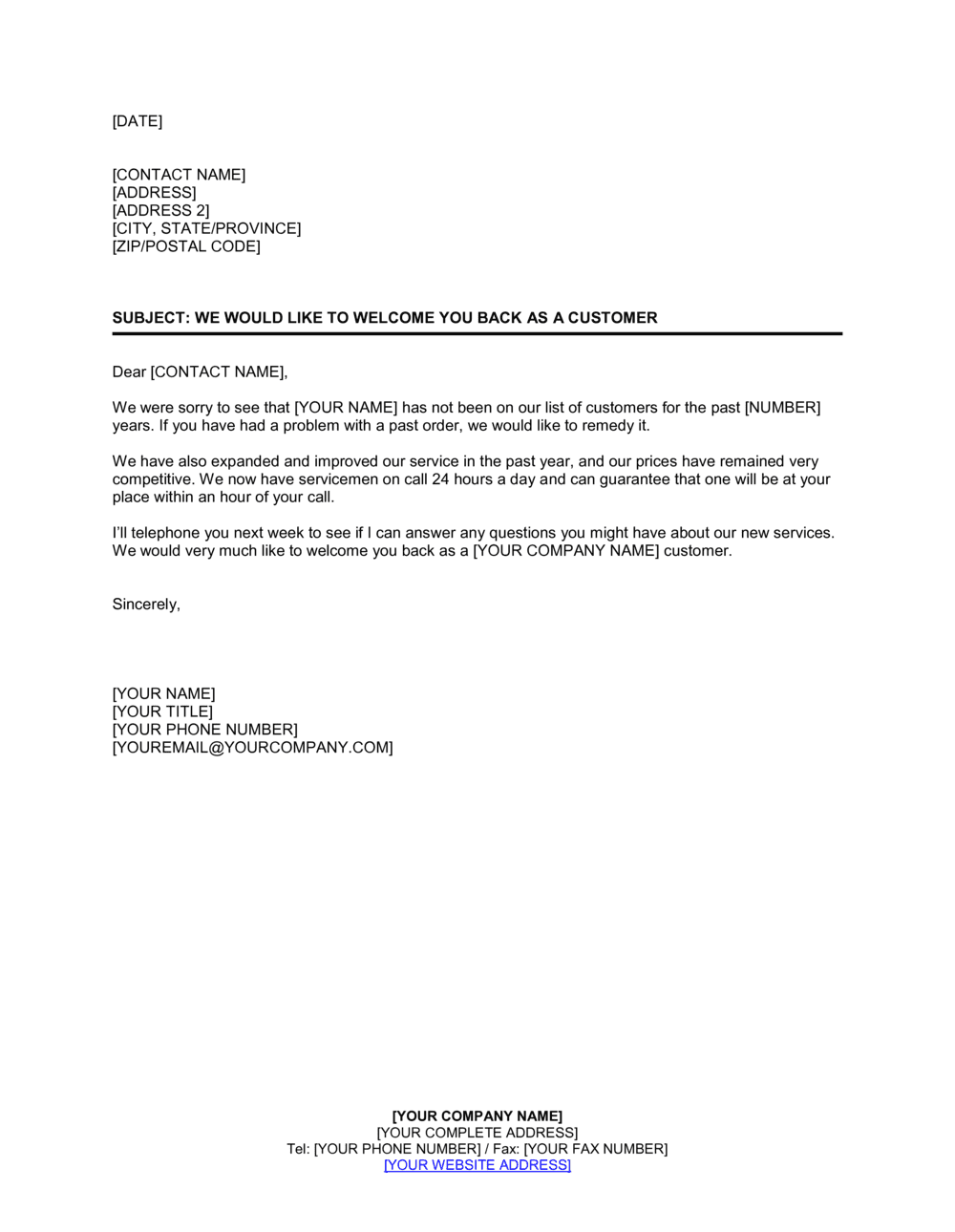
We Would Like to Welcome You Back as a Customer Template

Free Word download β€’ Edit online β€’ Save & share with Drive β€’ Export to PDF

1 pageβ€’20–30 min to fillβ€’Difficulty: Standardβ€’Signature requiredβ€’Legal review recommended
Learn more ↓
FreeWe Would Like to Welcome You Back as a Customer Template

At a glance

What it is
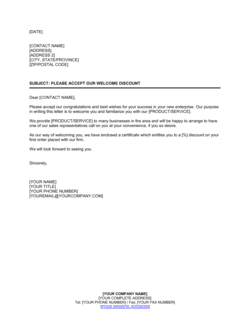
A "We Would Like to Welcome You Back as a Customer" letter is a formal business communication β€” with optional binding agreement terms β€” sent to a previously lapsed or churned customer to invite them to resume a commercial relationship under stated conditions. This free Word download lets you personalize the offer, update account terms, and establish any applicable promotional pricing or reinstated credit conditions before the customer returns, then export as PDF for delivery.
When you need it
Use it when a customer has not purchased or transacted within a defined period, when an account was closed or suspended and the business wishes to reinstate it, or when reactivation comes with updated terms, a promotional incentive, or revised credit conditions that must be documented in writing.
What's inside
Identification of both parties and account history reference, the formal welcome-back statement and reason for reactivation, any promotional offer or incentive terms, updated or reinstated account conditions, payment terms and credit arrangements, a summary of any changed service terms since the customer's last active period, and a signature or acceptance block confirming the customer's agreement to resume on the stated terms.

What is a "We Would Like to Welcome You Back as a Customer" Letter?

A "We Would Like to Welcome You Back as a Customer" letter is a formal business document sent to a lapsed, churned, or suspended customer to invite them to resume a commercial relationship under clearly stated terms. Unlike a generic marketing email, this document carries legal weight: it identifies both parties, establishes any win-back incentive with defined limits, reinstates or updates account and credit conditions, references the current governing terms and conditions, and includes an acceptance block that creates a written record of the customer's agreement to return. When properly executed, it functions as a binding amendment to the commercial relationship β€” not just a goodwill gesture.

Why You Need This Document

Without a formal, documented win-back letter, reinstating a lapsed customer account creates a set of avoidable risks. Credit extended without written confirmation of the terms leaves you without a clear basis for collections if payment is delayed again. A verbal or email-only promotional offer with no expiry date can be claimed months later when the underlying pricing assumptions have changed. Customers who return without acknowledging your updated terms and conditions are on record as having agreed only to the old version β€” creating disputes at the first invoice that references a changed liability cap, late payment rate, or dispute resolution clause. A signed welcome back letter closes all of these gaps in a single 30-minute document, giving you a defensible paper trail from the moment the relationship resumes β€” and giving the returning customer the clarity they need to commit with confidence.

Which variant fits your situation?

If your situation is…Use this template
Reinstating a suspended account after resolution of an overdue balanceAccount Reinstatement Letter
Offering a time-limited promotional discount to win back a churned customerWin-Back Promotional Offer Letter
Re-engaging a B2B customer with formally updated contract termsCustomer Agreement Renewal Letter
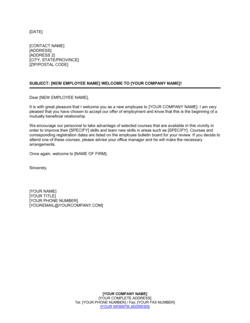
Welcoming a new customer for the first timeWelcome New Customer Letter
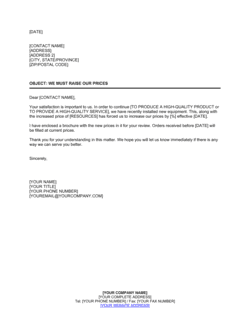
Notifying a lapsed customer of updated pricing before reactivationPrice Change Notification Letter
Reactivating a retail loyalty member with reward points reinstatementLoyalty Program Reactivation Letter
Resuming a subscription after cancellation at the customer's requestSubscription Reinstatement Confirmation

Common mistakes to avoid

❌ Reinstating a suspended account without confirming the outstanding balance

Why it matters: Reactivating credit on an account that still carries unpaid invoices adds new exposure on top of existing debt and sends a signal that non-payment has no consequences.

Fix: Run an accounts-receivable check before issuing the letter. Either require full settlement as a condition precedent or formally acknowledge the balance and set a payment plan within the letter.

❌ No expiry date on the win-back offer

Why it matters: An open-ended promotional offer can be claimed months after the letter was sent, long after the pricing or capacity assumptions behind it have changed.

Fix: Always state a specific calendar date by which the offer must be accepted and the first order placed β€” typically 30 to 60 days from the letter date.

❌ Failing to reference the current version of your general terms

Why it matters: If your standard terms have changed since the customer last transacted, a returning customer who is not explicitly notified may reasonably assume the old terms still apply β€” creating a dispute at the first invoice.

Fix: Attach the current terms as a schedule or include a direct URL, state the version date, and require the customer to acknowledge them in the acceptance block.

❌ Addressing the letter to a personal contact rather than the legal entity

Why it matters: Credit terms, account conditions, and dispute resolution clauses are enforceable against the legal entity β€” not an individual employee who may no longer be at the company.

Fix: Confirm the customer's current registered legal name before drafting. If the business has changed ownership or structure since their last active period, treat it as a new account and collect fresh credit information.

❌ Sending a welcome-back letter with no acceptance block

Why it matters: Without a signed acknowledgment, there is no documented proof the customer agreed to the reinstated credit limit, updated terms, or promotional conditions β€” making enforcement uncertain.

Fix: Always include a signature block and require the signed copy to be returned before activating the account or processing any orders under the reinstated terms.

❌ Not recording the promotional period end date in the customer's account system

Why it matters: If the promotional period expires and standard pricing resumes without the customer being notified, the first full-price invoice frequently triggers a dispute or another churn event.

Fix: Log the promotional end date in your CRM or accounts system at the time of reactivation, and set an automated or manual reminder to notify the customer 7–10 days before it lapses.

The 10 key clauses, explained

Parties and Account Identification

In plain language: Identifies the business sending the letter and the customer being invited back, including any account or customer reference number on file.

Sample language
This letter is addressed to [CUSTOMER FULL NAME / COMPANY NAME] ('Customer'), formerly holding account number [ACCOUNT NUMBER] with [COMPANY NAME] ('Company'), a [ENTITY TYPE] incorporated in [STATE/PROVINCE/COUNTRY].

Common mistake: Addressing the letter to a contact name rather than the legal entity. If the customer is a business, the legal entity name must appear so any reinstated credit or contractual terms are enforceable against the right party.

Welcome-Back Statement and Reactivation Intent

In plain language: States clearly that the company wishes to resume the commercial relationship and invites the customer to re-engage on the terms set out in the letter.

Sample language
We are pleased to invite [CUSTOMER NAME] to resume their purchasing relationship with [COMPANY NAME], effective [DATE], subject to the terms and conditions set out below.

Common mistake: Framing the letter as purely marketing communication without confirming the legal intent to reinstate account terms β€” making any subsequent dispute about credit or pricing harder to resolve.

Win-Back Offer or Promotional Incentive

In plain language: Details any special pricing, discount, waived fee, or credit being offered as an incentive to return, including the exact amount, duration, and any conditions the customer must satisfy.

Sample language
As a gesture of appreciation, Company offers Customer a [X]% discount on all purchases made within [30/60/90] days of the date of this letter ('Promotional Period'). This offer is non-transferable, applies to standard catalogue items only, and expires on [DATE].

Common mistake: Stating a promotional offer without an expiry date or scope limitation. Open-ended offers can be claimed months later and are difficult to refuse without damaging the renewed relationship.

Reinstated Account and Credit Conditions

In plain language: Sets out the credit limit, payment terms, and any conditions placed on the reinstated account β€” particularly if the account was previously suspended for non-payment.

Sample language
Upon acceptance, Customer's account will be reinstated with a credit limit of $[AMOUNT] and payment terms of Net [30/60] days from invoice date. Should any invoice remain unpaid beyond [X] days, the account will revert to prepayment-only status without further notice.

Common mistake: Reinstating the same credit limit that applied when the customer first churned, without reassessing their current payment risk β€” particularly for accounts that were suspended due to non-payment.

Updated Terms and Conditions Reference

In plain language: Notifies the customer that the company's general terms and conditions, pricing schedule, or service agreement may have changed since their last active period, and that reactivation is subject to the current version.

Sample language
The Customer acknowledges that Company's General Terms and Conditions, as published at [URL / attached as Schedule A] and dated [DATE], apply to all transactions under the reinstated account and supersede any prior version previously accepted by Customer.

Common mistake: Failing to reference or attach the current terms. A customer who returns assuming the old terms still apply can legitimately dispute changed payment, liability, or dispute-resolution provisions.

Pricing and Product Schedule

In plain language: Confirms the pricing structure applicable to the returning customer β€” whether standard list price, a negotiated rate, or the promotional rate during the incentive window.

Sample language
Following the Promotional Period, all purchases will be invoiced at [COMPANY NAME]'s standard price list in effect at the time of order, a copy of which is available at [URL / attached as Schedule B].

Common mistake: Quoting specific prices in the body of the letter without stating that prices are subject to the then-current price list after the promotional period β€” creating a contractual obligation to honour outdated pricing.

Conditions Precedent to Reactivation

In plain language: Lists any steps the customer must complete before the account is fully reinstated β€” such as settling an outstanding balance, updating contact or payment details, or signing the acceptance block.

Sample language
Reactivation of the Customer's account is conditional upon: (a) settlement of any outstanding balance, currently $[AMOUNT], no later than [DATE]; (b) completion and return of the signed acceptance block below; and (c) provision of current billing and shipping details.

Common mistake: Sending the welcome-back letter without confirming whether a prior outstanding balance exists. Reinstating an account with an unresolved debt creates a credit risk and can complicate future collections.

Duration and Termination

In plain language: States whether the reinstated account runs indefinitely or for a defined term, and under what conditions either party may close it again.

Sample language
The reinstated account will remain active unless terminated by either party upon [30] days' written notice, or immediately by Company in the event of a payment default or material breach of the General Terms and Conditions.

Common mistake: Omitting termination conditions from a win-back letter on the assumption that the general terms cover it β€” without confirming the customer has actually received and accepted those terms as part of this reactivation.

Governing Law and Dispute Resolution

In plain language: Specifies which jurisdiction's law governs any dispute arising from the reactivation and the agreed mechanism for resolving disagreements.

Sample language
This letter and the reinstated account relationship are governed by the laws of [STATE / PROVINCE / COUNTRY]. Any dispute arising hereunder shall be resolved by [binding arbitration / mediation / the courts of JURISDICTION], and the Customer irrevocably submits to such jurisdiction.

Common mistake: Omitting a governing law clause on the assumption it is covered by the master terms β€” when the customer may not have re-acknowledged those terms as part of the reactivation process.

Acceptance Block

In plain language: A signature section for the customer to confirm they have read, understood, and agreed to the terms of reactivation, creating a written record of consent.

Sample language
By signing below, Customer confirms acceptance of the terms set out in this letter and agrees to resume their account with [COMPANY NAME] on the stated conditions. Signed: _________________________ Name: [CUSTOMER NAME] Date: [DATE]

Common mistake: Sending the letter without an acceptance block or expecting an email reply to constitute binding acceptance. Without a signed or clearly documented acceptance, the enforceability of reinstated credit terms and updated conditions is uncertain.

How to fill it out

  1. 1

    Identify the customer and verify their account history

    Enter the customer's legal name, account number, and the last date of active trading. Confirm whether any outstanding balance exists before drafting the offer terms.

    πŸ’‘ Pull the customer's payment history before setting the reinstated credit limit β€” a customer who churned due to non-payment warrants tighter initial terms than one who left for a competitor.

  2. 2

    Define the win-back offer with clear limits

    State the promotional discount or incentive, the exact promotional period dates, which products or services it applies to, and any conditions such as minimum order value.

    πŸ’‘ An offer with a hard expiry date β€” '30 days from the date of this letter' β€” converts at a higher rate than an open-ended one and protects you from late claims.

  3. 3

    Set the reinstated credit terms

    Enter the credit limit, payment terms (Net 30, Net 60, or prepayment), and the trigger that would cause the account to revert to restricted status.

    πŸ’‘ For accounts previously suspended for overdue balances, start with a lower credit limit than the original β€” e.g., 50% β€” with a review at 90 days of clean payment history.

  4. 4

    Reference your current terms and conditions

    Include a direct URL or attach the current general terms as a schedule. Confirm the date of the version you are referencing so there is no ambiguity about which terms apply.

    πŸ’‘ If your terms have changed materially since the customer last transacted β€” particularly around liability caps, dispute resolution, or payment penalties β€” highlight the key changes explicitly rather than relying on the customer to spot them.

  5. 5

    List any conditions precedent to reactivation

    State clearly what the customer must do before the account is live: settle any arrears, sign the acceptance block, or update billing details.

    πŸ’‘ Set a firm deadline for each condition β€” 'no later than [DATE]' β€” so the reactivation offer does not remain open indefinitely while conditions go unsatisfied.

  6. 6

    Add governing law and dispute resolution

    Enter the applicable jurisdiction β€” the state, province, or country where disputes will be resolved β€” and the chosen mechanism (arbitration, mediation, or courts).

    πŸ’‘ Use the jurisdiction where your business is registered unless you have a specific reason to use the customer's location β€” and ensure consistency with your master terms.

  7. 7

    Prepare the acceptance block and send

    Include a signature line, printed name, and date field for the customer. Send by email with a PDF attachment or by post for high-value accounts, and request a signed copy in return before activating the account.

    πŸ’‘ Use a tracked delivery method β€” email with read receipt or recorded post β€” so you have evidence the customer received the offer, which matters if they later dispute the terms.

  8. 8

    File the signed acceptance and update your records

    Once the customer returns the signed letter, update their account record with the new credit limit, terms, and promotional period end date. File the executed document with your customer contracts.

    πŸ’‘ Set a calendar reminder for the promotional period expiry so you can proactively notify the customer before standard pricing resumes β€” avoiding a surprise that triggers another churn.

Frequently asked questions

What is a welcome back customer letter?

A welcome back customer letter is a formal communication a business sends to a lapsed or churned customer inviting them to resume their commercial relationship under stated conditions. It typically includes a win-back incentive, updated account terms, reinstated credit conditions, and a reference to the current general terms and conditions. When paired with an acceptance block, it becomes a binding document confirming the customer's agreement to return on the stated terms.

When should a business send a welcome back customer letter?

Send it when a previously active customer has not transacted for a defined period β€” commonly 6 to 24 months β€” or when a suspended account is eligible for reinstatement. It is also appropriate when reactivation comes with changed pricing, updated terms, or a promotional offer that must be documented in writing. Sending it too early (within 60 days of the last purchase) risks alienating a customer who simply hasn't needed to reorder yet.

Does a welcome back letter need to be signed to be enforceable?

A plain letter expressing goodwill requires no signature. However, if the letter reinstates a credit facility, introduces updated terms, or offers a promotional discount with conditions attached, a signed acceptance block is strongly advisable. Without it, the customer can later dispute which terms apply, what credit limit was agreed, or whether they accepted the promotional conditions at all. In most jurisdictions, a signed acceptance creates clear evidence of mutual consent.

What should the win-back offer include?

A well-structured win-back offer states the exact incentive (percentage discount, waived fee, or account credit), the products or services to which it applies, the promotional period with a specific start and end date, any minimum order or spending threshold, and what happens when the period expires. Vague offers β€” 'special pricing for returning customers' β€” create disputes at the invoice stage and undermine the goodwill the letter is meant to build.

Can I use this letter to reinstate credit terms for a customer who previously defaulted?

Yes, but proceed with caution. The letter should explicitly confirm whether any prior outstanding balance must be settled before reactivation, and the reinstated credit limit should reflect the customer's current risk profile rather than their original limit. Consider starting with a lower limit and a shorter payment term β€” Net 15 instead of Net 30 β€” with a review period of 60 to 90 days of clean payment history before restoring full terms.

How is a welcome back letter different from a standard marketing email?

A marketing email is a promotional communication with no contractual effect. A welcome back letter β€” particularly one that references updated terms, reinstates a credit facility, or includes an acceptance block β€” functions as a legally significant document. It creates a written record of the conditions under which the customer returned, which is valuable if a payment dispute, pricing disagreement, or account suspension arises later.

What happens if the customer does not respond to the welcome back letter?

If the customer does not sign and return the acceptance block within the stated deadline, the account should remain inactive and the promotional offer should expire. Do not activate the account or extend credit without a signed acceptance. You may send one follow-up after 2 to 3 weeks, but activating an account on the assumption of implied acceptance β€” particularly for credit purposes β€” creates legal and financial risk.

Should the letter reference the company's current terms and conditions?

Always. If your standard terms have changed since the customer last transacted, the welcome back letter is the legally correct moment to notify them of those changes and obtain fresh acknowledgment. Attaching the current terms as a schedule or providing a direct URL, combined with a clause in the acceptance block confirming the customer has reviewed them, closes the most common gap in win-back documentation.

What jurisdiction governs a welcome back customer letter?

The governing jurisdiction should match the one specified in your master terms and conditions β€” typically the state, province, or country where your business is registered. If your customer is in a different jurisdiction and your master terms do not already address this, include an explicit governing law clause in the letter. In cross-border B2B relationships, the choice of jurisdiction has material implications for how any payment dispute or credit default would be pursued.

How this compares to alternatives

vs Welcome New Customer Letter

A new customer welcome letter introduces a first-time buyer to the business, sets expectations, and confirms basic account details. A welcome back letter addresses a returning customer with specific reference to their prior history, any win-back incentive, reinstated credit terms, and updated conditions. The returning-customer letter carries more legal weight because it modifies or restores an existing commercial relationship rather than establishing a new one.

vs Customer Satisfaction Survey Letter

A customer satisfaction survey collects feedback from current or former customers with no contractual intent. A welcome back letter is an active commercial invitation with enforceable terms attached. Use the survey to understand why a customer churned; use the welcome back letter once you are ready to make a specific, documented offer to restore the account.

vs Price Increase Notification Letter

A price increase letter notifies existing active customers of upcoming changes to pricing. A welcome back letter is directed at lapsed customers and may include a temporary promotional rate that is lower than the new standard pricing. The two letters serve opposite commercial purposes and should never be sent simultaneously to the same customer.

vs Account Suspension Letter

An account suspension letter formally closes or freezes a customer account β€” typically for non-payment or breach of terms. A welcome back letter is the downstream document that reinstates the account after the underlying issue has been resolved. Together they form a complete account lifecycle record and should reference each other by date to create a clear audit trail.

Industry-specific considerations

Wholesale and Distribution

Reinstating trade accounts with updated credit limits, revised Net 30/60 terms, and a volume-discount incentive tied to a minimum first reorder quantity.

Professional Services

Re-engaging former clients with a summary of new service offerings, updated billing rates, and a waived onboarding fee for the first engagement after reactivation.

Retail and E-commerce

Reactivating loyalty members with a time-limited discount code, reinstating accumulated points that would otherwise have expired, and directing the customer to updated returns and refunds terms.

SaaS and Subscription Services

Offering a discounted re-entry subscription tier for a defined number of billing cycles, with the customer acknowledging the current terms of service and data processing agreement before account reactivation.

Jurisdictional notes

United States

In the US, a signed win-back letter that reinstates credit terms constitutes a binding amendment to the commercial relationship and is enforceable under general contract law. State-specific consumer protection statutes β€” particularly in California, New York, and Texas β€” may regulate the language of promotional offers and automatic renewals. For B2C customers, ensure any promotional pricing disclosure complies with the FTC's guidelines on deceptive pricing.

Canada

Canadian commercial and consumer protection law varies by province. In Ontario and British Columbia, promotional offers must clearly disclose expiry dates and conditions to comply with consumer protection legislation. Quebec requires all customer-facing documents to be provided in French for provincially-regulated businesses. Reinstated credit terms should be consistent with the original credit agreement or a new agreement should be executed.

United Kingdom

In the UK, a welcome back letter that reinstates credit or introduces new terms is subject to the Consumer Rights Act 2015 for B2C relationships, requiring terms to be fair and transparent. For B2B accounts, the Late Payment of Commercial Debts Act 1998 governs overdue invoices and should be reflected in any reinstated payment terms. Promotional offers to consumers must comply with the ASA's Code of Non-broadcast Advertising.

European Union

EU member state consumer protection directives require promotional offers to clearly state their duration, scope, and conditions. GDPR applies to how customer data is used to identify and contact lapsed customers β€” ensure your marketing and reactivation activities have a valid lawful basis, typically legitimate interest or prior consent. B2B reactivation letters are governed by member-state commercial law, which varies significantly between Germany, France, and Spain on credit terms and late payment.

Template vs lawyer β€” what fits your deal?

PathBest forCostTime
Use the templateSmall and mid-sized businesses reinstating standard trade accounts with straightforward credit terms and a promotional offerFree15–30 minutes
Template + legal reviewBusinesses reinstating high-value accounts, materially changed terms, or accounts previously suspended for significant non-payment$150–$400 for a solicitor or commercial lawyer review1–2 business days
Custom draftedEnterprise-level account reactivations involving complex credit arrangements, multi-jurisdiction customers, or prior litigation history$500–$2,000+3–7 business days

Glossary

Lapsed Customer
A customer who has not made a purchase or engaged with the business within a defined period, typically 6–24 months, and whose account may be inactive.
Win-Back Offer
A promotional incentive β€” discount, credit, or waived fee β€” extended to a former customer to motivate them to resume buying.
Account Reinstatement
The formal process of reactivating a suspended or closed customer account and restoring access to credit, services, or purchasing privileges.
Promotional Period
A defined time window during which special pricing or terms apply, after which standard rates automatically resume.
Credit Terms
The conditions under which a seller extends trade credit to a buyer β€” including credit limit, payment due date, and interest on overdue amounts.
Acceptance Block
A signature or written acknowledgment section at the end of the letter that confirms the customer agrees to the stated terms of reactivation.
Governing Terms
The master agreement, general terms and conditions, or service agreement whose provisions apply to the renewed customer relationship.
Churn
The rate at which customers stop doing business with a company, measured as a percentage of total customers lost over a given period.
Net 30 / Net 60
Payment terms requiring full payment within 30 or 60 days of the invoice date β€” commonly reinstated with modified conditions for returning customers.
Consideration
Something of value exchanged between parties β€” such as a discount offered by the seller and renewed purchases promised by the customer β€” that makes a reactivation agreement legally binding.

Part of your Business Operating System

This document is one of 3,000+ business & legal templates included in Business in a Box.

  • Fill-in-the-blanks β€” ready in minutes
  • 100% customizable Word document
  • Compatible with all office suites
  • Export to PDF and share electronically

Create your document in 3 simple steps.

From template to signed document β€” all inside one Business Operating System.
1
Download or open template

Access over 3,000+ business and legal templates for any business task, project or initiative.

2
Edit and fill in the blanks with AI

Customize your ready-made business document template and save it in the cloud.

3
Save, Share, Send, Sign

Share your files and folders with your team. Create a space of seamless collaboration.

Save time, save money, and create top-quality documents.

β˜…β˜…β˜…β˜…β˜…

"Fantastic value! I'm not sure how I'd do without it. It's worth its weight in gold and paid back for itself many times."

Managing Director Β· Mall Farm
Robert Whalley
Managing Director, Mall Farm Proprietary Limited
β˜…β˜…β˜…β˜…β˜…

"I have been using Business in a Box for years. It has been the most useful source of templates I have encountered. I recommend it to anyone."

Business Owner Β· 4+ years
Dr Michael John Freestone
Business Owner
β˜…β˜…β˜…β˜…β˜…

"It has been a life saver so many times I have lost count. Business in a Box has saved me so much time and as you know, time is money."

Owner Β· Upstate Web
David G. Moore Jr.
Owner, Upstate Web

Run your business with a system β€” not scattered tools

Stop downloading documents. Start operating with clarity. Business in a Box gives you the Business Operating System used by over 250,000 companies worldwide to structure, run, and grow their business.

Start freeΒ Β·Β No credit card required