We Are Not Taking Your Dissatisfaction Lightly Template

Free Word download β€’ Edit online β€’ Save & share with Drive β€’ Export to PDF

1 pageβ€’15–25 min to fillβ€’Difficulty: Standard
Learn more ↓
FreeWe Are Not Taking Your Dissatisfaction Lightly Template

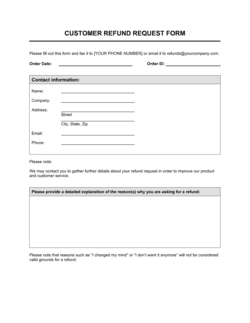
At a glance

What it is
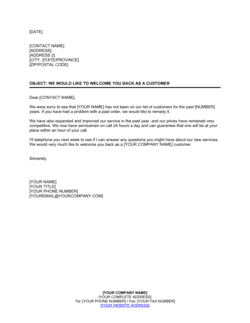
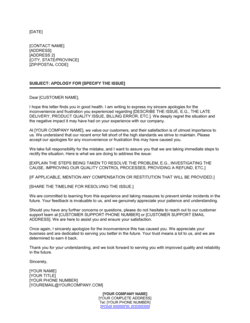
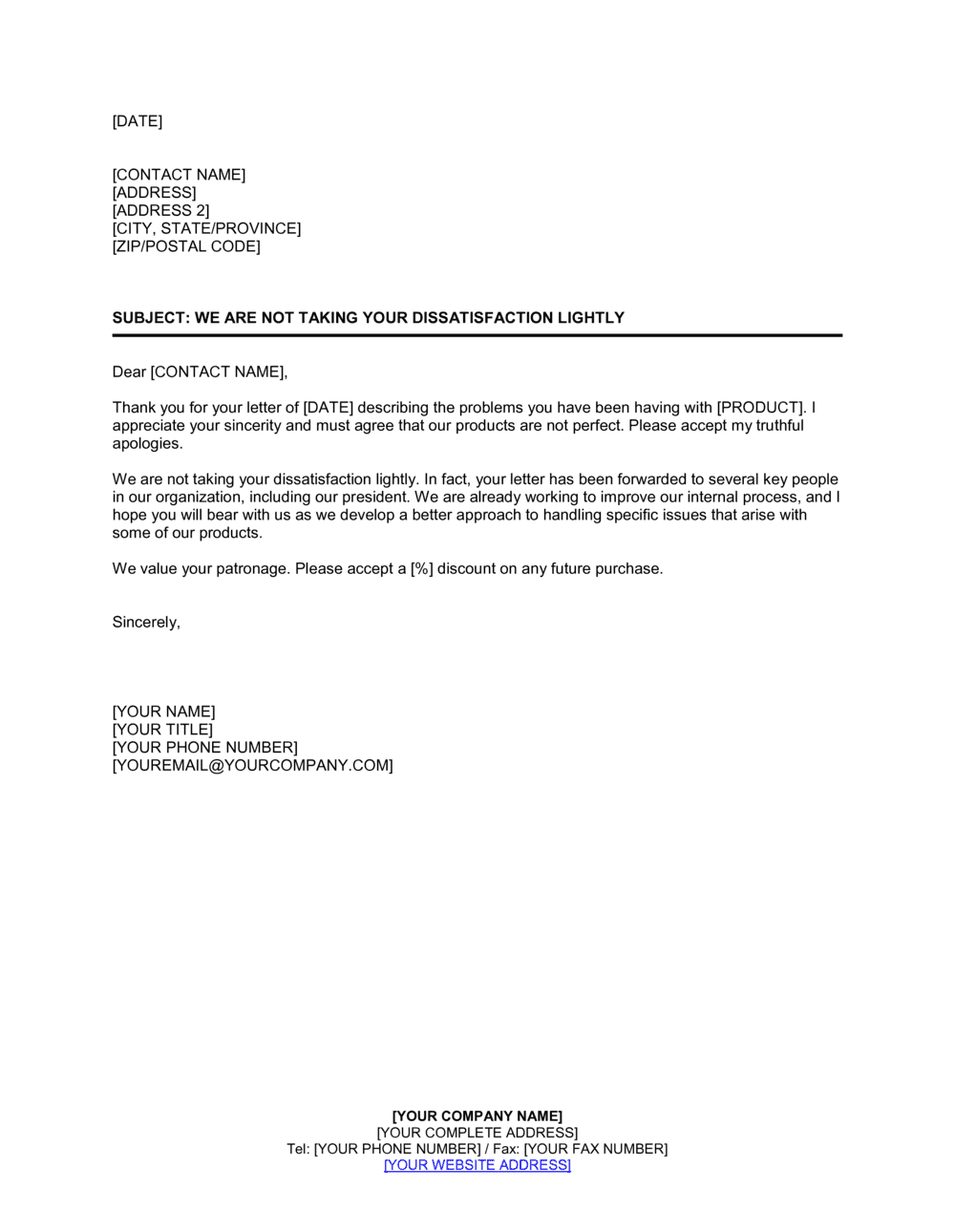
The "We Are Not Taking Your Dissatisfaction Lightly" letter is a formal written response from a business to a customer who has raised a complaint or expressed dissatisfaction with a product, service, or experience. This free Word download gives you a professionally structured template you can edit online and export as PDF to send by email or post within minutes.
When you need it
Use it when a customer has formally complained β€” by letter, email, or phone β€” and the situation warrants a written response that acknowledges the issue, demonstrates accountability, and outlines the corrective steps being taken.
What's inside
A direct acknowledgment of the complaint, an expression of concern without deflecting blame, a summary of the investigation or corrective action underway, a specific remediation offer, and a commitment to follow-up contact β€” all in a tone that is professional, empathetic, and solution-focused.

What is a "We Are Not Taking Your Dissatisfaction Lightly" Letter?

A "We Are Not Taking Your Dissatisfaction Lightly" letter is a formal business response letter sent by a company to a customer who has raised a complaint or reported a negative experience. It goes beyond a simple acknowledgment β€” it demonstrates that the business has investigated the complaint, understands what went wrong, and is taking concrete steps to resolve it and prevent recurrence. The letter is structured to balance professional accountability with genuine empathy, moving through complaint acknowledgment, investigation findings, a specific remedy, and a named follow-up commitment in a single, cohesive document.

Why You Need This Document

Ignoring or under-responding to a customer complaint is rarely a passive act β€” it is an active choice with measurable consequences. Customers who receive no meaningful written response after a serious complaint are significantly more likely to escalate to a consumer protection body, post a public review, or end the relationship entirely. A well-crafted response letter, sent within five business days, short-circuits all three of those outcomes by demonstrating that a real person reviewed the specific complaint and is taking ownership of the resolution. For regulated industries β€” financial services, healthcare, utilities β€” a documented written response is not optional; it is a compliance requirement with defined timelines. This template gives any business, regardless of size or industry, a professionally structured starting point that takes less than 30 minutes to complete and signals to the customer that their concern was taken seriously from the moment it arrived.

Which variant fits your situation?

If your situation is…Use this template
Customer reported a defective or substandard productProduct Complaint Response Letter
Service was delivered late or below agreed standardsService Failure Apology Letter
Customer is demanding a refund after a negative experienceRefund Acknowledgment Letter
Complaint was submitted through a consumer protection agencyFormal Regulatory Complaint Response Letter
Business relationship is at risk and escalation is possibleCustomer Retention Letter
Employee conduct caused the dissatisfactionCustomer Apology Letter β€” Staff Conduct
No fault found but customer still needs a professional responseComplaint Declined Response Letter

Common mistakes to avoid

❌ Defensive opening before acknowledging the customer

Why it matters: Leading with a description of how hard the business tries before acknowledging the customer's experience signals that reputation management comes before resolution. It typically inflames rather than defuses the complaint.

Fix: Lead with acknowledgment and regret. Reserve any context about company standards for the investigation or corrective-action section, after the customer feels heard.
❌ Vague remediation offer

Why it matters: Offering 'a discount on a future purchase' in response to a significant service failure tells the customer the business is protecting margin rather than making things right.

Fix: Match the remedy to the specific impact of the complaint β€” a refund for a defective product, a complimentary service for a booking failure β€” and state the exact amount or benefit.

❌ No named contact or specific follow-up date

Why it matters: Telling a dissatisfied customer that 'someone from our team will be in touch' and then leaving them waiting for an anonymous call confirms their worst suspicion: that the letter is a form response.

Fix: Name the person following up, give their direct contact details, and commit to a specific date β€” not a range.

❌ Paraphrasing the complaint inaccurately

Why it matters: A customer who reads a summary of their own complaint and finds it wrong concludes the business did not read their letter carefully β€” which is often the very thing they were already frustrated about.

Fix: Re-read the original complaint immediately before drafting the summary clause. Quote specific details β€” the date, the product, the location β€” to demonstrate that the complaint was read in full.

The 9 key clauses, explained

Date, Reference, and Recipient Details

In plain language: Opens the letter with the date, the customer's name and address, and a reference line linking to the original complaint by date or case number.

Sample language
[DATE] | [CUSTOMER FULL NAME] | [ADDRESS] | Re: Your complaint of [COMPLAINT DATE] β€” Reference [CASE NUMBER]

Common mistake: Omitting a reference number or complaint date. Without it, the customer cannot easily match the letter to their original complaint, which erodes confidence in the business's tracking process.

Opening Acknowledgment

In plain language: Confirms receipt of the complaint, thanks the customer for raising it, and states that the business takes the matter seriously β€” in plain, non-defensive language.

Sample language
Thank you for taking the time to write to us regarding your recent experience with [COMPANY NAME]. We want to assure you that we do not take your dissatisfaction lightly and are committed to addressing your concerns fully.

Common mistake: Starting with a defensive disclaimer such as 'While we strive for excellence...' before acknowledging the customer's experience. This signals the business is prioritizing its image over the customer's concern.

Summary of the Complaint

In plain language: Restates the customer's complaint in neutral, accurate language to demonstrate that the business has understood the specific issue raised.

Sample language
As we understand it, your concern relates to [BRIEF DESCRIPTION OF ISSUE] that occurred on [DATE] at [LOCATION / VIA CHANNEL]. You indicated that [SPECIFIC IMPACT ON CUSTOMER].

Common mistake: Paraphrasing the complaint inaccurately or incompletely. A mismatch between what the customer said and what the letter describes suggests the business did not read carefully β€” worsening the customer's frustration.

Expression of Concern and Accountability

In plain language: Expresses genuine regret for the customer's experience without necessarily admitting legal liability, and signals that the business is taking ownership of the resolution.

Sample language
We sincerely regret the inconvenience and frustration this situation has caused you. This is not the standard of service we aim to deliver, and we understand why you are disappointed.

Common mistake: Writing 'we are sorry you feel that way' rather than 'we are sorry this happened.' The former implies the customer's reaction is the problem; the latter acknowledges the business's role.

Investigation or Review Statement

In plain language: Explains what steps the business has taken or is taking to investigate the root cause of the complaint.

Sample language
Upon receiving your complaint, we immediately reviewed the circumstances surrounding [ISSUE]. We have spoken with [RELEVANT TEAM / DEPARTMENT] and examined [RECORDS / PROCESSES / SYSTEMS] related to your account.

Common mistake: Claiming an investigation without describing any actual steps taken. Vague language like 'we have looked into this' does not reassure the customer that anything was actually done.

Findings and Explanation

In plain language: Shares relevant findings from the investigation in plain language, without making excuses or shifting blame, and explains what caused the issue.

Sample language
Our review found that [SPECIFIC CAUSE OF ISSUE]. This occurred due to [ROOT CAUSE β€” process gap, system error, training deficiency, etc.]. We acknowledge that this fell short of what you should have experienced.

Common mistake: Over-explaining internal process details that mean nothing to the customer. Customers want to know what went wrong and what is being done β€” not a detailed internal post-mortem.

Corrective Action and Remediation Offer

In plain language: States specifically what the business will do to fix the immediate problem for this customer β€” refund, replacement, service redo, credit β€” and what structural changes are being made to prevent recurrence.

Sample language
As an immediate resolution, we would like to offer you [SPECIFIC REMEDY β€” refund of $[AMOUNT] / complimentary [SERVICE] / replacement of [PRODUCT]]. In addition, we have implemented [CORRECTIVE MEASURE] to ensure this does not happen again.

Common mistake: Offering a generic 'discount on your next purchase' as the only remedy when the complaint warrants a full resolution. Underpowered remediation can do more damage to the relationship than no gesture at all.

Follow-Up Commitment and Contact Details

In plain language: Commits to a specific follow-up action β€” a call, a second letter, or a confirmation β€” and provides direct contact details so the customer can reach a named person.

Sample language
A member of our team, [NAME], will contact you by [DATE] to confirm this has been resolved to your satisfaction. In the meantime, you may reach [NAME] directly at [PHONE / EMAIL].

Common mistake: Providing only a general customer service number rather than a named contact. Anonymous follow-up contact feels like another handoff, not a genuine commitment to resolution.

Closing Statement

In plain language: Closes on a forward-looking, relationship-affirming note β€” expressing appreciation for the customer's patience and the business's desire to retain their confidence.

Sample language
We value your relationship with [COMPANY NAME] and appreciate the opportunity to make this right. We look forward to restoring your confidence in us. Yours sincerely, [SIGNATORY NAME] | [TITLE]

Common mistake: Closing with generic language like 'Thank you for your feedback' when the situation required a recovery letter. This tone mismatch makes the entire letter feel like a form response rather than a genuine effort.

How to fill it out

  1. 1

    Enter the date, recipient details, and case reference

    Add today's date, the customer's full name and mailing or email address, and a reference line citing the original complaint date and any case or ticket number your team assigned.

    πŸ’‘ If the complaint came in by phone, note the call date and the name of the representative who took it β€” this shows the customer their call was logged properly.

  2. 2

    Write a direct, non-defensive opening acknowledgment

    Confirm you received the complaint, thank the customer for raising it, and state clearly that the matter is being taken seriously. Keep this to two to three sentences.

    πŸ’‘ Avoid starting the letter with 'I' β€” it focuses on the sender. Open with 'Thank you' or 'Your recent communication' to center the customer.

  3. 3

    Restate the complaint in neutral language

    Summarize the customer's issue accurately β€” the what, when, and where β€” so they know their specific situation was understood, not processed as a generic ticket.

    πŸ’‘ Read the customer's original complaint one more time before drafting this section. A single inaccurate detail undoes the goodwill the letter is trying to build.

  4. 4

    Express regret and take ownership

    Write a clear statement of regret focused on the customer's experience. Acknowledge that the experience fell below the expected standard without deflecting.

    πŸ’‘ Have a colleague read just this paragraph before sending. If it sounds defensive or qualified, rewrite it. The test is whether a frustrated customer would feel heard.

  5. 5

    Describe the investigation steps taken

    Name the specific actions taken to investigate β€” who was spoken to, what records were reviewed, what process was examined. One to two sentences of specifics is enough.

    πŸ’‘ Specificity here does more work than length. 'We reviewed your order records and delivery logs from [DATE]' is more reassuring than a full paragraph of vague language.

  6. 6

    State the remedy and corrective action clearly

    Specify exactly what you are offering the customer β€” refund amount, replacement item, service credit, or complimentary service β€” and what internal change has been made to prevent recurrence.

    πŸ’‘ Calibrate the remedy to the severity of the complaint. A minor inconvenience warrants a smaller gesture; a significant failure that cost the customer time or money requires a proportionate response.

  7. 7

    Add a named follow-up commitment and direct contact

    Name a specific person who will follow up, give a specific date, and provide their direct phone number or email address. Avoid routing the customer back to a general helpline.

    πŸ’‘ Set a follow-up date no more than five business days out. A longer window signals the issue is not a priority.

Frequently asked questions

What is a customer dissatisfaction response letter?

A customer dissatisfaction response letter is a formal written reply from a business to a customer who has raised a complaint or reported a negative experience. It acknowledges the issue, expresses genuine regret, explains what investigation was conducted, and offers a specific remedy. Its purpose is to resolve the immediate complaint and preserve the customer relationship through clear, empathetic communication.

When should I send a formal written response to a complaint?

Send a formal written response whenever the complaint is serious enough to have been submitted in writing, whenever the customer has escalated beyond a first contact, or whenever a verbal resolution did not satisfy the customer. For B2B relationships, written responses are standard for any service failure that affected the client's operations or finances. A written record also protects the business if the complaint escalates further.

How quickly should a complaint response letter be sent?

Industry best practice is to acknowledge a complaint within one to two business days and send the full written response within five business days. If a thorough investigation requires more time, send an interim acknowledgment within 24 hours confirming the complaint has been received and giving a specific date by which the full response will follow.

Should the letter admit fault or liability?

The letter should acknowledge the customer's experience and express regret without making a formal admission of legal liability. Phrases like 'we regret that this happened' and 'this fell short of our standard' are appropriate. If the complaint involves a situation with potential legal consequences, have legal counsel review the letter before sending.

What remedies are appropriate to offer in a complaint response letter?

The remedy should be proportionate to the impact of the complaint. Common options include a full or partial refund, a replacement product, a complimentary service, an account credit, or a discount on a future purchase. A goodwill gesture β€” such as an upgrade or voucher β€” can be added on top when the relationship warrants it. Avoid offering only a future discount for complaints involving significant inconvenience or financial loss.

Can this letter be used for B2B client complaints as well as consumer complaints?

Yes. The template works for both consumer (B2C) and business (B2B) contexts with minor adjustments to tone and remedy. B2B responses typically reference the specific contract or service agreement, use more formal language, and may include a commitment to a service review meeting rather than a simple refund. The core structure β€” acknowledgment, investigation, remedy, follow-up β€” applies in both cases.

Does a complaint response letter need to be signed?

A signature is not legally required for this type of letter to be effective, but including a named signatory β€” the customer service manager, account manager, or business owner β€” significantly increases the letter's perceived sincerity. An anonymous letter that closes with 'The Customer Service Team' carries far less weight than one signed by a specific, named individual with a direct contact number.

What tone should the letter use?

The tone should be professional, direct, and empathetic β€” not defensive, legalistic, or overly formal. Avoid corporate hedging language like 'we endeavor to provide' or 'it is our policy to.' Write as if a senior manager is speaking directly to the customer. The goal is to make the customer feel that their specific complaint was read by a real person who cares about the outcome.

How this compares to alternatives

vs Customer Apology Letter

A customer apology letter focuses primarily on expressing regret and restoring goodwill, with less emphasis on investigation findings or corrective-action detail. The dissatisfaction response letter is more comprehensive β€” it includes a structured account of what happened, what was investigated, and what remediation is being offered. Use the apology letter for minor service lapses; use this template when the complaint is serious and requires a documented resolution.

vs Customer Complaint Form

A customer complaint form is used to capture a complaint from the customer's side β€” recording the issue, date, and desired outcome. This letter is the business's outbound response to a complaint already received. The two documents are complementary: the form captures the input; the response letter closes the loop.

vs Refund Request Response Letter

A refund request response letter is narrowly focused on approving or declining a specific refund claim, often tied to a returns policy. The dissatisfaction response letter is broader β€” it addresses the full complaint experience, including non-financial impacts, and may or may not include a refund as part of a wider remediation package.

vs Service Level Agreement (SLA)

An SLA defines the service standards a business commits to upfront, including complaint response times and escalation procedures. This letter is used after an SLA has been breached β€” it is the recovery communication that acknowledges the failure and outlines how it will be corrected. The SLA sets the expectation; the letter responds when it is not met.

Industry-specific considerations

Retail and E-commerce

Defective product complaints, failed deliveries, and returns disputes β€” written responses help prevent chargebacks and negative public reviews.

Financial Services

Regulated complaint-handling timelines (typically 5–8 weeks in the UK and Canada) mean formal written responses are mandatory, not optional.

Hospitality and Travel

Guests who experienced a poor stay or travel disruption expect a direct written response from management, often as a condition of returning or not posting a public review.

Professional Services

Service quality disputes in consulting, accounting, or legal services require a carefully worded response that addresses the specific deliverable or engagement that fell short.

Template vs pro β€” what fits your needs?

PathBest forCostTime
Use the templateSmall business owners and customer service teams handling standard complaints without legal exposureFree15–30 minutes per letter
Template + professional reviewComplaints involving potential refund liability, regulated industries, or clients where escalation to a dispute body is likely$50–$200 for a manager or legal review1–2 hours
Custom draftedHigh-value B2B client disputes, complaints that have already been referred to a regulator or ombudsman, or situations with litigation potential$300–$1,000+ (legal counsel)1–3 days

Glossary

Complaint Acknowledgment
A written or verbal confirmation to the customer that their complaint has been received and is being taken seriously.
Remediation
A concrete action taken to correct a problem β€” such as a refund, replacement, discount, or service redo β€” offered to the dissatisfied party.
Goodwill Gesture
An unrequested benefit offered to a customer β€” such as a voucher or complimentary service β€” to restore confidence beyond the minimum required to resolve the complaint.
Escalation
The process by which a complaint moves to a higher level of authority β€” from a front-line agent to a manager, or from a business to a regulator β€” when initial resolution attempts fail.
Root Cause
The underlying reason a problem occurred, identified through investigation, which the corrective action is designed to address.
Service Recovery
The set of actions a business takes after a service failure to restore the customer's satisfaction and preserve the relationship.
Response SLA
The committed maximum time within which a business undertakes to respond to a customer complaint, typically defined in a customer service policy.
Tone of Empathy
A writing approach that acknowledges the customer's feelings and experience before moving to explanations or solutions, reducing defensiveness on both sides.

Part of your Business Operating System

This document is one of 3,000+ business & legal templates included in Business in a Box.

  • Fill-in-the-blanks β€” ready in minutes
  • 100% customizable Word document
  • Compatible with all office suites
  • Export to PDF and share electronically

Create your document in 3 simple steps.

From template to signed document β€” all inside one Business Operating System.
1
Download or open template

Access over 3,000+ business and legal templates for any business task, project or initiative.

2
Edit and fill in the blanks with AI

Customize your ready-made business document template and save it in the cloud.

3
Save, Share, Send, Sign

Share your files and folders with your team. Create a space of seamless collaboration.

Save time, save money, and create top-quality documents.

β˜…β˜…β˜…β˜…β˜…

"Fantastic value! I'm not sure how I'd do without it. It's worth its weight in gold and paid back for itself many times."

Managing Director Β· Mall Farm
Robert Whalley
Managing Director, Mall Farm Proprietary Limited
β˜…β˜…β˜…β˜…β˜…

"I have been using Business in a Box for years. It has been the most useful source of templates I have encountered. I recommend it to anyone."

Business Owner Β· 4+ years
Dr Michael John Freestone
Business Owner
β˜…β˜…β˜…β˜…β˜…

"It has been a life saver so many times I have lost count. Business in a Box has saved me so much time and as you know, time is money."

Owner Β· Upstate Web
David G. Moore Jr.
Owner, Upstate Web

Run your business with a system β€” not scattered tools

Stop downloading documents. Start operating with clarity. Business in a Box gives you the Business Operating System used by over 250,000 companies worldwide to structure, run, and grow their business.

Start freeΒ Β·Β No credit card required