Value Chain Analysis Template

Free download β€’ Use as a template β€’ Print or share

3 pagesβ€’20–30 min to useβ€’Difficulty: Standard
Learn more ↓
FreeValue Chain Analysis Template

At a glance

What it is
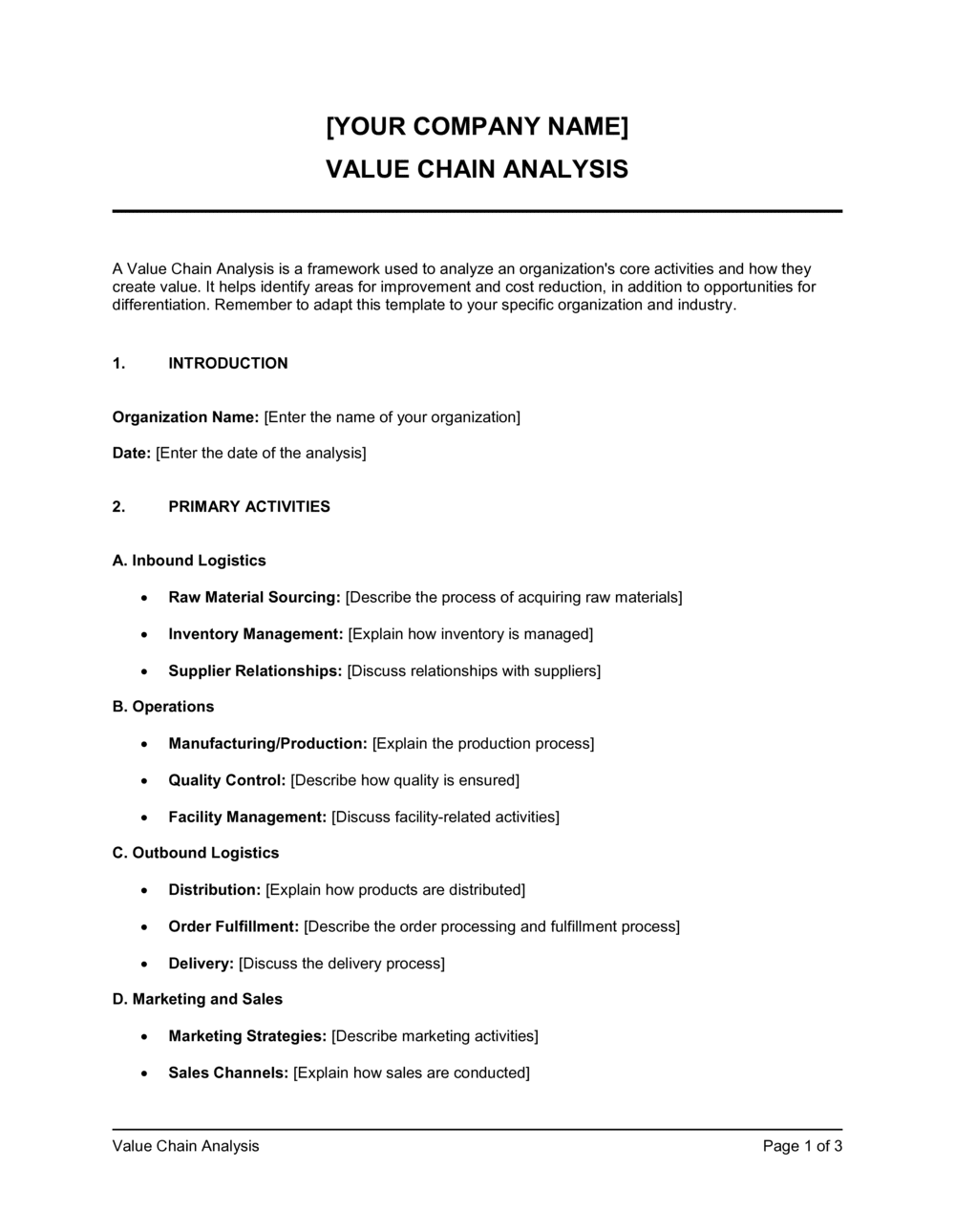
A Value Chain Analysis is a structured strategic document that maps every activity a business performs β€” from inbound logistics to after-sales service β€” and evaluates how each one contributes to cost structure and competitive differentiation. This free Word download gives you a ready-to-edit framework based on Porter's value chain model that you can customize and export as PDF to share with leadership, consultants, or investors.
When you need it
Use it when diagnosing why margins are eroding, preparing a competitive strategy review, evaluating a potential acquisition, or building the operations section of a business plan. It is also the natural starting point for any outsourcing, digital transformation, or cost-reduction initiative.
What's inside
Executive summary of findings, a primary activities breakdown covering inbound logistics through after-sales service, a support activities analysis covering infrastructure through procurement, a cost and value driver assessment for each activity, a competitive benchmarking section, and a strategic recommendations block with prioritized action items.

What is a Value Chain Analysis?

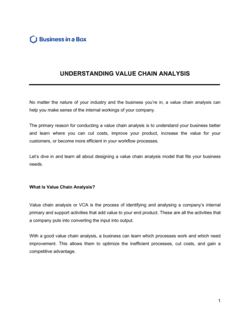
A Value Chain Analysis is a strategic framework document that breaks a business down into its individual activities β€” from receiving raw materials to delivering after-sales support β€” and evaluates how each activity contributes to the company's cost structure and competitive differentiation. Rooted in Michael Porter's model from Competitive Advantage (1985), it divides activities into two categories: primary activities that directly create and deliver the product or service, and support activities that enable primary operations. By assigning cost data and value contribution scores to each activity, the analysis reveals precisely where a company earns its margin, where it wastes resources, and which activities are genuinely responsible for its competitive advantage.

Why You Need This Document

Without a structured value chain analysis, strategic decisions about outsourcing, investment, and cost reduction are made on intuition rather than evidence β€” and the consequences are predictable. Activities that look expensive in aggregate turn out to be critical differentiators when examined at the activity level; activities that feel essential turn out to be commodities a supplier could handle at half the cost. Executives who skip this step routinely cut the wrong costs and under-invest in the capabilities that actually retain customers. A completed value chain analysis gives leadership a shared factual foundation for resource allocation, competitive positioning, and operational improvement β€” turning what would otherwise be a debate about opinions into a discussion of data. This template gives you the structure to complete that analysis in days rather than weeks, with a format your board, lenders, or strategy team can act on immediately.

Which variant fits your situation?

If your situation is…Use this template
Analyzing a manufacturing or product-based businessValue Chain Analysis (Manufacturing)
Evaluating a service firm or professional services businessValue Chain Analysis (Service Firm)
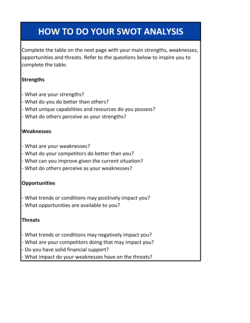
Quick competitive landscape scan without deep cost analysisSWOT Analysis
Mapping industry forces alongside internal activity analysisPorter's Five Forces Analysis
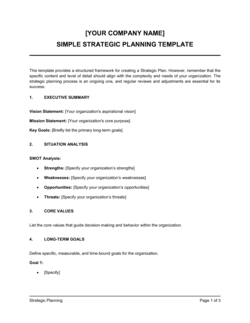
Presenting strategic findings to a board or investor audienceStrategic Planning Template
Identifying cost-reduction opportunities across the supply chainSupply Chain Analysis
Benchmarking operational performance against industry peersCompetitive Analysis Template

Common mistakes to avoid

❌ Scoping the analysis at enterprise level

Why it matters: An enterprise-level analysis averages out activity performance across business units with very different cost structures, producing findings too vague to act on.

Fix: Restrict the scope to a single business unit, product line, or customer segment. Complete two separate analyses rather than one blended one if you need enterprise coverage.

❌ Scoring activities on cost without assessing value contribution

Why it matters: Cutting a high-cost activity that is also a primary differentiator destroys competitive advantage β€” a mistake that can take years to reverse.

Fix: Always produce a two-dimensional score (cost materiality Γ— value contribution) for every activity before making any outsourcing or cost-reduction recommendation.

❌ Relying solely on internal data for benchmarking

Why it matters: Internal data shows how you perform in absolute terms, not whether you are ahead of or behind competitors on the activities that matter most to customers.

Fix: Supplement internal metrics with at least two external sources per activity: customer surveys, competitor job postings, analyst reports, or supplier interviews.

❌ Producing more than five strategic recommendations

Why it matters: A list of twelve priorities is functionally the same as no priorities β€” leadership cannot fund, staff, and execute that many simultaneous changes effectively.

Fix: Force-rank all candidate actions by expected impact divided by implementation effort. Present only the top three to five, and move the rest to a 'watch list' appendix.

❌ Treating support activities as fixed overhead

Why it matters: Support activities such as HR and technology directly affect the quality and cost of primary activities. Ignoring them produces an incomplete picture of where competitive advantage is built or lost.

Fix: For each support activity, map at least one explicit linkage to a primary activity and quantify the performance impact of a 10% improvement or degradation.

❌ Writing the executive summary before completing the analysis

Why it matters: A summary written first anchors the analysis toward confirming existing beliefs rather than surfacing what the data actually shows β€” a form of confirmation bias that undermines the document's strategic value.

Fix: Complete all sections, including competitive benchmarking and recommendations, before writing the executive summary. Treat it as a synthesis task, not a framing task.

The 10 key sections, explained

Executive summary of findings

Company and scope definition

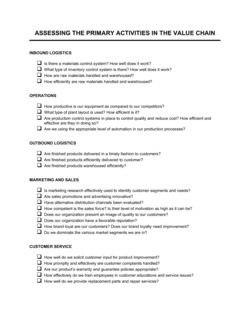
Primary activities β€” inbound logistics

Primary activities β€” operations, outbound logistics, and sales

Primary activities β€” service and after-sales

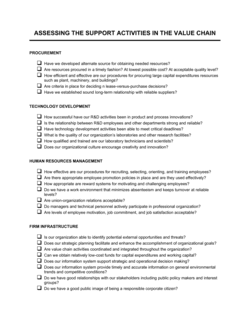
Support activities β€” firm infrastructure and HR

Support activities β€” technology development and procurement

Cost and value driver assessment

Competitive benchmarking

Strategic recommendations and action plan

How to fill it out

  1. 1

    Define the scope and business unit

    Specify which product line, business unit, or geography the analysis covers. Document what is in scope and what is explicitly excluded so all contributors work from the same boundary.

    πŸ’‘ Narrower scope produces more actionable findings. A single product line analyzed in depth outperforms an enterprise-wide analysis that stays at 30,000 feet.

  2. 2

    Map all primary activities and collect cost data

    List every primary activity from inbound logistics through after-sales service. For each, record annual cost, headcount, and one or two performance metrics (e.g., inventory turns, order fulfillment time, CSAT).

    πŸ’‘ Use your management accounts or ERP system to pull actual cost data by function. Estimated figures introduce errors that compound in the recommendations section.

  3. 3

    Map all support activities and their linkages to primary activities

    Document infrastructure, HR, technology, and procurement activities. For each, identify which primary activities they enable and how changes in support-activity quality or cost flow through to customer-facing performance.

    πŸ’‘ Drawing linkage arrows between support and primary activities on a single page often surfaces non-obvious cost interdependencies that narrative alone misses.

  4. 4

    Score each activity on cost materiality and value contribution

    Assign a cost tier (high, medium, low as a percentage of total operating cost) and a value contribution rating (high, medium, low based on customer willingness to pay and differentiation impact) to each activity.

    πŸ’‘ Validate your value contribution scores against customer data β€” NPS comments, support tickets, and win/loss reports reveal what customers actually value versus what internal teams assume.

  5. 5

    Benchmark two or three direct competitors

    For each activity where you have a cost or performance disadvantage, identify at least one competitor that performs it better. Document the estimated gap in dollars per unit or as a percentage of revenue.

    πŸ’‘ Supplement public financials with job postings, customer reviews, and supplier interviews. A competitor hiring aggressively in after-sales service signals they are investing in that activity as a differentiator.

  6. 6

    Identify outsourcing and investment candidates

    Flag activities that are high cost and low value contribution as outsourcing or elimination candidates. Flag activities that are high value contribution but underfunded relative to competitors as investment priorities.

    πŸ’‘ Before recommending outsourcing, confirm that the activity does not contain proprietary knowledge or customer data that would create risk if transferred to a third party.

  7. 7

    Write strategic recommendations with owners and timelines

    Translate your findings into no more than five prioritized actions. Each recommendation should name a responsible owner, a target completion date, and the specific metric expected to improve.

    πŸ’‘ Tie each recommendation to a financial estimate β€” even a rough one. 'Reduce inbound logistics cost by 8%, saving approximately $[X]' is far more persuasive than 'improve supplier terms.'

  8. 8

    Write the executive summary last

    Once all sections are complete, distill the analysis into a one-page summary covering the top value-creating activity, the top cost opportunity, and the three highest-priority recommendations.

    πŸ’‘ The executive summary is the only section most decision-makers will read in full. If the recommendations are not clear in the first paragraph, they will not act on the findings.

Frequently asked questions

What is a value chain analysis?

A value chain analysis is a strategic framework that maps every activity a business performs to deliver its product or service β€” from receiving raw inputs to after-sales support β€” and evaluates how each activity contributes to cost structure and competitive differentiation. It was introduced by Michael Porter in Competitive Advantage (1985) and remains one of the most widely used tools in strategy consulting and operations management.

What is the difference between primary and support activities in a value chain?

Primary activities are the five core functions that directly create and deliver the product or service: inbound logistics, operations, outbound logistics, marketing and sales, and service. Support activities β€” firm infrastructure, human resource management, technology development, and procurement β€” enable primary activities but do not themselves touch the product. Both categories contribute to margin, and neither can be ignored in a complete analysis.

When should a business conduct a value chain analysis?

The most common triggers are declining margins without an obvious cause, entry into a new market or product line, evaluation of a potential acquisition, a cost-reduction or outsourcing initiative, and preparation of a competitive strategy for a board or investor audience. It is also useful as an annual strategic review tool for businesses in fast-moving competitive environments.

What is the difference between a value chain analysis and a SWOT analysis?

A SWOT analysis identifies internal strengths and weaknesses alongside external opportunities and threats at a high level. A value chain analysis goes deeper into the internal dimension β€” it disaggregates the business into specific activities, assigns cost and value contribution data to each, and benchmarks them against competitors. Use a SWOT for a quick situational scan and a value chain analysis when you need activity-level insight to drive operational or investment decisions.

How long does a value chain analysis take to complete?

A focused analysis of a single business unit typically takes one to three weeks, depending on data availability. Collecting accurate cost-by-activity data from financial systems is usually the longest step. Using a structured template cuts the structural work significantly, concentrating effort on the data gathering, benchmarking, and recommendation-writing that require original judgment.

Do I need a consultant to run a value chain analysis?

For most small and mid-size businesses, a well-structured template plus an internal team with access to management accounts is sufficient. Engage an external consultant when the analysis involves cross-industry benchmarking, a potential acquisition target, or a strategic decision with material financial consequences β€” typically when the decision involves more than $500K in capital reallocation or a major outsourcing contract.

What outputs should a value chain analysis produce?

The core outputs are a scored activity map showing cost materiality and value contribution for each activity, a competitive benchmark comparing your performance to two or three rivals, and a prioritized action plan with no more than five recommendations, each tied to an owner, deadline, and expected metric improvement. A one-page executive summary synthesizing these findings is the deliverable most decision-makers actually use.

Can a value chain analysis be used for a service business?

Yes β€” Porter's framework applies to service businesses with minor adaptations. For service firms, operations becomes service delivery (consulting hours, software development sprints, patient care episodes), outbound logistics becomes client onboarding and access provisioning, and inbound logistics covers knowledge, talent, and data inputs. The logic of identifying which activities create differentiated value and which are cost centers is identical regardless of whether the output is a physical product or a service.

How this compares to alternatives

vs SWOT Analysis

A SWOT analysis provides a high-level snapshot of internal strengths and weaknesses alongside external opportunities and threats. A value chain analysis disaggregates internal operations into specific activities with cost and value data. Use a SWOT for a quick strategic scan and a value chain analysis when you need to make specific operational or investment decisions based on activity-level evidence.

vs Competitive Analysis Template

A competitive analysis maps competitors' products, pricing, positioning, and market share from an external perspective. A value chain analysis looks inward β€” it explains why a company is or is not competitive by examining the activities that produce the product or service. They are complementary: the competitive analysis identifies where gaps exist; the value chain analysis explains what internal activities are causing them.

vs Strategic Planning Template

A strategic plan defines multi-year goals, initiatives, and KPIs for an existing business. A value chain analysis is a diagnostic input to that plan β€” it answers which activities to invest in, optimize, or exit before the strategic plan allocates resources. Most strategic planning cycles benefit from a completed value chain analysis as a foundation.

vs Business Process Improvement Plan

A business process improvement plan focuses on redesigning specific workflows within one function to reduce errors, time, or cost. A value chain analysis operates at a higher level of abstraction β€” it identifies which activities are strategically important enough to warrant a process improvement effort in the first place. The value chain analysis sets priorities; the process improvement plan executes them.

Industry-specific considerations

Manufacturing

Focus is on inbound logistics, production cost per unit, and supplier concentration β€” where small improvements in activity cost compound across high unit volumes.

Retail / E-commerce

Outbound logistics and returns processing are often the largest cost and differentiation levers, with technology development (demand forecasting, personalization) as the critical support activity.

Professional Services

Human resource management and knowledge management systems are the dominant value drivers, while firm infrastructure (utilization tracking, billing systems) determines margin realization.

SaaS / Technology

Technology development and after-sales service (customer success, support) are the primary value-creating activities, with inbound logistics replaced by data acquisition and talent sourcing.

Template vs pro β€” what fits your needs?

PathBest forCostTime
Use the templateInternal strategy teams, small business owners, and MBA students completing a standalone competitive or operational reviewFree1–3 weeks (15–30 hours)
Template + professional reviewMid-size companies preparing a board-level strategy presentation or evaluating a major outsourcing decision$500–$2,000 for a strategy advisor or operations consultant review session2–4 weeks
Custom draftedM&A due diligence, enterprise transformation programs, or regulated industries where activity benchmarks require primary research$5,000–$25,000+ for a full consulting engagement4–12 weeks

Glossary

Value Chain
The full sequence of activities a firm performs to deliver a product or service to the end customer, from raw input to after-sales support.
Primary Activities
The five core operational activities that directly create, deliver, and support the product or service: inbound logistics, operations, outbound logistics, marketing and sales, and service.
Support Activities
The four enabling functions that underpin primary activities: firm infrastructure, human resource management, technology development, and procurement.
Value Driver
A specific activity or capability that increases the perceived value of the offering to the customer and justifies a price premium.
Cost Driver
A factor β€” such as scale, learning, capacity utilization, or linkages between activities β€” that determines the cost of performing a given activity.
Margin
In a value chain context, the difference between the total value created for the customer and the total cost of performing all value chain activities.
Linkages
Interdependencies between value chain activities where the way one activity is performed affects the cost or effectiveness of another.
Competitive Advantage
A sustained performance superiority over rivals achieved either by performing activities at lower cost or by differentiating activities in ways customers value and will pay for.
Disaggregation
The process of breaking down a business function into its component activities to analyze each one individually for cost and value contribution.
Outsourcing
The decision to have an external party perform a value chain activity that was previously done internally, typically to reduce cost or access superior capability.

Part of your Business Operating System

This document is one of 3,000+ business & legal templates included in Business in a Box.

  • Fill-in-the-blanks β€” ready in minutes
  • 100% customizable Word document
  • Compatible with all office suites
  • Export to PDF and share electronically

Create your document in 3 simple steps.

From template to signed document β€” all inside one Business Operating System.
1
Download or open template

Access over 3,000+ business and legal templates for any business task, project or initiative.

2
Edit and fill in the blanks with AI

Customize your ready-made business document template and save it in the cloud.

3
Save, Share, Send, Sign

Share your files and folders with your team. Create a space of seamless collaboration.

Save time, save money, and create top-quality documents.

β˜…β˜…β˜…β˜…β˜…

"Fantastic value! I'm not sure how I'd do without it. It's worth its weight in gold and paid back for itself many times."

Managing Director Β· Mall Farm
Robert Whalley
Managing Director, Mall Farm Proprietary Limited
β˜…β˜…β˜…β˜…β˜…

"I have been using Business in a Box for years. It has been the most useful source of templates I have encountered. I recommend it to anyone."

Business Owner Β· 4+ years
Dr Michael John Freestone
Business Owner
β˜…β˜…β˜…β˜…β˜…

"It has been a life saver so many times I have lost count. Business in a Box has saved me so much time and as you know, time is money."

Owner Β· Upstate Web
David G. Moore Jr.
Owner, Upstate Web

Run your business with a system β€” not scattered tools

Stop downloading documents. Start operating with clarity. Business in a Box gives you the Business Operating System used by over 250,000 companies worldwide to structure, run, and grow their business.

Free Forever PlanΒ Β·Β No credit card required