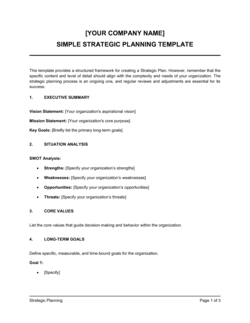
- Strengths
- Internal attributes and resources that give the organization a competitive advantage over rivals — things it does better than anyone else.
- Weaknesses
- Internal limitations or gaps — skills, resources, processes, or capabilities — that place the organization at a disadvantage.
- Opportunities
- External conditions in the market, industry, or environment that the organization could exploit to grow or improve its position.
- Threats
- External factors — competitor moves, regulatory changes, economic shifts, or technology disruption — that could harm performance or viability.
- Internal Analysis
- Assessment of factors the organization controls or influences directly, covering both strengths and weaknesses.
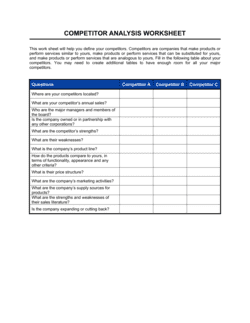
- External Analysis
- Assessment of factors outside the organization's direct control, including market conditions, competitors, and macroeconomic trends.
- TOWS Matrix
- An extension of the SWOT that maps each quadrant against the others to generate four types of strategic options: SO, ST, WO, and WT strategies.
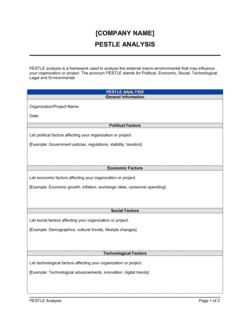
- PESTLE Analysis
- A complementary external scan covering Political, Economic, Social, Technological, Legal, and Environmental factors — often used to populate the Threats and Opportunities quadrants.
- Competitive Moat
- A durable structural advantage — brand, patents, network effects, or switching costs — that is typically surfaced as a core strength in a SWOT.
- Strategic Priorities
- The ranked set of actions derived from SWOT findings, identifying which opportunities to pursue, which weaknesses to address, and which threats to mitigate first.