- ESG
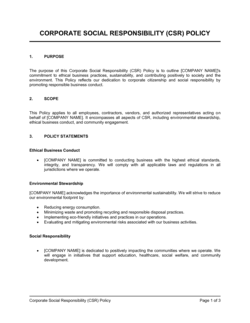
- Environmental, Social, and Governance — the three pillars used to evaluate a company's non-financial performance and long-term risk profile.
- Carbon Footprint
- The total greenhouse gas emissions caused directly or indirectly by a company's operations, measured in metric tons of CO2 equivalent.
- Scope 1, 2, and 3 Emissions
- A framework that classifies emissions: Scope 1 is direct emissions from owned sources, Scope 2 is purchased energy, and Scope 3 is indirect emissions across the value chain including suppliers and customers.
- Materiality Assessment
- A process that identifies which sustainability topics have the greatest impact on the business and its stakeholders, used to prioritize where to focus strategy and reporting.
- Net Zero
- A target state where a company's total greenhouse gas emissions equal the amount it removes or offsets, resulting in no net addition to atmospheric CO2.
- Circular Economy
- A business model that eliminates waste by keeping materials in use as long as possible — through reuse, repair, remanufacturing, or recycling — rather than following a linear take-make-dispose model.
- Supply Chain Due Diligence
- The process of identifying, assessing, and mitigating environmental, social, and governance risks across a company's network of suppliers and subcontractors.
- KPI (Key Performance Indicator)
- A specific, measurable metric used to track progress toward a strategic target — in sustainability contexts, examples include tonnes of waste diverted, percentage of renewable energy used, or employee volunteer hours.
- Stakeholder Engagement
- The structured process of identifying, consulting, and communicating with all parties — employees, customers, investors, communities, regulators — who are affected by or can affect a company's sustainability performance.
- GRI Standards
- Global Reporting Initiative Standards — a widely adopted framework for sustainability reporting that defines how companies disclose their environmental, social, and governance impacts.
- Science-Based Target
- A greenhouse gas reduction goal aligned with the reductions required by climate science to limit global warming to 1.5°C above pre-industrial levels, validated by the Science Based Targets initiative (SBTi).