5 Strategies For Effective Business Future Proofing In The Digital Age

Free to read β€’ Save or share with one click

Free5 Strategies For Effective Business Future Proofing In The Digital Age Template

At a glance

What it is
This document is a structured strategic planning guide that walks leadership teams through five proven strategies for building a business that can absorb technological disruption, shifting market conditions, and competitive threats in the digital age. It is a free Word download you can edit online and export as PDF to share with your board, investors, or senior team.
When you need it
Use it when conducting an annual strategy review, preparing for a digital transformation initiative, or responding to a market disruption that has exposed gaps in your current operating model. It is also a strong starting point for any leadership offsite where long-term resilience is on the agenda.
What's inside
A diagnostic of your current digital readiness, five action-oriented strategic frameworks covering technology adoption, talent development, customer centricity, operational agility, and data-driven decision-making, plus implementation roadmap guidance and KPIs to track progress.

What is a Business Future Proofing Strategy?

A Business Future Proofing Strategy is a structured planning document that prepares an organization to adapt to technological disruption, competitive shifts, and evolving customer expectations before those forces create a crisis. It moves beyond general strategic planning by focusing specifically on five capability domains β€” technology adoption, digital talent, customer experience, operational agility, and data-driven decision-making β€” that determine whether a business can absorb and respond to digital-age disruption. This template is a free Word download you can edit online, complete with a digital readiness assessment, five strategy frameworks, an implementation roadmap, and a KPI tracking structure, ready to export as PDF and share with your leadership team or board.

Why You Need This Document

Businesses that do not deliberately build adaptability into their operations are structurally exposed to disruptions they cannot respond to in time. The window between a market shift and competitive displacement has compressed from years to months in most industries, and organizations without a documented future proofing strategy consistently discover their gaps at the worst possible moment β€” when a well-funded competitor, a platform change, or a customer behavior shift is already eroding their position. Without this document, technology investments get made without a readiness baseline, upskilling programs get funded without a skills gap analysis, and roadmaps exist only in the heads of individual leaders rather than as a shared, reviewable plan. This template gives your leadership team a common framework to diagnose where the business is vulnerable, prioritize the strategies with the highest impact, and track progress against outcomes that matter β€” before the disruption forces the decision for you.

Which variant fits your situation?

If your situation is…Use this template
Conducting a full enterprise-wide digital transformationDigital Transformation Strategy Plan
Building resilience in response to a specific competitive threatCompetitive Analysis Template
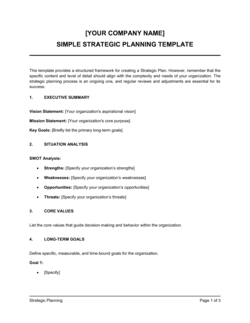
Planning a three-year strategic roadmap for the whole businessStrategic Planning Template
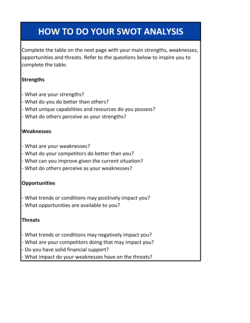
Identifying internal strengths, weaknesses, and external threatsSWOT Analysis
Building a workforce capability plan to support digital adoptionTraining and Development Plan
Defining innovation priorities and R&D investment allocationInnovation Management Plan
Presenting the strategy to investors or board membersBusiness Plan

Common mistakes to avoid

❌ Skipping the digital readiness assessment

Why it matters: Without a baseline, the five strategies are selected by preference rather than need β€” teams invest in visible but low-impact technology while structural gaps go unaddressed.

Fix: Score your organization across technology, data, talent, process, and customer experience before assigning a single strategy. Use the scores to prioritize, not to perform.

❌ Automating broken processes

Why it matters: Applying automation to a flawed workflow accelerates the production of bad outputs and embeds the inefficiency so deeply that fixing it later requires unwinding both the process and the technology.

Fix: Map, analyze, and redesign each target process on paper before selecting an automation tool. The redesign step typically delivers 30–40% of the efficiency gain before any technology is deployed.

❌ Setting activity-based KPIs instead of outcome-based KPIs

Why it matters: Counting training sessions held or tools deployed creates the illusion of progress while the business outcomes the strategy was meant to improve β€” churn, cycle time, error rate β€” go unmeasured and unchanged.

Fix: For every strategy, identify the business outcome it is meant to move and express the KPI in terms of that outcome. Replace 'tools deployed' with 'operational error rate reduced by X%'.

❌ Treating the roadmap as a fixed plan

Why it matters: A 12-month roadmap built in January is outdated by March in most industries β€” new competitors, budget changes, or technology shifts can invalidate key assumptions within weeks.

Fix: Build in a formal quarterly roadmap review where each milestone is tested against current market conditions and internal progress. Update the roadmap in the shared tool immediately after each review.

❌ Selecting technology before defining the problem

Why it matters: Tool-first decisions almost always result in underutilized platforms because the use case was invented to justify the purchase rather than the technology selected to solve a documented pain point.

Fix: Document the specific operational problem, its frequency, and its cost before evaluating any vendor. Use that documented problem as the primary criterion in the vendor selection process.

❌ Leaving talent development out of the strategy entirely

Why it matters: Technology investments consistently underperform when the people responsible for using them lack the skills to do so β€” adoption rates stall, workarounds proliferate, and the tool is abandoned within 18 months.

Fix: Include a skills gap analysis and upskilling plan as a non-negotiable component of every technology or process change in the roadmap, with budget and timeline matched to the rollout schedule.

The 9 key sections, explained

Digital Readiness Assessment

Strategy 1 β€” Technology Adoption Roadmap

Strategy 2 β€” Talent Development and Digital Upskilling

Strategy 3 β€” Customer-Centric Digital Experience

Strategy 4 β€” Operational Agility and Process Automation

Strategy 5 β€” Data-Driven Decision-Making Framework

Implementation Roadmap

KPIs and Progress Tracking

Risk and Scenario Planning

How to fill it out

  1. 1

    Complete the digital readiness assessment

    Score your organization across five dimensions β€” technology infrastructure, data maturity, digital talent, process automation, and customer digital experience β€” on a 1–5 scale. Document the current state and the gaps before touching any strategy section.

    πŸ’‘ Involve at least three department heads in the assessment to avoid a single-perspective blind spot; cross-functional disagreement on scores is itself a valuable data point.

  2. 2

    Prioritize the five strategies by impact and feasibility

    Map each strategy on a 2Γ—2 grid of effort versus business impact using your readiness assessment scores as input. Start with the two highest-impact, lowest-effort strategies in Year 1.

    πŸ’‘ Quick wins in the first 90 days build organizational confidence and secure budget for harder, longer-cycle strategies.

  3. 3

    Build the technology adoption roadmap with specific tools and owners

    For each technology initiative, name the platform, the problem it solves, the owner responsible, the go-live date, and the budget. Avoid placeholder language β€” vague roadmaps do not get funded or executed.

    πŸ’‘ Phase implementations in 90-day sprints rather than annual plans; shorter cycles force prioritization and surface integration issues earlier.

  4. 4

    Map workforce skills gaps and define the upskilling plan

    Compare your current team's documented skills against the digital capabilities each strategy requires. Assign a specific learning pathway β€” course, certification, or mentorship β€” to each identified gap, with a completion date.

    πŸ’‘ Partner with a platform like Coursera for Business or LinkedIn Learning to scale delivery; self-directed learning without structure has low completion rates.

  5. 5

    Define customer-facing digital experience KPIs

    Identify the three to five customer journey moments that most affect retention and revenue. Set a current baseline metric for each and a target for 12 months out. Assign ownership to a specific role.

    πŸ’‘ Use customer support ticket data and NPS verbatims to identify the highest-friction moments β€” they are faster and cheaper to find than a commissioned UX research project.

  6. 6

    Build the implementation roadmap with quarterly milestones

    Map each strategy's key actions across four quarters, noting dependencies between strategies (e.g., data infrastructure must be in place before the data-driven decision-making framework can launch). Assign one named owner per milestone.

    πŸ’‘ Build the roadmap in a shared tool your leadership team reviews weekly β€” a static PDF roadmap is consulted once and forgotten.

  7. 7

    Set outcome-based KPIs and a review cadence

    For each strategy, define one to three measurable outcomes β€” not activities β€” and the review frequency. Connect each KPI to a named leadership owner who reports on it at a defined cadence.

    πŸ’‘ Schedule the first quarterly KPI review before you publish the plan; an unscheduled review gets deprioritized when execution pressure builds.

  8. 8

    Document risks and assign mitigation owners

    List the top five risks to the strategy β€” technology integration failure, budget cuts, talent attrition, regulatory change, or market shift β€” and assign a specific mitigation action and owner to each.

    πŸ’‘ Revisit the risk register every quarter, not annually; the digital environment moves fast enough that a risk that was low-probability in January can be high-probability by April.

Frequently asked questions

What does future proofing a business mean?

Future proofing a business means systematically preparing the organization to absorb and adapt to disruptions β€” technological, competitive, regulatory, or economic β€” before they become crises. It involves assessing your current digital readiness, identifying the capabilities you will need in 3–5 years, and building those capabilities in advance through deliberate strategy. The goal is not to predict the future but to reduce the cost and recovery time when change arrives.

Why is future proofing especially important in the digital age?

The pace of technological change has compressed the window between disruption and obsolescence. A business that took 10 years to be displaced by digital competitors in 2005 can be disrupted in 18–24 months today. AI, automation, platform shifts, and changing customer expectations are simultaneously rewriting cost structures, channel economics, and talent requirements across every industry. Businesses that do not deliberately build adaptability into their operations are structurally exposed to disruptions they cannot respond to fast enough.

What are the five strategies covered in this template?

The five strategies are: building a technology adoption roadmap aligned to documented operational needs; developing digital talent through structured upskilling and hiring plans; designing a customer-centric digital experience tied to measurable retention and satisfaction outcomes; creating operational agility through targeted process automation; and embedding a data-driven decision-making framework into routine leadership and operational reviews. Each strategy is supported by a practical implementation guide and KPI framework.

How is this different from a general strategic plan?

A general strategic plan covers the full range of business objectives β€” revenue targets, market expansion, organizational design, and capital allocation. This document focuses specifically on the five capability areas that determine whether a business can adapt to digital disruption. It functions as a focused workstream within a broader strategic plan, or as a standalone tool for businesses whose primary strategic challenge is digital resilience rather than overall growth planning.

How long does it take to complete this document?

A leadership team with good internal data can complete a first draft in two to three working sessions of two hours each. The digital readiness assessment and KPI-setting sections take the most time because they require gathering data from multiple departments. Most teams reach a board-ready version within two to four weeks of starting, depending on how much cross-functional alignment work is needed.

Who should be involved in filling out this template?

At minimum: the CEO or managing director, the head of operations or strategy, and the leader responsible for technology or digital. For the talent development section, HR should be a co-author. Including at least one customer-facing leader β€” head of sales or customer success β€” in the customer centricity section produces materially better output than having strategy or IT fill it in alone.

How often should the future proofing strategy be reviewed?

The KPI dashboard should be reviewed monthly. The full strategy β€” including the roadmap, risk register, and readiness assessment β€” should be reviewed quarterly and formally updated annually. In fast-moving industries like SaaS, financial services, or retail, a semi-annual full review is more appropriate. Any significant external disruption β€” a major competitor move, a regulatory change, or a new enabling technology β€” should trigger an immediate off-cycle review of the affected strategies.

Can a small business use this template, or is it only for large organizations?

The template scales to any organization size. Small businesses should focus on the two or three strategies most relevant to their current constraints rather than attempting all five simultaneously. A 10-person professional services firm will prioritize the customer digital experience and data-driven decision-making strategies differently than a 500-person manufacturer, but the diagnostic and planning structure applies equally. The key is calibrating the ambition of the roadmap to available budget, bandwidth, and leadership capacity.

What is the difference between a future proofing strategy and a digital transformation plan?

A digital transformation plan is typically a project-scoped initiative with a defined start, end, and technology implementation agenda. A future proofing strategy is ongoing and broader β€” it covers talent, culture, customer experience, and operational processes alongside technology, and it is designed to be updated continuously rather than concluded. Digital transformation is one component of future proofing, not a synonym for it.

How this compares to alternatives

vs Strategic Planning Template

A strategic planning template covers the full scope of a business's objectives β€” revenue, market position, capital allocation, and organizational design. This future proofing document focuses specifically on digital resilience and adaptability. The two work best together: the strategic plan sets the destination; the future proofing strategy ensures the organization can navigate the disruptions along the way.

vs Digital Transformation Strategy Plan

A digital transformation plan is a time-bound project document focused on technology implementation β€” migrating platforms, deploying tools, and retraining staff for a defined system change. The future proofing strategy is an ongoing, broader framework that includes talent, culture, customer experience, and process alongside technology. Transformation is a phase; future proofing is a permanent operating discipline.

vs SWOT Analysis

A SWOT analysis is a diagnostic snapshot identifying strengths, weaknesses, opportunities, and threats at a point in time. It is a useful input into a future proofing strategy but does not produce an actionable roadmap, KPIs, or implementation guidance on its own. Use the SWOT to inform the readiness assessment section of this template.

vs Business Continuity Plan

A business continuity plan addresses how a business survives a specific disruptive event β€” a cyberattack, natural disaster, or key personnel loss β€” and restores operations within a defined recovery window. A future proofing strategy addresses the longer arc of strategic adaptation to structural market and technology change. Both are necessary; they address different timescales and types of risk.

Industry-specific considerations

Financial Services

Regulatory technology adoption, open banking API integration, digital onboarding experience, and AI-driven fraud detection readiness are the four highest-priority future proofing domains.

Retail and E-commerce

Omnichannel fulfillment agility, personalization engine maturity, and supply chain digitization determine which retailers absorb platform shifts versus which are displaced by them.

Professional Services

AI-assisted research and document generation, client self-service portals, and data-driven pricing models are redefining the delivery economics of law, accounting, and consulting firms.

Manufacturing

Predictive maintenance, IoT-connected production lines, digital twin modeling, and workforce upskilling for automated systems are the primary future proofing leverage points.

Template vs pro β€” what fits your needs?

PathBest forCostTime
Use the templateSMBs, growth-stage companies, and internal strategy teams conducting an annual digital resilience reviewFree2–4 weeks (3–4 working sessions)
Template + professional reviewMid-market companies preparing a future proofing strategy for a board presentation or investor update$1,000–$3,000 for a strategy consultant review session3–5 weeks
Custom draftedEnterprise organizations undergoing a multi-year digital transformation requiring external facilitation and cross-functional alignment$10,000–$50,000+ for a management consulting engagement6–16 weeks

Glossary

Future Proofing
The process of anticipating and designing for future challenges, disruptions, and opportunities so a business can adapt without a crisis-driven overhaul.
Digital Transformation
The integration of digital technology into all areas of a business, fundamentally changing how it operates and delivers value to customers.
Organizational Agility
A company's capacity to rapidly reconfigure its structure, processes, and resources in response to changing market conditions.
Technology Stack
The collection of software tools, platforms, and infrastructure a business uses to run its operations and deliver its products or services.
Upskilling
Training existing employees to develop new competencies β€” particularly digital and data skills β€” required by evolving roles or technologies.
Customer Centricity
An operating philosophy that puts the customer's needs, behaviors, and feedback at the center of every product, process, and strategic decision.
Data-Driven Decision-Making
Making business choices based on analyzed data and measurable metrics rather than intuition or historical convention.
Scenario Planning
A strategic method of imagining multiple plausible futures and designing responses to each, reducing the cost of being caught unprepared.
Digital Readiness
An organization's current capacity β€” in terms of technology, talent, processes, and culture β€” to adopt and benefit from digital tools and practices.
Innovation Pipeline
A structured system for capturing, evaluating, and advancing ideas from initial concept through to implemented business change.
KPI (Key Performance Indicator)
A quantifiable metric used to evaluate progress toward a specific strategic or operational objective over a defined time period.

Part of your Business Operating System

This document is one of 3,000+ business & legal templates included in Business in a Box.

  • Fill-in-the-blanks β€” ready in minutes
  • Compatible with all office suites
  • Export to PDF and share electronically

Create your document in 3 simple steps.

From template to signed document β€” all inside one Business Operating System.
1
Download or open template

Access over 3,000+ business and legal templates for any business task, project or initiative.

2
Edit and fill in the blanks with AI

Customize your ready-made business document template and save it in the cloud.

3
Save, Share, Send, Sign

Share your files and folders with your team. Create a space of seamless collaboration.

Save time, save money, and create top-quality documents.

β˜…β˜…β˜…β˜…β˜…

"Fantastic value! I'm not sure how I'd do without it. It's worth its weight in gold and paid back for itself many times."

Managing Director Β· Mall Farm
Robert Whalley
Managing Director, Mall Farm Proprietary Limited
β˜…β˜…β˜…β˜…β˜…

"I have been using Business in a Box for years. It has been the most useful source of templates I have encountered. I recommend it to anyone."

Business Owner Β· 4+ years
Dr Michael John Freestone
Business Owner
β˜…β˜…β˜…β˜…β˜…

"It has been a life saver so many times I have lost count. Business in a Box has saved me so much time and as you know, time is money."

Owner Β· Upstate Web
David G. Moore Jr.
Owner, Upstate Web

Run your business with a system β€” not scattered tools

Stop downloading documents. Start operating with clarity. Business in a Box gives you the Business Operating System used by over 250,000 companies worldwide to structure, run, and grow their business.

Free Forever PlanΒ Β·Β No credit card required