1
Define market positioning before anything else
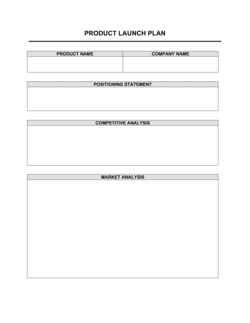
Identify your target customer segment with demographic and psychographic detail, write a one-sentence value proposition, and name at least three direct competitors and one specific attribute on which you differentiate.
💡 Test your positioning statement by asking whether your three closest competitors could plausibly claim the same thing — if they could, sharpen it.
2
Audit your current acquisition channels and set CAC targets
Pull 90 days of spend and orders for each active channel. Calculate actual CAC per channel, compare to your LTV, and prioritize the two or three channels where CAC payback is under 6 months.
💡 A CAC-to-LTV ratio below 1:3 on your top channel is a signal to fix retention before scaling acquisition spend.
3
Identify your top three CRO priorities
Review your funnel analytics — traffic, product page views, add-to-cart, checkout initiation, and purchase — and identify the step with the largest drop-off. Document the three highest-leverage tests to run against that drop-off point.
💡 Checkout abandonment fixes (one-page checkout, guest checkout, buy-now-pay-later) consistently outperform homepage or category page tests in conversion lift.
4
Set your pricing model and promotion calendar
Decide between cost-plus, value-based, or competitive pricing and document the rationale. Then map no more than four promotional events per year to a calendar, specifying discount depth, eligible SKUs, and AOV target for each event.
💡 Establish a minimum margin floor per SKU before building promotions — discounting below that floor destroys contribution margin even on high-volume days.
5
Document your fulfillment model and SLAs
Confirm your fulfillment partner (or in-house process), the shipping promise you will display to customers, your returns window, and the cost-per-shipment target. Validate the SLA with your 3PL or carrier before publishing it on the site.
💡 Negotiate carrier rate cards before committing to a free-shipping threshold — the threshold should cover blended shipping cost at your target AOV, not your current AOV.
6
Map your retention email and SMS flows
List every automated post-purchase flow: order confirmation, shipping notification, delivery confirmation, review request, replenishment reminder, and win-back sequence. Assign a send timing and measurable conversion goal to each.
💡 A 5-email post-purchase sequence that includes a replenishment prompt at the product's average repurchase interval consistently outperforms generic 'we miss you' win-back campaigns.
7
Select your KPIs and assign owners
Choose no more than eight weekly metrics and four monthly deep-dive metrics. Assign an owner responsible for reporting and acting on each, and set a target and acceptable range alongside each metric.
💡 Put your KPI dashboard on a shared screen during weekly reviews rather than distributing a report — real-time discussion catches anomalies faster than async reading.
8
Review and stress-test the full strategy before sharing
Read the completed document as if you were a skeptical investor — check that channel CAC targets are consistent with your financial model, that the fulfillment SLA is operationally achievable, and that KPI targets are tied to specific tactics, not wishful estimates.
💡 Have someone outside the strategy team review the document for internal consistency before distributing — a fresh reader will spot gaps in logic that the author has stopped seeing.