Characteristics of Competitive Strategies

Free Word download β€’ Edit online β€’ Save & share with Drive β€’ Export to PDF

1 pageβ€’20–25 min to fillβ€’Difficulty: Standard
Learn more ↓
FreeCharacteristics of Competitive Strategies Template

At a glance

What it is
A Characteristics of Competitive Strategies document is a structured operational template that defines and describes the core attributes of the competitive approaches a business uses to win and retain customers against rivals. This free Word download lets you map your cost leadership, differentiation, focus, or hybrid positioning in a single reference document you can edit online and export as PDF to share with leadership, sales teams, or strategic partners.
When you need it
Use it during annual strategic planning cycles, when entering a new market, or when competitive pressure requires a formal reassessment of how your business positions itself against alternatives. It is also the natural companion to a SWOT analysis or competitive landscape review.
What's inside
Company and market context, a description of each competitive strategy in use, the defining characteristics of each approach, resource and capability requirements, risk factors, and implementation priorities β€” giving leadership a clear, shared picture of how the company competes and why.

What is a Characteristics of Competitive Strategies Document?

A Characteristics of Competitive Strategies document is a structured operational template that formally defines the specific attributes of the competitive approaches a business uses to win customers and outperform rivals in its market. It goes beyond a simple strategy statement to describe, in concrete terms, the defining features of the chosen approach β€” whether cost leadership, differentiation, focus, or a deliberate hybrid β€” along with the resources required, the advantages created, the risks accepted, and the implementation priorities that will put the strategy into motion. The document draws on frameworks like Porter's generic strategies while grounding every claim in company-specific data rather than generic strategic language.

Why You Need This Document

Without a written record of your competitive strategy and its defining characteristics, alignment breaks down at every level of the organization. Sales teams position the product differently than marketing, operations optimizes for the wrong metrics, and new hires make decisions based on assumptions that contradict leadership's intent. The cost of this misalignment is concrete: deals lost because messaging contradicts the actual competitive advantage, margin erosion because pricing decisions are made without reference to the stated strategy, and leadership credibility damaged when a board or investor asks how the company competes and receives five different answers. A completed characteristics of competitive strategies document gives every team a single, authoritative reference that connects daily decisions to the company's chosen way of winning β€” and this template provides the structure to build that document in hours rather than weeks.

Which variant fits your situation?

If your situation is…Use this template
Broad market cost leadership as the primary strategyCharacteristics Of Competitive Strategies (Cost Leadership Focus)
Differentiation through product quality or brand as the primary strategyCharacteristics Of Competitive Strategies (Differentiation Focus)
Narrow market or niche focus strategyCharacteristics Of Competitive Strategies (Focus/Niche)
Comprehensive competitive landscape mapping with multiple rivalsCompetitive Analysis Template
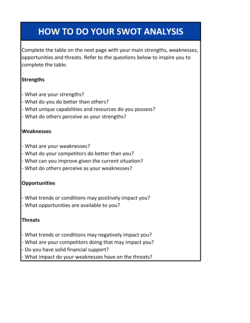
Identifying internal strengths and weaknesses alongside competitive factorsSWOT Analysis
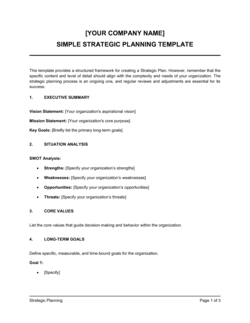
Translating competitive strategy into a full business roadmapStrategic Planning Template
Communicating strategy to investors alongside financial projectionsBusiness Plan

Common mistakes to avoid

❌ Pursuing multiple primary strategies without prioritizing

Why it matters: Being 'stuck in the middle' β€” attempting cost leadership and differentiation simultaneously without sufficient scale or resources β€” typically yields neither advantage and produces below-average returns.

Fix: Select one primary strategy and treat others as secondary or unit-level variations. Document the explicit trade-offs accepted by choosing this approach.

❌ Using generic language for competitive characteristics

Why it matters: Phrases like 'high quality,' 'customer focus,' and 'innovative culture' appear in nearly every competitor's documentation and provide no actionable strategic direction.

Fix: Replace every adjective-based claim with a measurable attribute β€” a percentage, a named process, a proprietary asset, or a time-based metric that can be verified.

❌ Omitting the risk and vulnerability section

Why it matters: A strategy document that presents only upside signals to leadership that analysis was incomplete, creating overconfidence and leaving the team unprepared for foreseeable competitive threats.

Fix: Include at least two to four specific risk scenarios with named mitigations. Honest risk acknowledgment strengthens, not weakens, the strategy's credibility.

❌ Defining strategy without linking it to resource allocation

Why it matters: A competitive strategy that is not backed by committed budget and headcount is a statement of intent, not a plan β€” teams will revert to prior behaviors when priorities compete for resources.

Fix: Attach a resource commitment β€” dollar amount or FTE β€” to each strategic priority within the implementation section before the document is finalized.

❌ Failing to update the document after market shifts

Why it matters: A competitive strategy written 18–24 months ago may no longer reflect the actual competitive landscape, creating a dangerous gap between stated strategy and actual execution.

Fix: Schedule a formal review at least annually, with a triggered interim review if a major competitor enters or exits, a key technology shifts, or significant pricing changes occur in the market.

❌ Treating the document as an executive-only artifact

Why it matters: When sales, marketing, and operations teams are unaware of the competitive strategy, they make daily decisions that contradict it β€” eroding the strategy from the ground up.

Fix: Distribute a summary version to every team whose work is influenced by competitive positioning, and train frontline managers on what the strategy means for their specific function.

The 10 key sections, explained

Company and Market Context

Strategic Objectives

Primary Competitive Strategy Type

Defining Characteristics of the Chosen Strategy

Required Resources and Capabilities

Competitive Advantages and Differentiators

Risk Factors and Vulnerabilities

Competitive Strategy by Business Unit or Product Line

Implementation Priorities and Timeline

Measurement and Review Cadence

How to fill it out

  1. 1

    Define the competitive landscape before choosing a strategy

    Complete a competitive analysis or SWOT before filling in this template. You need a clear picture of who your main rivals are, how they compete, and where gaps exist before selecting your primary strategic approach.

    πŸ’‘ Limit your named competitors to four to six direct rivals. Including too many dilutes the focus and makes the strategy appear reactive rather than deliberate.

  2. 2

    Select one primary strategy type and state the rationale

    Choose cost leadership, differentiation, focus, or a clearly defined hybrid β€” and write two to three sentences on why this strategy fits your company's resources and the market's competitive dynamics.

    πŸ’‘ If you cannot articulate why a competitor with similar resources could not pursue the same strategy, your rationale needs more specificity.

  3. 3

    Write the defining characteristics with specifics, not adjectives

    For each characteristic of the chosen strategy, include a number, a named process, or a traceable claim. Replace 'superior customer service' with 'average support response time of under 4 hours vs. industry average of 18 hours.'

    πŸ’‘ Three to five well-evidenced characteristics are more persuasive than eight vague ones.

  4. 4

    Audit the required resources against what you actually have

    List the resources and capabilities the strategy demands, then mark each as 'in place,' 'partially in place,' or 'gap.' Gaps become the basis for your implementation priorities.

    πŸ’‘ A strategy with more than two capability gaps requires a resourcing plan before the strategy is credible β€” flag this honestly in the document.

  5. 5

    Name competitors when describing advantages

    In the competitive advantages section, reference actual named rivals and quantify the advantage wherever possible. Generic claims about being 'better than competitors' carry no strategic weight.

    πŸ’‘ Use win/loss data from your sales team as a direct source β€” it reveals the real reasons customers choose or reject you.

  6. 6

    Complete the risk section with genuine vulnerabilities

    Identify two to four conditions that could erode the strategy β€” technology shifts, regulatory changes, new entrants, or a price war β€” and note a mitigation action for each.

    πŸ’‘ Ask your sales team what objections they hear most often from prospects who chose a competitor. These objections map directly to your current strategic vulnerabilities.

  7. 7

    Assign owners and budgets to every implementation priority

    For each of the top three to five strategic initiatives, name a role or individual responsible, state the budget or resource commitment, and set a completion milestone.

    πŸ’‘ If a priority cannot be assigned an owner on the day you write it, it is not yet a real priority β€” resolve ownership before finalizing the document.

  8. 8

    Set a review date and communicate it to stakeholders

    Enter a specific date β€” not 'annually' β€” for the next full strategy review. Distribute the completed document to all relevant leadership team members and confirm alignment.

    πŸ’‘ A competitive strategy document that is never reviewed becomes organizational wallpaper. Calendar the review at the same time you distribute the document.

Frequently asked questions

What are the main types of competitive strategies?

The three foundational competitive strategies, based on Porter's framework, are cost leadership, differentiation, and focus. Cost leadership means competing on the lowest price or highest margin at parity pricing. Differentiation means offering unique product or service attributes that command a premium. Focus means applying either of the first two strategies within a narrow market segment or geography. Hybrid strategies combine elements but require clear prioritization to avoid being stuck in the middle.

What is a Characteristics of Competitive Strategies document used for?

It is used to formally describe and communicate the specific attributes of the competitive approaches a company has chosen to win in its market. Leaders use it to align teams around a common strategic direction, brief new executives on how the company competes, support investor or board presentations, and provide the strategic context for annual operational planning. It acts as the single source of truth for competitive intent.

How is this document different from a competitive analysis?

A competitive analysis examines external rivals β€” their strengths, weaknesses, pricing, and market share. A characteristics of competitive strategies document focuses on your own company's chosen approach β€” the specific attributes, resources, advantages, and priorities that define how you compete. The two documents are complementary: a competitive analysis informs the strategy; this document records and communicates it.

How long should a competitive strategies document be?

For most small and mid-size businesses, 4–8 pages covering the ten core sections is sufficient for internal use. Board or investor versions may be condensed to 2–3 pages with supporting appendices. Avoid padding β€” a focused 5-page document with specific, verifiable claims is more useful than a 20-page document full of generic strategic language.

How often should competitive strategies be reviewed?

At minimum, once per fiscal year as part of the annual strategic planning cycle. A triggered review is warranted when a major new competitor enters the market, a key technology disrupts the basis of competition, a significant pricing shift occurs industry-wide, or the company launches a new product line or enters a new market. Strategies older than 18 months without a review should be treated as potentially outdated.

Can a company pursue more than one competitive strategy at the same time?

Yes, but only with clear boundaries. A company can pursue cost leadership in one business unit and differentiation in another, provided the units operate with sufficient independence and the corporate resource allocation reflects both priorities. Applying two strategies to the same product or customer segment without sufficient scale or resources typically leads to average performance on both dimensions rather than excellence on either.

What resources and capabilities does a differentiation strategy typically require?

Differentiation strategies typically require strong R&D or product design capability, a recognizable brand, premium customer service infrastructure, and the ability to continuously innovate to maintain the premium. Financially, they require margin discipline β€” the cost of differentiation must remain below the price premium customers are willing to pay. Talent in design, engineering, and customer experience roles is usually critical.

How do I know if my competitive strategy is working?

Track outcome-level KPIs directly tied to the strategy: win rate against named competitors, gross margin trend, customer retention rate, net promoter score versus key rivals, and market share by segment. Activity metrics like the number of sales calls or marketing campaigns do not confirm the strategy is working β€” only competitive outcomes do. Review these metrics at least quarterly against the targets set in the strategy document.

Do I need a consultant to complete this template?

For most small businesses and startups, a well-structured template combined with honest internal analysis is sufficient. Engage a strategy consultant when the competitive environment is highly complex, when a major strategic pivot is under consideration, when the document will be presented to institutional investors or a board, or when internal teams lack strategic planning experience. A focused half-day facilitated workshop ($1,500–$3,000) is often more valuable than a full consulting engagement for straightforward competitive positioning.

How this compares to alternatives

vs Competitive Analysis

A competitive analysis examines external rivals β€” profiling their strengths, weaknesses, pricing, and market positioning. A characteristics of competitive strategies document defines your own company's chosen approach and what makes it distinctive. The analysis is the input; the strategy document is the output. Both are needed for complete strategic planning.

vs SWOT Analysis

A SWOT analysis inventories internal strengths and weaknesses alongside external opportunities and threats β€” it diagnoses the strategic situation. A competitive strategies document translates that diagnosis into a specific, actionable competitive posture. SWOT is typically completed before this document to inform strategy selection.

vs Strategic Planning Template

A strategic plan covers the full scope of organizational direction β€” vision, mission, goals, initiatives, and resource allocation across all functions. A competitive strategies document focuses specifically on how the company positions itself against rivals. The competitive strategy is one critical component of a broader strategic plan, not a substitute for it.

vs Marketing Plan

A marketing plan details the specific channels, campaigns, messaging, and budgets used to acquire and retain customers. A competitive strategies document defines the overarching competitive posture that the marketing plan must express. Strategy precedes and constrains marketing β€” you cannot write a coherent marketing plan without a defined competitive position.

Industry-specific considerations

SaaS / Technology

Competitive strategy typically centers on product differentiation through proprietary features, network effects, and data advantages, with cost leadership reserved for commodity infrastructure layers.

Retail / E-commerce

Price-based cost leadership and brand differentiation often coexist at the category level, with focus strategies applied to niche verticals where margin and loyalty are stronger.

Professional Services

Differentiation through sector specialization, certified expertise, and client relationship depth is the dominant strategy, as cost leadership is structurally difficult in high-skill labor markets.

Manufacturing

Cost leadership through production efficiency, supply chain scale, and lean operations is common, with differentiation strategies reserved for proprietary process technology or custom-engineered products.

Healthcare / MedTech

Differentiation through clinical outcomes data, regulatory approvals, and physician relationships dominates, with focus strategies targeting specific disease areas or care settings where reimbursement is strongest.

Food & Beverage

Brand differentiation and private-label cost leadership coexist within the same sector, with focus strategies applied to premium or specialty segments where margin is significantly higher than mass market.

Template vs pro β€” what fits your needs?

PathBest forCostTime
Use the templateSmall business owners, early-stage founders, and internal strategy teams building competitive positioning for the first timeFree4–8 hours
Template + professional reviewGrowth-stage companies preparing competitive strategy for board presentations, investor decks, or major market entries$500–$2,000 for a strategy advisor or facilitator review1–2 weeks
Custom draftedEnterprises undergoing significant competitive repositioning, M&A strategy, or entry into highly contested regulated markets$5,000–$25,000+ for a full strategy consulting engagement4–12 weeks

Glossary

Competitive Strategy
The set of choices a company makes about how it will attract customers, outperform rivals, and achieve sustainable profitability in a defined market.
Cost Leadership
A strategy in which a company aims to be the lowest-cost producer in its industry, enabling it to undercut rivals on price or capture higher margins at parity pricing.
Differentiation Strategy
A strategy in which a company offers products or services with attributes β€” quality, design, brand, or features β€” that customers value enough to pay a premium for.
Focus Strategy
A strategy that targets a narrow customer segment or geographic niche, applying either cost leadership or differentiation within that limited scope.
Competitive Advantage
A capability or position that allows a company to consistently outperform rivals on metrics that matter to customers β€” price, quality, speed, or service.
Value Proposition
The specific combination of benefits a company promises to deliver to customers in exchange for their business, distinguishing it from alternatives.
Porter's Five Forces
A framework that analyzes competitive intensity using five factors: rivalry among existing competitors, threat of new entrants, bargaining power of suppliers and buyers, and threat of substitutes.
Strategic Positioning
The deliberate choice of how a company will differ from competitors in the eyes of its target customers, determining where and how it competes.
Competitive Moat
A durable structural advantage β€” such as network effects, proprietary technology, switching costs, or scale β€” that is difficult for rivals to replicate.
Blue Ocean Strategy
An approach in which a company creates uncontested market space by offering a fundamentally different value proposition rather than competing in existing saturated markets.

Part of your Business Operating System

This document is one of 3,000+ business & legal templates included in Business in a Box.

  • Fill-in-the-blanks β€” ready in minutes
  • 100% customizable Word document
  • Compatible with all office suites
  • Export to PDF and share electronically

Create your document in 3 simple steps.

From template to signed document β€” all inside one Business Operating System.
1
Download or open template

Access over 3,000+ business and legal templates for any business task, project or initiative.

2
Edit and fill in the blanks with AI

Customize your ready-made business document template and save it in the cloud.

3
Save, Share, Send, Sign

Share your files and folders with your team. Create a space of seamless collaboration.

Save time, save money, and create top-quality documents.

β˜…β˜…β˜…β˜…β˜…

"Fantastic value! I'm not sure how I'd do without it. It's worth its weight in gold and paid back for itself many times."

Managing Director Β· Mall Farm
Robert Whalley
Managing Director, Mall Farm Proprietary Limited
β˜…β˜…β˜…β˜…β˜…

"I have been using Business in a Box for years. It has been the most useful source of templates I have encountered. I recommend it to anyone."

Business Owner Β· 4+ years
Dr Michael John Freestone
Business Owner
β˜…β˜…β˜…β˜…β˜…

"It has been a life saver so many times I have lost count. Business in a Box has saved me so much time and as you know, time is money."

Owner Β· Upstate Web
David G. Moore Jr.
Owner, Upstate Web

Run your business with a system β€” not scattered tools

Stop downloading documents. Start operating with clarity. Business in a Box gives you the Business Operating System used by over 250,000 companies worldwide to structure, run, and grow their business.

Start freeΒ Β·Β No credit card required