- Adverse Action
- A denial or unfavorable change to a credit application or existing credit arrangement, triggering specific disclosure requirements under consumer credit laws.
- ECOA (Equal Credit Opportunity Act)
- A US federal law prohibiting creditors from discriminating against credit applicants on the basis of race, color, religion, national origin, sex, marital status, age, or receipt of public assistance.
- FCRA (Fair Credit Reporting Act)
- A US federal law regulating how consumer reporting agencies collect, disseminate, and use consumer credit information, including disclosure obligations when a credit report influences a denial.
- Trade Credit
- An arrangement where a supplier allows a buyer to purchase goods or services on account and pay within an agreed period — typically net 30, 60, or 90 days.
- Credit Bureau
- An agency that collects and maintains consumer or business credit information and supplies it to creditors as a credit report used in lending decisions.
- Creditworthiness
- An assessment of a borrower's ability and history of repaying debts, typically evaluated using payment history, outstanding balances, length of credit history, and public records.
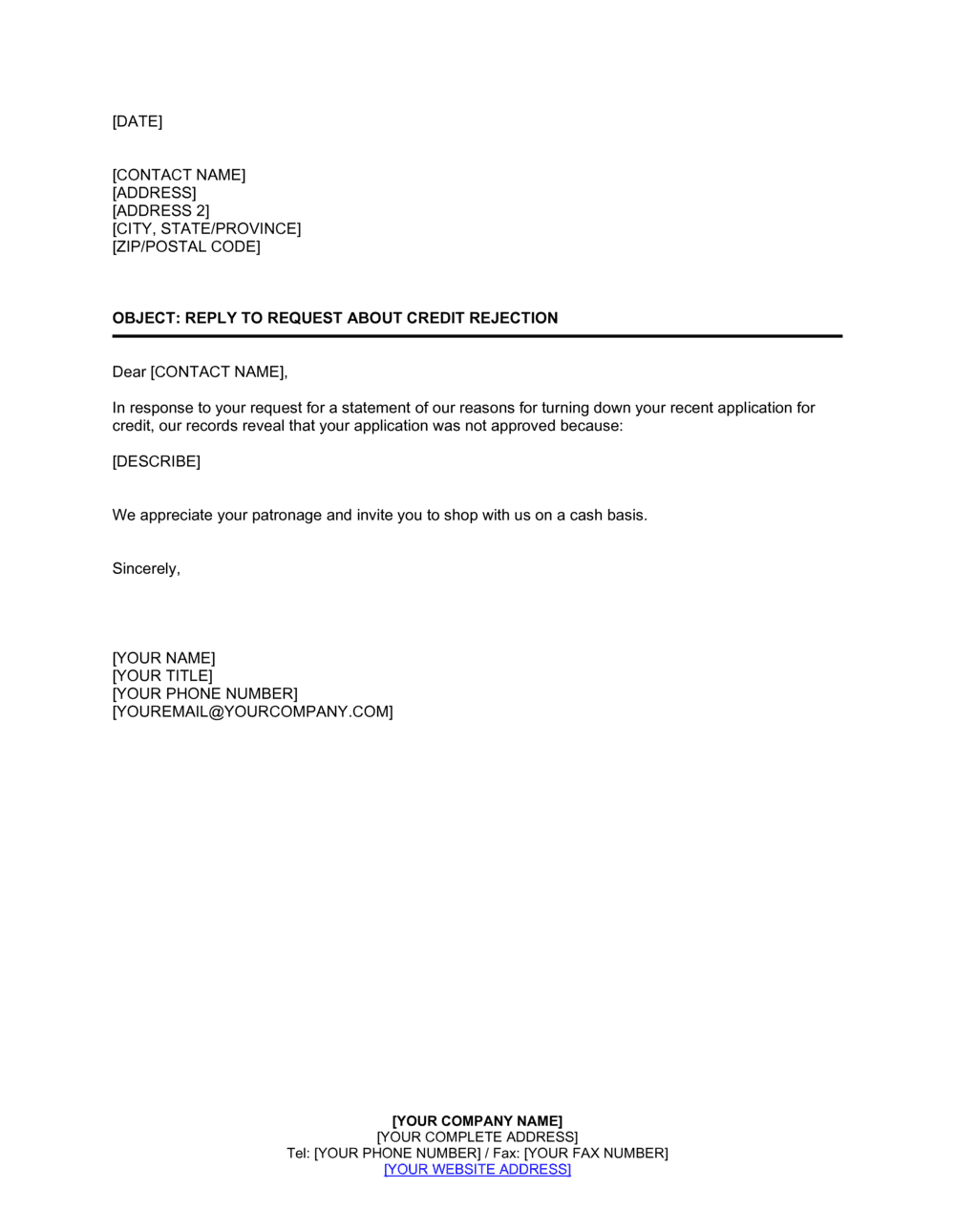
- Adverse Action Notice
- A written notice required by law informing an applicant of a credit denial and their right to learn the specific reasons for the decision.
- Credit Score
- A numerical summary of a borrower's credit history, typically ranging from 300 to 850, used by creditors to quickly assess default risk.
- Right to Reconsideration
- The applicant's opportunity to request a review of a credit denial, often by providing additional financial documentation or correcting errors in the credit report.
- Statement of Specific Reasons
- The legally required disclosure of the principal factors that caused a credit denial, as opposed to a generic rejection with no explanation.