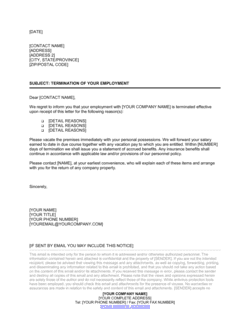
Acknowledgment and Waiver About Employee Dating Template

Free Word download • Edit online • Save & share with Drive • Export to PDF

2 pages15–25 min to fillDifficulty: Standard
Learn more ↓
FreeAcknowledgment and Waiver About Employee Dating Template

At a glance

What it is
An Acknowledgment and Waiver About Employee Dating is a formal notice an employer issues — and an employee signs — to document a disclosed romantic relationship between two colleagues, confirm both parties understand the company's workplace relationship policy, and record their agreement to maintain professional conduct. This free Word download is editable online and can be exported as PDF for HR file retention in minutes.
When you need it
Use it when two employees in the same organization disclose a romantic relationship, especially when one party supervises or manages the other, when they work on the same team, or when company policy requires formal disclosure of any workplace relationship.
What's inside
Employer and employee identification, a description of the disclosed relationship, confirmation that the relationship is voluntary and consensual, an acknowledgment of applicable workplace policies, a waiver of potential conflict-of-interest claims, conduct expectations going forward, and a signature block for HR records.

What is an Acknowledgment and Waiver About Employee Dating?

An Acknowledgment and Waiver About Employee Dating is a formal HR document an employer issues when two employees disclose a romantic relationship. It records both parties' confirmation that the relationship is voluntary and consensual, documents their acknowledgment of the company's workplace relationship policy, and captures a limited waiver of conflict-of-interest claims arising specifically from the disclosed relationship. It also serves as the official record of any reporting-line adjustments or team reassignments the company makes in response to the disclosure.

Why You Need This Document

Without a signed acknowledgment on file, an employer who later faces a harassment, favoritism, or retaliation claim has no documented evidence that the relationship was ever disclosed, was confirmed as consensual, or was addressed through a formal process. Courts and arbitrators treat undocumented HR decisions as if they never happened. A single completed form per employee — signed at the time of disclosure and filed in the confidential HR record — closes that gap immediately. It also signals to both employees that the company takes workplace relationships seriously, sets clear conduct expectations from the start, and gives HR a concrete reference point if the relationship later affects the work environment. This template gives you the complete structure to handle a disclosure correctly the first time, without starting from a blank page.

Which variant fits your situation?

If your situation is…Use this template
Disclosing a relationship between a direct supervisor and a subordinate employeeAcknowledgment and Waiver About Employee Dating (Supervisor/Subordinate)
Establishing a company-wide written policy on workplace relationshipsWorkplace Romance Policy
Documenting a conflict of interest involving a personal relationshipConflict of Interest Disclosure Form
Updating a broader employee code of conduct to include relationship rulesCode of Conduct Policy
Issuing a formal notice of a required reporting-line change due to a disclosed relationshipEmployee Transfer or Reassignment Letter
Addressing a relationship that has ended and raised a harassment concernWorkplace Harassment Policy

Common mistakes to avoid

❌ Filing unsigned or incomplete forms

Why it matters: An unsigned acknowledgment has no evidentiary value if a harassment or favoritism claim is made later. Courts treat it as if the disclosure never happened.

Fix: Never file the form without both the employee's signature and an HR countersignature on the same document. Use a short checklist before filing to confirm all fields are complete.

❌ Omitting the supervisory relationship details

Why it matters: If one employee manages the other and this is not documented or addressed, the company faces heightened liability for favoritism, retaliation, or hostile-work-environment claims.

Fix: Always identify the reporting relationship explicitly and document either the reassignment made or a written explanation of why no reassignment was necessary.

❌ Using an overbroad waiver clause

Why it matters: A waiver that appears to strip the employee of all employment-related rights — beyond those specifically arising from the disclosed relationship — may be unenforceable and can expose the company to claims of overreach.

Fix: Limit the waiver to conflicts of interest and employment decisions directly tied to the disclosed relationship. Have a sample clause reviewed by HR counsel before using it as a standard template.

❌ Referencing an outdated policy version

Why it matters: If the policy cited in the acknowledgment has been superseded, the employee can argue they were not informed of the current rules, weakening the company's position in any dispute.

Fix: Confirm the policy citation before every use of the template, and attach the current policy page to the signed acknowledgment at the time of filing.

The 9 key clauses, explained

Parties and date

In plain language: Identifies the employer, the employee completing the acknowledgment, and the date the document is executed.

Sample language
This Acknowledgment and Waiver is entered into on [DATE] between [EMPLOYER LEGAL NAME] ('Company') and [EMPLOYEE FULL NAME] ('Employee'), employed as [JOB TITLE] in the [DEPARTMENT] department.

Common mistake: Using a department nickname or a manager's name instead of the company's registered legal entity name, which can create ambiguity if the document is ever referenced in a dispute.

Relationship disclosure

In plain language: States the nature of the disclosed relationship, identifies the other employee involved, and confirms that both parties voluntarily disclosed it.

Sample language
Employee discloses that they are currently in a personal romantic relationship with [SECOND EMPLOYEE FULL NAME], [JOB TITLE], [DEPARTMENT]. Both parties have voluntarily disclosed this relationship to Human Resources on [DISCLOSURE DATE].

Common mistake: Omitting the second employee's job title and department, which are necessary to assess whether a reporting-line conflict or team-level conflict exists.

Voluntariness and consent confirmation

In plain language: Confirms that the relationship is entirely consensual and free from coercion, duress, or exploitation of a supervisory power differential.

Sample language
Employee confirms that the relationship described above is entirely voluntary and consensual, and that neither party has been subjected to pressure, coercion, or undue influence in connection with the relationship.

Common mistake: Including this clause in template language that sounds boilerplate without leaving room for the employee to initial specifically — this weakens its evidentiary value.

Policy acknowledgment

In plain language: States that the employee has read the company's workplace relationship or dating policy and agrees to comply with all its requirements.

Sample language
Employee acknowledges receipt of and agrees to comply with the Company's Workplace Relationship Policy (Employee Handbook, Section [X]), including all disclosure, reassignment, and conduct obligations set out therein.

Common mistake: Referencing a policy section that has not been updated to reflect current rules — always confirm the policy citation matches the current version of the handbook before issuing this document.

Conflict-of-interest waiver

In plain language: The employee acknowledges the potential for conflict and agrees not to assert certain conflict-of-interest claims against the company arising from decisions related to the disclosed relationship.

Sample language
Employee acknowledges that the disclosed relationship may give rise to actual or perceived conflicts of interest and agrees not to assert any claim against the Company solely on the basis of employment decisions made in compliance with the Company's Workplace Relationship Policy.

Common mistake: Drafting this clause so broadly that it appears to waive rights unrelated to the relationship — courts may strike an overbroad waiver entirely rather than narrowing it.

Professional conduct expectations

In plain language: Sets out the specific behavioral expectations that apply to both employees going forward — public displays of affection, favoritism, and communication norms.

Sample language
Employee agrees to maintain professional conduct in all work settings, to avoid any conduct that a reasonable observer would perceive as favoritism, and to refrain from public displays of affection on Company premises or at Company events.

Common mistake: Using vague language like 'act professionally' without defining what that means in the context of a workplace relationship, making it difficult to enforce if conduct issues arise later.

Reporting-line or assignment changes

In plain language: Documents any agreed changes to the employees' reporting structure, team assignment, or project allocation to address a supervisory conflict.

Sample language
To address the direct reporting relationship between Employee and [SECOND EMPLOYEE FULL NAME], the following reassignment has been agreed: [DESCRIBE CHANGE, e.g., Employee will report to [NEW MANAGER NAME] effective [DATE]].

Common mistake: Leaving this clause blank when a supervisory relationship exists. Documenting no action when action was clearly needed undermines the company's position if a harassment or favoritism claim arises later.

Acknowledgment of consequences

In plain language: Notifies the employee that violations of the policy or the terms of this waiver may result in disciplinary action up to and including termination.

Sample language
Employee understands that any violation of the Company's Workplace Relationship Policy or the terms of this Acknowledgment may result in disciplinary action, up to and including termination of employment, in accordance with the Company's standard disciplinary procedures.

Common mistake: Omitting specific reference to the company's disciplinary procedures, which can make the consequences feel arbitrary and harder to enforce consistently.

Signature and HR acknowledgment

In plain language: Space for the employee's signature, the date, and an HR representative's countersignature confirming receipt and filing.

Sample language
Employee Signature: _________________________ Date: __________ | Printed Name: [EMPLOYEE FULL NAME] | Received and filed by HR: _________________________ Date: __________

Common mistake: Filing an unsigned copy or one signed only by the employee without an HR countersignature, which leaves no record of when the company received and processed the disclosure.

How to fill it out

  1. 1

    Enter the company's legal name and the employee's details

    Fill in the employer's registered legal name and the disclosing employee's full name, job title, and department at the top of the document.

    💡 Use the exact legal entity name as it appears on the company's incorporation documents — not a brand name or a DBA.

  2. 2

    Identify the second employee and the relationship

    Enter the second employee's full name, job title, and department. Record the date both employees first disclosed the relationship to HR.

    💡 If both employees are completing separate acknowledgment forms, ensure the disclosure date is consistent across both documents.

  3. 3

    Confirm the voluntary and consensual nature of the relationship

    Review the consent clause with the employee before signing. If the employee has any hesitation about the voluntariness language, pause and escalate to legal counsel before proceeding.

    💡 Ask the employee to initial the consent clause separately in addition to signing the final page — this reinforces that the clause was read and understood independently.

  4. 4

    Reference the correct policy section

    Insert the current version number or section reference of your Workplace Relationship Policy from the employee handbook. Confirm the policy is up to date before issuing the form.

    💡 Attach a copy of the referenced policy section to the acknowledgment at the time of signing, and note the attachment in the document body.

  5. 5

    Document any reporting-line or assignment changes

    If the relationship involves a supervisory dynamic, record the specific reassignment agreed upon — new reporting manager, team transfer, or project reallocation — with an effective date.

    💡 If no changes are needed because no supervisory relationship exists, write 'No reporting-line changes required' rather than leaving the clause blank, to show the issue was considered.

  6. 6

    Obtain the employee's signature and HR countersignature

    Have the employee sign and date the document in the presence of an HR representative. The HR representative should countersign to confirm receipt and filing.

    💡 Scan the signed original immediately and store it in the employee's HR file. Provide the employee with a copy for their own records.

Frequently asked questions

What is an acknowledgment and waiver about employee dating?

It is a formal document an employer uses to record that two employees have disclosed a romantic relationship, confirmed it is consensual, acknowledged the company's workplace relationship policy, and agreed to maintain professional conduct going forward. It also typically includes a limited waiver of conflict-of-interest claims arising from the relationship and documents any adjustments to the employees' reporting structure.

Is an employee dating acknowledgment legally required?

No federal or state law in the US requires employers to collect a formal acknowledgment when employees date. However, having a signed document on file significantly strengthens the company's position if a later harassment, favoritism, or retaliation claim arises. Many employment law advisors recommend requiring disclosure and acknowledgment whenever a relationship involves employees in the same reporting chain or on the same team.

Does the employee need to sign this form?

Yes, the employee's signature is what transforms the acknowledgment into a usable HR record. An unsigned form is not enforceable and provides no evidentiary protection. Both the disclosing employee and an HR representative should sign and date the document at the same session, and each party should retain a copy.

What if both employees are peers with no supervisory relationship?

The form is still useful even when no reporting-line conflict exists. It documents mutual consent, confirms both employees understand conduct expectations, and establishes that the company was notified. In that case, the reporting-line clause should note explicitly that no reassignment is required, rather than being left blank.

Can this form protect the company from a harassment claim?

A properly executed acknowledgment is a meaningful piece of evidence that the relationship was disclosed voluntarily and confirmed as consensual at the time of signing. It does not, however, immunize the company from all future claims — particularly if circumstances change, the relationship ends badly, or a power imbalance is later established. It is one layer of protection, not a complete shield.

Should both employees in the relationship complete separate forms?

Yes. Each employee should complete and sign their own acknowledgment form. This ensures both parties independently confirm the relationship is consensual and that each has personally acknowledged the applicable policy. Using a single joint form signed by both on the same page is acceptable, but separate forms create a cleaner HR record.

What happens if an employee refuses to sign the acknowledgment?

An employee cannot typically be forced to sign. However, refusal to complete a required disclosure form when company policy mandates it may itself be a policy violation subject to disciplinary action. Document the refusal in writing, note the date, and consult HR counsel before taking any further steps.

Should this form be kept confidential?

Yes. Acknowledgment forms contain sensitive personal information and should be stored in the employee's confidential HR file, accessible only to HR personnel and senior management with a legitimate need to know. They should not be shared with the employee's colleagues or referenced in performance reviews.

How this compares to alternatives

vs Workplace Romance Policy

A workplace romance policy is the company-wide rule that governs how relationships must be handled — it defines what is and is not permitted, required disclosures, and consequences. The acknowledgment and waiver is the employee-level document confirming that a specific individual has read, understood, and agreed to that policy for a specific relationship. The policy sets the rules; the acknowledgment enforces them.

vs Conflict of Interest Disclosure Form

A conflict of interest disclosure form covers a broader range of situations — financial interests, vendor relationships, board memberships, and personal relationships — where an employee's outside interests may influence their professional judgment. The employee dating acknowledgment is a narrower, relationship-specific document with consent and conduct language not found in a general conflict-of-interest form.

vs Employee Handbook Acknowledgment

An employee handbook acknowledgment confirms that the employee has received and read the entire handbook. The employee dating acknowledgment is event-triggered — issued only when a specific relationship is disclosed — and includes relationship-specific consent, waiver, and conduct terms that a generic handbook acknowledgment does not address.

vs Non-Fraternization Policy Letter

A non-fraternization policy letter informs employees that certain personal relationships between colleagues are prohibited or restricted outright. The dating acknowledgment and waiver is used when relationships are permitted but must be disclosed and managed — it documents a permitted relationship, not a prohibited one.

Industry-specific considerations

Professional Services

Client-facing roles and billing teams create heightened conflict-of-interest exposure when colleagues date, making formal disclosure and conduct agreements especially important.

Technology / SaaS

Flat org structures and cross-functional teams mean two employees in a relationship often work closely on shared projects, requiring explicit documentation of any reassignments or reporting adjustments.

Retail / Hospitality

High staff turnover and shift-scheduling authority create frequent supervisor-subordinate relationship scenarios, making standardized acknowledgment forms critical for consistent policy enforcement.

Healthcare

Regulatory oversight and patient-safety obligations mean that favoritism or distraction from a workplace relationship carries consequences beyond employment law, reinforcing the need for documented disclosure and conduct agreements.

Template vs pro — what fits your needs?

PathBest forCostTime
Use the templateHR managers, office managers, and small business owners handling routine peer-level relationship disclosuresFree10–15 minutes per form
Template + professional reviewSituations involving a direct supervisory relationship, a senior employee, or a company without an existing workplace relationship policy$150–$400 for an HR counsel review1–2 business days
Custom draftedRegulated industries, multi-state employers, or companies updating a full workplace relationship policy alongside the acknowledgment form$500–$1,5003–7 business days

Glossary

Acknowledgment
A written confirmation by an employee that they have read, understood, and agree to abide by a stated policy or notice.
Waiver
A voluntary, written relinquishment of a known right or claim — in this context, the employee's agreement not to assert certain conflict-of-interest claims arising from the disclosed relationship.
Consensual Relationship
A romantic or personal relationship entered into freely by both parties, without coercion, undue influence, or exploitation of a power imbalance.
Conflict of Interest
A situation in which a personal relationship or financial interest could improperly influence a professional judgment or business decision.
Disclosure
The formal act of informing the employer of a personal relationship that may be subject to company policy or create a potential conflict.
Reporting Relationship
The direct supervisory or management chain between two employees — particularly relevant when a disclosed relationship involves a manager and a direct report.
Code of Conduct
A company document that sets behavioral expectations for all employees, including rules governing personal relationships in the workplace.
Favoritism
The practice of giving unfair preferential treatment to a person due to a personal relationship, which a properly executed waiver is designed to prevent and document against.
At-Will Employment
Employment that either party may end at any time for any lawful reason — relevant here because this document does not restrict the employer's right to act on policy violations.
HR File
The confidential personnel record maintained for each employee, where signed acknowledgment forms and policy documents are typically stored.

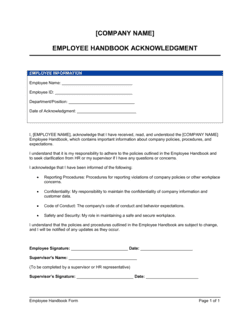
Part of your Business Operating System

This document is one of 3,000+ business & legal templates included in Business in a Box.

  • Fill-in-the-blanks — ready in minutes
  • 100% customizable Word document
  • Compatible with all office suites
  • Export to PDF and share electronically

Create your document in 3 simple steps.

From template to signed document — all inside one Business Operating System.
1
Download or open template

Access over 3,000+ business and legal templates for any business task, project or initiative.

2
Edit and fill in the blanks with AI

Customize your ready-made business document template and save it in the cloud.

3
Save, Share, Send, Sign

Share your files and folders with your team. Create a space of seamless collaboration.

Save time, save money, and create top-quality documents.

★★★★★

"Fantastic value! I'm not sure how I'd do without it. It's worth its weight in gold and paid back for itself many times."

Managing Director · Mall Farm
Robert Whalley
Managing Director, Mall Farm Proprietary Limited
★★★★★

"I have been using Business in a Box for years. It has been the most useful source of templates I have encountered. I recommend it to anyone."

Business Owner · 4+ years
Dr Michael John Freestone
Business Owner
★★★★★

"It has been a life saver so many times I have lost count. Business in a Box has saved me so much time and as you know, time is money."

Owner · Upstate Web
David G. Moore Jr.
Owner, Upstate Web

Run your business with a system — not scattered tools

Stop downloading documents. Start operating with clarity. Business in a Box gives you the Business Operating System used by over 250,000 companies worldwide to structure, run, and grow their business.

Free Forever Plan · No credit card required