- Policy Brief
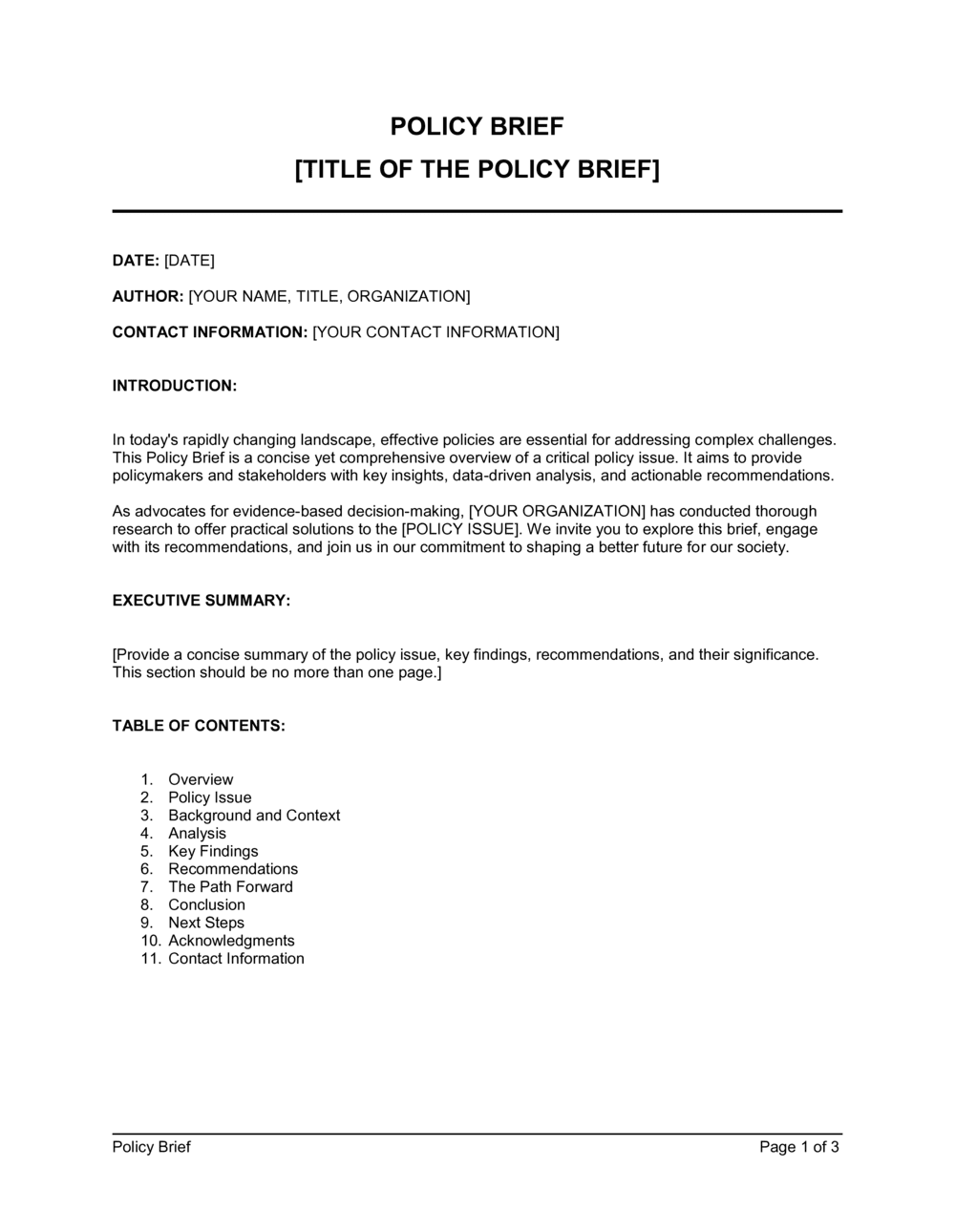
- A short document, typically two to four pages, that summarizes a policy problem and presents evidence-based recommendations to a specific audience.
- Executive Summary
- A one-paragraph or half-page overview at the top of the brief that states the problem, key finding, and primary recommendation — written for readers who may not read further.
- Problem Statement
- A concise articulation of the issue being addressed, its scope, and why it requires attention from the target decision-maker now.
- Stakeholder
- Any individual, group, or organization with a direct interest in the outcome of the policy decision being addressed.
- Policy Options
- The discrete, actionable alternatives a decision-maker could choose from, each assessed for feasibility, cost, and likely impact.
- Evidence Base
- The body of research, data, case studies, or precedent used to support the analysis and justify the recommended course of action.
- Implementation Considerations
- Practical factors — budget, timeline, regulatory requirements, stakeholder resistance — that affect how and whether a recommendation can be carried out.
- Call to Action
- The specific, direct request the brief makes of its audience — for example, approving a budget line, passing a regulation, or commissioning further research.
- Background Context
- Historical or situational information that frames the problem and helps the audience understand how the issue developed.
- Key Performance Indicator (KPI)
- A measurable metric used to track whether an implemented policy recommendation is achieving its intended outcome.