Social Media Branding Strategies

Free Word download β€’ Edit online β€’ Save & share with Drive β€’ Export to PDF

3 pagesβ€’20–30 min to fillβ€’Difficulty: Standard
Learn more ↓
FreeSocial Media Branding Strategies Template

At a glance

What it is
A Social Media Branding Strategies document is an operational plan that defines how your business presents itself across social platforms β€” covering brand voice, visual identity, content pillars, platform-specific guidelines, and community management standards. This free Word download gives you a structured, editable framework you can tailor to your brand and share with your marketing team, agencies, or freelancers.
When you need it
Use it when launching a new brand on social media, onboarding a marketing agency or content creator, or standardizing inconsistent posting across multiple platforms or team members. It is also essential before a rebrand to ensure all channels update simultaneously and consistently.
What's inside
Brand identity and voice guidelines, target audience profiles, platform selection rationale, content pillars and post format rules, visual style standards, publishing cadence, community management protocols, and performance metrics with reporting benchmarks.

What is a Social Media Branding Strategies document?

A Social Media Branding Strategies document is an operational plan that defines how a business presents its brand identity consistently across social media platforms β€” covering voice, visual standards, content themes, platform selection, publishing cadence, and community management protocols. It functions as the governance layer between a company's broader brand identity and the day-to-day execution of social media content. Without it, every team member, contractor, or agency posting on behalf of the brand makes independent judgment calls that accumulate into inconsistency, eroding the recognition and trust that effective social branding is designed to build.

Why You Need This Document

A brand that sounds different on LinkedIn than it does on Instagram, or that uses three different shades of blue depending on who designed the graphic that week, is not building recognition β€” it is undermining it. The cost of skipping this document is visible in every mismatched post, every off-tone community reply, and every freelancer who produces technically acceptable content that still feels wrong. For businesses onboarding an agency or adding a second team member to manage social accounts, this document is the difference between briefing that takes ten minutes and briefing that takes two weeks of back-and-forth. It also creates accountability: when KPIs are documented alongside voice and visual standards, underperformance becomes diagnosable rather than just frustrating. This template gives you the complete structure to build that governance layer in a single afternoon.

Which variant fits your situation?

If your situation is…Use this template
Launching a brand on social media for the first timeSocial Media Branding Strategies
Building a detailed channel-by-channel content calendarSocial Media Content Calendar
Defining broader marketing goals and budget allocationMarketing Plan
Creating visual identity rules beyond social mediaBrand Guidelines Template
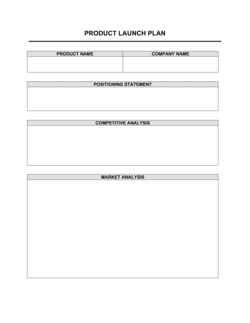
Planning a specific product or service launch campaignProduct Launch Plan
Auditing current social media performance before setting new strategySocial Media Audit Report
Briefing an external agency on brand and campaign expectationsMarketing Brief

Common mistakes to avoid

❌ Activating too many platforms simultaneously

Why it matters: Spreading a small team across five platforms produces inconsistent posting schedules, low-quality content, and brand accounts that appear neglected β€” each of which actively damages brand perception.

Fix: Choose two or three platforms where your target audience is most active and execute them well before expanding. Document the excluded platforms and the conditions under which you would activate them.

❌ Writing a single tone rule for all content types

Why it matters: A casual, playful tone is appropriate for a community engagement post but creates brand damage when used in a customer service reply about a billing error or a public complaint.

Fix: Define at least three tone modes within your brand voice β€” standard, service, and crisis β€” with example language for each so any team member can apply the right register instantly.

❌ Setting a posting frequency without assessing team capacity

Why it matters: Committing to daily posting without the content pipeline to support it leads to rushed, off-brand posts or extended silent periods that cause follower drop-off and algorithm suppression.

Fix: Audit your current content production capacity honestly before setting frequency targets. A sustainable three-posts-per-week schedule will outperform an aspirational daily schedule that collapses after two weeks.

❌ Tracking follower count as the primary KPI

Why it matters: Follower count can be gamed, grows slowly for most brands, and has no direct correlation to revenue β€” optimizing for it leads to audience-building tactics that attract non-buyers.

Fix: Set engagement rate, click-through rate, and profile-to-website conversions as primary KPIs. Report follower growth as a secondary trend indicator, not a success metric.

❌ Using visual assets inconsistently across platforms

Why it matters: When colors, fonts, and image styles vary between Instagram, LinkedIn, and X, audiences do not recognize the brand as unified β€” eroding the recognition value of every post.

Fix: Create one master template per platform per format, stored in a shared location with clear naming conventions, and require all content to use them before approval.

❌ No community management escalation protocol

Why it matters: Without a documented escalation path, a single critical comment or viral negative post is handled inconsistently β€” or not at all β€” turning a manageable issue into a public relations problem.

Fix: Document specific triggers that escalate a comment or DM to a manager or PR lead, with a response time target for each tier and approved holding-response language ready to deploy.

The 9 key sections, explained

Brand Identity Overview

Target Audience Profiles

Platform Selection and Rationale

Brand Voice and Tone Guidelines

Visual Style Standards

Content Pillars and Post Formats

Publishing Cadence and Scheduling Rules

Community Management Protocols

Performance Metrics and Reporting

How to fill it out

  1. 1

    Complete the brand identity overview

    Write the brand's mission, core values, and personality traits in plain language. Describe how the brand would come across as a person β€” three to five adjectives with brief explanations.

    πŸ’‘ Test your personality descriptors against your last ten posts. If the posts don't match the adjectives, update the descriptors β€” not the posts.

  2. 2

    Define your target audience profiles

    Build one to two audience segments with demographic basics, primary platform usage, and specific content motivations. Identify what problem they are trying to solve when they open each platform.

    πŸ’‘ Pull real data from your existing analytics before writing assumptions β€” platform audience insights panels often reveal that your actual audience differs from your assumed one.

  3. 3

    Select and justify your active platforms

    Choose two to three platforms your audience uses most. Write a one-sentence rationale for each, and explicitly list any platform you are not activating with a reason why.

    πŸ’‘ Maintaining two platforms well consistently outperforms maintaining five platforms inconsistently β€” resource constraint is a legitimate strategic reason to exclude a channel.

  4. 4

    Document brand voice and tone rules

    Write explicit do/don't examples for word choice, sentence structure, and emoji usage. Create three to four example responses covering different scenarios: promotion, customer complaint, and lighthearted community post.

    πŸ’‘ Include a 'we never say' list β€” specific forbidden phrases matter more to consistent execution than a list of preferred words.

  5. 5

    Specify visual style standards

    Record hex codes, approved fonts, logo clear-space rules, and photography direction. Link to or embed the master graphic templates and note where source files are stored.

    πŸ’‘ Create one approved template per post format per platform and save them in a shared folder β€” this eliminates the single biggest source of visual inconsistency.

  6. 6

    Set content pillars and posting ratios

    Choose three to five content themes and assign a percentage split between educational, promotional, and community content. Map each pillar to the formats that perform best on each platform.

    πŸ’‘ A common starting ratio is 60% educational or entertaining, 30% community/engagement, and 10% direct promotion β€” adjust based on your audience's tolerance for promotional content.

  7. 7

    Establish publishing cadence and approval workflow

    Set a realistic posting frequency for each platform, identify the scheduling tool, and document who approves content before it publishes and by what deadline.

    πŸ’‘ Build a two-day buffer into your scheduling workflow β€” content that goes through a rushed approval process at 11 PM produces more errors and more off-brand posts.

  8. 8

    Define KPIs and reporting cadence

    Choose three to five metrics tied to business goals β€” not just follower count. Set baseline benchmarks from the last 90 days of data and establish a weekly and monthly reporting rhythm.

    πŸ’‘ Set one primary KPI per platform based on its role in your funnel: awareness metrics for top-of-funnel channels, engagement or CTR for mid-funnel, and conversions for bottom-of-funnel.

Frequently asked questions

What is a social media branding strategy?

A social media branding strategy is a documented plan that defines how a business presents its brand identity β€” voice, visuals, content themes, and community standards β€” consistently across social platforms. It goes beyond a content calendar by establishing the why and how behind every post, ensuring that any team member or agency can create on-brand content without guessing. It is the governance layer that keeps all social activity aligned with broader brand and marketing goals.

What should a social media branding strategy include?

A complete strategy covers brand identity and personality, target audience profiles, platform selection rationale, voice and tone guidelines, visual style standards, content pillars and post format rules, publishing cadence, community management protocols, and performance KPIs with reporting benchmarks. Missing any of these means a team member or agency will fill the gap with their own judgment β€” which is how inconsistency starts.

How is a social media branding strategy different from a social media marketing plan?

A branding strategy defines who the brand is on social media β€” its voice, visual identity, and content positioning. A marketing plan defines what the brand will do β€” campaigns, budgets, paid media schedules, and conversion goals. The branding strategy is the foundation that every marketing plan sits on; you need the former before the latter is useful.

How often should a social media branding strategy be updated?

Review the strategy annually at minimum, and trigger an immediate review after a rebrand, a major product pivot, a platform algorithm change that affects performance, or a significant shift in your target audience. Most teams find that voice and visual standards remain stable for 12–18 months, while content pillars and cadence need quarterly recalibration against performance data.

Which social media platforms should my business use?

The right platforms depend on where your target audience spends time, not on where every brand has a presence. B2B companies typically prioritize LinkedIn and occasionally X. Consumer brands focused on visual products perform well on Instagram and TikTok. Local businesses often see the most ROI from Facebook and Instagram. Document your rationale and exclude platforms explicitly rather than leaving accounts dormant.

How do I maintain a consistent brand voice when multiple people post?

Document explicit do/don't language examples, a forbidden-phrases list, and three to four example responses covering different post types and tones. Store these in the branding strategy document and make it mandatory reading for anyone with posting access. Pair the document with an approval workflow so no post publishes without a brand-consistency check by a designated reviewer.

What KPIs should I track for social media branding performance?

Track engagement rate (likes, comments, shares, saves divided by reach), click-through rate from social to your website, branded search volume trends, and share of voice versus competitors for brand-level measurement. Follower growth is a useful secondary indicator but should never be the primary KPI. Set platform-specific benchmarks from your own last 90 days of data rather than industry averages.

Do I need an agency to create a social media branding strategy?

A structured template handles the framework for most small and mid-size businesses without agency involvement. Hire an agency or brand strategist when you are launching a new brand with no existing audience data, rebranding after a reputation issue, or operating across six or more platforms in multiple markets with regional variations. For most businesses, a well-completed template plus a one-hour review by a freelance social media strategist is sufficient.

What is the difference between brand voice and brand tone?

Brand voice is the consistent personality that stays the same across all communications β€” for example, knowledgeable, direct, and approachable. Tone is the adjustment of that voice for specific contexts β€” you might be warmer and more playful in a community post and more measured and empathetic in a complaint response, while still sounding like the same brand. Voice is the constant; tone is the variable.

How this compares to alternatives

vs Marketing Plan

A marketing plan covers channels, budgets, campaigns, and conversion targets across all marketing activities β€” including paid, email, events, and content. A social media branding strategy is narrower: it governs brand identity, voice, and consistency specifically on social platforms. You need the branding strategy before the marketing plan's social tactics can be executed consistently.

vs Social Media Policy

A social media policy governs employee behavior on personal and professional social accounts β€” what staff can and cannot post about the company. A social media branding strategy governs how the brand's own accounts look, sound, and operate. Both are needed but serve completely different audiences: one addresses staff conduct, the other guides content production.

vs Brand Guidelines Template

Brand guidelines cover the full visual and verbal identity system for use across all touchpoints β€” print, packaging, digital, and social. A social media branding strategy applies those guidelines specifically to social platforms, adding platform-specific rules, content pillars, posting cadence, and community management protocols that broader brand guidelines do not address.

vs Product Launch Plan

A product launch plan is a time-bound document covering the tactics, timeline, and milestones for a single campaign or product introduction. A social media branding strategy is an evergreen governance document that outlines how the brand operates on social media permanently. A launch plan sits within and depends on the branding strategy for voice and visual consistency.

Industry-specific considerations

Retail and e-commerce

Product photography style rules, seasonal campaign content pillars, and UGC reposting guidelines are critical to maintain visual consistency across high-volume posting schedules.

Professional services

Tone guidelines must balance professional credibility with approachability, and content pillars typically emphasize thought leadership, case studies, and regulatory updates relevant to the client base.

SaaS / Technology

Content pillars split between product education, developer community engagement, and customer success stories; platform selection typically prioritizes LinkedIn and X alongside a YouTube channel for tutorials.

Food and beverage

Visual style standards dominate the strategy given the sensory nature of the category; photography direction, food styling rules, and platform-specific aspect ratios for Instagram and TikTok require detailed specification.

Healthcare and wellness

Tone guidelines must address compliance requirements around health claims, and community management protocols need a documented escalation path for medical questions that must be redirected to qualified professionals.

Creative and marketing agencies

Agencies maintain separate branding strategy documents for each client, making a standardized template format essential for onboarding new accounts and briefing freelance content creators consistently.

Template vs pro β€” what fits your needs?

PathBest forCostTime
Use the templateSmall business owners, solo marketers, and startups establishing brand presence on one to three platformsFree3–6 hours
Template + professional reviewGrowing brands onboarding an agency or expanding to new platforms for the first time$300–$1,000 for a one-hour strategy session with a freelance social media strategist1–2 days
Custom draftedMulti-market brands, rebrands after a reputation issue, or enterprises managing six or more active platforms with regional content variations$3,000–$15,000 for a full agency brand strategy engagement4–8 weeks

Glossary

Brand Voice
The consistent personality, tone, and style a brand uses in all written and spoken communications β€” for example, authoritative, conversational, or irreverent.
Content Pillar
A core theme or topic category that anchors a brand's content strategy β€” typically three to five pillars that every post maps back to.
Brand Persona
A semi-fictional characterization of the brand as if it were a person, used to guide tone, word choice, and audience engagement style.
Organic Reach
The number of unique accounts that see a post without any paid promotion β€” driven by algorithm, engagement, and follower count.
Engagement Rate
The percentage of accounts reached that take an action (like, comment, share, or save) on a given post, used as a measure of content resonance.
Visual Identity
The set of visual elements β€” logo, color palette, typography, and image style β€” that make a brand immediately recognizable across platforms.
Platform Algorithm
The automated ranking system a social platform uses to decide which content to show which users, based on signals like recency, engagement, and relationship to the poster.
Community Management
The practice of monitoring, responding to, and moderating comments, messages, and mentions on a brand's social profiles to maintain tone and protect reputation.
Social Listening
Monitoring social platforms for mentions of a brand, competitor, or keyword to inform strategy, identify issues, and spot engagement opportunities.
UGC (User-Generated Content)
Content created by customers or followers β€” photos, reviews, videos β€” that a brand can reshare, subject to permission, to build authenticity and social proof.

Part of your Business Operating System

This document is one of 3,000+ business & legal templates included in Business in a Box.

  • Fill-in-the-blanks β€” ready in minutes
  • 100% customizable Word document
  • Compatible with all office suites
  • Export to PDF and share electronically

Create your document in 3 simple steps.

From template to signed document β€” all inside one Business Operating System.
1
Download or open template

Access over 3,000+ business and legal templates for any business task, project or initiative.

2
Edit and fill in the blanks with AI

Customize your ready-made business document template and save it in the cloud.

3
Save, Share, Send, Sign

Share your files and folders with your team. Create a space of seamless collaboration.

Save time, save money, and create top-quality documents.

β˜…β˜…β˜…β˜…β˜…

"Fantastic value! I'm not sure how I'd do without it. It's worth its weight in gold and paid back for itself many times."

Managing Director Β· Mall Farm
Robert Whalley
Managing Director, Mall Farm Proprietary Limited
β˜…β˜…β˜…β˜…β˜…

"I have been using Business in a Box for years. It has been the most useful source of templates I have encountered. I recommend it to anyone."

Business Owner Β· 4+ years
Dr Michael John Freestone
Business Owner
β˜…β˜…β˜…β˜…β˜…

"It has been a life saver so many times I have lost count. Business in a Box has saved me so much time and as you know, time is money."

Owner Β· Upstate Web
David G. Moore Jr.
Owner, Upstate Web

Run your business with a system β€” not scattered tools

Stop downloading documents. Start operating with clarity. Business in a Box gives you the Business Operating System used by over 250,000 companies worldwide to structure, run, and grow their business.

Start freeΒ Β·Β No credit card required