1
Write the brand overview and mission
Start with a focused one-paragraph brand narrative covering who you serve, what you do, and the three to five values that should inform every brand decision. This section anchors everything that follows.
💡 Read the overview aloud and ask: does this tell a designer or copywriter anything actionable? If not, it is too vague.
2
Document every logo variant with file references
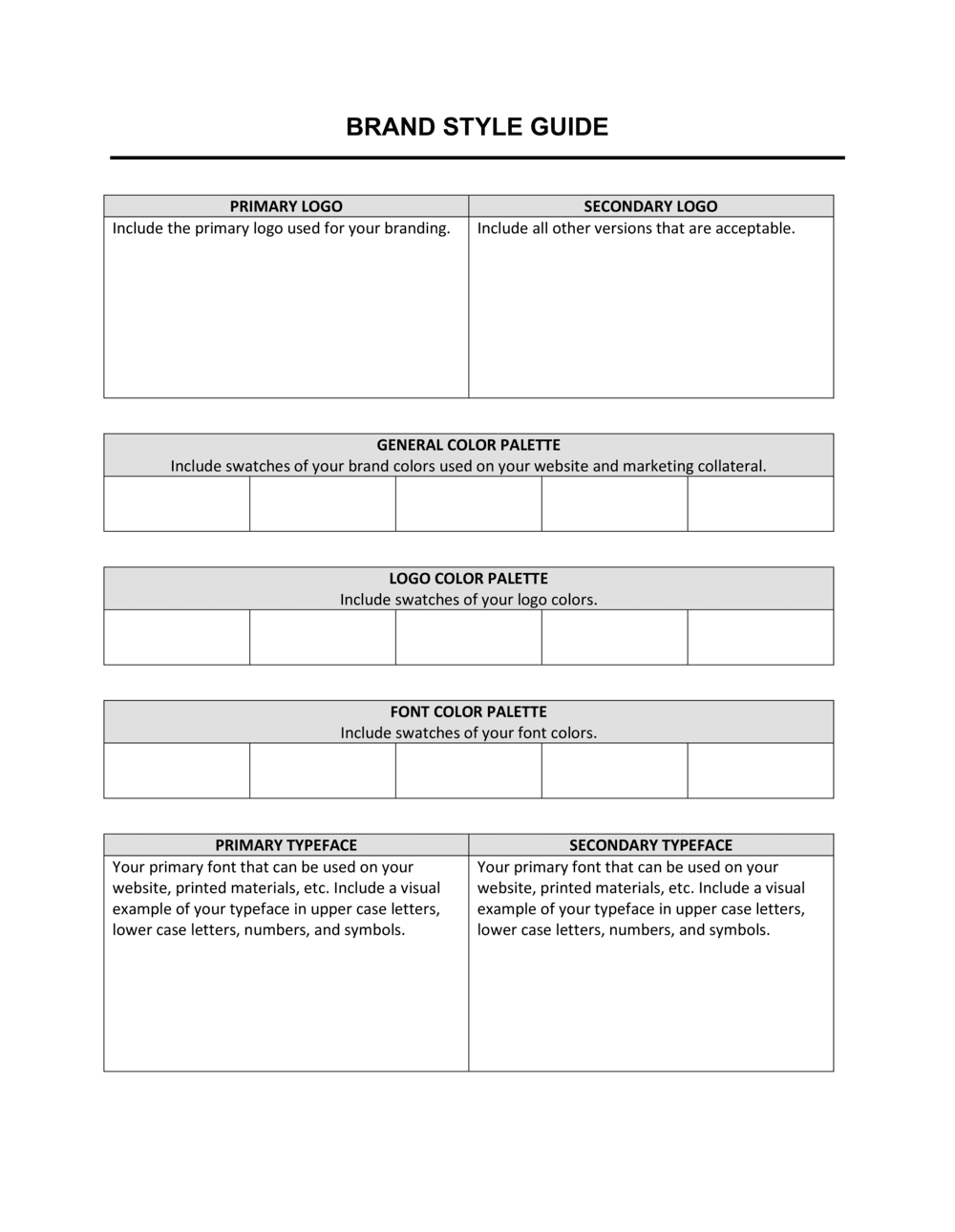
List each approved logo variant (primary, reversed, monochrome, icon-only), note where the files are stored, and specify clear-space and minimum-size rules for each. Attach or link the source files.
💡 Include a visual example of the most common incorrect logo use — stretched, recolored, or crowded — so the 'prohibited' list is concrete.
3
Define the color palette with all reproduction values
For each brand color, record hex, RGB, CMYK, and Pantone values. Note which colors are primary, which are secondary, and which are accent-only. Flag any pairings that fail WCAG AA contrast.
💡 Use a tool like Adobe Color or Coolors to extract exact values from your existing brand assets — do not approximate hex codes visually.
4
Specify typefaces and the full hierarchy
Name each approved font, its weight and size at each hierarchy level (H1 through body and caption), line height, and letter spacing. Include the web fallback and the license source.
💡 If a brand font requires a paid license, note the license tier and the purchase link so new team members can access it without delay.
5
Write the tone of voice section with examples
Choose three to five adjectives that describe the brand's voice, then write one before-and-after copy rewrite for each to show what the tone looks like in practice. Include a short list of words to use and words to avoid.
💡 Use real content from your existing marketing materials as the 'before' examples — this makes the improvement concrete and immediately credible.
6
Define imagery standards with visual references
Describe the approved photography style in one paragraph, then curate three to five example images that represent the standard and two to three that represent what to avoid. Link to an approved image library if one exists.
💡 A shared folder of approved images (Google Drive, Dropbox, or Brandfolder) eliminates the need for repeated approval requests from designers and social media managers.
7
Add digital and print application specs
Fill in the platform-specific dimensions and treatments for each major touchpoint: social profiles, email signature, business card, letterhead, and any recurring ad formats. Reference pixel and millimeter dimensions explicitly.
💡 Check each social platform's current recommended image dimensions before publishing — they update frequently and outdated specs cause cropped or distorted brand assets.
8
Distribute and version-control the guide
Export the completed guide as a PDF and store the editable source file in a shared location accessible to all relevant teams and vendors. Add a version number and review date to the cover page.
💡 Set a calendar reminder to review the guide every 12 months or after any brand update — a style guide that does not reflect current assets does more harm than no guide at all.