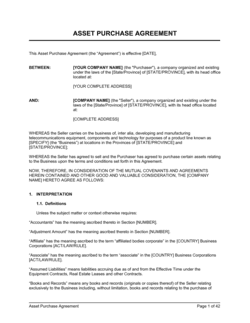
- Asset Purchase
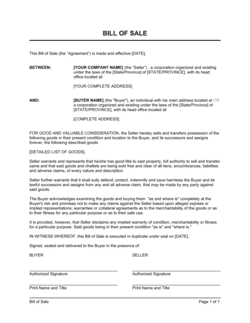
- A transaction in which a buyer acquires specific assets of a business rather than its shares, allowing the buyer to select what is included and exclude liabilities not expressly assumed.
- Purchased Assets
- The specific equipment, inventory, IP, customer lists, contracts, and goodwill itemized in the agreement as being transferred to the buyer at closing.
- Excluded Assets
- Assets the seller retains after closing — typically cash, accounts receivable, and items not listed in the purchase schedule.
- Assumed Liabilities
- The specific debts or obligations of the seller that the buyer agrees to take on; anything not listed remains the seller's responsibility.
- Goodwill
- The intangible value of an established business — customer relationships, brand reputation, and trade name — beyond the book value of its hard assets.
- Representations and Warranties
- Factual statements made by each party about the assets, title, and their authority to complete the transaction, which form the basis for indemnification claims if found to be false.
- Closing
- The date and event on which the purchase price is paid, legal title to the assets transfers, and all closing conditions have been satisfied.
- Non-Competition Clause
- A post-closing restriction preventing the seller from starting or joining a competing business within a defined territory and time period.
- Bulk Sale Notice
- A statutory notification required in some jurisdictions before an asset sale, alerting the seller's creditors that business assets are being transferred so they can protect their claims.
- Purchase Price Allocation
- The assignment of portions of the total purchase price to specific asset categories — equipment, inventory, goodwill, non-compete — required for tax reporting purposes by both buyer and seller.
- Indemnification
- A contractual obligation by one party to compensate the other for losses, damages, or claims that arise from a breach of the agreement or a misrepresented fact.
- Conditions to Closing
- Specific events or requirements — such as landlord consent, third-party approvals, or financing confirmation — that must be satisfied before either party is obligated to complete the transaction.