1
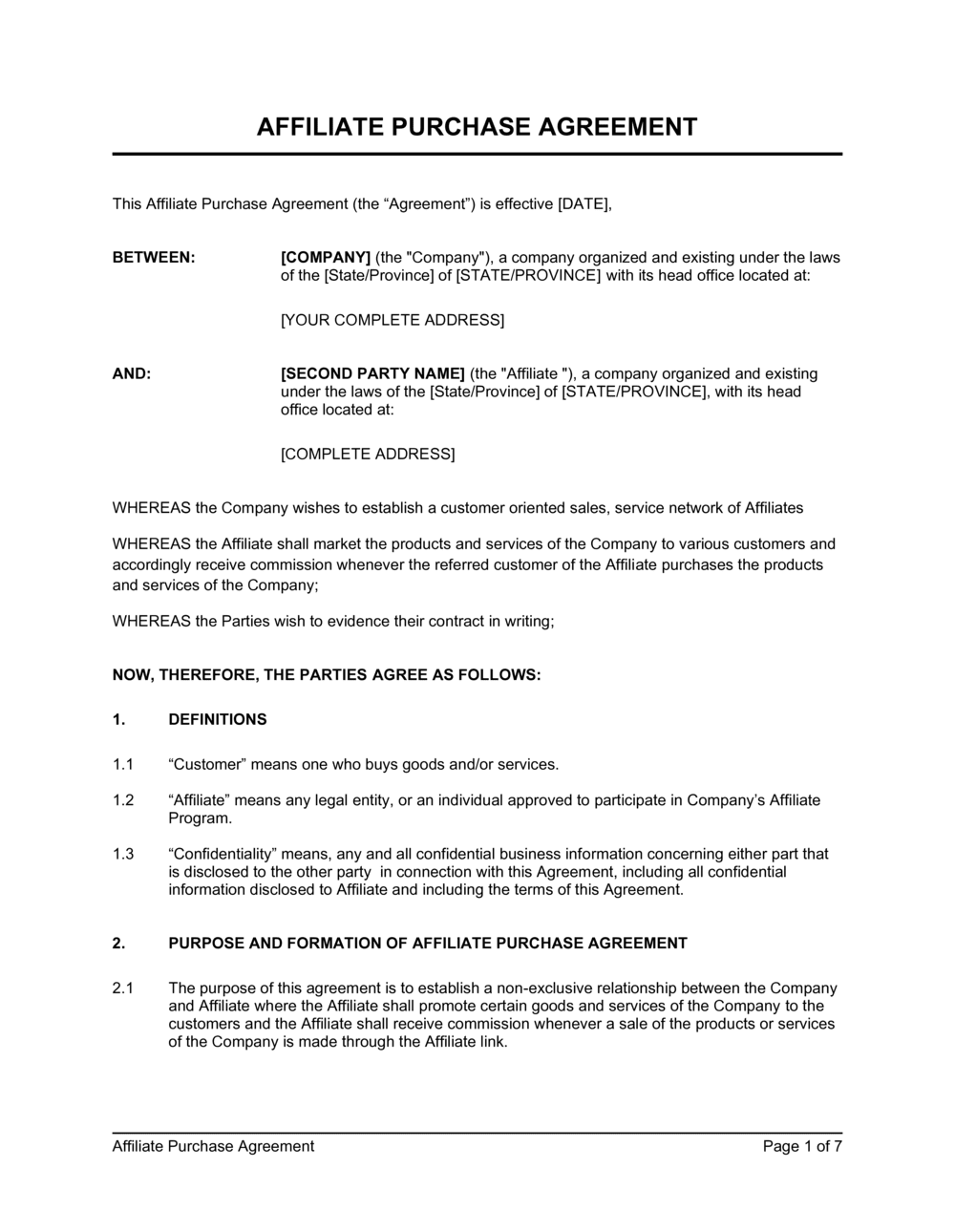
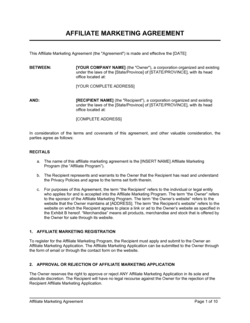
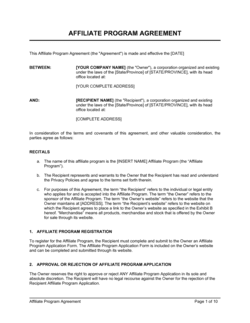
Enter both parties' full legal entity names
Replace every placeholder with the registered legal name of the merchant entity and the affiliate entity. Include entity type (LLC, Inc., Ltd.) and state or province of formation.
💡 Cross-check the affiliate's legal name against their W-9 or equivalent tax form before signing — this name must match the entity receiving commission payments.
2
Define the scope and exclusivity of the appointment
Choose whether the affiliate appointment is exclusive (limited to a specific territory or channel) or non-exclusive. List the exact products or service lines included in the program.
💡 If you intend to run multiple affiliate partners, explicitly state 'non-exclusive' — silence on this point has been interpreted as exclusivity in some jurisdictions.
3
Set the commission rate and qualifying purchase definition
Enter the commission percentage and specify whether it applies to net revenue or gross revenue. Define what makes a purchase 'qualifying' — cleared payment, return window expiry, and fraud checks.
💡 Tiered commission structures (e.g., 8% for the first 50 sales per month, 12% above 50) are a strong incentive but require a clear calculation example in the contract to avoid disputes.
4
Specify the tracking and attribution method
Identify the tracking mechanism (unique link, coupon code, or pixel), the cookie duration or attribution window, and the attribution model (last-click, first-click, or multi-touch).
💡 State explicitly which party's tracking system is the authoritative record for commission calculation — discrepancies between the affiliate's own analytics and the merchant's platform are common.
5
Fill in the payment schedule and payout threshold
Set the payment frequency (monthly is standard), minimum payout threshold (typically $50–$100), payment method, and currency. Include the payment window after the commission period closes.
💡 A 30-day hold after the return window closes protects against paying commission on purchases that are later refunded — include this explicitly.
6
Attach or reference approved creative assets and brand guidelines
List which logos, images, and messaging are pre-approved for use and link to or attach the brand guidelines as an exhibit. State explicitly what is prohibited — including keyword bidding and unsolicited email.
💡 Adding a short prohibited-practices list (branded search, domain spoofing, cookie stuffing) takes five minutes and prevents the most common affiliate fraud patterns.
7
Confirm the term, notice period, and post-termination commission terms
Set the initial term and auto-renewal period. Define the notice period for non-renewal and the window within which the merchant must pay commissions earned before the termination date.
💡 For affiliates with long attribution windows (30–90 day cookies), consider a post-termination commission period that covers any qualifying purchases from pre-termination referrals — this reduces disputes significantly.
8
Sign before any promotional activity begins
Both parties must execute the agreement before the affiliate publishes any promotional content or shares any tracking links. Post-activity signatures create enforceability gaps, particularly for IP and compliance clauses.
💡 Use a timestamped e-signature to establish the execution date clearly — this matters if a commission dispute involves sales that occurred close to the agreement date.