1
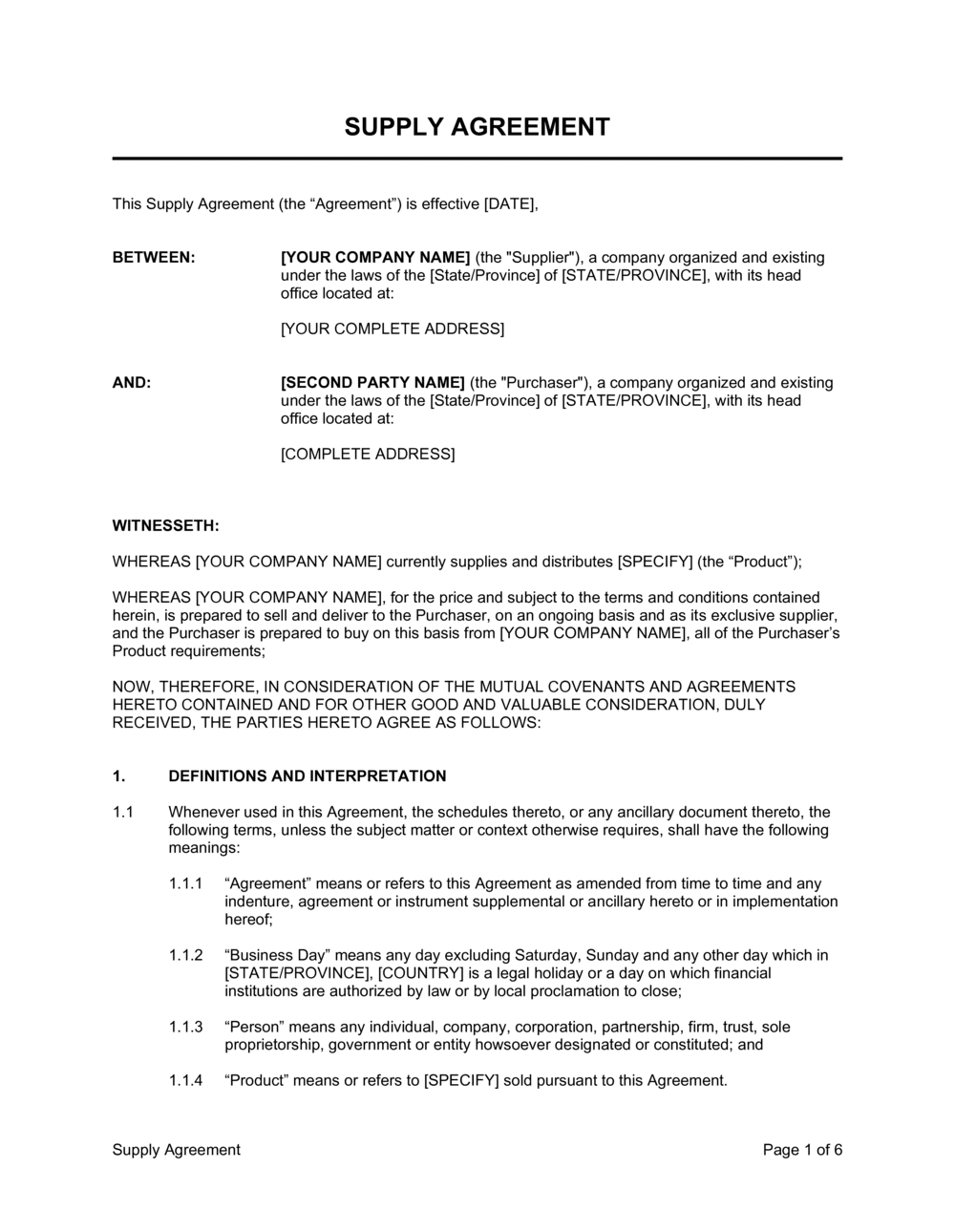
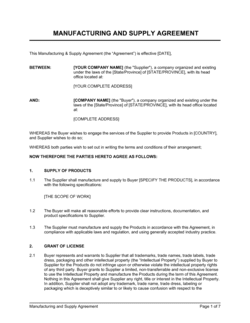
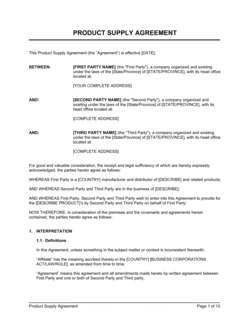
Identify the parties and define the goods precisely
Enter the full registered legal names and addresses of both the supplier and the buyer. Attach a Schedule A listing every SKU, product code, or category covered, and a Schedule B setting out the technical specifications each good must meet.
💡 Use the supplier's registered entity name — not a trading name — to ensure the party bound by the IP warranty and quality obligations is the entity with the assets to back them.
2
Set the pricing structure and adjustment mechanism
Enter the initial price per unit or SKU in Schedule C. Choose a price adjustment index (CPI or PPI for manufactured goods) and cap the annual adjustment percentage. State payment terms — Net 30 is standard for B2B supply.
💡 For commodity inputs, tie the price index to the specific commodity exchange (e.g., London Metal Exchange for aluminium) rather than a general PPI to keep adjustments accurate.
3
Define the forecasting and ordering process
Set the rolling forecast window (typically 12 months), specify whether forecasts are binding or non-binding, and describe the purchase order format. State clearly that this agreement governs in any conflict with a PO.
💡 If forecasts are non-binding, add a 'firm window' — the first 4–6 weeks of each forecast become binding purchase commitments, giving the supplier a short-horizon certainty without locking the buyer to 12 months.
4
Specify delivery terms using Incoterms 2020
Choose the applicable Incoterm (FOB, DAP, DDP, or CIF), enter the delivery address, and state the Lead Time obligation. Confirm who arranges and pays for insurance during transit.
💡 For cross-border supply, DDP (Delivered Duty Paid) is buyer-friendly but adds cost and complexity for the supplier; DAP is more common and splits customs obligations more cleanly.
5
Set the quality standards and inspection window
Reference the Specifications in Schedule B and enter a fixed inspection period — 10 business days is typical. Describe the rejection notice process and the supplier's obligation to replace or credit within a defined period.
💡 For perishable or time-sensitive goods, shorten the inspection period to 3–5 business days and add a deemed-acceptance clause to protect the supplier from open-ended rejection risk.
6
Negotiate and document exclusivity terms
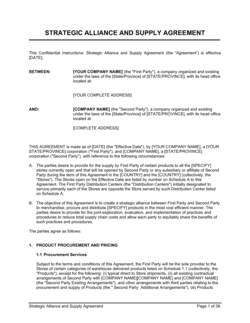
Decide whether the arrangement is exclusive (buyer-only, supplier-only, or mutual), define the territory, and set the minimum purchase threshold that activates and maintains exclusivity. Add a step-down mechanism if volumes fall short.
💡 If exclusivity is important to the buyer, offer a modest price premium in exchange — courts are more likely to enforce exclusivity obligations that are backed by clear consideration.
7
Set the term, notice periods, and renewal mechanics
Enter the initial term, the auto-renewal period (typically 1 year), and the notice period required to prevent renewal. Add termination-for-cause and termination-for-convenience provisions with separate notice periods.
💡 Align the non-renewal notice period with your procurement review calendar — if your annual vendor review happens in October, a 60-day notice window gives you until August to decide, which is usually sufficient.
8
Execute before the first purchase order is placed
Both parties' authorized signatories must sign before any goods are ordered under the agreement. Confirm that each signatory has authority to bind their entity — a board resolution or officer certificate may be needed for larger commitments.
💡 Use dated electronic signatures timestamped before the first PO to eliminate any argument that the supply relationship predated the agreement and that the contract terms do not govern early orders.