Pricing List Template

Free Excel download β€’ Edit online β€’ Save & share with Drive β€’ Export to PDF

1 pageβ€’20–30 min to fillβ€’Difficulty: Standardβ€’Signature requiredβ€’Legal review recommended
Learn more ↓
FreeXLSPricing List Template

At a glance

What it is
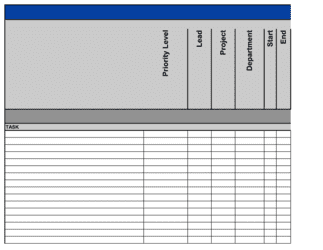
A Pricing List is a formal business document that sets out the prices, rates, or fees a company charges for its products or services, along with the conditions and terms under which those prices apply. This free Word download gives you a structured, editable template you can customize with your own product lines, service tiers, discount schedules, and validity windows β€” then export as PDF to share with clients, distributors, or procurement departments.
When you need it
Use it when quoting standard rates to multiple customers, supplying a reference price schedule to a distribution or reseller partner, responding to an RFQ or tender, or anchoring a service agreement with a fixed fee schedule. A formalized pricing list is also required in many B2B procurement processes and government contracting contexts.
What's inside
Seller identification and contact details, product or service descriptions with item codes, unit pricing and quantity tiers, currency and tax handling, discount structures, validity period, payment terms, and binding conditions of sale β€” all organized into a clear, scannable format.

What is a Pricing List?

A Pricing List is a formal business document that sets out the prices, rates, or fees a company charges for its products or services, together with the terms and conditions that govern how those prices apply β€” including validity period, currency, tax treatment, minimum order quantities, discount eligibility, payment terms, and delivery conditions. Unlike an informal quote or a verbal price discussion, a properly structured pricing list creates a documented, versioned reference that both sellers and buyers can rely on when placing orders, processing invoices, or resolving billing disputes. When a buyer places an order referencing a signed pricing list, the listed prices and incorporated conditions of sale typically form the contractual basis of that transaction.

Why You Need This Document

Without a formalized pricing list, every sales conversation starts from scratch β€” and every invoice becomes a negotiation. Undocumented pricing exposes your business to four concrete risks: buyers disputing the price agreed at the point of sale, inconsistent discounts applied by different members of your sales team, tax and currency misunderstandings on cross-border transactions, and the inability to enforce payment terms that were never put in writing. In procurement-driven industries β€” manufacturing, healthcare, construction, and government supply β€” a signed pricing list is a prerequisite for being added to an approved vendor list or responding to a formal tender. A versioned, signed pricing list with incorporated conditions of sale closes these gaps, gives your finance team a clear audit trail, and signals to buyers that your business operates with commercial discipline.

Which variant fits your situation?

If your situation is…Use this template
Selling physical goods to wholesale buyers at volume-based tiersWholesale Price List
Offering professional services billed by the hour or dayService Rate Sheet
Publishing a public-facing menu of products and prices for retail customersRetail Price List
Supplying prices as part of a formal response to a buyer's RFQPrice Quotation
Attaching a fee schedule as an exhibit to a services agreementFee Schedule Addendum
Setting out subscription tiers and billing cycles for a SaaS productSaaS Pricing Schedule
Listing parts and labor rates for a repair or maintenance businessParts and Labor Rate Card

Common mistakes to avoid

❌ No expiry or validity date on the price list

Why it matters: A buyer can argue that an undated price list represents a standing offer that the seller is obligated to honor indefinitely, even after costs have risen significantly.

Fix: Always include a validity period with a specific end date and a notice provision allowing early revision in the event of material cost changes.

❌ Vague product and service descriptions

Why it matters: Descriptions like 'standard service' or 'product bundle' create scope disputes at the invoice stage, often resulting in payment delays or deductions the seller did not anticipate.

Fix: Write descriptions specific enough that a buyer who never spoke to your sales team would know exactly what they are purchasing β€” include unit of measure, specifications, and any exclusions.

❌ Omitting currency and tax clarification

Why it matters: International buyers frequently assume prices are tax-inclusive and in their local currency; a surprise tax line or exchange-rate adjustment erodes trust and triggers disputes.

Fix: State currency in the column header and add a clause explicitly confirming whether prices are inclusive or exclusive of all applicable taxes and duties.

❌ Issuing discounts informally without updating the pricing list

Why it matters: Informal discounts communicated by email or verbally become binding commitments in many jurisdictions but are not tracked, leading to inconsistent billing and audit failures.

Fix: Document all standing discounts in the pricing list's discount schedule and issue a revised version whenever new discount arrangements are agreed.

❌ No conditions of sale or governing law clause

Why it matters: A pricing list without incorporated terms leaves the seller with no agreed warranty disclaimer, limitation of liability, or returns policy β€” gaps courts fill with jurisdiction-specific defaults that often favor the buyer.

Fix: Include a clause incorporating your standard conditions of sale by reference and designating a governing jurisdiction, even if the full conditions are provided as a separate attachment.

❌ Distributing multiple unversioned copies simultaneously

Why it matters: Without version numbers and dates, buyers and sales staff reference different price lists, producing invoice disputes that are impossible to resolve without a clear audit trail.

Fix: Assign every pricing list a version number and effective date in the document header, archive superseded versions, and issue a supersession notice to all recipients when a new version is released.

The 10 key clauses, explained

Seller identification and contact details

In plain language: Identifies the company issuing the pricing list β€” legal name, trading name, address, and contact for pricing inquiries.

Sample language
This Pricing List is issued by [COMPANY LEGAL NAME] (trading as [TRADING NAME]), registered at [REGISTERED ADDRESS]. For pricing inquiries, contact [NAME] at [EMAIL] or [PHONE].

Common mistake: Using only a trading name rather than the registered legal entity name. If a dispute arises over a quoted price, the enforcing party must be the legal entity β€” not a brand.

Effective date and validity period

In plain language: States the date from which prices take effect and the date on which they expire or become subject to revision, protecting both parties from price-change disputes.

Sample language
Prices listed herein are effective from [DATE] and valid until [DATE], unless superseded by a revised Pricing List issued in writing by [COMPANY NAME] with [X] days' advance notice.

Common mistake: Omitting an expiry date entirely. Without one, a buyer may argue that a quoted price is indefinitely binding β€” particularly for services with long delivery cycles.

Product and service descriptions with item codes

In plain language: Lists each product or service with a unique identifier, a clear description, and the unit of measure so there is no ambiguity about what is being priced.

Sample language
Item [SKU/CODE] | [PRODUCT/SERVICE NAME] | [DESCRIPTION] | Unit of Measure: [EACH / HOUR / LICENSE / KG / MONTH]

Common mistake: Using ambiguous descriptions like 'consulting services' or 'standard package' without specifying scope. Vague descriptions are the most common source of pricing disputes when deliverables differ from expectations.

Unit pricing and quantity tiers

In plain language: Sets out the price for each item at each quantity level, making it unambiguous what a buyer pays based on how much they order.

Sample language
1–9 units: $[X] each | 10–49 units: $[X] each | 50–99 units: $[X] each | 100+ units: $[X] each (MOQ: [X] units)

Common mistake: Failing to state the minimum order quantity alongside tiered prices. Buyers often attempt to claim the lowest tier price on a single-unit order, citing only the price table.

Currency, taxes, and duties

In plain language: Specifies the currency in which prices are denominated and whether listed prices include or exclude applicable taxes, customs duties, or import fees.

Sample language
All prices are stated in [CURRENCY β€” e.g., USD / CAD / GBP] and are exclusive of applicable sales tax, VAT, GST, customs duties, and import fees unless expressly stated otherwise.

Common mistake: Stating prices without clarifying tax inclusion. A buyer in a different jurisdiction may assume prices are tax-inclusive; an unexpected tax line on the invoice creates disputes and erodes trust.

Discount schedule and eligibility

In plain language: Documents any standing discounts available to specific customer categories β€” trade accounts, loyalty tiers, early-payment discounts β€” and the conditions required to qualify.

Sample language
Trade account holders: [X]% off list price on orders of [Y]+ units. Early payment discount: [Z]% if full payment received within [N] days of invoice date. Discount eligibility determined at [COMPANY NAME]'s sole discretion.

Common mistake: Documenting discounts in email exchanges rather than in the pricing list itself. Informal discount commitments become binding in many jurisdictions but are hard to track, audit, or revoke consistently.

Payment terms and conditions

In plain language: States when payment is due, acceptable payment methods, and the consequences β€” interest, suspension of supply β€” for late or missed payments.

Sample language
Payment is due [Net 30 / on delivery / 50% deposit with order, balance on delivery]. Accepted methods: [bank transfer / credit card / cheque]. Late payments accrue interest at [X]% per month from the due date.

Common mistake: Referencing payment terms only on the invoice and not in the pricing list. Buyers who sign purchase orders referencing the pricing list may argue that the invoice terms were never agreed.

Delivery, lead times, and FOB terms

In plain language: Explains how and when goods or services will be delivered, who bears the cost and risk of shipping, and what lead times the buyer should expect.

Sample language
Standard lead time: [X] business days from confirmed order. Delivery: [FOB ORIGIN / FOB DESTINATION / Ex Works LOCATION]. Shipping costs are [included / billed separately at cost].

Common mistake: Omitting FOB terms on product price lists. Without them, both parties assume the other bears shipping costs and risk of loss in transit β€” a gap that routinely triggers disputes on high-value orders.

Conditions of sale and governing law

In plain language: Establishes that acceptance of a price from this list constitutes agreement to the seller's standard terms of sale and designates which jurisdiction's law governs disputes.

Sample language
By placing an order referencing this Pricing List, the Buyer agrees to [COMPANY NAME]'s Standard Conditions of Sale, available at [URL / on request]. This Pricing List is governed by the laws of [STATE / PROVINCE / COUNTRY].

Common mistake: Attaching no conditions of sale and assuming a price list alone is a sufficient contract. Without standard terms incorporated by reference, the seller has no agreed returns policy, warranty disclaimer, or limitation of liability.

Supersession and revision clause

In plain language: Confirms that this pricing list replaces all prior price communications and specifies how revisions will be communicated and when they take effect.

Sample language
This Pricing List (Version [X], dated [DATE]) supersedes all prior price lists, rate cards, and quoted prices issued by [COMPANY NAME]. Revised lists will be issued in writing with [X] days' notice before taking effect on confirmed future orders.

Common mistake: Issuing updated price lists without a version number or date. Buyers and internal teams reference old versions, creating invoice disputes and contractual confusion that a simple version-control convention prevents.

How to fill it out

  1. 1

    Enter your company's legal name and contact details

    Add your registered business name, trading name if different, registered address, and the name and contact information of the person responsible for pricing inquiries.

    πŸ’‘ Keep a master header block pre-filled with your company details and version number so each new pricing list only requires updating the date and prices.

  2. 2

    Set the effective date and validity window

    Enter the start date and expiry date for this pricing list. Choose a validity window that matches your cost cycle β€” quarterly for commodity-linked businesses, annually for stable service rates.

    πŸ’‘ Add a calendar reminder 30 days before expiry to review and reissue β€” letting a pricing list lapse without a replacement creates ambiguity for active orders.

  3. 3

    List every product or service with a unique item code

    Assign a SKU or item code to each line item and write a description specific enough that a buyer unfamiliar with your business would understand exactly what they are purchasing.

    πŸ’‘ Align item codes with your invoicing or ERP system so orders referencing the price list are automatically matched without manual re-entry.

  4. 4

    Enter unit prices and quantity tiers

    State the base unit price and any volume-based tiers. For each tier, include the minimum order quantity that triggers it and confirm that the currency is stated in the column header.

    πŸ’‘ If you offer only flat pricing with no tiers, still include a minimum order quantity column β€” it prevents buyers from placing uneconomical micro-orders at list price.

  5. 5

    Specify currency, tax treatment, and applicable duties

    State the currency in the table header and add a footnote or clause clarifying whether prices are inclusive or exclusive of VAT, GST, sales tax, and any import duties applicable to international buyers.

    πŸ’‘ For clients in multiple countries, consider creating country-specific versions of the pricing list with local currency and tax treatment pre-calculated.

  6. 6

    Document discount eligibility and payment terms

    Add a discount schedule identifying who qualifies (trade accounts, volume buyers, early payers) and the percentage reduction. Then state payment terms β€” due date, accepted methods, and late-payment interest rate.

    πŸ’‘ Express discounts as a percentage off list price rather than a fixed dollar amount β€” this keeps the discount schedule valid even after price revisions.

  7. 7

    Add delivery terms and governing law

    Include FOB terms or equivalent delivery conditions, standard lead times, and a governing law clause. Reference your standard conditions of sale by URL or attachment.

    πŸ’‘ For international transactions, use Incoterms 2020 designations (EXW, FCA, DAP) rather than informal 'delivered' or 'collected' language β€” these have precise legal meanings accepted in most jurisdictions.

  8. 8

    Version, sign, and distribute

    Assign a version number (e.g., PL-2026-v1), obtain an authorized signature from a company officer, and send the signed PDF to customers or attach it to your standard conditions of sale.

    πŸ’‘ Store every signed version in a document management system with the effective date in the filename β€” you will need historical versions to resolve invoice disputes on orders placed months earlier.

Frequently asked questions

What is a pricing list?

A pricing list is a formal business document that sets out the prices a company charges for its products or services, along with the conditions under which those prices apply β€” including validity period, currency, taxes, minimum order quantities, discount eligibility, and payment terms. It functions as both a sales reference tool and a contractual basis for orders placed by buyers who accept the listed prices.

Is a pricing list legally binding?

A pricing list can be legally binding when a buyer places an order referencing it and the seller accepts that order β€” at that point the listed price and incorporated conditions typically form a binding contract. However, a price list issued unilaterally without a buyer's acceptance is generally considered an invitation to treat rather than a firm offer in most common-law jurisdictions. Including a conditions-of-sale clause and obtaining a buyer's signature or written purchase order referencing the list strengthens enforceability considerably.

What should a pricing list include?

At minimum: your company name and contact details, the effective date and validity period, a description of each product or service with a unique item code, unit prices, currency and tax treatment, quantity tiers and minimum order quantities, applicable discounts, payment terms, delivery conditions, and a governing law clause. Missing any of these creates ambiguity that typically resolves in the buyer's favor in a dispute.

How often should I update my pricing list?

For businesses with commodity-linked or volatile input costs, quarterly reviews are standard. For stable service-based businesses, annual updates aligned to a fiscal year are typical. Always issue a revised list with adequate advance notice β€” 30 days is common for trade accounts β€” before new prices take effect. Surprise price changes on active orders are a frequent source of buyer disputes and can damage long-term relationships.

What is the difference between a pricing list and a quotation?

A pricing list is a standard schedule of prices applicable to all buyers or a defined customer category β€” it is not tailored to a specific transaction. A quotation is a document prepared for a specific buyer, project, or order that may reflect negotiated pricing, custom scope, or project-specific terms. Quotations typically have a shorter validity window and are more commonly treated as firm offers once accepted.

Do I need to sign a pricing list?

An authorized signature from a company officer is strongly recommended for pricing lists issued to trade accounts, resellers, or in response to a formal RFQ. It confirms the list is authoritative and reduces the risk of a buyer disputing whether an emailed attachment was the current or approved version. For public-facing retail price lists with no incorporated terms, a signature is less critical but still best practice.

How do I handle tax on a pricing list for international customers?

State all prices exclusive of tax and add a clause clarifying that the buyer is responsible for all applicable taxes, customs duties, and import fees in their jurisdiction. For EU customers, include a VAT registration number if you are VAT-registered and note whether reverse charge applies to B2B sales. For Canadian customers, clarify whether GST and HST are included. Separate pricing list versions for major markets β€” with local currency and tax treatment β€” reduce confusion significantly.

Can a seller change prices before the validity period ends?

Generally, a seller can revise prices for future orders with appropriate notice even within a stated validity period, provided the pricing list includes a force majeure or material cost change provision allowing early revision. However, orders already confirmed in writing at a listed price are typically protected β€” the seller cannot unilaterally reprice a confirmed order. This is why including a clear revision and supersession clause is critical.

What is the difference between a pricing list and a price schedule attached to a contract?

A standalone pricing list is a general commercial document issued to multiple buyers as a standard rate reference. A price schedule attached to a specific contract is a negotiated exhibit that governs only that contract β€” it may differ substantially from the general pricing list. The attached schedule takes precedence over the general pricing list for the specific contracting parties, so any discrepancies between the two should be resolved by including a hierarchy-of-documents clause in the master contract.

How this compares to alternatives

vs Price Quotation

A price quotation is prepared for a specific buyer and transaction, often reflecting negotiated terms, custom scope, or project-specific adjustments. A pricing list is a standard rate schedule applicable to all buyers or a defined customer tier. Quotations typically reference the pricing list as their basis but can deviate from it; the quotation governs the specific deal once accepted.

vs Service Agreement

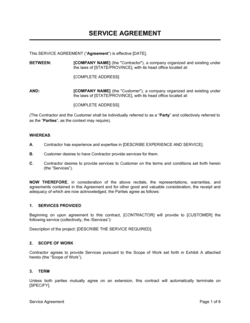
A service agreement is a comprehensive contract governing the ongoing relationship between a service provider and client β€” covering scope, deliverables, IP, liability, and termination. A pricing list documents rates and conditions only. In practice, a pricing list is often attached as a schedule or exhibit to a service agreement, with the agreement governing all non-pricing terms.

vs Invoice

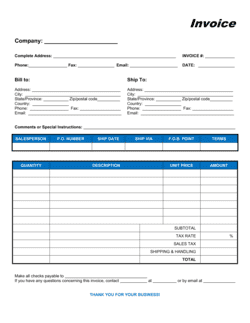
An invoice is a payment demand issued after goods are delivered or services rendered, referencing agreed prices. A pricing list is the upstream document that establishes what those agreed prices are. An invoice that references a valid pricing list is easier to enforce because the pricing basis is pre-documented rather than asserted after the fact.

vs Sales Contract

A sales contract is a transaction-specific binding agreement covering the terms of a single or ongoing sale β€” parties, goods, price, delivery, and warranties. A pricing list is a reference document that a sales contract incorporates by reference rather than replaces. When both exist, the sales contract takes precedence for that specific transaction.

Industry-specific considerations

Manufacturing and wholesale

Volume-tiered pricing tables by SKU, MOQ requirements, FOB shipping terms, and trade account discount schedules are standard components of manufacturer and distributor pricing lists.

Professional services

Hourly or daily rate cards by seniority level, retainer package pricing, and expense reimbursement policies are typically formalized in a service pricing list attached to master service agreements.

Healthcare and medical supply

Regulatory references, formulary codes, and insurance reimbursement rate alignment must be factored into pricing lists for medical devices and consumables to ensure compliance with procurement rules.

Retail and e-commerce

MSRP and wholesale price columns, seasonal promotional pricing windows, and MAP (Minimum Advertised Price) policy references distinguish retail pricing lists from standard B2B rate schedules.

Construction and trades

Labor rates by trade classification, materials pricing with supplier cost escalation clauses, and project-phase billing schedules are common elements of construction pricing lists used in tender responses.

SaaS and technology

Subscription tier pricing by user count or feature set, annual vs. monthly billing differentials, and add-on module pricing require versioned pricing lists that align with product release cycles.

Jurisdictional notes

United States

In the US, a price list is generally treated as an invitation to treat rather than a binding offer under UCC Article 2, which governs the sale of goods. State-level consumer protection laws β€” particularly in California, New York, and the FTC's regulations on deceptive pricing β€” impose obligations around price accuracy, advertised discounts, and promotional pricing. Failure to honor a listed price for consumers can trigger FTC enforcement or state attorney general action.

Canada

In Canada, competition law under the Competition Act prohibits deceptive price representation, including misleading reference prices and false ordinary price claims. Federal GST and provincial HST or PST must be clearly addressed in the pricing list; the CRA expects tax treatment to be unambiguous on commercial documents. Quebec's Consumer Protection Act imposes additional obligations for B2C pricing in that province, and all documents distributed in Quebec by provincially regulated businesses must be available in French.

United Kingdom

UK pricing lists for B2C transactions are regulated under the Consumer Rights Act 2015 and the Price Marking Order 2004, which require unit pricing and VAT-inclusive display for consumer-facing documents. For B2B pricing lists, the Unfair Contract Terms Act 1977 applies to any incorporated conditions of sale. Post-Brexit, UK pricing lists no longer require EU VAT compliance, but separate UK VAT registration numbers must be displayed if applicable.

European Union

The EU Omnibus Directive (effective 2022) requires that any price reductions in B2C pricing lists reference the lowest price charged in the prior 30 days, preventing artificial 'sale' pricing. B2B pricing lists must comply with member-state VAT display requirements, which vary significantly β€” Germany, France, and the Netherlands each have specific rules on VAT identification and reverse charge notation. GDPR implications arise if the pricing list is sent as part of a targeted marketing campaign involving personal data.

Template vs lawyer β€” what fits your deal?

PathBest forCostTime
Use the templateSmall businesses and freelancers issuing standard rate schedules to domestic clientsFree30–60 minutes
Template + legal reviewBusinesses issuing pricing lists to trade accounts, resellers, or government procurement bodies with incorporated conditions of sale$200–$5001–2 days
Custom draftedMulti-jurisdiction distributors, regulated industries (healthcare, defense, financial services), or pricing lists with complex discount and rebate structures requiring custom terms$1,000–$3,000+1–2 weeks

Glossary

Unit Price
The price charged for a single item, hour, or unit of measure β€” before quantity discounts or taxes are applied.
Tiered Pricing
A structure where the unit price decreases as the quantity purchased increases, expressed as a table of quantity ranges and corresponding prices.
Validity Period
The date range during which the prices on the list are guaranteed or offered β€” after which the seller may revise prices without notice.
List Price
The standard published price before any negotiated discounts, promotional reductions, or volume adjustments are applied.
Net Price
The final price after all applicable discounts have been deducted from the list price, representing the actual amount the buyer owes.
SKU (Stock Keeping Unit)
A unique alphanumeric code assigned to each distinct product or service line item to facilitate ordering, tracking, and reconciliation.
Currency Denomination
The currency in which prices are stated β€” critically important for cross-border transactions where USD, CAD, GBP, or EUR may be ambiguous.
Minimum Order Quantity (MOQ)
The smallest quantity of a product a seller is willing to supply at the stated price in a single order.
Payment Terms
The conditions governing when and how payment is due β€” such as Net 30 from invoice date, prepayment, or 50% deposit on order.
Conditions of Sale
The contractual rules that govern the buyer-seller relationship when the buyer accepts a price β€” covering delivery, title transfer, returns, and disputes.
Supersession Clause
A provision stating that this pricing list replaces all prior quoted prices and informal rate communications, making it the authoritative reference.

Part of your Business Operating System

This document is one of 3,000+ business & legal templates included in Business in a Box.

  • Fill-in-the-blanks β€” ready in minutes
  • 100% customizable Word document
  • Compatible with all office suites
  • Export to PDF and share electronically

Create your document in 3 simple steps.

From template to signed document β€” all inside one Business Operating System.
1
Download or open template

Access over 3,000+ business and legal templates for any business task, project or initiative.

2
Edit and fill in the blanks with AI

Customize your ready-made business document template and save it in the cloud.

3
Save, Share, Send, Sign

Share your files and folders with your team. Create a space of seamless collaboration.

Save time, save money, and create top-quality documents.

β˜…β˜…β˜…β˜…β˜…

"Fantastic value! I'm not sure how I'd do without it. It's worth its weight in gold and paid back for itself many times."

Managing Director Β· Mall Farm
Robert Whalley
Managing Director, Mall Farm Proprietary Limited
β˜…β˜…β˜…β˜…β˜…

"I have been using Business in a Box for years. It has been the most useful source of templates I have encountered. I recommend it to anyone."

Business Owner Β· 4+ years
Dr Michael John Freestone
Business Owner
β˜…β˜…β˜…β˜…β˜…

"It has been a life saver so many times I have lost count. Business in a Box has saved me so much time and as you know, time is money."

Owner Β· Upstate Web
David G. Moore Jr.
Owner, Upstate Web

Run your business with a system β€” not scattered tools

Stop downloading documents. Start operating with clarity. Business in a Box gives you the Business Operating System used by over 250,000 companies worldwide to structure, run, and grow their business.

Start freeΒ Β·Β No credit card required