What documents does a sales operations team typically need?
At minimum: a sales agreement or order form for each deal, a commission plan or policy for the team, a rep or agency agreement for any external sellers, and a sales report template for tracking performance. Larger teams also need an operations manual, expense reimbursement policy, and territory agreements to prevent channel conflict.
Is a sales commission plan legally binding?
A commission plan is generally binding when it has been signed by both the employer and the employee or contractor and forms part of the compensation agreement. In most jurisdictions, once a rep has earned a commission under the plan's terms, it cannot be retroactively reduced or withheld. Consider having a lawyer review your plan before rollout, particularly for at-will employment contexts.
What's the difference between an exclusive and non-exclusive sales rep agreement?
An exclusive agreement gives the rep sole rights to sell in a defined territory or account segment — the company cannot appoint other reps or sell directly in that space without the rep's consent. A non-exclusive agreement allows the company to engage multiple reps or sell directly alongside the rep. Exclusive agreements typically command higher commission rates to compensate for the additional commitment required from the rep.
Can I use a sales proposal as a binding contract?
A sales proposal can become binding if both parties sign it and it contains all essential contract terms — price, scope, payment, and duration. However, most proposals are intentionally structured as pre-contract offers, not binding commitments, until a formal sales agreement or purchase order is issued. If you intend the proposal to bind, include explicit acceptance language and signature blocks.
What should a sales report include?
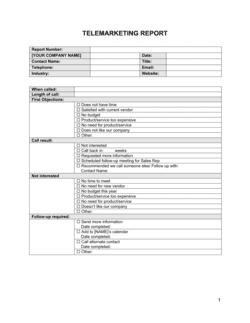
A sales report should include total revenue versus target, number of deals closed, average deal size, pipeline by stage, conversion rates at each funnel stage, and a variance explanation for any significant gap to plan. Weekly operational reports focus on pipeline health; monthly and quarterly reports focus on closed revenue, trends, and forecasts.
How often should a sales commission plan be updated?
Most organizations review commission plans annually, aligned with fiscal year planning. Mid-year changes are possible but require careful communication — reps should receive written notice before any change takes effect, and in many jurisdictions, changes cannot reduce already-earned commissions. Document all plan versions with effective dates.
Do I need a separate agreement for each sales territory?
Not always. A single rep agreement can define multiple territories or include a schedule that lists territories. However, when different reps cover different geographies with different commission rates or exclusivity terms, separate territory agreements reduce ambiguity and make enforcement straightforward.
What is an operations manual and does a sales team need one?
An operations manual documents the step-by-step processes, tools, escalation paths, and standards for running a function. Sales teams benefit from one once they reach 5–10 reps, because it codifies onboarding, qualification criteria, CRM hygiene, approval workflows, and discounting authority — reducing manager dependency and speeding ramp time for new hires.
Sales Operation vs. related documents
Sales Agreement vs. Sales Proposal
A sales proposal is a pre-contract document used to present an offer — it outlines scope, pricing, and terms but is not typically binding. A sales agreement is the executed contract that legally commits both parties to the transaction. Use a proposal to win the deal; use an agreement to close it. Some deals skip the proposal stage entirely, but complex B2B sales almost always benefit from both.
A sales commission plan is an internal policy document that defines the commission structure for your entire sales team — rates, quotas, tiers, and payout schedules. A commission sales agreement is a bilateral contract between a company and an individual rep (often an independent contractor) governing a specific engagement. Use the plan for employed reps; use the agreement for contracted or external reps.
Sales Representative Agreement vs. Sales Agency Agreement
A sales representative agreement typically governs an individual rep who sells on behalf of your company, often as an independent contractor. A sales agency agreement governs a business (the agency) that represents you commercially, sometimes with authority to bind contracts on your behalf. The agency agreement carries broader commercial authority and usually includes trademark and IP use terms.
An operations manual documents the end-to-end processes, procedures, and standards for running a business or department. A sales and marketing policy is a narrower document that sets rules and expectations specifically for how the sales and marketing team operates — lead handling, discounting authority, promotional conduct. Large organizations need both; smaller teams often start with the policy and grow into the full manual.
Key clauses every Sales Operation contains
Most sales operations documents share a common set of structural clauses, even though the specifics vary widely by document type.
Parties and roles. Identifies the company, rep, buyer, or agent by full legal name and clarifies each party's role in the relationship.
Scope of engagement. Defines what the rep, agent, or buyer is authorized to do — products covered, territories permitted, and services included.
Pricing and payment terms. Specifies the price, payment schedule, invoicing method, and any late-payment consequences.
Commission or incentive structure. Sets the rate, calculation basis (gross or net), quota threshold, accelerators, and payout timing.
Term and termination. States the contract duration, renewal conditions, and how either party can exit with or without cause.
Exclusivity and territory. Defines whether the rep or agent has exclusive rights to a region, channel, or account segment, and for how long.
Confidentiality and IP. Prevents the rep or agent from sharing customer data, pricing, or proprietary processes with competitors.
Dispute resolution and governing law. Names the jurisdiction and mechanism — arbitration, mediation, or litigation — for resolving disagreements.
How to write a sales operations document
Sales operations documents range from one-page receipts to multi-section commission plans — but every effective one follows the same drafting logic.
1
Identify the specific operational problem you're solving
Clarify whether you're formalizing a deal, governing a rep relationship, defining compensation, or documenting a process — each requires a different document.
2
Name the parties precisely
Use full registered legal names for all companies and individuals, not trading names or titles.
3
Define the scope narrowly and specifically
Ambiguous scope — 'all sales activities' or 'general territory' — creates disputes; name specific products, regions, accounts, or channels.
4
Spell out compensation or pricing terms completely
List every rate, threshold, cap, and calculation method; do not rely on verbal agreements or attached spreadsheets without incorporating them by reference.
5
Include a clear term and termination clause
State the start date, end date or renewal mechanism, and the notice period required to exit — for both with-cause and without-cause scenarios.
6
Add confidentiality and non-solicitation language
Protect customer lists, pricing, and process knowledge from being used against you after the relationship ends.
7
Specify governing law and dispute resolution
Name the jurisdiction and whether disputes go to arbitration, mediation, or court — this clause is often skipped and almost always regretted later.
8
Have authorized signatories execute the document
Ensure the person signing has authority to bind their company, then store the executed copy in a retrievable location.
At a glance
What it is
Sales operations documents are the contracts, policies, plans, and reports that govern how a sales team is organized, compensated, measured, and held accountable. They cover everything from how commission is calculated to how a rep agreement is structured to how deals are recorded and invoiced.
When you need one
Any time you're hiring reps, closing deals, paying commission, or building a repeatable sales process, you need the right document in place before the handshake happens.
The right template depends on what you're trying to formalize — a deal, a rep relationship, a compensation structure, or an operational process. Match your situation below.
Your situation
Recommended template
Formalizing a one-time or recurring deal with a customer
Covers price, delivery, payment terms, and warranties for a standard sale.
Sales Agreement
Setting up commission rates and payout rules for your sales team
Defines quota, rate tiers, accelerators, and payout timing in one document.
Reimbursing reps for travel, entertainment, and field expenses
Defines eligible expenses, approval thresholds, and submission procedures.
Sales Expenses Reimbursement Policy
Glossary
Sales agreement
A binding contract between a seller and buyer that sets out the price, product or service, delivery terms, and payment conditions for a transaction.
Commission plan
An internal document that defines how sales team members earn variable pay — including quota levels, commission rates, tiers, and payout schedules.
Exclusive territory
A defined geographic area or market segment in which a rep or agent has the sole right to sell on behalf of the company.
Sales agency agreement
A contract between a company and an external business (the agent) that authorizes the agent to sell products or services, sometimes with authority to bind contracts.
Sales funnel
A staged model of the buying process — from initial awareness through to closed deal — used to forecast revenue and identify conversion bottlenecks.
Sales projection
A forward-looking estimate of expected revenue over a future period, based on pipeline data, historical performance, and market assumptions.
Accelerator
A commission rate increase that kicks in once a rep exceeds their quota, rewarding overperformance with a higher percentage on incremental revenue.
Operations manual
A document that records the standard procedures, tools, and responsibilities required to run a business unit or team consistently.
Sales addendum
A supplementary document that modifies or extends an existing sales contract without replacing the original agreement.
Non-exclusive rep agreement
A sales rep contract that allows the company to appoint additional reps or sell directly in the same territory alongside the rep.
Reimbursable expense
A business cost incurred by a sales rep — such as travel or client entertainment — that the company agrees to pay back under a defined policy.
What is a sales operations document?
A sales operations document is any contract, policy, plan, or report that
governs how a sales team structures its deals, compensates its reps, manages its
external selling relationships, and measures its results. The category spans a wide
range — from a one-page sales receipt that records a transaction to a multi-section
commission plan that defines quota tiers, accelerators, and payout schedules for an
entire team. What these documents share is their function: they turn informal
agreements and verbal understandings into written records that both parties can
rely on when things get complicated.
Sales operations documents are used by in-house sales teams, independent reps,
sales agencies, franchise networks, and any business that sells products or
services through a structured commercial process. A company early in its growth
might start with a simple sales agreement and a basic commission policy. As it
scales — adding territory reps, agency partners, or a franchise network — it needs
the full stack: rep agreements, territory exclusivity documents, incentive plans,
expense policies, an operations manual, and regular reporting templates to track
performance against plan.
When you need a sales operations document
You need a sales operations document any time you're about to commit to a deal,
hire a rep, pay a commission, or hand off sales authority to someone outside your
direct employ. Without written documentation, disputes over territory, commission
calculations, and deal ownership become difficult to resolve — and expensive to
litigate.
Common triggers:
Closing a deal with a new customer that involves custom pricing or payment terms
Hiring an independent sales rep or signing with a sales agency
Granting a rep exclusive rights to a territory or product line
Rolling out a new commission structure at the start of the fiscal year
Bringing on a franchisee who will operate under your brand and sales process
Reimbursing reps for field expenses under a documented and auditable policy
Forecasting next quarter's revenue and presenting it to leadership or investors
Onboarding a new sales hire who needs a process guide and evaluation framework
The cost of undocumented sales operations isn't always visible immediately — it
shows up later as a commission dispute with a departing rep, a channel conflict
between two reps who thought they owned the same account, or a deal that falls
apart because terms were never written down. The right template, completed before
the relationship begins, eliminates most of that risk in under an hour.
Award-winning platform
Great Place to Work 2025
BIG Award — Product of the Year 2025
Smartest Companies 2025
Global 100 Excellence 2026
Best of the Best 2025
Create your document in 3 simple steps.
From template to signed document — all inside one Business Operating System.
1
Download or open template
Access over 3,000+ business and legal templates for any business task, project or initiative.
2
Edit and fill in the blanks with AI
Customize your ready-made business document template and save it in the cloud.
3
Share with your team
Share your files and folders with your team. Create a space of seamless collaboration.
Save time, save money, and create top-quality documents.
★★★★★
"Fantastic value! I'm not sure how I'd do without it. It's worth its weight in gold and paid back for itself many times."
Managing Director · Mall Farm
RW
Robert Whalley
Managing Director, Mall Farm Proprietary Limited
★★★★★
"I have been using Business in a Box for years. It has been the most useful source of templates I have encountered. I recommend it to anyone."
Business Owner · 4+ years
MF
Dr Michael John Freestone
Business Owner
★★★★★
"It has been a life saver so many times I have lost count. Business in a Box has saved me so much time and as you know, time is money."
Owner · Upstate Web
DM
David G. Moore Jr.
Owner, Upstate Web
Run your business with a system — not scattered tools
Stop downloading documents. Start operating with clarity. Business in a Box gives you the Business Operating System used by over 250,000 companies worldwide to structure, run, and grow their business.