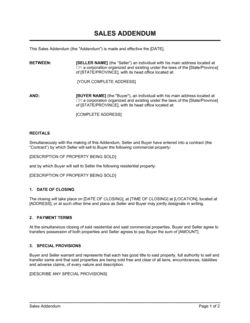
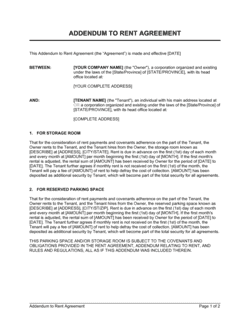
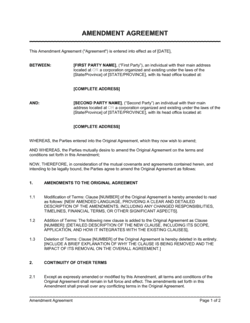
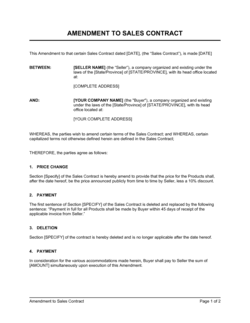
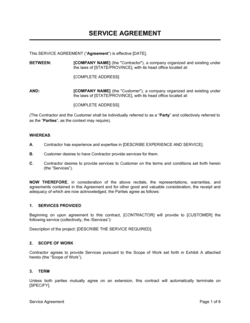
Contract Addendum Template

Free Word download • Edit online • Save & share with Drive • Export to PDF

2 pages20–30 min to fillDifficulty: StandardSignature requiredLegal review recommended
Learn more ↓
FreeContract Addendum Template

At a glance

What it is
A Contract Addendum is a legally binding document that modifies a specific term or set of terms in an existing contract — adding new obligations, changing existing ones, or removing provisions — without replacing the original agreement. This free Word download lets you draft, edit, and export a complete addendum as PDF in under 30 minutes.
When you need it
Use it when a signed contract needs to change — a deadline shifts, a deliverable is added, a price is renegotiated, or a clause is mutually agreed to be removed — and both parties want the change documented in writing and signed.
What's inside
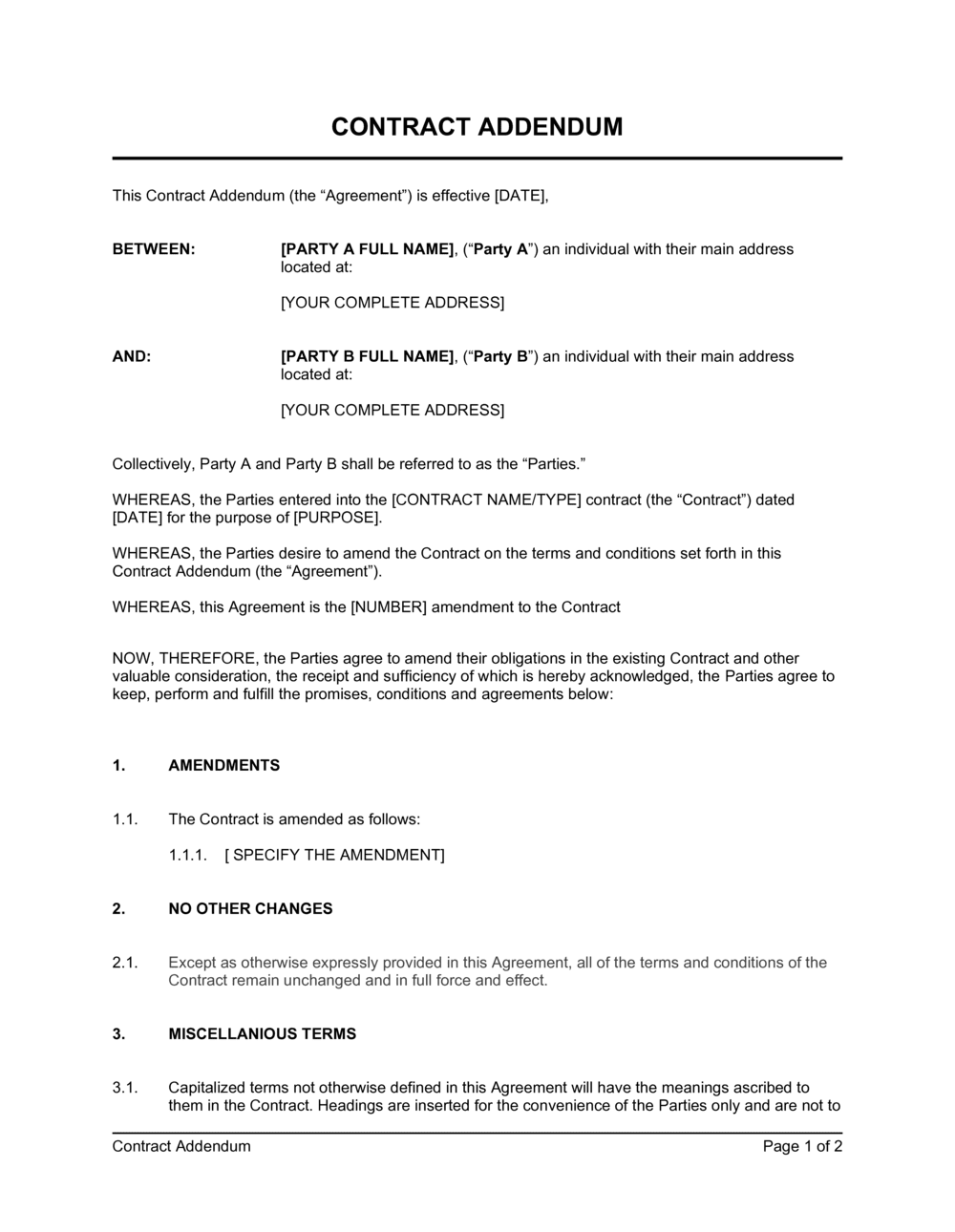
Reference to the original contract, identification of both parties, a precise description of each modification, effective date of the change, a confirmation that all other original terms remain in force, and signature blocks for all parties.

What is a Contract Addendum?

A Contract Addendum is a legally binding document that modifies specific terms of an existing signed contract — adding new provisions, replacing current language, or removing clauses — without voiding or replacing the original agreement. It must be signed by all original parties to take effect, and every term of the original contract not expressly changed continues in full force. Addenda are the standard tool for managing contract changes mid-relationship: when a deadline shifts, a deliverable is added, a price is renegotiated, or a new obligation is introduced after the original agreement is already in place.

Why You Need This Document

Relying on emails, verbal agreements, or informal notes to document a contract change is one of the most common causes of commercial disputes. Without a signed addendum, each party has its own record of what was agreed, and courts default to the original signed contract — not the emails. The practical cost is concrete: undocumented scope changes become unpaid work, undocumented deadline extensions become breaches, and undocumented price adjustments become collection problems. A properly executed addendum creates a clear paper trail, eliminates ambiguity about which version of the agreement is operative, and gives both parties a document they can rely on if the relationship deteriorates. This template gives you the structure to document any contract change in under 30 minutes, with the right clauses — consideration, precedence, continuity, and authority — already in place.

Which variant fits your situation?

If your situation is…Use this template
Changing a single clause in a service or vendor agreementContract Addendum
Making multiple simultaneous changes across several sectionsContract Amendment
Extending the term of an existing contract past its expiry dateContract Renewal Agreement
Completely replacing an existing contract with updated termsRestated Agreement
Adding a confidentiality obligation to an existing agreementNon-Disclosure Agreement
Modifying the payment schedule only, with no other changesPayment Plan Agreement
Adding new scope or deliverables to a consulting or services contractStatement of Work Addendum

Common mistakes to avoid

❌ Vague description of what is being changed

Why it matters: An addendum that says 'the deadline is extended' without specifying the original deadline, the new deadline, and the clause number creates a dispute the moment any party has an incentive to interpret it differently.

Fix: Quote the original clause verbatim, state it is replaced in its entirety, and provide the complete new language — including dates, dollar amounts, and any cross-references.

❌ Only one party signs the addendum

Why it matters: A contract modification requires mutual assent from all original parties. A unilaterally signed addendum is generally unenforceable as a binding change, leaving the original terms in place.

Fix: Circulate the addendum to all parties and obtain a countersignature before treating any modification as effective. Track outstanding signatures actively.

❌ No fresh consideration recital

Why it matters: In several common-law jurisdictions, a contract modification unsupported by new consideration can be challenged as unenforceable, particularly where the change benefits only one party.

Fix: Include a mutual-consideration recital acknowledging that each party receives value from the modification, and document any payment, concession, or benefit exchanged.

❌ Mismatched governing law with the original contract

Why it matters: If the addendum specifies a different governing jurisdiction than the original contract, the two documents may be interpreted under different legal standards, complicating enforcement of either.

Fix: Copy the governing law clause from the original contract verbatim into the addendum, or explicitly state that the original contract's governing law applies to the addendum as well.

❌ Failing to attach the addendum to the original contract

Why it matters: An addendum stored separately from the contract it modifies is routinely overlooked during disputes, audits, and due diligence — leading parties to perform under outdated terms.

Fix: Immediately upon execution, attach the signed addendum to the original contract in every location where it is stored — physical binder, document management system, and with all parties.

❌ Using an addendum to make changes that require a full restatement

Why it matters: When an addendum modifies so many sections that the original and addendum must be read simultaneously to understand any obligation, the documents become unworkable and prone to internal inconsistency.

Fix: If changes affect more than one-third of the original contract's substantive provisions, consider issuing an Amended and Restated Agreement that consolidates all current terms into a single clean document.

The 9 key clauses, explained

Recitals and reference to original contract

In plain language: Identifies the original agreement by its full title, date, and the parties, establishing that this addendum modifies that specific contract and no other.

Sample language
This Addendum ('Addendum') dated [EFFECTIVE DATE] amends the [ORIGINAL CONTRACT TITLE] dated [ORIGINAL CONTRACT DATE] between [PARTY A LEGAL NAME] ('Party A') and [PARTY B LEGAL NAME] ('Party B') (the 'Agreement').

Common mistake: Referencing the original contract by a nickname or informal description instead of its exact title and date. If the parties have signed multiple agreements, ambiguity about which contract is being amended can render the addendum ineffective.

Identification of modified terms

In plain language: Precisely identifies the section, clause number, or paragraph being changed — and states whether it is being added, deleted, or replaced.

Sample language
Section [X] of the Agreement, currently reading '[ORIGINAL LANGUAGE]', is hereby deleted in its entirety and replaced with the following: '[NEW LANGUAGE]'.

Common mistake: Describing a change in general terms ('the payment terms are updated') without quoting the old and new language side by side. Vague descriptions create disputes about what exactly was agreed.

Effective date of modification

In plain language: States the specific date the changes take effect, which may be the signing date, a future date, or retroactively from a past date.

Sample language
The modifications set forth in this Addendum shall take effect on [EFFECTIVE DATE], regardless of the date of execution.

Common mistake: Omitting a distinct effective date and assuming it defaults to the signing date. Retroactive changes in particular require an explicit date to be enforceable and to avoid ambiguity in accounting or performance records.

Consideration

In plain language: States what each party is giving or receiving in exchange for agreeing to the modification, satisfying the legal requirement that a contract change be supported by new consideration.

Sample language
In consideration of the mutual promises contained herein and other good and valuable consideration, the receipt and sufficiency of which are hereby acknowledged, the parties agree as follows.

Common mistake: Relying on the original contract's consideration to support the addendum. In some jurisdictions a modification without fresh consideration is unenforceable — a recital acknowledging mutual benefit is the minimum safeguard.

Continuity of original agreement

In plain language: Confirms that all terms and conditions of the original contract not expressly modified by this addendum remain in full force and effect.

Sample language
Except as expressly modified herein, all terms and conditions of the Agreement shall remain unchanged and in full force and effect. In the event of any conflict between this Addendum and the Agreement, the terms of this Addendum shall control.

Common mistake: Forgetting this clause entirely. Without it, a party may argue the addendum implicitly superseded unmodified sections, creating unnecessary disputes about the scope of the change.

Precedence clause

In plain language: Establishes that in case of conflict between the addendum and the original contract, the addendum's language takes priority for the modified terms.

Sample language
To the extent any provision of this Addendum conflicts with any provision of the Agreement, the terms of this Addendum shall govern and control solely with respect to the subject matter hereof.

Common mistake: Omitting the precedence clause when the addendum changes a term that is also referenced elsewhere in the original contract. Without it, ambiguity about which version controls can invalidate the intended change.

Representations and authority

In plain language: Each party confirms they have the legal authority to agree to the modification — important when the signing individual may not have full authority to bind the organization.

Sample language
Each party represents and warrants that it has the full power and authority to enter into this Addendum and that the person executing this Addendum on its behalf is duly authorized to do so.

Common mistake: Having a signatory who does not have authority to bind the company — such as a project manager rather than an officer. An addendum signed by an unauthorized person may not bind the organization.

Governing law

In plain language: States which jurisdiction's law governs the addendum, typically matching the governing law clause of the original contract.

Sample language
This Addendum shall be governed by and construed in accordance with the laws of [STATE / PROVINCE / COUNTRY], consistent with the governing law provision of the Agreement.

Common mistake: Specifying a different governing law than the original contract. Conflicting governing law clauses create jurisdictional uncertainty and complicate enforcement.

Signature blocks

In plain language: Provides space for each party's authorized representative to sign, print their name, title, and the date of signing.

Sample language
IN WITNESS WHEREOF, the parties have executed this Addendum as of the date first written above. [PARTY A LEGAL NAME] By: _______________ Name: [NAME] Title: [TITLE] Date: [DATE] [PARTY B LEGAL NAME] By: _______________ Name: [NAME] Title: [TITLE] Date: [DATE]

Common mistake: Using a signature block that only captures one party's signature, or omitting the title and date fields. An addendum signed only by one party is generally unenforceable as a modification.

How to fill it out

  1. 1

    Gather the original contract and note the exact clause references

    Before opening the template, locate the signed original contract and identify the exact section numbers, headings, and current language of every clause you intend to modify.

    💡 Screenshot or copy the exact existing text — you will need to quote it verbatim in the addendum to avoid ambiguity about what was changed.

  2. 2

    Enter the parties' legal names and original contract details

    In the recitals block, enter the full registered legal names of all parties and the precise title and date of the original agreement. If the original contract has a defined term for each party (e.g., 'Client', 'Vendor'), use the same defined terms throughout.

    💡 Check the original contract's signature page for the exact entity names — trade names and legal names often differ.

  3. 3

    Set the effective date

    Decide whether the change takes effect on the signing date, a future date, or retroactively. Enter that date explicitly in the effective date clause — do not leave it blank or defaulted.

    💡 For retroactive changes, confirm both parties are comfortable documenting that a change already implemented now has a formal legal record — retroactive effective dates are valid but require clear intent.

  4. 4

    Draft the modification language precisely

    For each change, quote the original clause language, state that it is deleted or replaced, and provide the full new language. For additions, state exactly where in the original contract the new clause is inserted.

    💡 Use a 'strikethrough / underline' format in a tracked-changes draft so both parties can visually confirm what is being removed and what is new before signing the clean version.

  5. 5

    Include the continuity and precedence clauses

    Confirm that all unmodified terms of the original contract remain in effect and that the addendum controls over the original in the event of conflict.

    💡 If the original contract has an integration clause, the addendum should explicitly state it supplements rather than supersedes that clause.

  6. 6

    Confirm signatory authority for both parties

    Before circulating for signature, verify that the person signing on behalf of each organization has authority to bind that entity to a contract modification — check bylaws, operating agreements, or authorization resolutions if needed.

    💡 For corporate entities, a title of 'Director', 'Officer', or 'Authorized Signatory' on the signature block reduces the risk of an unauthorized-signature challenge.

  7. 7

    Execute and attach to the original contract

    Have all parties sign the addendum and retain a fully executed copy. Physically attach or electronically link the signed addendum to the original contract in your records so they are always reviewed together.

    💡 Use Business in a Box eSign to timestamp execution and store the executed addendum alongside the original agreement in BIB Drive.

Frequently asked questions

What is a contract addendum?

A contract addendum is a legally binding document that modifies specific terms of an existing contract by adding new provisions, replacing existing ones, or removing clauses — without replacing the original agreement entirely. All original parties must sign the addendum for it to take effect, and all unmodified terms of the original contract remain in force.

What is the difference between a contract addendum and a contract amendment?

The terms are often used interchangeably in practice. Some drafters distinguish them by use: an addendum adds entirely new terms or exhibits to a contract, while an amendment changes existing language already in the contract. In most jurisdictions the legal effect is identical as long as the document is signed by all parties and clearly identifies what is being changed. When in doubt, label the document as you prefer and ensure the body specifies exactly what is modified.

Does a contract addendum need to be signed by all parties?

Yes. A contract modification is only binding when all original parties agree to it and sign. An addendum signed by only one party is generally unenforceable as a change to the contract — the original terms remain in effect. If a party refuses to sign, the original contract continues unchanged.

Does a contract addendum need consideration to be enforceable?

In most common-law jurisdictions, yes — a modification requires fresh consideration, meaning each party must receive something of value in exchange for agreeing to the change. In practice, mutual concessions (one party gets an extended deadline; the other gets a price reduction) satisfy this requirement. A consideration recital in the addendum acknowledging mutual benefit is the standard safeguard. Some jurisdictions and some contract types (e.g., those governed by UCC Article 2 in the US) allow modifications without additional consideration.

Can I use an addendum to change a price in an existing contract?

Yes, a price change is one of the most common uses of a contract addendum. The addendum should quote the original payment clause, state the new amount or rate, specify the effective date of the new pricing, and be signed by all parties. If the price change applies retroactively, state that clearly and confirm both parties agree on any true-up amount owed.

How specific does the addendum language need to be?

Specific enough that neither party needs to consult anything outside the addendum and the original contract to understand exactly what changed. Quote the original clause number and text, state whether it is deleted, replaced, or supplemented, and provide the complete new language including all dates, dollar amounts, and cross-references. Vague addenda are a leading cause of contract disputes.

Is a contract addendum the same as a side letter or side agreement?

Not exactly. A side letter or side agreement is a separate document that operates alongside the main contract — often to address a specific point one party did not want in the main document. An addendum is formally integrated into the original contract and explicitly modifies its terms. Side letters can create legal risk if they contradict the main contract's integration clause; an addendum that explicitly references and supersedes specific provisions is generally the safer approach.

How many addenda can be attached to a single contract?

There is no legal limit on the number of addenda. However, once an original contract has been modified by several addenda, the documents can become difficult to read holistically. If there are three or more addenda, consider consolidating everything into a single Amended and Restated Agreement that reflects all current terms in one clean document.

Do I need a lawyer to write a contract addendum?

For straightforward single-clause changes — extending a deadline, updating a price, adding a standard exhibit — a well-drafted template is generally sufficient. Consider engaging a lawyer when the modification involves significant financial exposure, changes liability or indemnity terms, involves a regulated industry, or when one party's counsel drafted the original agreement and you want equivalent representation on the change.

How this compares to alternatives

vs Contract Amendment

A contract amendment and a contract addendum serve the same legal function — modifying an existing agreement — and the terms are often used interchangeably. Some practitioners reserve 'amendment' for changes to existing language and 'addendum' for entirely new provisions. Use whichever label your industry or original contract prefers; the enforceability depends on content and signatures, not the title.

vs New Contract

A new contract replaces the existing agreement entirely with a fresh document. Use a new contract when the changes are so extensive that the original is no longer a reliable reference, or when the parties want a clean start. An addendum is appropriate when the changes are limited and the original terms are largely still operative.

vs Non-Disclosure Agreement

An NDA is a standalone confidentiality contract. When confidentiality obligations need to be added to an existing agreement that lacks them, you can either attach an NDA as an addendum or draft a confidentiality addendum that incorporates the key NDA terms directly. The standalone NDA is preferable when the confidentiality scope is broader than the original contract's subject matter.

vs Letter of Intent

A letter of intent records preliminary agreement on terms before a contract is signed — it is not a binding modification to an existing contract. A contract addendum is used after a contract is already executed and needs to change. If negotiations on a signed contract break down before an addendum is executed, the original contract terms remain in force.

Industry-specific considerations

Real estate

Addenda are standard practice for adjusting purchase price, closing dates, inspection contingencies, and repair obligations after a purchase agreement is signed.

Construction

Change orders — a form of addendum — document scope additions, material substitutions, and schedule extensions in construction contracts, often required before additional work can begin.

Professional services

Consultants and agencies use addenda to document mid-engagement scope expansions, rate adjustments, and deliverable changes without reissuing a full services agreement.

Technology / SaaS

SaaS vendors use addenda to add data processing agreements (DPAs), security exhibits, or updated SLA commitments to existing subscription agreements, particularly for enterprise clients.

Healthcare

HIPAA Business Associate Agreements are commonly added to existing vendor contracts as addenda when a vendor's role changes to include access to protected health information.

Manufacturing and supply chain

Addenda document pricing adjustments for commodity fluctuations, revised delivery schedules, and updated quality standards in long-term supply agreements.

Jurisdictional notes

United States

Most US states require consideration to support a contract modification under common law, though UCC Article 2 (goods contracts) allows modifications without additional consideration if made in good faith. California and New York courts scrutinize addenda for mutual assent closely. Non-compete modifications in California face additional challenges given the state's broad restriction on such clauses.

Canada

Canadian common law requires fresh consideration for a contract modification to be enforceable, with leading cases such as Foakes v. Beer applying in most provinces. Quebec civil law (Civil Code of Québec) takes a different approach, permitting modifications by consent without the strict consideration requirement found in common-law provinces. Employment contract addenda must meet provincial Employment Standards Act minimums or they may be partially void.

United Kingdom

English law requires consideration for a binding variation, though the practical consideration doctrine (Williams v. Roffey Bros) has relaxed this in commercial contexts where one party obtains a practical benefit from the modification. Many UK commercial contracts include a 'no oral variation' (NOV) clause requiring any modification to be in writing and signed — addenda are the standard mechanism for satisfying NOV clauses.

European Union

Civil law jurisdictions across the EU generally do not require fresh consideration for a contract modification — mutual consent of the parties is sufficient. However, modifications to consumer contracts are subject to consumer protection directives that restrict changes that materially disadvantage the consumer. Data processing agreements (DPAs) required under GDPR are commonly added to existing vendor contracts via addendum when a service provider's role changes.

Template vs lawyer — what fits your deal?

PathBest forCostTime
Use the templateSingle-clause changes with clear language — deadline extensions, price updates, or adding a standard exhibit to a services contractFree20–30 minutes
Template + legal reviewChanges to liability, indemnity, IP, or payment terms where one side bears meaningfully more risk after the modification$200–$5001–2 days
Custom draftedComplex multi-clause modifications, heavily negotiated commercial contracts, regulated industries, or cross-border agreements$500–$2,500+3–10 days

Glossary

Addendum
A written document that modifies an existing contract by adding, changing, or removing terms, executed by all original parties.
Amendment
A formal change to a contract's existing language; often used interchangeably with addendum, though some drafters reserve 'amendment' for changes and 'addendum' for additions.
Consideration
Something of value exchanged between parties that makes a contract — or a modification to one — legally binding.
Effective Date
The specific date on which the changes introduced by the addendum take legal effect, which may differ from the signing date.
Integration Clause
A provision stating that the written contract (plus any addenda) represents the entire agreement, preventing parties from relying on prior oral or written understandings.
Counterpart
A separately signed copy of the same document; when all counterparts are combined, they form one complete, executed agreement.
Mutual Assent
The agreement of all parties to the modification, evidenced by their signatures on the addendum.
Severability
A clause providing that if one part of the addendum is found unenforceable, the remaining provisions continue in effect.
Material Change
A modification significant enough to alter the core obligations or economics of the original contract, often triggering a higher standard of review or consent.
Precedence Clause
A provision specifying which document controls in the event of a conflict — typically giving the addendum precedence over the original agreement for the modified terms.

Part of your Business Operating System

This document is one of 3,000+ business & legal templates included in Business in a Box.

  • Fill-in-the-blanks — ready in minutes
  • 100% customizable Word document
  • Compatible with all office suites
  • Export to PDF and share electronically

Create your document in 3 simple steps.

From template to signed document — all inside one Business Operating System.
1
Download or open template

Access over 3,000+ business and legal templates for any business task, project or initiative.

2
Edit and fill in the blanks with AI

Customize your ready-made business document template and save it in the cloud.

3
Save, Share, Send, Sign

Share your files and folders with your team. Create a space of seamless collaboration.

Save time, save money, and create top-quality documents.

★★★★★

"Fantastic value! I'm not sure how I'd do without it. It's worth its weight in gold and paid back for itself many times."

Managing Director · Mall Farm
Robert Whalley
Managing Director, Mall Farm Proprietary Limited
★★★★★

"I have been using Business in a Box for years. It has been the most useful source of templates I have encountered. I recommend it to anyone."

Business Owner · 4+ years
Dr Michael John Freestone
Business Owner
★★★★★

"It has been a life saver so many times I have lost count. Business in a Box has saved me so much time and as you know, time is money."

Owner · Upstate Web
David G. Moore Jr.
Owner, Upstate Web

Run your business with a system — not scattered tools

Stop downloading documents. Start operating with clarity. Business in a Box gives you the Business Operating System used by over 250,000 companies worldwide to structure, run, and grow their business.

Start free · No credit card required