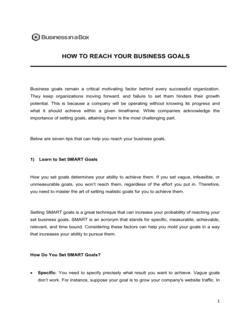
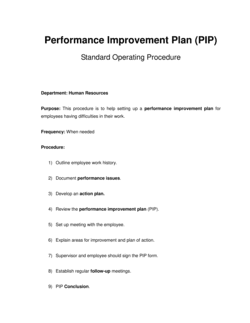
List Of Business Goals Template

Free download β€’ Use as a template β€’ Print or share

6 pagesβ€’25–35 min to useβ€’Difficulty: Complexβ€’Signature requiredβ€’Legal review recommended
Learn more ↓
FreeList Of Business Goals Template

At a glance

What it is
A List of Business Goals is a formally structured document that captures a company's strategic, operational, and financial objectives for a defined period β€” typically one fiscal year or a multi-year planning horizon. This free Word download provides a ready-to-edit framework you can complete online and export as PDF for board approval, investor review, or internal leadership alignment.
When you need it
Use it at the start of a fiscal year, when onboarding new leadership, when presenting a strategic plan to investors or a board of directors, or when formalizing commitments tied to funding agreements or operating covenants.
What's inside
Company and period identification, prioritized strategic and financial objectives, measurable key results for each goal, responsible owners and accountability assignments, review cadence, and a signatory block for executive approval.

What is a List of Business Goals?

A List of Business Goals is a formally structured document that records a company's strategic, financial, operational, and people objectives for a defined governing period β€” typically one fiscal year or a multi-year planning horizon. Each goal is paired with a measurable key result, a target date, and a named accountable owner, transforming a loose collection of intentions into a binding internal commitment signed by authorized executives. When attached to a shareholder agreement, investment term sheet, or bank loan covenant, the document carries legal weight as a referenced exhibit and can be used to demonstrate compliance with reporting obligations or performance covenants.

Why You Need This Document

Without a formally executed goals document, annual priorities exist only in slide decks and email threads β€” easily reinterpreted, rarely enforced, and invisible to any external party reviewing the company's governance. Leadership teams operating from unwritten or unsigned goals have no shared basis for accountability when targets are missed, no amendment trail when circumstances change, and no defensible record to present to investors or lenders asking for evidence of strategic discipline. Banks and institutional investors routinely request a signed goals or objectives document as a condition of financing, and the absence of one β€” or the presence of a vague, unsigned one β€” signals operational immaturity. This template gives you a complete, professional starting point: structured clauses, a clear accountability framework, and a signature block designed to hold up whether the document is used for internal alignment or attached to a capital agreement.

Which variant fits your situation?

If your situation is…Use this template
Setting individual employee performance goals tied to company objectivesPerformance Improvement Plan
Defining a 3–5 year organizational roadmap with strategic initiativesStrategic Planning Template
Tracking goal progress quarterly with KPIs and metric dashboardsBusiness Review Report
Presenting goals to investors alongside financials and market contextBusiness Plan
Setting department-level objectives aligned to company OKRsAction Plan
Documenting goals as part of a new partnership or joint ventureJoint Venture Agreement
Tracking project-specific milestones and deliverable timelinesProject Plan

Common mistakes to avoid

❌ Writing activity-based goals instead of outcome-based goals

Why it matters: Goals framed as activities β€” 'develop a new sales process' β€” cannot be objectively assessed as achieved or missed, making accountability reviews meaningless.

Fix: Reframe every goal as a measurable outcome with a specific metric and deadline, e.g., 'increase qualified pipeline by 40% by Q3 2026.'

❌ Setting revenue targets with no margin or profitability counterpart

Why it matters: A team that hits a revenue target by cutting prices or over-spending on acquisition technically succeeds while materially harming the business.

Fix: Pair every top-line revenue goal with at least one profitability or efficiency metric β€” gross margin percentage, CAC payback, or EBITDA β€” as a co-equal target.

❌ Assigning goals to teams or departments instead of named individuals

Why it matters: Shared ownership without a single accountable person is effectively no ownership β€” goals assigned to groups are consistently deprioritized when competing demands arise.

Fix: Designate one named individual as the primary owner for each goal and record their reporting obligation explicitly in the accountability clause.

❌ Omitting a baseline metric for operational and people goals

Why it matters: Without a stated starting point, progress cannot be measured objectively β€” mid-year reviews devolve into disagreements about what the number was when the period began.

Fix: Record the current baseline for every non-financial goal at the time of execution, sourced from a dated management report or system record.

❌ Allowing verbal amendments without a written addendum

Why it matters: When a List of Business Goals is attached to an investor agreement or loan covenant, informally modifying a goal without written co-approval can put the company in technical default.

Fix: Include an explicit amendment clause requiring written approval from all signatories and produce a signed addendum for every material change, however minor it appears.

❌ Executing the document after the governing period has already started

Why it matters: In jurisdictions that treat the document as a binding commitment, goals ratified after the period begins may be challenged as unenforceable for lack of consideration or timeliness.

Fix: Schedule the goal-setting and signing session at least two weeks before the governing period start date so all signatories have adequate time to review and negotiate.

The 10 key clauses, explained

Parties and Governing Period

In plain language: Identifies the company by legal name, its jurisdiction of incorporation, and the exact date range during which the listed goals are active and binding.

Sample language
This List of Business Goals is adopted by [COMPANY LEGAL NAME], a [STATE/PROVINCE] [ENTITY TYPE], for the period commencing [START DATE] and ending [END DATE] ('Governing Period').

Common mistake: Using the trade name instead of the registered legal entity name. If the document is referenced in a loan covenant or shareholder agreement, a name mismatch can invalidate the cross-reference.

Purpose and Scope Statement

In plain language: Defines why the document exists β€” whether for internal alignment, investor reporting, board approval, or lender covenant compliance β€” and which business units or functions it covers.

Sample language
These goals govern the strategic and operational priorities of [COMPANY NAME] across its [DESCRIBE SCOPE β€” all business units / the [DIVISION] division] during the Governing Period and are submitted to [BOARD / INVESTORS / LENDER] for approval.

Common mistake: Omitting scope entirely and implying the document covers all operations when it only applies to one division. Ambiguous scope creates disputes when accountability for missed targets is assessed.

Strategic Goals

In plain language: Lists the company's top-level, outcome-oriented objectives for the period β€” typically three to five β€” each tied to a measurable key result and a target date.

Sample language
Strategic Goal 1: [GOAL DESCRIPTION]. Key Result: [METRIC] by [DATE]. Owner: [TITLE]. Strategic Goal 2: [GOAL DESCRIPTION]. Key Result: [METRIC] by [DATE]. Owner: [TITLE].

Common mistake: Writing goals as activities rather than outcomes β€” e.g., 'launch a marketing campaign' instead of 'acquire 500 new customers by Q3.' Activity-based goals cannot be objectively measured as achieved or missed.

Financial Goals

In plain language: States specific, quantified financial targets for the period β€” revenue, gross margin, EBITDA, cash runway, or cost reduction β€” with a named owner and review date.

Sample language
Financial Goal 1: Achieve annual revenue of $[AMOUNT] by [DATE]. Owner: [CFO / CEO]. Financial Goal 2: Reduce operating expenses by [X]% relative to [PRIOR PERIOD] by [DATE]. Owner: [TITLE].

Common mistake: Setting revenue targets without specifying gross margin or profitability targets alongside them. A business that hits revenue by sacrificing margin has technically met the goal while damaging the company financially.

Operational Goals

In plain language: Defines process, efficiency, and capacity targets β€” such as reducing delivery time, improving customer satisfaction scores, or scaling production volume β€” with measurable baselines.

Sample language
Operational Goal 1: Reduce average order fulfillment time from [CURRENT] days to [TARGET] days by [DATE]. Owner: [TITLE]. Operational Goal 2: Achieve a Net Promoter Score of [X] or above by [DATE]. Owner: [TITLE].

Common mistake: Failing to state a baseline for operational goals. 'Improve customer satisfaction' is unverifiable without a starting benchmark β€” include the current metric so progress can be calculated.

People and Organizational Goals

In plain language: Captures hiring targets, employee retention rates, training completion milestones, or diversity and inclusion objectives tied to the company's people strategy.

Sample language
People Goal 1: Hire [X] full-time employees in [DEPARTMENT] by [DATE]. Owner: [VP PEOPLE / HR DIRECTOR]. People Goal 2: Achieve an employee retention rate of [X]% or above for the Governing Period. Owner: [TITLE].

Common mistake: Treating headcount targets as the only people goal. Hiring [X] people and immediately losing existing talent in the same period is a net negative β€” include retention and engagement metrics alongside growth targets.

Accountability and Ownership Assignment

In plain language: Formally assigns a named individual (by title and, optionally, name) as the accountable owner for each goal category, along with their reporting obligation.

Sample language
Each goal listed in this document is assigned a designated Owner as indicated. Each Owner shall provide a written status update to [CEO / BOARD / EXECUTIVE COMMITTEE] no less than [QUARTERLY / MONTHLY] during the Governing Period.

Common mistake: Assigning a team or department as the owner rather than a named individual. Shared ownership without a single accountable party routinely results in goals being deprioritized when competing demands arise.

Review and Amendment Procedure

In plain language: States the scheduled review cadence, the conditions under which goals may be amended, and the approval threshold required to modify a goal mid-period.

Sample language
Goals shall be reviewed [QUARTERLY / SEMI-ANNUALLY]. Material amendments β€” defined as any change to a goal metric, target date, or owner β€” require written approval from [CEO / BOARD / MAJORITY SHAREHOLDERS] and shall be documented as a signed addendum to this document.

Common mistake: Allowing informal verbal amendments to goals that are referenced in investor or lender agreements. Any change to a goal that is part of an operating covenant must be documented in writing and counter-signed to remain enforceable.

Governing Law and Dispute Resolution

In plain language: Specifies the jurisdiction whose law governs any disputes arising from the document and how disagreements between signatories or with external parties are resolved.

Sample language
This document is governed by the laws of [STATE / PROVINCE / COUNTRY]. Any dispute arising from the interpretation or enforcement of these goals shall be resolved by [MEDIATION / ARBITRATION / LITIGATION] in [CITY / JURISDICTION].

Common mistake: Omitting a governing law clause because the document feels informal. When a List of Business Goals is attached to a shareholder agreement, investment term sheet, or loan covenant, the absence of a governing law clause creates ambiguity about which jurisdiction's standards apply.

Signatures and Execution

In plain language: Provides a signature block for the authorizing executives, confirms the date of execution, and establishes the document as the binding record of the company's goals for the Governing Period.

Sample language
By signing below, the authorized representatives of [COMPANY NAME] confirm that the goals stated in this document represent the company's binding priorities for the Governing Period and supersede any prior informal or draft goal statements. Signed: [NAME], [TITLE], Date: [DATE].

Common mistake: Having only the CEO sign when the document will be presented to a board or investor who expects dual signatures. A single-signatory document on a material goal commitment can be challenged as unauthorized if the CEO's authority is disputed.

How to fill it out

  1. 1

    Enter the company's legal name and governing period

    Use the full registered entity name β€” not a trade name β€” and specify the exact start and end dates for the goals. A fiscal year (e.g., January 1 – December 31, 2026) is the most common governing period.

    πŸ’‘ If the document will be attached to a shareholder or loan agreement, confirm the entity name matches exactly what appears in the parent document.

  2. 2

    Define the purpose and scope of the document

    State clearly whether the goals cover the entire company or a specific division, and identify the audience β€” internal leadership, board, investor, or lender. This prevents scope disputes when goals are assessed.

    πŸ’‘ If the document is submitted to a bank or investor under a covenant, name the parent agreement and clause number in the purpose statement.

  3. 3

    Draft three to five strategic goals as outcomes, not activities

    Write each strategic goal as an outcome the company intends to achieve, paired with at least one measurable key result and a target date. Avoid activity-based language like 'work on' or 'explore.'

    πŸ’‘ Apply the SMART test to every goal before finalizing: Specific, Measurable, Achievable, Relevant, and Time-bound. Goals that fail any one criterion should be rewritten.

  4. 4

    Add quantified financial targets

    Enter specific revenue, margin, cost, or cash flow targets with dollar amounts and percentages β€” not directional language like 'grow revenue.' Assign each financial goal to a named executive.

    πŸ’‘ Pair every revenue target with at least one profitability or efficiency metric to prevent revenue-at-all-cost execution that harms long-term health.

  5. 5

    Complete operational and people goals with baselines

    For each operational and people goal, record the current baseline metric alongside the target. This makes progress measurement unambiguous at each review date.

    πŸ’‘ Pull baseline data from your most recent quarterly report or management accounts so the figure is defensible if challenged.

  6. 6

    Assign a single accountable owner to each goal

    Name a specific individual β€” by title and, where possible, by name β€” as the owner responsible for each goal. Record their reporting obligation and the review frequency.

    πŸ’‘ Where two executives share related goals, designate one as the primary owner and the other as a supporting stakeholder to prevent diffusion of accountability.

  7. 7

    Define the amendment procedure

    State the conditions under which a goal may be changed mid-period, who must approve the change, and how amendments are documented. Reference any parent agreements that require co-approval.

    πŸ’‘ Set a materiality threshold β€” for example, 'any change to a target metric exceeding 20% requires board approval' β€” so minor operational adjustments do not require full re-execution.

  8. 8

    Execute with authorized signatures before the period begins

    Obtain signatures from all required executives before the governing period starts. File the signed document in your corporate records and share copies with any external parties named in the scope.

    πŸ’‘ Use a timestamped e-signature to create an auditable execution record, especially if the document is submitted to a lender or investor.

Frequently asked questions

What is a list of business goals?

A list of business goals is a formal document that records a company's strategic, financial, operational, and people objectives for a defined period β€” typically one fiscal year. It pairs each goal with a measurable key result, a target date, and a named accountable owner. When signed by authorized executives, it functions as the binding record of the company's priorities and can be referenced in board resolutions, investor agreements, or lender covenants.

How is a list of business goals different from a strategic plan?

A strategic plan is a comprehensive 3–5 year roadmap covering market analysis, competitive positioning, resource allocation, and financial projections. A list of business goals is a more focused document that captures the specific, measurable commitments for a single period β€” often derived from the strategic plan. The strategic plan explains the direction; the list of business goals formalizes the next set of steps with accountability and timelines attached.

Does a list of business goals need to be signed?

For internal alignment purposes, a signature is not legally required. However, when the document is attached to a shareholder agreement, an investment term sheet, or a bank loan covenant, signatures from authorized executives are essential to create an enforceable record. In those contexts, an unsigned goals document carries no binding weight and cannot be used to demonstrate compliance with reporting obligations.

How many goals should a business include in this document?

Most organizations perform best with three to five strategic goals per period. Beyond that number, priorities fragment and leadership attention is diluted. Within each strategic goal, two to four key results provide sufficient measurability without creating tracking overhead. Financial, operational, and people goals can each carry one to three specific targets for a total of eight to fifteen items across the full document.

Can a list of business goals be amended mid-year?

Yes, but amendments should follow a defined procedure. For internal documents, written approval from the CEO or executive committee is typically sufficient. When the document is referenced in an investor or lender agreement, the parent agreement may require co-approval from the investor or lender before any material goal can be changed. Verbal amendments are not advisable β€” every change should be documented as a signed addendum referencing the original document.

What is the difference between a business goal and a KPI?

A business goal is a defined outcome the company intends to achieve within a period β€” it has a target, a deadline, and an owner. A KPI is a recurring operational metric used to monitor ongoing performance against a baseline, not necessarily tied to a single achievement. Goals are completed or missed; KPIs are tracked continuously. A well-structured business goals document often uses KPIs as the key results that measure progress toward each goal.

Should every employee see the company's list of business goals?

The answer depends on the goals' sensitivity and the document's purpose. High-level strategic and financial goals are often shared across the organization to drive alignment. Confidential financial targets, goals tied to a pending acquisition, or metrics referenced in a loan covenant may be restricted to senior leadership and the board. A common approach is to publish a summarized version organization-wide while maintaining the full signed document in restricted corporate records.

How does a list of business goals interact with employment contracts?

Individual employees' performance goals are typically documented in employment contracts, offer letters, or separate performance plans β€” not in the company's overarching business goals document. However, the company-level goals serve as the source from which individual targets cascade. When an employee's bonus or variable compensation is explicitly tied to company goals by contract, the signed goals document becomes a referenced exhibit and should be retained accordingly.

How often should business goals be reviewed?

Quarterly reviews are standard for most organizations β€” frequent enough to catch off-track goals before the year is lost, but not so frequent that reviews become a management burden. For goals attached to investor reporting obligations, the review frequency is often dictated by the parent agreement β€” monthly reporting is common in early-stage funding arrangements. Each review should produce a written status record, even if it is a brief one-page update.

How this compares to alternatives

vs Strategic Planning Template

A strategic plan is a comprehensive multi-year document covering market analysis, competitive positioning, and resource allocation. A list of business goals distills that strategy into specific, signed commitments for a single period with named owners and measurable key results. Use the strategic plan to set direction; use the goals document to drive execution and accountability within that direction.

vs Business Plan

A business plan is an external-facing document designed for investors, lenders, or franchise authorities β€” it includes market research, competitive analysis, and full financial projections. A list of business goals is a shorter, internally binding document focused on commitments and accountability for a defined period. Both may coexist: the business plan makes the case; the goals document operationalizes the commitment.

vs Action Plan

An action plan breaks a single initiative into tasks, assignees, and deadlines at a project level. A list of business goals operates at the organizational level, capturing the company's top priorities across all functions. Goals documents inform what action plans need to exist; action plans detail how individual goals will be executed.

vs Performance Improvement Plan

A performance improvement plan targets an individual employee's specific deficiencies with a corrective timeline. A list of business goals sets the company's forward-looking strategic and operational objectives. They operate at different levels: company goals cascade down to inform individual performance targets, but the two documents serve entirely distinct purposes and audiences.

Industry-specific considerations

Technology / SaaS

Goals typically include ARR growth targets, net revenue retention rate, product launch milestones, and engineering headcount tied to product roadmap commitments in investor agreements.

Professional Services

Revenue per employee, billable utilization rate, client retention percentage, and new practice area launch timelines are standard goal categories for consulting and advisory firms.

Manufacturing

Production volume, defect rate reduction, on-time delivery percentage, and capacity expansion milestones define the operational goals section for manufacturing companies.

Nonprofit / Social Sector

Fundraising targets, program beneficiary counts, grant compliance milestones, and board-approved strategic initiative completions are the primary goal categories reviewed by nonprofit boards and funders.

Jurisdictional notes

United States

In the US, a List of Business Goals signed by authorized officers can be incorporated by reference into shareholder agreements, operating agreements, and loan covenants under general contract law principles. State corporate statutes β€” particularly in Delaware, California, and New York β€” govern the signatory authority required for such commitments. When goals are tied to equity incentive plans or performance-based compensation, securities law considerations may apply.

Canada

Canadian corporations governed under the CBCA or provincial equivalents (OBCA, BCBCA) must ensure that signatories have proper authority under the articles or a board resolution before binding the company to a goals document attached to a financing agreement. Quebec-incorporated companies should ensure the document is available in French if used internally or submitted to a Quebec-based lender or investor.

United Kingdom

Under the Companies Act 2006, documents signed on behalf of a UK company must be executed by a director and the company secretary, or by two authorized signatories. When a List of Business Goals forms part of a facility agreement or investor side letter, it should be executed as a deed or as a simple contract with consideration clearly established to be enforceable by external parties.

European Union

EU member states have varying requirements for formal corporate commitments. In Germany, France, and the Netherlands, a goals document attached to an investment or credit agreement may require notarization or a specific form of corporate resolution to be enforceable. GDPR considerations apply when the document includes personal data β€” such as named employees with specific targets β€” requiring appropriate data handling provisions.

Template vs lawyer β€” what fits your deal?

PathBest forCostTime
Use the templateInternal alignment documents, annual planning sessions, and board reporting for established businessesFree2–4 hours
Template + legal reviewDocuments attached to a shareholder agreement, investor term sheet, or bank covenant where accuracy of language matters$200–$500 for a one-hour attorney review1–3 days
Custom draftedCompanies with complex multi-party obligations, cross-border investors, or goals that form part of a regulated reporting requirement$800–$2,500+1–2 weeks

Glossary

Strategic Objective
A high-level, outcome-focused goal that directs the organization's priorities over a defined period, typically 1–3 years.
Key Result
A measurable indicator used to track progress toward a specific goal β€” expressed as a number, percentage, or binary milestone.
OKR (Objectives and Key Results)
A goal-setting framework pairing a qualitative objective with two to five quantitative key results that define what success looks like.
KPI (Key Performance Indicator)
A recurring metric that measures ongoing operational performance against a baseline or target, distinct from a one-time goal milestone.
Accountability Owner
The named individual β€” by title or name β€” who is responsible for driving progress toward a specific goal and reporting on its status.
Review Cadence
The scheduled frequency β€” monthly, quarterly, or semi-annual β€” at which goal progress is formally reviewed and documented.
Operating Covenant
A binding commitment in a loan or investment agreement requiring the company to maintain certain performance or operational standards.
SMART Goal
A goal that is Specific, Measurable, Achievable, Relevant, and Time-bound β€” the standard framework for drafting enforceable business objectives.
Materiality Threshold
The minimum significance level at which a change in goal scope, metric, or ownership requires formal amendment and re-signature.
Governing Period
The calendar range β€” fiscal year, quarter, or multi-year span β€” during which the stated goals are active and subject to review.
Signatory Authority
The officer or representative with legal authority to bind the company to the commitments stated in the document.

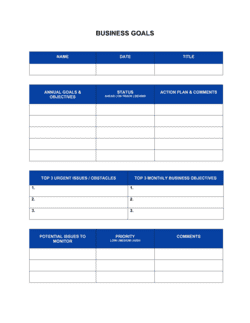
Part of your Business Operating System

This document is one of 3,000+ business & legal templates included in Business in a Box.

  • Fill-in-the-blanks β€” ready in minutes
  • 100% customizable Word document
  • Compatible with all office suites
  • Export to PDF and share electronically

Create your document in 3 simple steps.

From template to signed document β€” all inside one Business Operating System.
1
Download or open template

Access over 3,000+ business and legal templates for any business task, project or initiative.

2
Edit and fill in the blanks with AI

Customize your ready-made business document template and save it in the cloud.

3
Save, Share, Send, Sign

Share your files and folders with your team. Create a space of seamless collaboration.

Save time, save money, and create top-quality documents.

β˜…β˜…β˜…β˜…β˜…

"Fantastic value! I'm not sure how I'd do without it. It's worth its weight in gold and paid back for itself many times."

Managing Director Β· Mall Farm
Robert Whalley
Managing Director, Mall Farm Proprietary Limited
β˜…β˜…β˜…β˜…β˜…

"I have been using Business in a Box for years. It has been the most useful source of templates I have encountered. I recommend it to anyone."

Business Owner Β· 4+ years
Dr Michael John Freestone
Business Owner
β˜…β˜…β˜…β˜…β˜…

"It has been a life saver so many times I have lost count. Business in a Box has saved me so much time and as you know, time is money."

Owner Β· Upstate Web
David G. Moore Jr.
Owner, Upstate Web

Run your business with a system β€” not scattered tools

Stop downloading documents. Start operating with clarity. Business in a Box gives you the Business Operating System used by over 250,000 companies worldwide to structure, run, and grow their business.

Start freeΒ Β·Β No credit card required