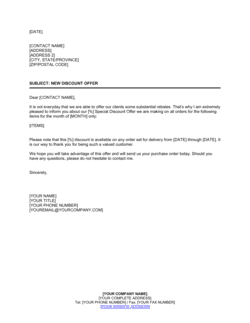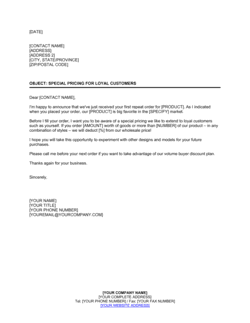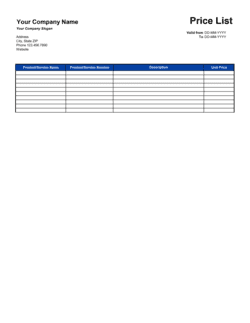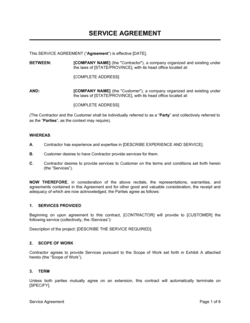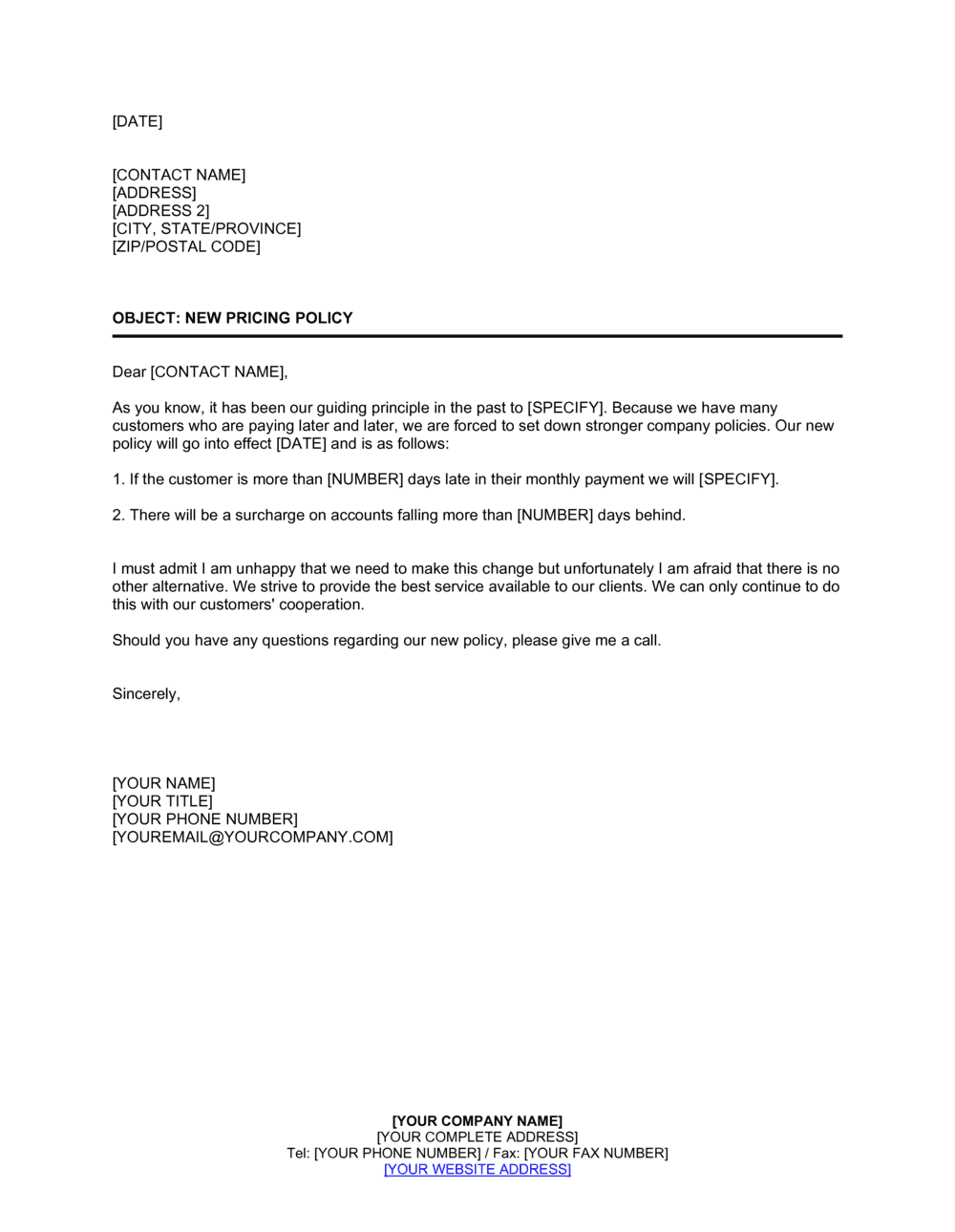
Announcement of New Pricing Policy Template

Free Word download β€’ Edit online β€’ Save & share with Drive β€’ Export to PDF

1 pageβ€’15–20 min to fillβ€’Difficulty: Standard
Learn more ↓
FreeAnnouncement of New Pricing Policy Template

At a glance

What it is
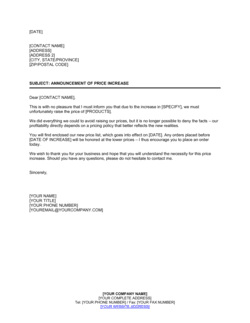
An Announcement of New Pricing Policy is a formal business letter sent to customers, clients, or partners to communicate upcoming changes to prices, fee structures, or rate schedules. This free Word download gives you a ready-to-edit template you can customize with your new rates, effective date, and rationale, then export as PDF and distribute in minutes.
When you need it
Use it whenever you are raising prices, restructuring your fee model, introducing new service tiers, or eliminating legacy rates β€” and need to give customers advance written notice in a professional, consistent format.
What's inside
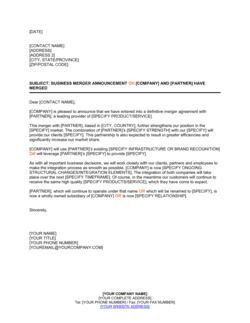
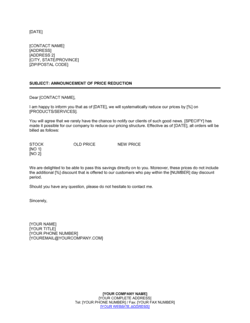
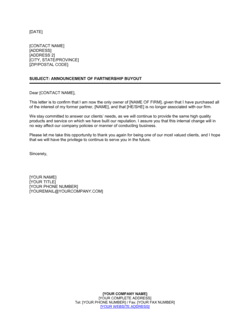
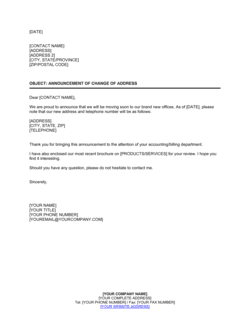
A formal salutation and opening statement, a clear explanation of the pricing change and its effective date, a brief rationale for the change, a summary of next steps or actions required from the recipient, and a professional closing with contact details for questions.

What is an Announcement of New Pricing Policy?

An Announcement of New Pricing Policy is a formal business letter a company sends to existing customers, clients, or trade partners to communicate an upcoming change to its prices, rates, or fee structure. It states what is changing, when the new pricing takes effect, and β€” critically β€” why the change is being made, giving recipients enough information to adjust their budgets, review their contracts, or reach out with questions before the effective date. Unlike a revised quote or a contract amendment, a pricing announcement is a unilateral notice that documents the sender's compliance with advance-notice obligations while preserving the business relationship through transparent, professional communication.

Why You Need This Document

Changing prices without formal written notice is one of the fastest ways to damage customer relationships and expose your business to invoice disputes. Customers who receive no advance notice β€” or a vague email that buries the key details β€” are more likely to dispute charges at the new rate, escalate to management, or cancel without warning. A clearly formatted announcement letter with a specific effective date, a before-and-after price comparison, and a named contact for questions gives customers what they need to respond constructively rather than reactively. It also creates a dated, documented record that you fulfilled any notice obligations in your service agreements β€” essential evidence if a customer later claims the change was not communicated. This template gives you a professional, ready-to-send structure that takes under 30 minutes to complete and protects the customer relationships you have worked to build.

Which variant fits your situation?

If your situation is…Use this template
Raising prices across all products or servicesAnnouncement of New Pricing Policy
Notifying a specific client that their contract rate is changing at renewalContract Renewal Letter with Updated Terms
Communicating a discount or promotional pricing periodSales Promotion Announcement Letter
Introducing a new tiered or subscription pricing modelNew Product or Service Announcement Letter
Informing customers of a late-payment fee policyLate Payment Policy Notice
Adjusting prices due to a supplier cost increasePrice Adjustment Letter (Cost Increase Justification)
Announcing an end-of-life legacy pricing planService Discontinuation Notice

Common mistakes to avoid

❌ Giving insufficient advance notice

Why it matters: Customers who receive less than 30 days' notice of a price change have less time to adjust budgets, seek alternatives, or renegotiate β€” and are more likely to churn or dispute invoices at the new rate.

Fix: Send the announcement at least 30 days before the effective date; 60 days is standard for subscription or contract customers and is often required by the underlying service agreement.
❌ Omitting the old price from the change summary

Why it matters: Without the current rate for comparison, customers cannot immediately assess the impact and must dig through past invoices β€” creating unnecessary friction and support volume.

Fix: Always show the before-and-after: 'The rate for [SERVICE] will increase from $[X] to $[Y] effective [DATE].' One line eliminates most downstream questions.

❌ Using vague rationale language

Why it matters: Phrases like 'due to market conditions' or 'in light of recent changes' read as evasive and erode customer trust, making them more likely to question the increase or leave.

Fix: Name the specific cost driver β€” 'a 12% increase in raw material costs since January' or 'expanded 24/7 support coverage' β€” and customers will understand and accept the change far more readily.

❌ Failing to state whether customer action is required

Why it matters: Ambiguity about whether a customer needs to sign, reply, or opt out generates inbound support inquiries at scale and delays your ability to confirm acceptance.

Fix: Include a single, clear sentence: either 'No action is required to continue service at the new rate' or 'Please sign and return the attached acknowledgment by [DATE].'

The 8 key clauses, explained

Letterhead and date

In plain language: Your company name, address, and the date the letter is issued β€” establishes the sender's identity and creates a dated record of the notice.

Sample language
[COMPANY NAME] | [ADDRESS] | [CITY, STATE, ZIP] | [DATE]

Common mistake: Using a generic template date or leaving the date blank β€” recipients use the issue date to calculate their advance notice period, and an incorrect date can trigger disputes.

Recipient address block

In plain language: The customer's or client's name, title, company, and mailing address β€” personalizes the notice and confirms it was directed to the correct party.

Sample language
[RECIPIENT NAME] | [TITLE] | [COMPANY NAME] | [ADDRESS]

Common mistake: Addressing letters to 'Valued Customer' instead of the individual contact. Impersonal salutations reduce the letter's impact and make escalation harder to manage.

Subject line

In plain language: A one-line header that immediately tells the reader what the letter is about, so the message is not overlooked or deprioritized.

Sample language
Subject: Notice of Updated Pricing Policy β€” Effective [DATE]

Common mistake: Omitting the subject line or using a vague heading like 'Important Update.' A specific subject line ensures the letter is routed to the right decision-maker without delay.

Opening statement

In plain language: A direct first paragraph that states the purpose of the letter β€” that pricing is changing β€” without burying the key information in pleasantries.

Sample language
We are writing to inform you that [COMPANY NAME] will be updating its pricing schedule for [PRODUCTS / SERVICES] effective [DATE].

Common mistake: Opening with three sentences of relationship-building before stating the purpose. Recipients scan for the point; delaying it creates confusion and erodes trust.

Summary of changes

In plain language: A clear description of what is changing β€” old rate versus new rate, which products or services are affected, and the magnitude of the increase or restructuring.

Sample language
Effective [DATE], the price for [SERVICE / PRODUCT] will increase from $[OLD PRICE] to $[NEW PRICE] per [UNIT / MONTH / PROJECT]. All other terms and conditions of your current agreement remain unchanged.

Common mistake: Stating only the new price without referencing the old price. Recipients cannot assess the impact without the comparison, and the omission reads as evasive.

Rationale for the change

In plain language: A brief, honest explanation of why prices are changing β€” input costs, operational investments, market adjustments, or expanded service scope β€” to preserve the business relationship.

Sample language
This adjustment reflects increased [MATERIAL / LABOR / OPERATIONAL] costs of [X]% over the past [PERIOD], as well as our continued investment in [SPECIFIC IMPROVEMENT OR SERVICE ENHANCEMENT].

Common mistake: Skipping the rationale entirely or using vague language like 'due to current market conditions.' A specific, credible reason reduces customer friction and churn significantly.

Next steps or required actions

In plain language: Instructions for what the recipient should do β€” accept the new terms, contact a representative, renew their agreement, or exercise an opt-out β€” with a clear deadline.

Sample language
No action is required to continue service at the new rate. If you have questions or would like to discuss your account, please contact [NAME] at [EMAIL / PHONE] by [DATE].

Common mistake: Failing to state whether any action is required. Customers left uncertain about whether they need to respond, sign, or opt out often contact support in volume, creating unnecessary service load.

Closing and signature block

In plain language: A professional closing that thanks the recipient for their continued business, followed by the sender's name, title, and direct contact information.

Sample language
We value your continued partnership and appreciate your understanding. Sincerely, [SENDER NAME] | [TITLE] | [COMPANY NAME] | [EMAIL] | [PHONE]

Common mistake: Closing with no contact name or direct phone number. Customers who cannot easily reach a person to ask questions are more likely to escalate, cancel, or dispute the change.

How to fill it out

  1. 1

    Enter your company letterhead and the issue date

    Add your company name, address, and the date you are sending the letter. The issue date anchors the advance notice period, so use the date the letter is distributed β€” not drafted.

    πŸ’‘ If sending by email, match the letter's issue date to the email send date to avoid discrepancies in the notice record.

  2. 2

    Personalize the recipient address block

    Enter the individual contact's name, title, company, and mailing or email address. Personalization reduces opt-out rates and makes follow-up easier.

    πŸ’‘ For bulk sends, use mail merge to personalize at scale rather than sending a generic 'Dear Customer' version.

  3. 3

    Write a specific subject line with the effective date

    Include the effective date directly in the subject line so recipients can immediately assess urgency and route the letter to the right person.

    πŸ’‘ Subject lines with a specific date in them have higher open rates than generic 'Important Notice' headers in email delivery.

  4. 4

    State the pricing change clearly in the opening paragraph

    Lead with the change, not the rationale. One or two sentences are enough: what is changing, what products or services are affected, and when it takes effect.

    πŸ’‘ If multiple price points are changing, attach a rate schedule as an exhibit rather than listing every change in the letter body.

  5. 5

    Provide a credible, specific rationale

    Include one to two sentences explaining why pricing is changing. Reference specific cost drivers β€” inflation, supplier increases, platform investments β€” rather than generic market language.

    πŸ’‘ Customers are more accepting of price increases framed around concrete cost inputs than around profit targets or 'business needs.'

  6. 6

    Specify required actions and the response deadline

    Tell the recipient exactly what they need to do β€” or confirm that no action is needed. Include a named contact with a direct email and phone number for questions.

    πŸ’‘ Setting a response deadline (e.g., 'please reach out by [DATE] if you have questions') reduces indefinite back-and-forth and helps you forecast customer retention impact.

  7. 7

    Review, export as PDF, and distribute

    Proofread for consistency between dates, prices, and product names. Export as PDF to lock formatting, then send by email or post with your preferred delivery confirmation.

    πŸ’‘ Keep a dated copy of the final letter on file for each customer. If a pricing dispute arises later, the timestamped notice is your primary evidence of adequate advance communication.

Frequently asked questions

What is a pricing policy announcement letter?

A pricing policy announcement letter is a formal written notice a business sends to customers, clients, or trade partners to communicate an upcoming change to its prices, rates, or fee structure. It states the new pricing, the effective date, and typically a brief explanation of the reason for the change. It creates a documented record that advance notice was given and helps maintain trust throughout the transition.

How much advance notice should I give for a price increase?

Thirty days is generally the minimum for consumer-facing businesses. For B2B, subscription, or contract customers, 60 days is the widely accepted standard and is often required by the terms of the existing service agreement. Some regulated industries require 90 days or more. Check your current customer contracts before setting the effective date to ensure the notice period satisfies any contractual obligations.

Do I need to explain why prices are increasing?

You are not legally required to provide a rationale in most cases, but doing so significantly reduces churn. Customers who understand the reason for a price change β€” cost increases, expanded service scope, inflation β€” accept it at a much higher rate than those who receive no explanation. One to two sentences citing a specific cost driver is enough; vague language does more harm than saying nothing at all.

Can customers cancel if they don't accept the new pricing?

That depends on the terms of their existing contract or service agreement. Many agreements include a clause allowing customers to terminate without penalty if pricing changes materially. Check the relevant contract before sending the notice, and state clearly in the letter what the customer's options are if they choose not to accept the new terms β€” including any cancellation window or opt-out process.

Should I send a pricing announcement by email or physical letter?

Email is standard for most B2B and subscription businesses and provides a timestamped delivery record. Physical mail is appropriate when the customer contract specifies written notice by post, when the relationship is formal or high-value, or when email delivery cannot be confirmed. For material changes, using both channels is a low-cost way to ensure no customer claims they did not receive notice.

What if I'm raising prices for only some customers?

Send personalized letters to each affected customer segment or account rather than a blanket announcement. Clearly state that the change applies to their specific account, product, or plan, and avoid language that implies other customers are receiving different terms β€” this can create tension in B2B relationships where contacts compare notes.

How do I handle customers who push back on the price increase?

Designate a specific contact in the letter for questions or concerns and empower that person to discuss account-specific options β€” a phased implementation, a short-term discount, or a contract adjustment. Having a clear escalation path in the letter itself reduces unstructured complaints and gives your team a framework to respond consistently without making ad hoc exceptions that erode the policy.

Does a pricing announcement letter need to be signed?

A standard announcement letter does not require a signature to be effective as a notice. However, if you want formal acknowledgment that the customer received and accepted the new terms, attach a one-page acknowledgment form for them to sign and return, or include a reply-by date asking them to confirm via email. Signed acknowledgments are particularly useful when the pricing change is large or when the customer contract requires mutual agreement to modify rates.

How this compares to alternatives

vs Price Quotation

A price quotation offers specific pricing to a single prospect for a defined scope of work β€” it is not a policy document. An announcement of new pricing policy communicates a change to your standard rates across an existing customer base. Use a quotation when closing a new deal; use the announcement letter when updating ongoing relationships.

vs Sales Proposal

A sales proposal is designed to win new business by presenting a solution and its pricing to a prospective customer. A pricing policy announcement addresses existing customers about changes to rates they already agreed to. The two documents serve opposite directions of the customer lifecycle β€” acquisition versus retention.

vs Service Agreement

A service agreement sets out the full terms of an ongoing relationship, including pricing, at the point of signing. A pricing announcement is a standalone notice used to update those terms mid-relationship. If the price change requires a formal contract amendment, the announcement letter should reference the amendment document and direct the customer to sign it.

vs Contract Amendment

A contract amendment formally modifies a specific clause β€” such as pricing β€” in an existing signed agreement and requires both parties to sign. A pricing announcement is a unilateral notice that communicates the change without requiring a new signature, and is appropriate when the original agreement permits the sender to update pricing with advance written notice.

Industry-specific considerations

SaaS and Software

Plan restructuring, per-seat rate increases, and end-of-life legacy pricing tiers communicated to active subscribers with a defined migration path and opt-out window.

Professional Services

Annual billing rate updates for legal, accounting, or consulting firms, typically sent 60 days before a new fiscal year or contract renewal date.

Retail and Wholesale

Catalogue price list updates sent to trade partners and distributors ahead of a new season or supplier cost adjustment, often accompanied by an updated rate schedule exhibit.

Construction and Trades

Labor rate and materials surcharge adjustments communicated to ongoing project clients, with new rates tied to a specific project phase or contract renewal milestone.

Template vs pro β€” what fits your needs?

PathBest forCostTime
Use the templateSmall businesses, freelancers, and subscription companies communicating standard rate increases to customersFree15–30 minutes per letter
Template + professional reviewCompanies with high-value contracts where the price change could trigger early termination clauses or legal disputes$150–$400 (legal or contract review)1–2 business days
Custom draftedEnterprises with complex pricing structures, regulated pricing requirements, or simultaneous policy rollouts to thousands of customers$500–$2,000+ (legal counsel or communications specialist)3–7 business days

Glossary

Effective Date
The specific calendar date on which the new pricing takes effect β€” the date recipients should use for planning and budgeting purposes.
Advance Notice Period
The lead time given before a price change takes effect, typically 30, 60, or 90 days, allowing customers time to adjust budgets or make purchasing decisions.
Legacy Rate
A pricing level previously offered to existing customers that is being phased out in favor of new standard pricing.
Rate Schedule
A formal listing of prices for specific products, services, or tiers, often attached as an exhibit to the announcement letter.
Cost Pass-Through
A pricing adjustment that passes increased input costs β€” materials, labor, or supplier prices β€” directly to customers, with the underlying cost driver cited as justification.
Grandfathered Pricing
An arrangement where existing customers retain their current rate for a defined period even after new pricing takes effect for new customers.
Opt-Out Clause
A provision in a service or subscription agreement that allows the customer to cancel without penalty if they do not accept the new pricing terms.
Price Increase Justification
The stated reason for a price change β€” such as inflation, increased input costs, expanded service scope, or market realignment β€” included in the letter to preserve goodwill.

Part of your Business Operating System

This document is one of 3,000+ business & legal templates included in Business in a Box.

  • Fill-in-the-blanks β€” ready in minutes
  • 100% customizable Word document
  • Compatible with all office suites
  • Export to PDF and share electronically

Create your document in 3 simple steps.

From template to signed document β€” all inside one Business Operating System.
1
Download or open template

Access over 3,000+ business and legal templates for any business task, project or initiative.

2
Edit and fill in the blanks with AI

Customize your ready-made business document template and save it in the cloud.

3
Save, Share, Send, Sign

Share your files and folders with your team. Create a space of seamless collaboration.

Save time, save money, and create top-quality documents.

β˜…β˜…β˜…β˜…β˜…

"Fantastic value! I'm not sure how I'd do without it. It's worth its weight in gold and paid back for itself many times."

Managing Director Β· Mall Farm
Robert Whalley
Managing Director, Mall Farm Proprietary Limited
β˜…β˜…β˜…β˜…β˜…

"I have been using Business in a Box for years. It has been the most useful source of templates I have encountered. I recommend it to anyone."

Business Owner Β· 4+ years
Dr Michael John Freestone
Business Owner
β˜…β˜…β˜…β˜…β˜…

"It has been a life saver so many times I have lost count. Business in a Box has saved me so much time and as you know, time is money."

Owner Β· Upstate Web
David G. Moore Jr.
Owner, Upstate Web

Run your business with a system β€” not scattered tools

Stop downloading documents. Start operating with clarity. Business in a Box gives you the Business Operating System used by over 250,000 companies worldwide to structure, run, and grow their business.

Start freeΒ Β·Β No credit card required