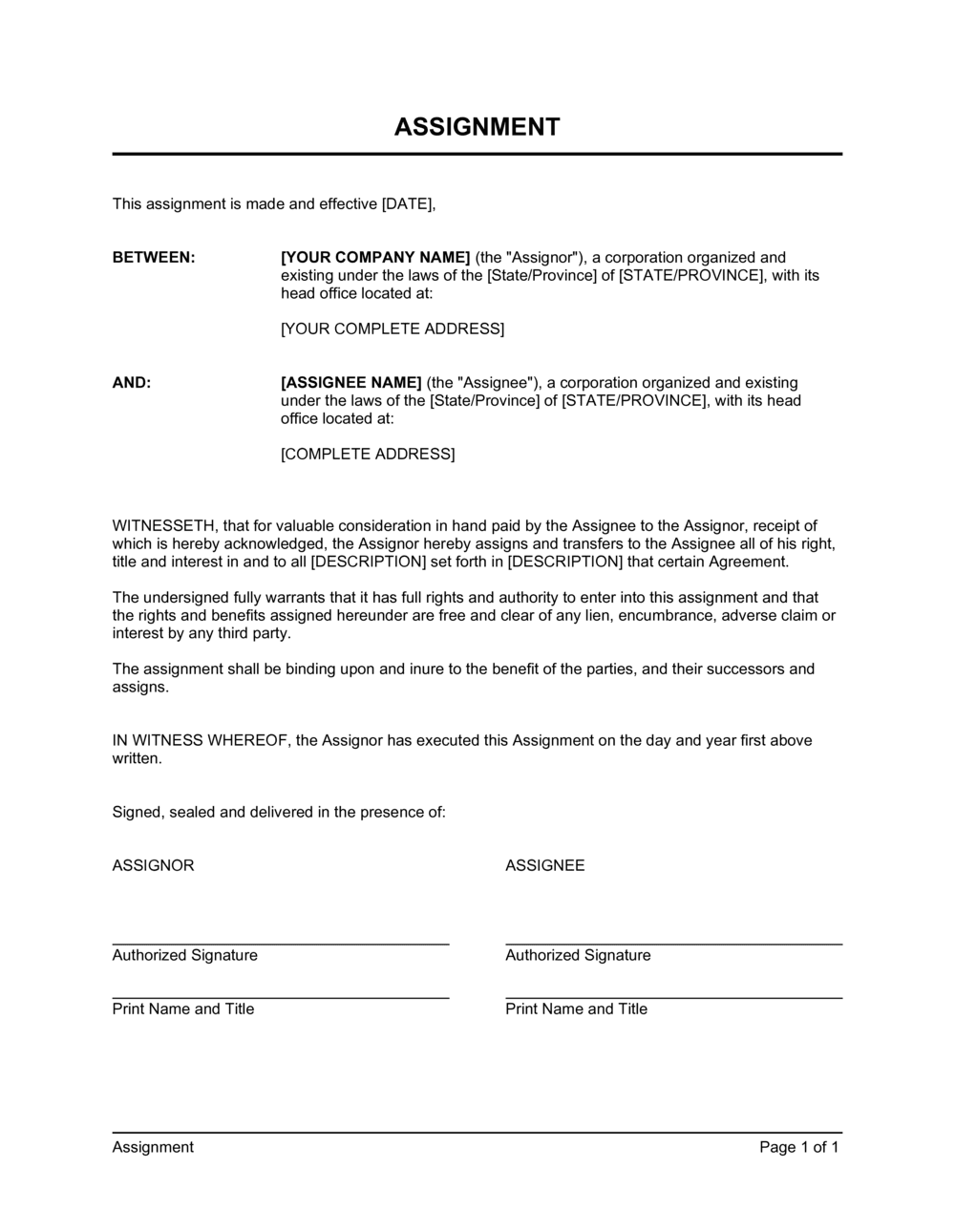
- Assignor
- The party who currently holds the rights, interests, or obligations and is transferring them to someone else.
- Assignee
- The party receiving the transferred rights, interests, or obligations under the assignment.
- Obligor
- The third party who owes a duty or obligation under the original agreement being assigned — for example, the other contracting party whose consent may be required.
- Anti-Assignment Clause
- A provision in the original contract that restricts or prohibits one party from transferring their rights or obligations without the other party's prior written consent.
- Novation
- A three-party agreement that replaces one contracting party with a new one, releasing the original party from all obligations — distinct from assignment, where the assignor may remain liable.
- Consideration
- The value exchanged between the assignor and assignee to make the assignment legally binding — may be a monetary payment, a service, or nominal consideration such as one dollar.
- Privity of Contract
- The legal principle that only the original parties to a contract have rights and obligations under it — assignment creates a limited exception by allowing the assignee to enforce certain rights.
- Residual Liability
- The ongoing liability an assignor may retain for obligations under the original contract even after assigning their interest, unless the obligor has released the assignor.
- Notice of Assignment
- Formal written notice sent to the obligor informing them that the assignor's rights have been transferred to the assignee and directing future performance to the assignee.
- Chose in Action
- A personal right to sue or claim something — such as a debt or contractual right — that can be assigned to another party who then steps into the shoes of the original right-holder.
- Partial Assignment
- An assignment that transfers only a portion of the assignor's rights or interests, rather than the entire bundle, with the assignor retaining the remainder.