Model and Talent Agency Business Plan Template

Free Word download β€’ Edit online β€’ Save & share with Drive β€’ Export to PDF

39 pagesβ€’3h 5m – 4h 15m to fillβ€’Difficulty: Expert
Learn more ↓
FreeModel and Talent Agency Business Plan Template

At a glance

What it is
A Model and Talent Agency Business Plan is a structured operational document that maps the strategy, roster model, revenue mechanics, and financial projections for launching or growing a talent representation business. This free Word download gives you a professionally formatted, editable starting point you can customize and export as PDF to share with investors, lenders, or business partners.
When you need it
Use it when launching a new modeling or talent agency, applying for a business loan, seeking investors, or formalizing operations for an existing agency that has been running informally.
What's inside
Executive summary, agency overview and mission, market and industry analysis, talent roster and service offerings, marketing and client acquisition strategy, operations and booking workflow, management team, and three-year financial projections including commission revenue model and startup cost breakdown.

What is a Model and Talent Agency Business Plan?

A Model and Talent Agency Business Plan is a structured operational document that defines the strategic, operational, and financial framework for launching or scaling a talent representation business. It covers the agency's niche, target roster, commission revenue model, client acquisition strategy, booking workflow, and 3-year financial projections β€” giving founders, lenders, and investors a single source of truth about how the business works and how it will grow. Unlike a general business plan, this template is built around the specific mechanics of talent representation: commission structures by category, receivables gaps between client invoicing and talent payment, scouting and onboarding timelines, and the seasonal booking cycles that drive agency cash flow.

Why You Need This Document

Operating a talent agency without a written business plan means making expensive decisions β€” hiring staff, signing a lease, committing to technology platforms β€” without a cash flow model to tell you whether those decisions are affordable. Lenders require a formal plan for any business loan application, and investors will not advance capital without one. Beyond financing, the planning process itself forces you to confront two risks that end most new agencies before their second year: a roster that looks large but produces few bookable bookings, and a cash flow crisis caused by the gap between when clients pay invoices and when talent must be paid. A well-built business plan surfaces both problems before they cost real money, and this template gives you the structure to work through them systematically.

Which variant fits your situation?

If your situation is…Use this template
Launching a fashion and print modeling agencyModel And Talent Agency Business Plan
Starting a general entertainment talent management firmTalent Management Business Plan
Opening a performing arts or acting school with agency servicesPerforming Arts School Business Plan
Building a social media influencer management agencyDigital Marketing Agency Business Plan
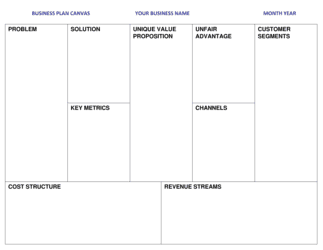
Quick one-page concept summary before writing the full planOne-Page Business Plan
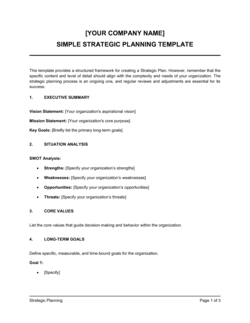
Aligning an existing agency's 3-year growth strategy internallyStrategic Planning Template
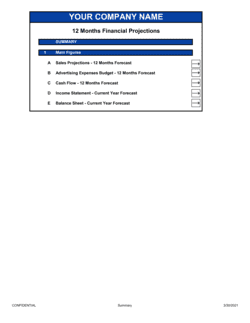
Projecting first-year commission and operating revenue in detail12-Month Financial Projections

Common mistakes to avoid

❌ Overstating the launch roster size

Why it matters: Projecting 40 bookable models at launch without a credible scouting and onboarding timeline signals that the founder hasn't modeled the actual effort required. Investors and lenders will discount the entire revenue model.

Fix: Build the roster plan from the bottom up: open castings scheduled, expected conversion rate from casting to signed talent, and onboarding time to first booking. Show the math.

❌ Ignoring the client invoice payment gap

Why it matters: Agencies typically invoice clients on Net 30–60 terms but must pay talent within days of job completion. A fast-growing agency can run out of cash even while generating strong revenue on paper.

Fix: Model monthly cash received separately from monthly revenue earned. Include a working capital reserve of at least 60 days of operating expenses in your startup funding request.

❌ No defined commission structure by talent category

Why it matters: Applying a single commission rate to all talent categories produces inaccurate revenue projections β€” fashion editorial, commercial print, and influencer bookings carry different market rates and negotiation norms.

Fix: Define the commission rate by category (e.g., 15% fashion, 20% commercial, 20% influencer) and model revenue separately for each category.

❌ Vague client acquisition strategy

Why it matters: Stating 'we will use social media and networking' without specific targets, budgets, or timelines gives investors no basis to evaluate whether the plan is executable.

Fix: Name the specific channels, the number of outreach contacts per month, the expected conversion rate to a paying account, and the budget allocated to each channel for the first 12 months.

❌ Missing the talent representation agreement reference

Why it matters: The business plan's operations section must acknowledge that every talent on the roster is under a signed contract β€” agencies that operate on handshake agreements face disputes over commissions, exclusivity, and poaching.

Fix: Reference your standard talent representation agreement in the operations section and note that all roster talent are contracted before being submitted to clients.

❌ Writing the executive summary first

Why it matters: An executive summary written before the financial model and market analysis is complete will contradict the numbers elsewhere in the plan, undermining credibility with every reader who checks the figures.

Fix: Complete every other section, including the full financial model, before writing the executive summary as a distillation of the finished plan.

The 9 key sections, explained

Executive Summary

Agency Overview and Mission

Market and Industry Analysis

Talent Roster and Service Offerings

Marketing and Client Acquisition Strategy

Operations and Booking Workflow

Management Team and Staffing Plan

Financial Projections

Funding Requirements and Use of Funds

How to fill it out

  1. 1

    Define your agency's niche and talent categories

    Before writing anything else, decide whether you are a boutique fashion agency, a commercial and print agency, a full-service entertainment agency, or a niche category specialist. Your niche determines your client target list, commission structure, and roster strategy.

    πŸ’‘ Boutique agencies focused on one or two talent categories consistently outperform generalist agencies in their first three years β€” specialization makes client pitches and talent scouting far more efficient.

  2. 2

    Research your local market and size the client base

    Identify the ad agencies, production companies, e-commerce brands, and casting directors in your target geography who regularly book talent. Count them and estimate their average annual talent spend to build a bottom-up revenue model.

    πŸ’‘ LinkedIn Sales Navigator and local ad-industry directories are faster for client prospecting than generic market research reports β€” and the output directly feeds your financial model.

  3. 3

    Build the talent roster and onboarding plan

    Define your target roster size at Month 1, Month 6, and Month 12. Specify how you will source talent β€” open castings, social media scouting, referrals β€” and what each talent needs before they are bookable: comp card, digitals, measurements on file, and a signed representation agreement.

    πŸ’‘ Plan for 30–50% of signed talent to be inactive in any given month β€” bookable roster size is always smaller than total signed talent.

  4. 4

    Model the commission revenue and cash flow

    Estimate monthly bookings by talent category, multiply by average day rate for that category, and apply your commission percentage. Then layer in a 45–60 day collection delay to model actual cash received versus revenue earned.

    πŸ’‘ Build a separate tab showing the receivables aging β€” when your receivables balance grows faster than your cash balance, you will need a line of credit or factoring facility before you run dry.

  5. 5

    Outline the booking operations workflow

    Map every step from client brief to talent payment: submission turnaround time, contract templates used, invoicing timeline, and payment terms offered to clients versus payment terms promised to talent.

    πŸ’‘ Standardizing your client invoice terms at Net 30 while paying talent within 7 days of receipt creates a predictable 3–4 week float β€” model this explicitly in your cash flow statement.

  6. 6

    Complete the management team and staffing section

    List each founder and staff member with their most relevant industry achievement and the specific agency function they own. Add a hiring milestone table tied to revenue triggers rather than calendar dates.

    πŸ’‘ Tie your first hire to a specific revenue or roster threshold β€” 'hire booking coordinator when monthly commission exceeds $[X]' is more credible than a fixed calendar date.

  7. 7

    Calculate startup costs and funding requirements

    List every cost required before you can book your first job: legal registration, website, booking software, office or studio space, marketing materials, and 3 months of operating expenses as a working capital reserve.

    πŸ’‘ Add 20% to your total estimated startup costs as a contingency before stating your funding ask β€” first-year cost overruns are the norm, not the exception, in service businesses.

  8. 8

    Write the executive summary last

    Pull the single most compelling data point from each completed section β€” market opportunity, Year 1 revenue projection, roster target, and funding ask β€” and compress them into one to two pages.

    πŸ’‘ If a lender or investor reads only the executive summary and the financial projections, they should be able to evaluate the opportunity without opening any other section.


Frequently asked questions

What is a model and talent agency business plan?

A model and talent agency business plan is a structured document that defines the agency's niche, target market, talent roster strategy, booking operations, commission revenue model, management team, and 3-year financial projections. It functions as both an internal operating roadmap and an external document for securing business loans, attracting investors, or applying for agency licenses in regulated markets.

What sections should a talent agency business plan include?

A complete plan covers nine core areas: executive summary, agency overview and mission, market and industry analysis, talent roster and service offerings, marketing and client acquisition strategy, booking operations workflow, management team and staffing plan, financial projections, and funding requirements with a use-of-funds breakdown. The financial section should include a commission revenue model, monthly cash flow for Year 1, and a break-even booking volume calculation.

How do modeling and talent agencies make money?

Agencies earn a commission on every booking β€” typically 10–20% of the talent's fee, deducted before the talent is paid. Some agencies charge clients a separate agency fee on top of the talent rate. Ancillary revenue sources include comp card production, portfolio development, coaching services, and workshop fees. Commission rates and structures vary by talent category, market, and agency tier.

Do I need a license to open a talent agency?

Licensing requirements vary by jurisdiction. In California, talent agencies must be licensed under the Talent Agencies Act. New York regulates employment agencies broadly. Other states and countries have their own requirements. Your business plan should acknowledge the applicable licensing obligations in your operating jurisdiction and include the associated costs in your startup budget.

How many talent should I plan to represent at launch?

A realistic boutique agency launch roster is 10–20 actively bookable talent in Month 1, growing to 30–50 by Month 12. Plan for 30–50% of signed talent to be inactive in any given month β€” on assignment elsewhere, between markets, or in development. Projecting a large roster without modeling scouting capacity and onboarding time will make your financial projections look unrealistic.

What financial projections should a talent agency business plan include?

At minimum: monthly commission revenue by talent category for Year 1, annual revenue for Years 2–3, a monthly operating expense schedule, cash flow statement showing the receivables collection gap, break-even booking volume, and total startup cost with a use-of-funds breakdown. A sensitivity table showing 70% of projected booking volume is useful for lenders who will stress-test the downside.

How long does it take to write a talent agency business plan?

Plan for 20–40 hours over 2–3 weeks for a first-time founder using a template. The financial model β€” commission projections, cash flow, and startup costs β€” typically takes 6–10 hours on its own. Using a structured template cuts layout and formatting time significantly, leaving most of your effort for market research and financial modeling.

Can I use this business plan to apply for an SBA loan?

Yes. SBA lenders require a formal business plan for most loan applications, including the 7(a) and Microloan programs. The plan must include a complete financial section with P&L projections, a cash flow statement, a startup cost schedule, and a clear use-of-funds breakdown. A talent agency business plan template covers all of these sections and can be customized with your specific numbers.

What makes a talent agency business plan credible to investors?

Four things most reliably build credibility: a bottom-up roster and booking volume model rather than percentage-of-market estimates, a cash flow model that accounts for the receivables gap between invoicing clients and paying talent, specific named client targets rather than generic market descriptions, and a management team section with at least one founder who has direct industry experience in talent representation, casting, or agency operations.

How this compares to alternatives

vs One-Page Business Plan

A one-page plan is a rapid-alignment tool useful for testing the agency concept internally or presenting a high-level summary to an early-stage advisor. It lacks the financial depth, operations detail, and market evidence required by lenders or investors. Use the one-page version to validate your concept before building the full plan.

vs Strategic Planning Template

A strategic plan focuses on goals, initiatives, and KPIs for an existing operating business over a 3–5 year horizon. A business plan adds the external-facing elements β€” market sizing, competitive analysis, and capital structure β€” needed for funding applications. An established agency typically needs both: the business plan for financing and the strategic plan for internal alignment.

vs 12-Month Financial Projections

A standalone financial projection covers the numbers only β€” revenue, expenses, and cash flow β€” without the market context, competitive positioning, or operational narrative that a business plan provides. Lenders and investors never evaluate financial projections in isolation; the business plan is the document that makes those numbers credible.

vs Marketing Plan

A marketing plan details the tactics, channels, and budget for client and talent acquisition but does not include operations, financial projections, or the agency's overall business model. The marketing plan is a single chapter of the business plan, useful as a standalone document for briefing a marketing hire or agency but insufficient for capital-raising purposes.

Industry-specific considerations

Fashion and Modeling

Segmented commission rates for editorial, runway, and commercial print; seasonal booking cycles tied to fashion weeks and catalog production schedules.

Entertainment and Media

Acting talent representation requires union affiliation tracking (SAG-AFTRA, ACTRA) and residual payment structures not present in modeling contracts.

Digital and Influencer Marketing

Influencer talent agencies model revenue on campaign fees and long-term brand partnership commissions rather than day-rate bookings, requiring a different financial model structure.

Commercial and Advertising

Usage rights fees and buyouts represent significant additional revenue beyond the day rate β€” commercial agencies must model usage revenue as a separate income stream.

Template vs pro β€” what fits your needs?

PathBest forCostTime
Use the templateFounders launching a boutique agency, applying for a small business loan under $150K, or completing an internal operating planFree2–3 weeks (20–40 hours)
Template + professional reviewAgencies seeking $150K–$500K in financing or presenting to angel investors for the first time$500–$2,000 for a financial model review or business advisor session3–4 weeks
Custom draftedMulti-city agency launches, institutional investment rounds, or markets with complex talent licensing requirements$3,000–$8,000 for a professional business plan writer with entertainment industry experience4–6 weeks

Glossary

Commission Rate
The percentage of a talent's booking fee that the agency retains as its primary revenue β€” typically 10–20% depending on the market and contract type.
Talent Roster
The agency's active pool of represented models or performers available for client bookings, each under a signed representation agreement.
Mother Agency
The original agency that discovers and develops a talent, retaining a share of commissions even after the talent signs with a larger agency in a different market.
Booking Fee
The total amount a client pays for a talent's services for a specific job, from which the agency deducts its commission before remitting the balance to the talent.
Go-See
An audition or casting appointment where a model or talent meets a client or casting director to be considered for a specific project.
Exclusivity Clause
A contract provision requiring a talent to work exclusively through the agency within a defined category or geographic market for the contract term.
Day Rate
The standard fee charged to clients for a full day's use of a model or talent, typically 8 hours, before agency commission and expenses.
Usage Rights
The scope and duration for which a client may use images or content featuring a talent β€” additional fees typically apply for extended or broader usage.
Scout
A person employed or contracted by the agency to identify and recruit new talent from open castings, social media, or public venues.
Comp Card
A model's personal marketing card β€” typically 5Γ—7 inches β€” featuring professional photos, measurements, and agency contact details used at castings.

Part of your Business Operating System

This document is one of 3,000+ business & legal templates included in Business in a Box.

  • Fill-in-the-blanks β€” ready in minutes
  • 100% customizable Word document
  • Compatible with all office suites
  • Export to PDF and share electronically

Create your document in 3 simple steps.

From template to signed document β€” all inside one Business Operating System.
1
Download or open template

Access over 3,000+ business and legal templates for any business task, project or initiative.

2
Edit and fill in the blanks with AI

Customize your ready-made business document template and save it in the cloud.

3
Save, Share, Send, Sign

Share your files and folders with your team. Create a space of seamless collaboration.

Save time, save money, and create top-quality documents.

β˜…β˜…β˜…β˜…β˜…

"Fantastic value! I'm not sure how I'd do without it. It's worth its weight in gold and paid back for itself many times."

Managing Director Β· Mall Farm
Robert Whalley
Managing Director, Mall Farm Proprietary Limited
β˜…β˜…β˜…β˜…β˜…

"I have been using Business in a Box for years. It has been the most useful source of templates I have encountered. I recommend it to anyone."

Business Owner Β· 4+ years
Dr Michael John Freestone
Business Owner
β˜…β˜…β˜…β˜…β˜…

"It has been a life saver so many times I have lost count. Business in a Box has saved me so much time and as you know, time is money."

Owner Β· Upstate Web
David G. Moore Jr.
Owner, Upstate Web

Run your business with a system β€” not scattered tools

Stop downloading documents. Start operating with clarity. Business in a Box gives you the Business Operating System used by over 250,000 companies worldwide to structure, run, and grow their business.

Free Forever PlanΒ Β·Β No credit card required