Market Survey B2B Template

Free Word download β€’ Edit online β€’ Save & share with Drive β€’ Export to PDF

3 pagesβ€’25–30 min to fillβ€’Difficulty: Standardβ€’Signature requiredβ€’Legal review recommended
Learn more ↓
FreeMarket Survey B2B Template

At a glance

What it is
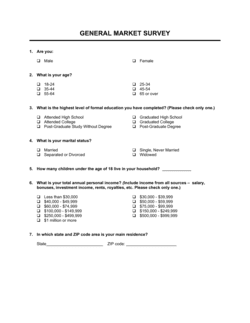
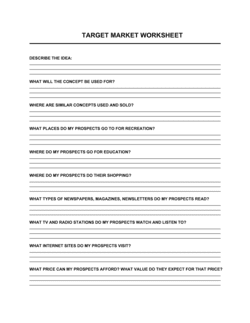
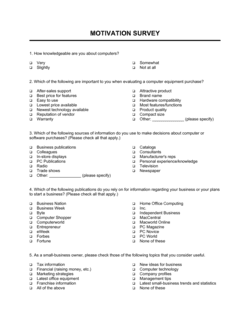
A Market Survey B2B is a structured legal document used by one business to collect competitive, pricing, procurement, or buyer-preference data from another business respondent under defined consent and confidentiality terms. This free Word download gives you an editable, professionally formatted survey instrument you can customize and export as PDF for distribution to business contacts, vendors, prospects, or industry peers.
When you need it
Use it when you need to gather market intelligence from business counterparts β€” such as pricing benchmarks, purchasing criteria, supplier preferences, or industry trend data β€” in a way that documents respondent consent, protects shared information, and limits your liability for how responses are used. It is also required when commissioning a third-party research firm to conduct the survey on your behalf.
What's inside
Purpose and scope of the survey, respondent identification and consent, confidentiality and data-use restrictions, question types covering competitive landscape and procurement behavior, response handling and storage terms, third-party disclosure limitations, and governing law.

What is a Market Survey B2B?

A Market Survey B2B is a formal legal document that combines a structured business questionnaire with a binding agreement governing how respondent data is collected, used, and protected. Unlike a simple online form, a B2B market survey agreement establishes explicit respondent consent, defines the permitted scope of data use β€” typically limited to aggregated research output β€” imposes confidentiality obligations on both parties, and includes antitrust compliance provisions when competitive information such as pricing or market share data is involved. It is used by companies, consulting firms, and research organizations to gather competitive intelligence, benchmark industry metrics, or validate market assumptions from other businesses in a legally documented way.

Why You Need This Document

Conducting a B2B market survey without a formal agreement exposes your organization on three fronts simultaneously. First, collecting and publishing business data without documented consent creates regulatory liability under GDPR, PIPEDA, CCPA, and equivalent frameworks β€” regulators do not accept "they filled out the form" as valid consent for commercial use of sensitive business data. Second, a survey that touches pricing, capacity, or competitive positioning among industry peers can trigger antitrust scrutiny from the DOJ, FTC, European Commission, or Competition Bureau without explicit safe-harbor provisions built into the design. Third, without a signed confidentiality clause, respondents have no contractual protection against their proprietary figures appearing in a competitor's hands β€” and they will decline to participate or retract answers after the fact. This template closes all three gaps: it documents consent, restricts data use to the stated research purpose, establishes a defensible aggregation standard, and includes the antitrust and data-deletion language that legal teams at respondent companies require before approving participation.

Which variant fits your situation?

If your situation is…Use this template
Surveying individual consumers rather than businessesConsumer Market Survey
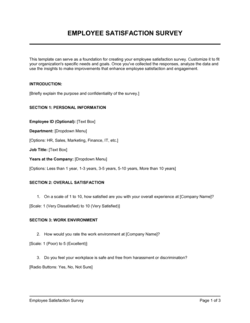
Gathering employee opinions on internal processes or cultureEmployee Satisfaction Survey
Collecting vendor pricing and qualification data for procurementSupplier Questionnaire
Conducting confidential one-on-one interviews with industry executivesNon-Disclosure Agreement (NDA)
Commissioning an external firm to conduct the survey on your behalfMarket Research Agreement
Running a post-purchase satisfaction survey with existing B2B clientsCustomer Satisfaction Survey
Benchmarking compensation and benefits data across industry peersCompensation Benchmarking Survey

Common mistakes to avoid

❌ Distributing the survey without a signed agreement

Why it matters: Without a signed agreement, the respondent's consent to data collection and your right to use responses commercially are undocumented. This creates GDPR, PIPEDA, and CCPA compliance exposure and makes confidentiality obligations unenforceable.

Fix: Require each respondent to sign or electronically acknowledge the survey agreement before accessing any questions. For digital surveys, embed the agreement as a mandatory consent step with a timestamp.

❌ No aggregation minimum on published data

Why it matters: A report based on three respondents can effectively identify each individual company's answers, turning a confidential survey into a de facto public disclosure of sensitive business data.

Fix: State a minimum aggregation threshold β€” at least five respondents per data point for general research, ten for pricing data β€” and commit to suppressing any data point that falls below it.

❌ Including current pricing questions without antitrust safeguards

Why it matters: Direct exchanges of current pricing data between competitors, even through a survey format, can be treated as unlawful information sharing under US, EU, and Canadian competition law β€” exposing both parties to regulatory investigation.

Fix: Use historical pricing ranges (prior fiscal year) rather than current figures, route data through a neutral third-party administrator, and include an explicit antitrust compliance clause.

❌ No withdrawal or data deletion clause

Why it matters: Respondents in GDPR-covered jurisdictions have a legal right to withdraw consent and request deletion regardless of contract terms. Without a documented process, you have no operational procedure to comply and face regulatory fines.

Fix: Include a withdrawal window of at least 14 days, a deletion timeline of 30 business days, and a named contact for withdrawal requests. Test the deletion procedure before distributing the survey.

❌ Vague data-use language that permits commercial exploitation

Why it matters: Clauses that allow the Surveyor to use data 'for any lawful business purpose' may permit selling response data to third parties β€” a use most B2B respondents would reject and some jurisdictions prohibit without explicit consent.

Fix: Limit data use to the specific research output named in the agreement (e.g., 'publication of an aggregated Market Intelligence Report') and prohibit all other commercial use without separate written consent.

❌ Authorizing an unauthorized employee to respond

Why it matters: Survey responses provided by someone without authority to bind their organization may be repudiated by that company β€” undermining the data's legal value and your ability to rely on it commercially.

Fix: Require the respondent's authorized representative to sign the agreement and include a representation of authority clause. For high-stakes surveys, request a copy of the signatory's title and role.

The 10 key clauses, explained

Parties and survey purpose

In plain language: Identifies the surveying organization and the respondent, and states the specific research objective the survey is designed to address.

Sample language
This Market Survey Agreement is entered into between [SURVEYING COMPANY NAME], a [STATE/COUNTRY] [ENTITY TYPE] ('Surveyor'), and [RESPONDENT COMPANY NAME], a [STATE/COUNTRY] [ENTITY TYPE] ('Respondent'). The purpose of this survey is to gather market data relating to [RESEARCH TOPIC] within the [INDUSTRY] sector.

Common mistake: Omitting the specific research purpose and relying on a vague 'market research' description. Vague purpose statements make it harder to limit data use and may expose both parties to broader obligations than intended.

Respondent consent and authorization

In plain language: Confirms that the respondent has authority to provide the requested information on behalf of their organization and consents to its use under the terms stated.

Sample language
Respondent represents that the individual completing this survey is duly authorized to provide the information herein on behalf of Respondent. By submitting this survey, Respondent consents to the collection and use of responses in accordance with this Agreement.

Common mistake: Collecting responses without confirming the respondent's authority to speak for their organization. Answers from an unauthorized employee may be repudiated by the company and create disputes over data reliability.

Confidentiality and data-use restrictions

In plain language: Specifies how the surveying party may use the data β€” typically limited to aggregated research output β€” and prohibits identifying individual respondents or sharing raw responses without consent.

Sample language
Surveyor shall use Respondent's data solely for the purpose stated in Section 1. Individual responses shall not be disclosed to any third party in a form that identifies Respondent. All published findings shall present data in aggregated form with a minimum pool of [X] respondents per data point.

Common mistake: No minimum aggregation threshold. Without one, a survey with only two respondents can effectively identify each respondent's individual answers in a published report.

Survey scope and question types

In plain language: Defines the categories of information being requested β€” pricing, procurement habits, market share estimates, technology use β€” and limits the survey to those categories.

Sample language
This survey covers the following categories: (a) annual procurement spend in [CATEGORY]; (b) vendor selection criteria; (c) satisfaction with current suppliers; (d) anticipated budget changes for [YEAR]. Respondent is not required to disclose specific customer names, proprietary formulas, or financial data beyond the ranges specified.

Common mistake: No scope limitation clause. Without boundaries, respondents may inadvertently disclose trade secrets or regulatorily sensitive data that creates antitrust or confidentiality liability for the Surveyor.

Respondent representations and accuracy

In plain language: States that the respondent will answer to the best of their knowledge and that the surveying party is relying on good-faith accuracy β€” while limiting liability for inaccurate responses.

Sample language
Respondent represents that all answers are provided in good faith and to the best of their knowledge as of the date of completion. Surveyor acknowledges that responses are estimates and opinions and shall not hold Respondent liable for reliance on information that proves inaccurate.

Common mistake: No accuracy disclaimer at all. Relying on survey responses as verified fact β€” and acting on them commercially β€” without this clause can expose the Surveyor to claims if conclusions prove incorrect.

Third-party disclosure and research publication

In plain language: Sets out who may receive the survey data or a resulting report, under what conditions, and whether respondent notification is required before publication.

Sample language
Surveyor may share aggregated findings with [NAMED RECIPIENTS / the public / subscribers] in a Market Intelligence Report. Individual response data shall not be shared with any third party without Respondent's prior written consent. Surveyor shall provide Respondent with [X] days' notice before publishing any report derived from this survey.

Common mistake: No notice period before publication. Respondents who discover their industry competitors have received the same report before them β€” without notice β€” may withdraw consent retroactively or dispute further participation.

Right to withdraw and data deletion

In plain language: Allows the respondent to retract their submission within a defined window and requires the surveying party to delete that data upon request.

Sample language
Respondent may withdraw their consent and request deletion of their submitted responses within [14] calendar days of submission by written notice to [CONTACT EMAIL]. Surveyor shall delete identifiable response data within [30] business days of receiving a valid withdrawal request.

Common mistake: No withdrawal window. In jurisdictions with data subject rights (GDPR, PIPEDA), respondents may have a legal right to withdraw regardless of contract β€” leaving this undefined creates compliance uncertainty.

Antitrust and competition law compliance

In plain language: Includes representations that the survey is not designed to facilitate price-fixing or market allocation and that a neutral third party handles data if required.

Sample language
The parties agree that this survey is not intended to facilitate, and shall not be used for, the exchange of current pricing, bidding strategy, or capacity allocation information in a manner that could constitute unlawful coordination under applicable competition law. Where required, data collection shall be administered by an independent third party, [THIRD PARTY NAME].

Common mistake: No antitrust clause in surveys covering pricing or market share. Competitor-to-competitor data exchanges β€” even through a survey format β€” can trigger antitrust scrutiny if current prices or future strategies are shared directly.

Term, termination, and survival

In plain language: States how long the agreement runs, how either party can terminate it, and which obligations β€” particularly confidentiality β€” survive after termination.

Sample language
This Agreement commences on the date of submission and continues until the Surveyor publishes its final Market Intelligence Report or [DATE], whichever is earlier. Confidentiality obligations in Section 3 shall survive termination for [3] years. Either party may terminate by written notice if the other materially breaches this Agreement.

Common mistake: No survival clause for confidentiality. Without it, a respondent could argue that confidentiality obligations ended the moment the project closed β€” leaving response data unprotected.

Governing law and dispute resolution

In plain language: Specifies which jurisdiction's laws apply and how disagreements will be resolved β€” litigation, arbitration, or mediation.

Sample language
This Agreement is governed by the laws of [STATE / PROVINCE / COUNTRY]. Any dispute arising from this Agreement shall be resolved by binding arbitration administered by [AAA / JAMS / ICC] in [CITY], except that either party may seek injunctive relief in a court of competent jurisdiction.

Common mistake: Choosing a governing law with no connection to either party's location. Courts in several jurisdictions will override a governing-law clause that has no reasonable nexus to the transaction.

How to fill it out

  1. 1

    Identify the surveying organization and respondent

    Enter the full legal names and entity types of both parties. If you are distributing the survey to multiple respondents, use a single master agreement with a respondent signature block that each company completes.

    πŸ’‘ Confirm the respondent's authorized signatory β€” survey agreements signed by someone without authority may not bind the company.

  2. 2

    Define the research purpose precisely

    Write a one-to-two sentence statement of the specific research objective β€” the market, the question, and the intended output. This statement anchors the data-use restrictions in the confidentiality clause.

    πŸ’‘ The more specific the purpose, the stronger your legal protection against respondents later claiming their data was used outside the agreed scope.

  3. 3

    Scope the survey categories and data types

    List the specific categories of information the survey will request β€” pricing ranges, procurement volumes, supplier counts, or technology adoption rates. Exclude any category that is not necessary for the stated research objective.

    πŸ’‘ Removing unnecessary data categories reduces antitrust risk and makes the agreement easier for respondent legal teams to approve quickly.

  4. 4

    Set the aggregation minimum and disclosure terms

    Enter the minimum number of respondents per published data point (typically 5 for general research, 10 for pricing data). Specify who may receive the final report and whether respondents receive a copy.

    πŸ’‘ Offering respondents a complimentary copy of the aggregated report significantly increases participation rates in B2B surveys.

  5. 5

    Fill in the withdrawal window and deletion timeline

    Set the number of days after submission during which a respondent may withdraw (14 days is standard) and the number of business days you commit to completing data deletion (30 days is common).

    πŸ’‘ Align these timelines with GDPR or PIPEDA requirements if any respondents are located in the EU or Canada β€” the legal minimums in those jurisdictions apply regardless of your contract terms.

  6. 6

    Complete the antitrust compliance clause

    Confirm whether the survey will cover current pricing or forward-looking strategy. If it will, name the neutral third-party administrator who will handle data collection and ensure direct competitor exchanges do not occur.

    πŸ’‘ For pricing surveys in concentrated industries, have an antitrust counsel review the questionnaire design before distribution β€” the questions themselves can be problematic regardless of the agreement terms.

  7. 7

    Set governing law and dispute resolution

    Select the jurisdiction whose laws will govern the agreement β€” typically the Surveyor's home jurisdiction β€” and choose between arbitration and litigation for dispute resolution.

    πŸ’‘ Arbitration clauses speed up dispute resolution significantly for cross-border B2B surveys where respondents are in multiple jurisdictions.

  8. 8

    Execute before distributing the survey

    Have each respondent sign the agreement before they access or submit any survey questions. For digital distribution, embed the agreement as a click-through acknowledgment with a timestamped electronic signature.

    πŸ’‘ Use Business in a Box eSign to capture timestamped signatures and store executed copies alongside response data for compliance documentation.

Frequently asked questions

What is a B2B market survey?

A B2B market survey is a structured research instrument used by one business to collect market intelligence β€” pricing benchmarks, procurement behavior, supplier preferences, or industry trend data β€” from other businesses. Unlike consumer surveys, B2B surveys typically involve sensitive commercial information and require a formal agreement covering respondent consent, data confidentiality, and permitted use of responses before distribution.

Is a B2B market survey subject to GDPR or other privacy laws?

Yes, if any respondent is an individual (such as a named business contact rather than an anonymous organizational response) located in the EU, UK, or Canada, GDPR, UK GDPR, or PIPEDA requirements apply. These include the right to access, correct, and delete personal data, as well as the requirement for a lawful basis for processing. Even where responses are organizational rather than personal, most B2B surveys collect at least some identifiable contact data that triggers these obligations.

Can a B2B market survey create antitrust liability?

It can, particularly when the survey collects current pricing, future pricing intentions, capacity plans, or bidding strategies from competing businesses. Regulators in the US (DOJ/FTC), EU (European Commission), and Canada (Competition Bureau) have found that structured information exchanges between competitors β€” even through a survey format β€” can constitute unlawful coordination. Using a neutral third-party administrator, collecting only historical data, and reporting exclusively in aggregated form are the standard antitrust safe-harbor practices.

Who needs to sign the B2B market survey agreement?

Both the surveying organization and each respondent should sign or electronically acknowledge the agreement before any survey questions are accessed or submitted. The respondent signatory must be an authorized representative of their organization β€” not an individual acting in a personal capacity. For large-scale surveys, an electronic click-through acknowledgment with a timestamp is generally accepted as valid consent in most jurisdictions.

What is an appropriate aggregation threshold for published survey data?

Industry practice for general B2B research surveys is a minimum of five respondents per published data point. For pricing or competitive data, ten respondents is the more conservative standard. Data points falling below the threshold should be suppressed from the published report entirely, not combined with other categories to reach the minimum. This threshold should be stated explicitly in the survey agreement.

Can respondents withdraw their answers after submitting the survey?

Yes, and in GDPR and PIPEDA jurisdictions they typically have a legal right to do so regardless of contract terms. Best practice is to include a 14-day withdrawal window in the agreement, a named contact for withdrawal requests, and a 30-business-day deletion timeline. Once data is included in a published aggregated report, individual withdrawal becomes operationally complex, so processing withdrawals before publication is strongly preferable.

What is the difference between a B2B market survey and a market research agreement?

A B2B market survey is the instrument through which data is collected directly from business respondents. A market research agreement governs the relationship between a company and a third-party research firm commissioned to design, administer, and analyze surveys on the company's behalf. Both documents are often needed when survey work is outsourced: the research agreement governs the research firm's obligations, and the market survey agreement governs the respondent relationship.

Do I need a lawyer to create a B2B market survey?

For surveys covering non-sensitive topics with a small group of non-competing respondents, a well-structured template is typically sufficient. Legal review is advisable when the survey will collect pricing or competitive data from direct competitors, when respondents are located in multiple jurisdictions with different data-protection laws, or when the results will be commercially published or sold. Antitrust counsel review of the questionnaire design is worth the investment for any survey in a concentrated industry.

How this compares to alternatives

vs Non-Disclosure Agreement

An NDA creates a blanket confidentiality obligation between two parties before any information is shared. A market survey agreement includes confidentiality provisions but also governs respondent consent, data use, aggregation terms, and antitrust compliance specific to the survey context. An NDA alone does not establish the legal framework needed to collect and publish B2B research findings.

vs Market Research Agreement

A market research agreement governs the relationship between a company and a third-party research firm engaged to design and administer surveys. A market survey B2B agreement governs the relationship between the surveying party and the individual business respondents. Outsourced research projects typically require both documents.

vs Customer Satisfaction Survey

A customer satisfaction survey collects feedback from existing clients about their experience with your products or services β€” typically without competitive data or antitrust considerations. A B2B market survey collects market intelligence from a broader respondent pool that may include competitors, requiring antitrust safeguards and more detailed consent and data-use terms.

vs Supplier Questionnaire

A supplier questionnaire collects qualification, capability, and pricing data from vendors as part of a procurement evaluation β€” a one-directional process where respondents are seeking business from the surveyor. A B2B market survey is a neutral intelligence-gathering exercise with no direct procurement outcome, requiring different consent and confidentiality terms.

Industry-specific considerations

Technology / SaaS

Software procurement criteria, vendor evaluation timelines, annual SaaS spend per employee, and renewal decision drivers β€” with strict aggregation to prevent competitor pricing disclosure.

Manufacturing

Raw material sourcing preferences, supplier lead times, procurement volume ranges, and capacity utilization benchmarks β€” with antitrust safeguards for pricing data among industry peers.

Professional Services

Billing rate ranges by service category, client acquisition channel effectiveness, project win rates, and technology adoption β€” typically administered through industry associations using neutral third parties.

Healthcare / MedTech

Procurement decision-maker mapping, formulary inclusion criteria, device or software evaluation cycles, and regulatory-compliance purchasing requirements β€” with HIPAA-aligned data handling provisions.

Jurisdictional notes

United States

The DOJ and FTC have issued guidance on competitor information exchanges, including survey-based data sharing. Surveys covering current prices, future pricing intentions, or market allocation among competitors carry the highest antitrust risk. Using a neutral third-party intermediary and reporting only aggregated historical data are the established safe-harbor practices. State-level data privacy laws (California CCPA, Virginia VCDPA) apply if any respondents are identified by name or contact information.

Canada

PIPEDA and provincial privacy laws (including Quebec Law 25, which imposes some of the strictest requirements in North America) govern the collection of identifiable personal data from business respondents. The Competition Bureau has jurisdiction over information exchanges that could facilitate coordinated conduct under the Competition Act. Quebec-based respondents may require French-language agreement terms for the contract to be fully enforceable in that province.

United Kingdom

UK GDPR and the Data Protection Act 2018 apply to any survey collecting identifiable personal data from UK-based respondents. The Competition and Markets Authority (CMA) monitors information-sharing arrangements between competitors, including survey-based exchanges. The UK Market Research Society publishes a Code of Conduct that, while not legally binding, sets the professional standard expected in commercial market research.

European Union

GDPR requires a documented lawful basis for processing personal data, explicit consent language, and compliance with data subject rights including the right to erasure. The European Commission's guidelines on horizontal cooperation agreements address competitor information exchanges and identify current pricing and capacity data as generally prohibited from direct sharing. Surveys distributed to respondents in multiple EU member states should be reviewed for any country-specific derogations.

Template vs lawyer β€” what fits your deal?

PathBest forCostTime
Use the templateNon-competitive B2B surveys collecting general market preference or adoption data from non-competing respondents in a single jurisdictionFree30–60 minutes
Template + legal reviewSurveys covering pricing or competitive data, cross-border respondents, or commercially published research findings$400–$8002–5 days
Custom draftedLarge-scale industry surveys, antitrust-sensitive pricing data exchanges, regulated industries (healthcare, financial services), or surveys with a neutral third-party administrator$1,500–$4,000+1–3 weeks

Glossary

Respondent
The business entity or authorized representative completing and submitting the survey.
Informed Consent
A respondent's documented acknowledgment that they understand how their responses will be collected, used, and stored before participating.
Confidential Information
Any non-public data β€” pricing, strategy, customer counts, or financial figures β€” shared in survey responses that the surveying party agrees not to disclose.
Data Controller
The organization that determines the purpose and means of processing personal or business data collected through the survey.
Aggregated Data
Survey results combined across multiple respondents so that no individual business's answers can be identified β€” the standard format for published research findings.
Competitive Intelligence
Information about competitors' pricing, positioning, products, or strategies gathered to inform business decisions.
Governing Law
The jurisdiction whose laws apply to interpreting and enforcing the survey agreement and any disputes arising from it.
Right to Withdraw
A respondent's contractual right to retract their survey participation and request deletion of their submitted data within a defined window.
Third-Party Disclosure
Sharing survey data β€” even in aggregated form β€” with an entity outside the surveying organization, which typically requires explicit respondent consent.
Market Intelligence Report
A compiled summary of survey findings, analysis, and insights derived from aggregated respondent data, typically the intended output of a B2B market survey.
Antitrust Safe Harbor
Specific survey design and data-handling practices β€” such as using a neutral third party and reporting only aggregated data β€” that reduce the risk of a competitive survey being treated as unlawful information sharing.

Part of your Business Operating System

This document is one of 3,000+ business & legal templates included in Business in a Box.

  • Fill-in-the-blanks β€” ready in minutes
  • 100% customizable Word document
  • Compatible with all office suites
  • Export to PDF and share electronically

Create your document in 3 simple steps.

From template to signed document β€” all inside one Business Operating System.
1
Download or open template

Access over 3,000+ business and legal templates for any business task, project or initiative.

2
Edit and fill in the blanks with AI

Customize your ready-made business document template and save it in the cloud.

3
Save, Share, Send, Sign

Share your files and folders with your team. Create a space of seamless collaboration.

Save time, save money, and create top-quality documents.

β˜…β˜…β˜…β˜…β˜…

"Fantastic value! I'm not sure how I'd do without it. It's worth its weight in gold and paid back for itself many times."

Managing Director Β· Mall Farm
Robert Whalley
Managing Director, Mall Farm Proprietary Limited
β˜…β˜…β˜…β˜…β˜…

"I have been using Business in a Box for years. It has been the most useful source of templates I have encountered. I recommend it to anyone."

Business Owner Β· 4+ years
Dr Michael John Freestone
Business Owner
β˜…β˜…β˜…β˜…β˜…

"It has been a life saver so many times I have lost count. Business in a Box has saved me so much time and as you know, time is money."

Owner Β· Upstate Web
David G. Moore Jr.
Owner, Upstate Web

Run your business with a system β€” not scattered tools

Stop downloading documents. Start operating with clarity. Business in a Box gives you the Business Operating System used by over 250,000 companies worldwide to structure, run, and grow their business.

Free Forever PlanΒ Β·Β No credit card required