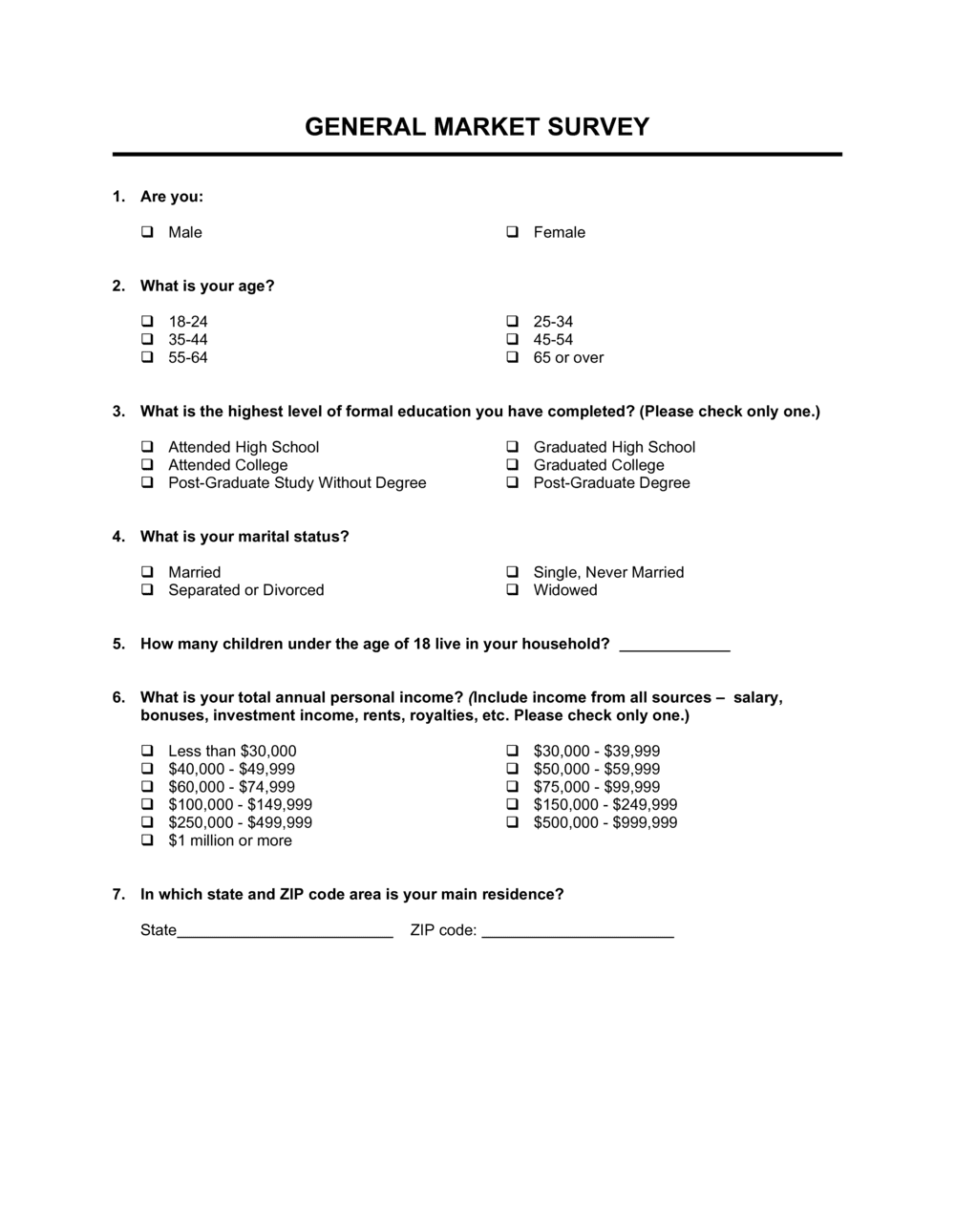
- Market Survey
- A structured process of collecting data on prices, availability, and conditions for specific goods or services in a defined market at a specific point in time.
- Price Reasonableness
- A determination — often required for government contracts — that the price paid for goods or services is consistent with prevailing market rates and not inflated.
- Respondent
- A vendor, supplier, contractor, or other market participant who provides pricing or availability data in response to the survey.
- Scope of Survey
- The defined boundaries of the market research, including the geographic area, product or service categories, and time period covered.
- Specification
- A detailed description of the goods or services being surveyed, including quality standards, quantities, delivery requirements, and any technical parameters.
- Prevailing Market Price
- The price at which a particular good or service is commonly transacted in a specific market, used as the baseline for cost comparisons and contract negotiations.
- Due Diligence
- The reasonable investigation a business or individual is expected to conduct before entering a contract or making a procurement decision.
- Certification Clause
- A signed statement by a respondent affirming that the information provided in the survey is accurate, complete, and made in good faith.
- Sole Source Justification
- Documentation supporting the decision to award a contract to a single supplier without competitive bidding, often requiring market survey evidence.
- Price Analysis
- The evaluation of proposed prices based on comparison with market data, historical pricing, or published price lists — without examining the seller's cost structure.
- Market Conditions
- Factors affecting supply, demand, pricing, and availability of goods or services at a given time, including supply chain disruptions, seasonal variation, and competitive intensity.