- Target Market
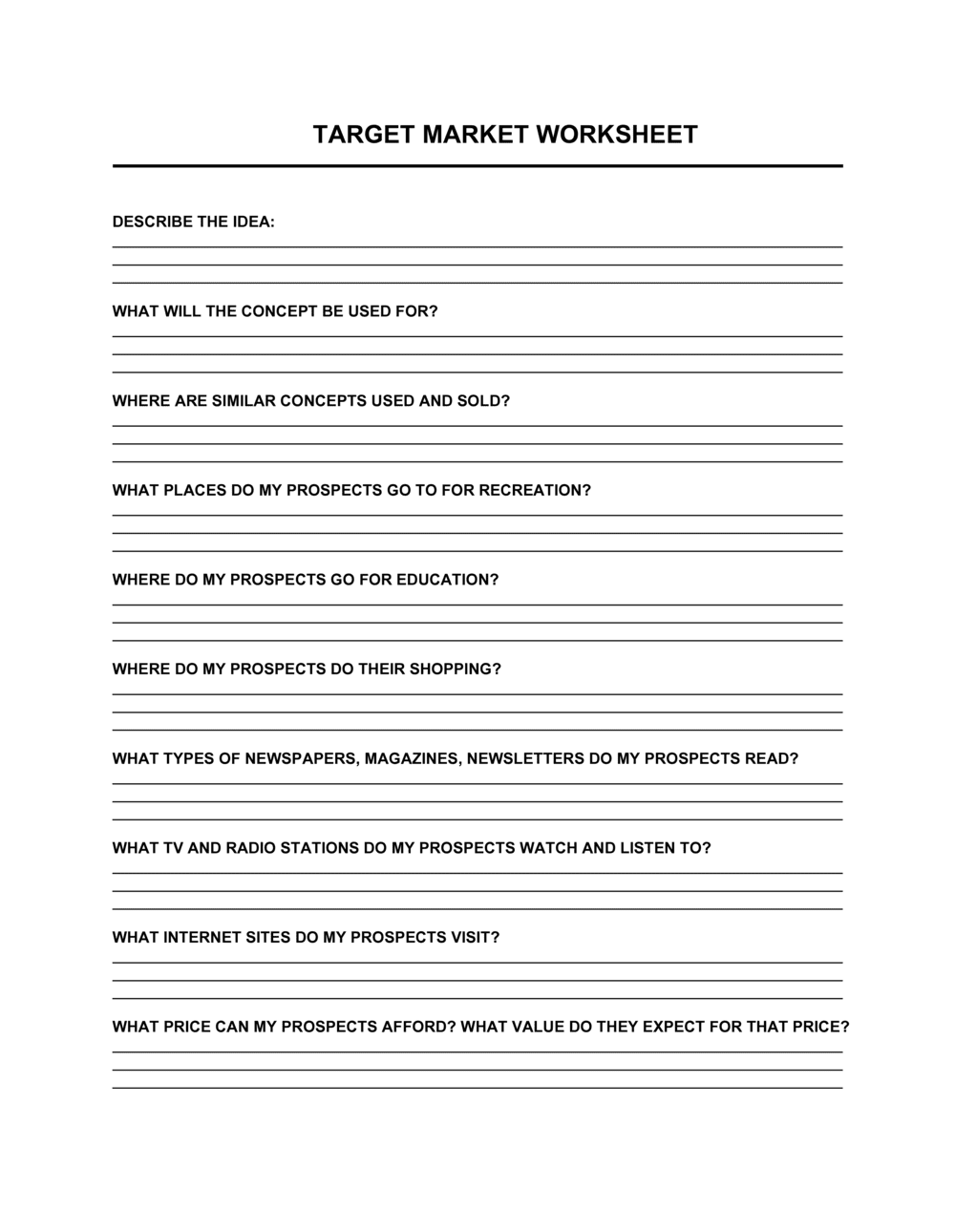
- The specific group of consumers or businesses most likely to purchase your product or service, defined by shared characteristics.
- Market Segmentation
- The process of dividing a broad market into distinct subgroups based on demographic, psychographic, behavioral, or geographic criteria.
- Demographics
- Measurable statistical characteristics of a population — such as age, gender, income, education level, and occupation.
- Psychographics
- Psychological and lifestyle attributes of a customer segment, including values, attitudes, interests, and personality traits.
- Behavioral Segmentation
- Grouping customers by how they interact with a product category — purchase frequency, brand loyalty, usage rate, or buying triggers.
- Geographic Segmentation
- Defining a target market by physical location — country, region, city size, climate, or urban versus rural setting.
- Buyer Persona
- A semi-fictional representation of an ideal customer based on market research and real data about existing customers.
- Pain Points
- Specific problems, frustrations, or unmet needs that motivate a target customer to seek a solution.
- Total Addressable Market (TAM)
- The full revenue opportunity available if a product or service captured 100% of its potential market with no competition.
- Serviceable Obtainable Market (SOM)
- The realistic portion of the market a business can capture in the near term given its resources, channels, and competitive position.
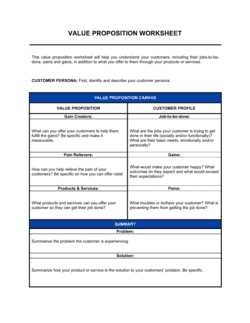
- Value Proposition
- A clear statement of the specific benefit a product or service delivers to a target segment and why it is preferable to alternatives.