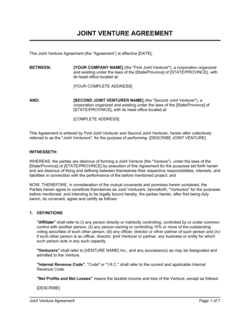
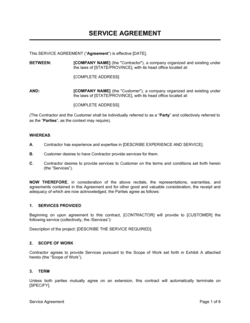
Research Agreement Template

Free Word download • Edit online • Save & share with Drive • Export to PDF

8 pages30–40 min to fillDifficulty: ComplexSignature requiredLegal review recommended
Learn more ↓
FreeResearch Agreement Template

At a glance

What it is
A Research Agreement is a legally binding contract between a sponsoring party and a researcher, research institution, or independent contractor that defines the scope of a research project, ownership of resulting intellectual property, confidentiality obligations, publication rights, payment terms, and termination conditions. This free Word download gives you a structured, attorney-reviewed starting point you can edit online and export as PDF to share with all parties before work begins.
When you need it
Use it whenever a company commissions external research — from a university lab, an independent scientist, a contract research organization, or a research consulting firm — and needs enforceable rights over the findings, data, and any inventions that result. It is also used between two co-sponsoring companies splitting research costs and ownership.
What's inside
Scope of work and project milestones, IP assignment and licensing terms, confidentiality and data-sharing obligations, publication review rights, payment schedule and budget, representations and warranties, termination provisions, and governing law.

What is a Research Agreement?

A Research Agreement is a legally binding contract between a sponsoring party — typically a corporation, government agency, or foundation — and a researcher, university, or contract research organization that governs every material dimension of a defined research engagement: scope of work, payment terms, intellectual property ownership, confidentiality obligations, publication rights, ethical compliance, and termination conditions. Unlike a simple service agreement or NDA, a research agreement addresses the unique legal complexity of knowledge creation — specifically the fact that the primary output is not a finished good but rather data, discoveries, and potentially patentable inventions whose ownership must be explicitly allocated before a single experiment is run.

Why You Need This Document

Without a signed research agreement in place before work begins, IP ownership defaults to patent law — which in most jurisdictions awards rights to the named inventors, not the party that funded the work. That means a company that pays $500,000 to develop a novel compound or algorithm may have no enforceable claim to the resulting patents if the researcher's name is the only one on the filing. Beyond IP, an unsigned engagement leaves confidential data unprotected, publication timing uncontrolled, and payment obligations undefined — any one of which can derail a research program or generate costly litigation. A properly structured research agreement closes all of these gaps before they become problems, giving sponsors enforceable IP rights, researchers clear payment and publication protections, and both parties a documented framework for resolving the disputes that inevitably arise in long-running, outcome-uncertain research projects.

Which variant fits your situation?

If your situation is…Use this template
Company funding research at a university or academic institutionSponsored Research Agreement
Two companies jointly funding and conducting research togetherJoint Research Agreement
Hiring an independent researcher or scientist as a contractorResearch Consulting Agreement
Outsourcing clinical or preclinical studies to a CROClinical Research Agreement
Sharing proprietary data or biological materials to enable researchMaterial Transfer Agreement
Licensing existing research results or know-how from another partyTechnology License Agreement
Protecting shared confidential information before research negotiations beginNon-Disclosure Agreement

Common mistakes to avoid

❌ Failing to distinguish foreground IP from background IP

Why it matters: An assignment clause without this distinction can inadvertently capture the researcher's pre-existing tools, databases, and know-how — making them unable to use their own prior work with other clients and creating legal exposure for the sponsor if the researcher later challenges the clause.

Fix: Define both terms explicitly in the definitions section and attach a Schedule C listing each party's background IP by category. State that the assignment applies only to IP first created under the project.

❌ Starting research before the agreement is signed

Why it matters: IP created before a written assignment clause exists may default to the inventor under patent law, particularly in the US and EU. Confidential information shared pre-signature has no contractual protection.

Fix: Execute the agreement — including IP assignment and confidentiality provisions — before any research activities begin or any proprietary information is disclosed. Use a mutual NDA to bridge the gap during negotiation.

❌ Setting an unlimited sponsor right to delay publication

Why it matters: University researchers are bound by institutional academic-freedom policies that typically prohibit indefinite publication blocks. An uncapped delay right can make the agreement unacceptable to top institutions and may be voided by the university's own policy.

Fix: Cap the total publication delay at 180 days (60-day review plus up to 120 days for patent filing). This aligns with most university technology-transfer office standards and keeps world-class researchers willing to participate.

❌ No milestone payment structure on multi-year contracts

Why it matters: A lump sum payable at completion gives the sponsor no financial leverage during the project and leaves the researcher without compensation if the agreement is terminated for convenience after substantial work has been done.

Fix: Break the budget into milestone payments of 20–30% each, with 15–20% withheld until final acceptance. Document each milestone as a specific, verifiable deliverable — not a calendar date alone.

❌ Omitting ethical and regulatory compliance warranties

Why it matters: Research conducted without required IRB approval, Good Laboratory Practice compliance, or applicable animal-use authorization produces data that regulators will not accept and that cannot be published — rendering the entire investment worthless.

Fix: Include an express warranty that the researcher will obtain and maintain all required ethical approvals, licenses, and regulatory authorizations before work begins, and will provide the sponsor with copies upon request.

❌ No termination-for-convenience right for the sponsor

Why it matters: Research priorities change. Without a convenience termination clause, a sponsor whose commercial strategy shifts is still obligated to fund the full contract — or must negotiate a settlement, often on unfavorable terms when the researcher knows the sponsor is motivated to exit.

Fix: Include a sponsor termination-for-convenience right with a 30–60 day notice period and a clear formula for calculating the researcher's compensation for work completed to the termination date, plus committed non-cancellable costs.

The 10 key clauses, explained

Parties, recitals, and definitions

In plain language: Identifies the sponsoring party and the performing party by full legal name, explains the background and purpose of the research relationship, and defines key terms used throughout the agreement.

Sample language
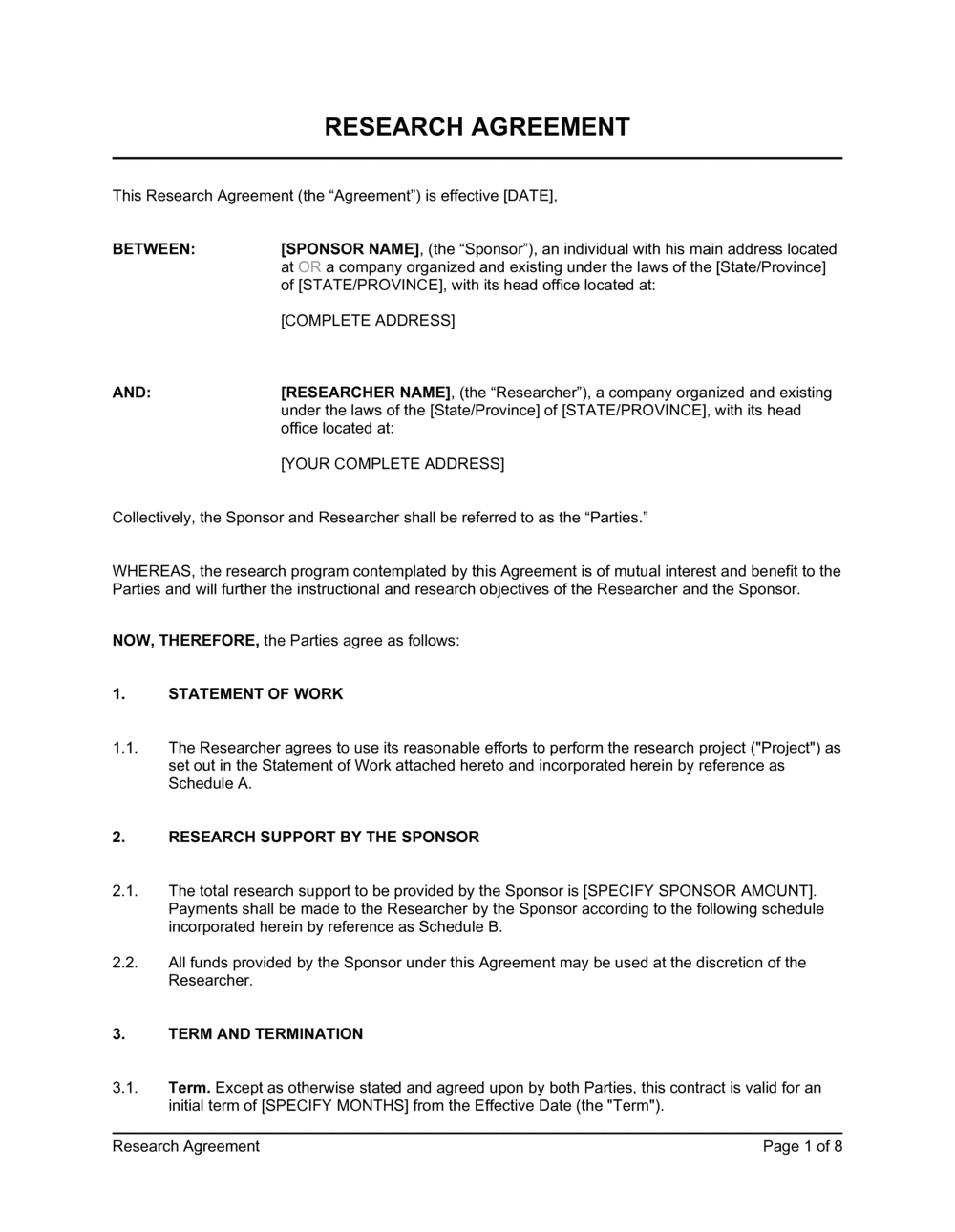
This Research Agreement ('Agreement') is entered into as of [DATE] between [SPONSOR LEGAL NAME], a [STATE] [ENTITY TYPE] ('Sponsor'), and [RESEARCHER / INSTITUTION LEGAL NAME], a [STATE] [ENTITY TYPE] ('Researcher'). The parties wish to conduct research in the field of [RESEARCH AREA] on the terms set out below.

Common mistake: Using informal names or abbreviations in the parties block instead of registered legal entity names. If the performing entity is a university department rather than the university itself, the wrong entity may be identified — creating an unenforceable agreement against the party that actually holds the IP.

Scope of work and statement of work

In plain language: Describes the specific research to be conducted, referencing a detailed Statement of Work attached as a schedule, and clarifies what is explicitly out of scope.

Sample language
Researcher shall conduct the research described in Schedule A ('Statement of Work'), attached hereto and incorporated by reference. Any material change to the scope requires a written amendment signed by both parties.

Common mistake: Embedding the full scope in the body of the agreement rather than a separate Schedule A. When the SOW needs updating mid-project, an embedded scope requires a formal contract amendment — a separate schedule can be replaced without re-executing the entire agreement.

Term and milestones

In plain language: Sets the start date, end date, and any interim milestone dates tied to deliverables or payment triggers.

Sample language
This Agreement commences on [START DATE] and expires on [END DATE] unless earlier terminated or extended by written agreement. Milestone dates are set out in Schedule B. Failure to meet a milestone date by more than [30] days shall entitle Sponsor to [withhold the next milestone payment / terminate for cause].

Common mistake: Setting a single end date with no interim milestones for multi-year projects. Without checkpoints, a sponsor may fund a full year before discovering the project has deviated significantly from the agreed scope.

Payment, budget, and invoicing

In plain language: States the total research budget, payment schedule tied to milestones or calendar dates, invoicing requirements, and what happens to unexpended funds if the project ends early.

Sample language
Sponsor shall pay Researcher a total of $[AMOUNT] in accordance with the payment schedule in Schedule B. Researcher shall submit invoices to [AP CONTACT / EMAIL] within [15] days of each milestone completion. Unexpended funds shall be [returned to Sponsor / applied to the next milestone] upon termination.

Common mistake: Agreeing to a lump-sum payment due at project completion on a multi-year contract. If the agreement is terminated early, a lump-sum structure gives the researcher no payment for work completed and gives the sponsor no leverage to enforce milestone delivery.

Intellectual property ownership and assignment

In plain language: Determines who owns IP created during the project — foreground IP — and how background IP is treated. Specifies whether the sponsor receives an assignment, exclusive license, or option to license.

Sample language
All Foreground IP developed solely by Researcher under this Agreement shall be assigned to Sponsor upon creation. Each party retains ownership of its respective Background IP. Researcher hereby grants Sponsor a non-exclusive, royalty-free license to use Researcher's Background IP solely as necessary to exploit the Foreground IP.

Common mistake: Failing to distinguish foreground IP from background IP. Without the distinction, a sponsor's assignment clause can inadvertently capture pre-existing tools, software, or know-how that the researcher uses across multiple projects — creating disputes or making the researcher unable to work with other clients.

Confidentiality and data handling

In plain language: Defines what constitutes confidential information, how it may be used and stored, how long confidentiality obligations survive the agreement, and how research data is handled, transferred, and retained.

Sample language
Each party agrees to hold the other's Confidential Information in strict confidence and not to disclose it to any third party without prior written consent. Confidential Information does not include information that is or becomes publicly known through no breach of this Agreement. Confidentiality obligations survive termination for [5] years.

Common mistake: Setting a confidentiality term that expires at the same time as the agreement. Research findings — especially unpublished data — remain competitively sensitive for years after a project ends. A post-termination survival period of three to five years is standard practice.

Publication and public disclosure rights

In plain language: Grants the researcher the right to publish findings while giving the sponsor a review period to identify patentable inventions or remove confidential information before publication.

Sample language
Researcher may publish or present research results subject to providing Sponsor with a draft [60] days in advance. Sponsor may request a delay of up to [90] additional days to file a patent application. Sponsor may request removal of Sponsor's Confidential Information from any proposed publication.

Common mistake: Granting the sponsor an unlimited or indefinite right to delay publication. Academic researchers are bound by institutional policies requiring eventual publication. An indefinite block can void the agreement at the university level and make recruitment of top researchers impossible.

Representations, warranties, and compliance

In plain language: Each party warrants that it has authority to enter the agreement, that the research will comply with applicable laws and ethical guidelines, and that it holds the necessary rights to any background IP it contributes.

Sample language
Researcher represents and warrants that: (a) it has full authority to enter this Agreement; (b) the research will be conducted in compliance with all applicable laws, regulations, and institutional ethical guidelines; and (c) it owns or has the right to use all Background IP contributed to the project.

Common mistake: Omitting ethical compliance warranties for life sciences or human-subjects research. If a study later turns out to lack required IRB or ethics-board approval, the sponsor can face reputational damage, regulatory liability, and unusable data — none of which is recoverable without a warranty and indemnity in the contract.

Termination and consequences of termination

In plain language: States the conditions under which either party may terminate — for cause, for convenience, or upon force majeure — and what happens to IP, data, deliverables, and payment obligations upon termination.

Sample language
Either party may terminate this Agreement for cause upon [30] days' written notice if the other party materially breaches and fails to cure within the notice period. Sponsor may terminate for convenience upon [60] days' written notice. Upon termination, Researcher shall deliver all data, reports, and work product to Sponsor within [15] business days.

Common mistake: No termination-for-convenience clause for the sponsor. Research projects frequently need to be wound down when commercial priorities shift. Without a convenience termination right, a sponsor is locked into the full budget even if the strategic rationale disappears — or must negotiate a settlement.

Governing law, dispute resolution, and entire agreement

In plain language: Specifies which jurisdiction's law governs, how disputes are resolved (arbitration, mediation, or litigation), and confirms the written agreement supersedes all prior discussions and letters of intent.

Sample language
This Agreement is governed by the laws of [STATE / PROVINCE / COUNTRY]. Any dispute shall be resolved by binding arbitration administered by [AAA / JAMS / ICC] in [CITY]. This Agreement constitutes the entire agreement of the parties and supersedes all prior negotiations, representations, and understandings relating to the subject matter hereof.

Common mistake: Choosing a governing law with no connection to where the research is actually performed. Several jurisdictions — including California and Quebec — apply mandatory local rules to contracts performed within their borders regardless of a contrary choice-of-law clause, particularly for employment and IP matters.

How to fill it out

  1. 1

    Identify both parties by full legal name

    Enter the sponsor's and researcher's registered legal entity names — not trade names or department labels. For university research, confirm whether the contracting party is the university's board of governors, a named research foundation, or the institution itself.

    💡 Request a Certificate of Incorporation or equivalent registration document from the researcher's institution to confirm the exact legal name before execution.

  2. 2

    Draft and attach a detailed statement of work

    Create Schedule A with specific research objectives, methodologies, deliverables, and acceptance criteria. The more precisely the SOW describes what 'successful completion' looks like, the less room there is for scope disputes mid-project.

    💡 Include negative scope — a line explicitly stating what the research does NOT cover — to prevent scope creep from eroding the budget.

  3. 3

    Set a milestone schedule with payment triggers

    Break the project into three to six measurable milestones and tie each to a specific deliverable (e.g., interim report, prototype, data set) and a payment amount. Create Schedule B listing dates, deliverables, and payment amounts.

    💡 Structure payments so roughly 20% is withheld until final delivery — this maintains meaningful leverage throughout the project.

  4. 4

    Define foreground and background IP clearly

    List each party's background IP by category in Schedule C, or at minimum describe the types of pre-existing tools, databases, and know-how each party brings. Then specify whether foreground IP is assigned to the sponsor outright, jointly owned, or subject to an option to license.

    💡 If the researcher is a university, expect them to push for a royalty-bearing license rather than an outright assignment — negotiate the royalty rate and field-of-use restrictions before signing.

  5. 5

    Set the publication review period

    Enter a sponsor review period for proposed publications — 30 to 60 days is standard for industry-sponsored academic research. Add an additional period of up to 90 days if the sponsor needs time to file a patent application.

    💡 Cap the total delay at 180 days maximum to remain consistent with most university technology-transfer office policies and keep top researchers willing to accept the arrangement.

  6. 6

    Complete the confidentiality and data-handling terms

    Define what constitutes confidential information for each party, state the post-termination survival period (three to five years is typical), and specify how raw data will be stored, who may access it, and what happens to it at project end.

    💡 If the research involves human subjects or patient data, add an explicit HIPAA, GDPR, or applicable privacy-law compliance clause referencing the specific regulation.

  7. 7

    Include termination and wind-down mechanics

    Specify notice periods for termination for cause (typically 30 days with a cure period) and termination for convenience (typically 60 days). Define what the researcher delivers upon termination and how pro-rated payments are calculated.

    💡 Add a clause requiring the researcher to stop incurring new costs after a termination notice is received — without it, committed expenditures can continue to accrue during the notice period.

  8. 8

    Sign before research activities begin

    Both parties must execute the agreement before any research work commences or any confidential information is shared. Starting work before signing can compromise IP ownership claims and eliminate the enforceability of confidentiality obligations.

    💡 Use a countersignature process where the sponsor signs first and the researcher returns a fully executed copy — this avoids a situation where work starts under an unsigned draft.

Frequently asked questions

What is a research agreement?

A research agreement is a legally binding contract between a sponsor — typically a company, government agency, or foundation — and a researcher or research institution that defines the scope of work, payment terms, IP ownership, confidentiality obligations, publication rights, and termination conditions for a specific research project. It protects both parties by creating clear, enforceable expectations before any work or confidential information is exchanged.

Who needs a research agreement?

Any company commissioning external research — from universities, contract research organizations, independent scientists, or research consultants — needs a research agreement to secure IP rights and protect proprietary information. Universities and research institutions use them to formalize sponsored research arrangements and protect their researchers' publication rights. Two companies co-funding joint research also use research agreements to allocate ownership of jointly developed IP.

What is the difference between a research agreement and an NDA?

An NDA protects confidential information exchanged during discussions but does not govern the research relationship itself — it covers no scope of work, no IP assignment, and no payment. A research agreement includes confidentiality provisions and additionally covers all material terms of the research engagement. Use an NDA to protect information during initial negotiations, then replace it with a full research agreement once the parties decide to proceed.

Who owns the IP created during a research project?

IP ownership depends entirely on what the parties negotiate and document in the agreement. In a sponsored research arrangement, sponsors typically seek an assignment of all foreground IP — or at minimum an exclusive option to license it. Universities often resist outright assignment and prefer a royalty-bearing license. For joint research, IP may be jointly owned with each party having the right to exploit it independently. Without a written agreement, patent law defaults vary by jurisdiction — in the US, each named inventor owns an undivided share regardless of who funded the work.

Can a university researcher sign a research agreement that assigns IP to a sponsor?

It depends on the institution's IP policy. Most research universities claim ownership of IP developed by their faculty and staff using university resources. A faculty researcher typically cannot assign IP to a sponsor directly — the university technology-transfer office must be the contracting party and negotiate the assignment or license on the institution's behalf. Always confirm the institution's IP policy and involve the TTO before finalizing any research agreement with academic researchers.

What publication rights should a sponsor expect in a research agreement?

Sponsors typically receive a review period of 30 to 60 days before a researcher may submit findings for publication, giving the sponsor time to identify patentable inventions and request removal of confidential information. An additional delay of up to 90 to 120 days for patent filing is common. Most university policies prohibit permanent publication suppression, so sponsors should not expect or request an indefinite block. The total delay is typically capped at 180 days in agreements with major research universities.

What happens to a research agreement if the sponsor goes bankrupt?

In most jurisdictions, IP licenses and research contracts are treated as executory contracts in bankruptcy proceedings. The bankruptcy trustee may assume or reject the agreement. If rejected, the researcher may be left with an unsecured claim for unpaid amounts and may lose the benefit of any IP assignment that has not yet been recorded. To reduce exposure, researchers should insist on milestone payments rather than backend-loaded compensation, and consider requesting that any IP assignment be recorded with the patent office promptly upon execution.

Do research agreements need to be notarized?

Notarization is generally not required for a research agreement to be legally enforceable in the US, Canada, the UK, or the EU. Both parties' authorized signatures are sufficient. However, some patent offices recommend or require a formal written assignment document — separate from the research agreement — to be recorded when transferring patent rights. Confirm the recording requirements of the relevant patent office for any jurisdiction where protection is sought.

How long should a research agreement's confidentiality clause survive termination?

Three to five years post-termination is standard for most research agreements. For agreements involving trade secrets, novel compounds, or unpublished clinical data, a longer period — up to ten years or the life of any resulting patent — may be warranted. Indefinite confidentiality obligations are enforceable in many jurisdictions for true trade secrets but can be difficult to defend for general research know-how. Match the survival period to the commercial sensitivity of the specific information involved.

How this compares to alternatives

vs Non-Disclosure Agreement

An NDA protects confidential information shared between parties but does not govern scope, payment, deliverables, or IP ownership. A research agreement includes confidentiality provisions and additionally defines every material term of the research engagement. Use an NDA to cover initial discussions, then replace it with a full research agreement once the parties decide to proceed. Relying on an NDA alone leaves IP ownership, publication rights, and payment entirely unaddressed.

vs Independent Contractor Agreement

An independent contractor agreement governs a service relationship for defined deliverables — typically work product that is straightforwardly assignable. A research agreement addresses the unique complexity of research: uncertain outcomes, foreground versus background IP, publication rights, ethical compliance, and data ownership. For any engagement where the primary output is knowledge, data, or inventions rather than a finished work product, a research agreement provides more appropriate and enforceable protections.

vs Technology License Agreement

A technology license agreement governs the use of IP that already exists — it transfers rights to use, commercialize, or sublicense an existing invention or technology. A research agreement governs the creation of new IP that does not yet exist. The two are often used in sequence: a research agreement is executed to produce a technology, and a license agreement is then used to commercialize what was developed. An option-to-license clause in the research agreement bridges the two stages.

vs Joint Venture Agreement

A joint venture agreement creates a separate legal entity or formal partnership structure between two parties combining resources for a shared commercial purpose. A research agreement is a narrower contract governing a defined research project without creating an ongoing business relationship or shared entity. Where two companies plan to conduct research together AND commercialize results jointly over the long term, a joint venture may be more appropriate — but it requires substantially more negotiation and legal cost.

Industry-specific considerations

Pharmaceutical and Biotech

CRO engagement for preclinical and clinical studies requires GLP/GCP compliance warranties, IRB approval conditions, and data exclusivity provisions tied to regulatory filing timelines.

Technology and SaaS

Software and algorithm research agreements must address ownership of training data, model weights, and derivative works — particularly where open-source components are incorporated into deliverables.

Manufacturing and Materials Science

Research into new materials or manufacturing processes often produces patentable inventions mid-project; milestone-triggered provisional patent filings and tightly scoped background IP schedules are essential.

Academic and Government Research

Federally funded research in the US is subject to Bayh-Dole Act obligations, giving the government a non-exclusive license to any resulting patents; agreements must acknowledge and not conflict with these march-in rights.

Energy and Cleantech

Research agreements in this sector frequently involve government co-funding with matching IP-sharing requirements; the agreement must coordinate sponsor rights with any government grant conditions.

Consumer Goods and FMCG

Formulation and ingredient research for consumer products requires strict confidentiality of proprietary recipes and supply-chain data, with publication delays long enough to secure international trademark and patent filings.

Jurisdictional notes

United States

Federally funded research is subject to the Bayh-Dole Act (35 U.S.C. §§ 200–212), which grants the US government a non-exclusive, royalty-free license to any patents resulting from federally funded work and march-in rights if the sponsor fails to commercialize. IP assignment is generally enforceable, but California Labor Code §2870 limits assignment of inventions developed entirely on an employee's own time without company resources. State-by-state non-compete enforceability also affects any researcher bound by such restrictions in the agreement.

Canada

Canada does not have a direct equivalent of the Bayh-Dole Act, but federal granting agencies (NSERC, CIHR, SSHRC) impose IP conditions on funded research that must be reflected in any associated research agreement. Quebec's civil-law system applies different contract interpretation rules than the common-law provinces; agreements intended to cover Quebec research should be reviewed for compatibility. University researchers in Canada typically cannot assign IP without institutional TTO involvement.

United Kingdom

Under the Patents Act 1977, inventions made by employees in the normal course of their duties belong to the employer — meaning a university owns its researchers' inventions unless a research agreement specifies otherwise. UK universities generally negotiate a license rather than an outright assignment. GDPR (retained in UK law post-Brexit as UK GDPR) applies to any personal data processed in connection with the research, and data-sharing clauses must reflect lawful basis and adequacy requirements for international transfers.

European Union

EU member states vary in their treatment of researcher IP — Germany, France, and the Netherlands each have distinct rules on employer versus employee ownership of inventions. GDPR applies to any research involving personal data and imposes strict requirements on data transfer outside the EEA; a Data Processing Agreement is typically required as a companion document. Horizon Europe grant conditions impose open-access publication requirements that must be reconciled with any sponsor publication-delay clause negotiated in the research agreement.

Template vs lawyer — what fits your deal?

PathBest forCostTime
Use the templateIndependent researchers or small companies commissioning straightforward, single-party research with a clear scope and modest budgetFree1–2 hours
Template + legal reviewCompanies engaging universities, CROs, or researchers in regulated industries where IP ownership and publication rights require negotiation$500–$1,5003–7 days
Custom draftedMulti-party joint research, large-budget pharmaceutical or technology programs, or agreements involving government co-funding and Bayh-Dole compliance$3,000–$15,000+2–6 weeks

Glossary

Foreground IP
Intellectual property created directly as a result of the research project — typically assigned to the sponsor or jointly owned, depending on negotiation.
Background IP
Intellectual property owned by either party before the research begins, or developed independently outside the project scope — usually retained by the original owner.
Sponsored Research Agreement (SRA)
A contract where a company funds research conducted by a university or research institution, typically granting the sponsor an option or license to commercialize results.
Statement of Work (SOW)
The schedule or exhibit describing in detail what research tasks will be performed, by whom, on what timeline, and to what specifications.
Publication Rights
Contractual provisions governing when and how research findings may be published or presented publicly, including any sponsor review period before publication.
Material Transfer Agreement (MTA)
A separate agreement governing the transfer of physical research materials — such as cell lines, compounds, or samples — between institutions or companies.
Milestone Payment
A payment triggered when the researcher completes a defined deliverable or reaches a specified stage of the project, rather than on a fixed calendar schedule.
Option to License
A contractual right granted to the sponsor to negotiate an exclusive or non-exclusive license to research results within a defined period after project completion.
Indemnification
A clause requiring one party to compensate the other for losses, claims, or damages arising from specified events — such as a breach of warranty or misuse of research results.
Data Ownership
The contractual determination of which party holds rights to raw and processed research data, including the right to store, use, publish, and commercialize it.
Principal Investigator (PI)
The named researcher responsible for directing and conducting the research project on behalf of the performing institution.

Part of your Business Operating System

This document is one of 3,000+ business & legal templates included in Business in a Box.

  • Fill-in-the-blanks — ready in minutes
  • 100% customizable Word document
  • Compatible with all office suites
  • Export to PDF and share electronically

Create your document in 3 simple steps.

From template to signed document — all inside one Business Operating System.
1
Download or open template

Access over 3,000+ business and legal templates for any business task, project or initiative.

2
Edit and fill in the blanks with AI

Customize your ready-made business document template and save it in the cloud.

3
Save, Share, Send, Sign

Share your files and folders with your team. Create a space of seamless collaboration.

Save time, save money, and create top-quality documents.

★★★★★

"Fantastic value! I'm not sure how I'd do without it. It's worth its weight in gold and paid back for itself many times."

Managing Director · Mall Farm
Robert Whalley
Managing Director, Mall Farm Proprietary Limited
★★★★★

"I have been using Business in a Box for years. It has been the most useful source of templates I have encountered. I recommend it to anyone."

Business Owner · 4+ years
Dr Michael John Freestone
Business Owner
★★★★★

"It has been a life saver so many times I have lost count. Business in a Box has saved me so much time and as you know, time is money."

Owner · Upstate Web
David G. Moore Jr.
Owner, Upstate Web

Run your business with a system — not scattered tools

Stop downloading documents. Start operating with clarity. Business in a Box gives you the Business Operating System used by over 250,000 companies worldwide to structure, run, and grow their business.

Free Forever Plan · No credit card required