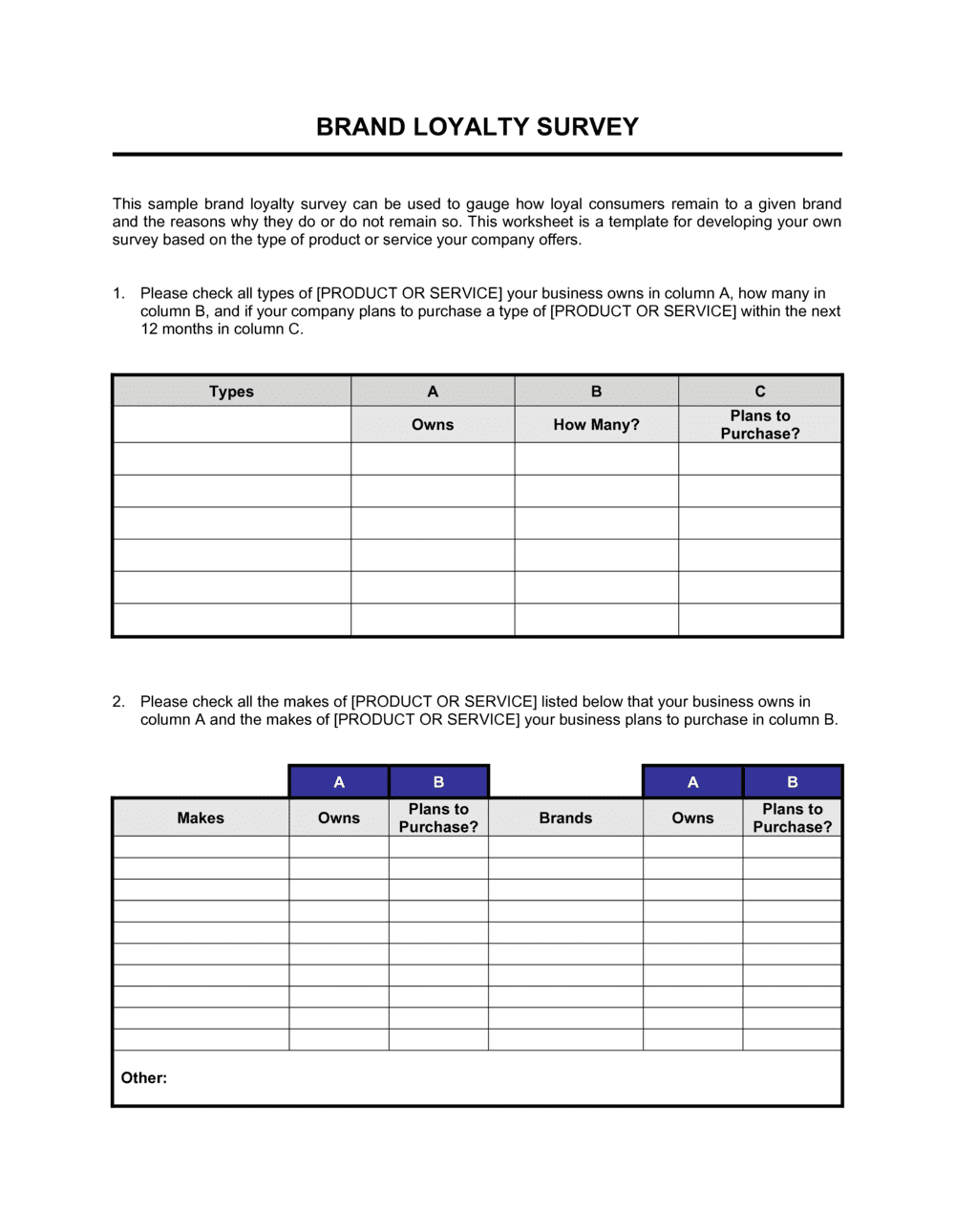
Brand Loyalty Survey Template

Free Word download β€’ Edit online β€’ Save & share with Drive β€’ Export to PDF

1 pageβ€’20–30 min to fillβ€’Difficulty: Standardβ€’Signature requiredβ€’Legal review recommended
Learn more ↓
FreeBrand Loyalty Survey Template

At a glance

What it is
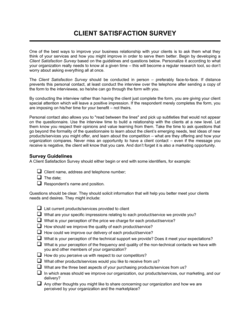
A Brand Loyalty Survey is a structured research instrument that a business deploys to measure how strongly customers identify with, prefer, and advocate for its brand over competing alternatives. This free Word download gives you a ready-to-edit survey with consent, confidentiality, and data use clauses β€” covering net promoter scoring, repeat-purchase intent, satisfaction drivers, and competitive switching behavior β€” that you can export as PDF or adapt for digital distribution in minutes.
When you need it
Deploy it after a product launch, following a customer service interaction, during annual brand-health tracking cycles, or before a pricing or repositioning decision where understanding retention risk is critical. It is also used to satisfy data-collection compliance requirements before storing or processing survey respondents' personal information.
What's inside
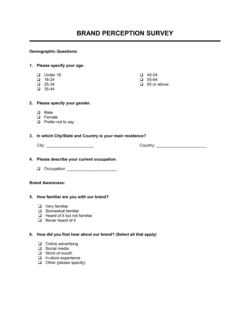
Respondent consent and data use disclosure, demographic profiling questions, brand awareness and purchase frequency items, net promoter score question, satisfaction driver ratings, competitive switching intent questions, open-ended advocacy and improvement prompts, and a confidentiality and data-handling clause governing how responses are stored and used.

What is a Brand Loyalty Survey?

A Brand Loyalty Survey is a structured research instrument a business uses to measure the depth and durability of its customers' preference for, emotional attachment to, and advocacy behavior toward the brand compared with competing alternatives. Unlike a one-off satisfaction survey that captures reaction to a single transaction, a brand loyalty survey assesses the cumulative relationship β€” how likely customers are to keep buying, to recommend the brand unprompted, and to resist switching when a competitor offers a lower price. The template combines rated items (including the standardized Net Promoter Score question), behavioral frequency measures, competitive switching intent questions, and open-ended prompts, wrapped in a legally compliant consent and data-handling framework that satisfies GDPR, CCPA, PIPEDA, and UK data protection requirements.

Why You Need This Document

Running a brand loyalty survey without a proper consent and data-handling framework exposes your business to privacy enforcement risk at exactly the moment you are trying to build customer trust β€” the opposite of the intended outcome. Regulators in the EU, UK, California, and Canada have all levied penalties against businesses that collected survey data under vague or absent consent terms, and data subjects increasingly exercise deletion rights when they feel their information was collected without clear explanation. Beyond legal compliance, a poorly structured survey produces unreliable data: inconsistent scales, missing behavioral anchors, and absent follow-up probes mean the results cannot drive decisions. This template gives you a research instrument and a compliant data agreement in a single document β€” so you collect the loyalty intelligence your retention strategy depends on, with the consent records and opt-out mechanism your legal team and privacy counsel require.

Which variant fits your situation?

If your situation is…Use this template
Measuring overall satisfaction at a single post-purchase touchpointCustomer Satisfaction Survey
Scoring customer effort across a specific service interactionCustomer Effort Score Survey
Tracking brand perception among non-customers and prospectsBrand Awareness Survey
Gathering detailed product feedback after a new launchProduct Feedback Survey
Evaluating employee engagement and internal brand advocacyEmployee Satisfaction Survey
Conducting exit interviews with churned customersCustomer Exit Survey
Running a full market segmentation study with demographic profilingMarket Research Survey

Common mistakes to avoid

❌ Omitting a GDPR-compliant consent statement

Why it matters: Collecting identifiable survey data without explicit consent exposes the business to GDPR fines of up to €20M or 4% of global annual turnover, and similar penalties under CCPA and PIPEDA.

Fix: Add a clear, standalone consent statement at the top of the survey explaining what data is collected, why, how long it is retained, and who processes it. Require an affirmative action β€” signature or checkbox β€” before any questions are answered.

❌ Promising anonymity while storing identified responses

Why it matters: If the survey form says 'responses are anonymous' but your back-end links responses to customer email addresses, you have made a false representation β€” a violation of consumer protection law in most jurisdictions and GDPR Article 5.

Fix: Either deliver genuine anonymity by stripping identifiers at the point of collection, or change the consent language to state clearly that responses are 'confidential but not anonymous.'

❌ Modifying the NPS question wording

Why it matters: Any deviation from the Reichheld NPS standard question ('How likely are you to recommend…') invalidates your ability to benchmark your score against industry databases, making the metric meaningless for competitive positioning.

Fix: Use the exact NPS question verbatim. Place all customization in the follow-up open-text probe, not in the scored question itself.

❌ No opt-out or data deletion mechanism

Why it matters: GDPR Article 17 (right to erasure) and CCPA Section 1798.105 both require that data subjects can request deletion of their data. A survey with no withdrawal path is non-compliant by design.

Fix: Include a monitored privacy contact email in the Data Rights clause and set an internal process for honoring deletion requests within 30 days of receipt.

❌ Using inconsistent rating scales across sections

Why it matters: Mixing a 10-point NPS scale with a 5-point Likert battery and a 7-point switching-intent scale makes cross-section analysis statistically invalid and confuses respondents, increasing abandonment rates.

Fix: Standardize all rated items to a single scale family β€” 5-point Likert for attribute batteries and the standard 0–10 for NPS β€” and include a brief scale key at the top of each section.

❌ Placing open-ended questions before rating scales

Why it matters: Respondents who answer an open-text improvement prompt before completing rating scales anchor their scores to whatever complaint or praise they just wrote, introducing order bias that inflates or deflates satisfaction scores by 5–15%.

Fix: Always sequence closed rating questions before open-ended prompts. The correct order is: consent β†’ demographics β†’ NPS β†’ satisfaction ratings β†’ switching intent β†’ open-ended β†’ advocacy.

The 10 key clauses, explained

Respondent Identification and Consent

In plain language: Captures the respondent's name or identifier (or confirms anonymous participation), the date of completion, and explicit consent to data collection and use as described in the survey.

Sample language
By completing this survey, [RESPONDENT NAME / 'Participant'] confirms they have read and understood the data use notice below and consent to [COMPANY NAME]'s collection and processing of their responses for the purposes described herein. Survey Date: [DATE].

Common mistake: Omitting a consent statement entirely and relying on implicit participation. Under GDPR and several US state laws, passive participation is not valid consent for processing identifiable personal data.

Data Use and Confidentiality Notice

In plain language: Explains how responses will be stored, who will access them, whether they will be aggregated or attributed, how long they will be retained, and whether they will be shared with third parties.

Sample language
Responses will be used solely for internal brand research by [COMPANY NAME] and its authorized research partners. Individual responses will not be shared externally in identifiable form. Data will be retained for [X] months and then anonymized or deleted.

Common mistake: Promising anonymity on the form but then storing responses linked to customer email addresses. This creates a legal exposure under GDPR and CCPA and destroys respondent trust if discovered.

Brand Awareness and Purchase History

In plain language: Establishes baseline familiarity with the brand, how long the respondent has been a customer, and their purchase frequency β€” providing the behavioral context for interpreting loyalty scores.

Sample language
How long have you been a customer of [BRAND NAME]? [Less than 6 months / 6–12 months / 1–3 years / More than 3 years]. How often do you purchase from [BRAND NAME]? [Weekly / Monthly / Quarterly / Rarely].

Common mistake: Skipping purchase-frequency questions and treating all respondents as equivalent. A once-yearly buyer's NPS score carries very different strategic weight than a weekly buyer's score.

Net Promoter Score Question

In plain language: The standardized single-question NPS item asking respondents how likely they are to recommend the brand on an 11-point scale, with follow-up prompting the primary reason for their score.

Sample language
On a scale of 0–10, how likely are you to recommend [BRAND NAME] to a friend or colleague? [0 = Not at all likely / 10 = Extremely likely]. What is the primary reason for your score? [OPEN TEXT].

Common mistake: Adding qualifying language to the NPS question β€” such as 'if you had a great experience' β€” which invalidates benchmarking comparability against industry NPS databases.

Satisfaction Driver Ratings

In plain language: A Likert-scale battery measuring satisfaction across the specific attributes most predictive of brand loyalty β€” product quality, value for money, customer service, ease of purchase, and brand trust.

Sample language
Please rate your satisfaction with [BRAND NAME] on each of the following: Product quality [1–5], Value for money [1–5], Customer service [1–5], Ease of purchase [1–5], Overall brand trust [1–5].

Common mistake: Using a 10-point scale for attribute ratings and a different scale for NPS, making comparative analysis between sections statistically misleading.

Competitive Switching Intent

In plain language: Assesses the probability that the respondent will switch to a competitor brand within a defined timeframe and identifies the primary trigger that would prompt switching.

Sample language
How likely are you to switch to a competing brand in the next 12 months? [Very unlikely / Unlikely / Neutral / Likely / Very likely]. If you were to switch, what would be the most likely reason? [OPEN TEXT].

Common mistake: Asking switching intent without asking the follow-up reason. The open-text trigger is the most actionable data point in the entire survey and is routinely omitted.

Advocacy and Referral Behavior

In plain language: Measures whether the respondent has already recommended the brand, in what channel, and their willingness to participate in a formal referral or loyalty program.

Sample language
Have you recommended [BRAND NAME] to someone in the past 12 months? [Yes / No]. If yes, in what channel? [In person / Social media / Online review / Email / Other]. Would you be interested in joining [BRAND NAME]'s referral program? [Yes / No / Tell me more].

Common mistake: Conflating NPS intent-to-recommend with actual past referral behavior. Past referrals are a stronger predictor of LTV than stated future intent.

Open-Ended Improvement Prompt

In plain language: An unstructured question inviting the respondent to identify the single change that would most increase their loyalty to the brand β€” capturing qualitative insight the rating scales cannot surface.

Sample language
What is the one thing [BRAND NAME] could change that would most increase your loyalty as a customer? [OPEN TEXT β€” maximum 200 words].

Common mistake: Placing the open-ended question first in the survey. Respondents who answer open text before rating questions anchor their subsequent ratings to whatever they wrote, introducing order bias.

Data Rights and Opt-Out

In plain language: Informs respondents of their right to access, correct, or request deletion of their data, and provides a clear mechanism for withdrawing from the study after submission.

Sample language
You may request access to, correction of, or deletion of your survey response at any time by contacting [PRIVACY CONTACT EMAIL]. To withdraw your data after submission, email [EMAIL] with the subject line 'Survey Data Withdrawal β€” [DATE COMPLETED].'

Common mistake: Providing no opt-out mechanism at all. Under GDPR Article 17 and CCPA Section 1798.105, data subjects have a right to erasure β€” failing to provide a withdrawal path creates direct regulatory exposure.

Governing Terms and Survey Ownership

In plain language: States that all responses become the property of the surveying company upon submission, that the survey is governed by the laws of the specified jurisdiction, and that results may be used in aggregated form in published research.

Sample language
All responses submitted to this survey become the property of [COMPANY NAME] upon submission. Results may be used in anonymized, aggregated form in public reports or marketing materials. This survey is governed by the laws of [JURISDICTION].

Common mistake: Not stating that aggregated results may be published. If a customer later sees their company's category mentioned in a published report, the absence of this clause can trigger a complaint or dispute.

How to fill it out

  1. 1

    Insert your company name and brand details

    Replace all [COMPANY NAME] and [BRAND NAME] placeholders throughout the template. These appear in the consent header, data use notice, and individual question stems.

    πŸ’‘ Use the exact brand name customers encounter on your packaging and website β€” not the legal entity name β€” to ensure the questions feel natural to respondents.

  2. 2

    Configure the data use and retention terms

    Enter the retention period (typically 12–24 months), the names or roles of internal teams with access, and whether any third-party research firms will process the data. If sharing with a third party, name them explicitly.

    πŸ’‘ Under GDPR, vague references to 'authorized partners' without naming them are insufficient. Name the processor or keep processing fully in-house.

  3. 3

    Customize the satisfaction driver attributes

    Replace the default Likert battery items with the 4–6 attributes most relevant to your category. A software company might replace 'ease of purchase' with 'ease of onboarding'; a retailer might add 'in-store experience.'

    πŸ’‘ Run a pilot with 10–15 customers before full deployment to confirm the attribute labels resonate and the rating scale feels intuitive.

  4. 4

    Set the competitive switching timeframe

    Choose a switching-intent window (6, 12, or 24 months) appropriate to your purchase cycle. Subscription businesses typically use 6 months; annual-contract B2B businesses use 12–24 months.

    πŸ’‘ Align the switching-intent window with the interval at which you track churn β€” this makes survey data directly comparable to your retention metrics.

  5. 5

    Add the opt-out and data rights contact

    Enter a valid privacy contact email or data rights request URL in the Data Rights clause. This must be a monitored address, not a generic info@ inbox.

    πŸ’‘ Set a 30-day SLA for responding to data access and deletion requests β€” GDPR requires a response within one calendar month.

  6. 6

    Specify the governing jurisdiction

    Enter the jurisdiction whose laws govern the survey and data processing. For EU respondents, this will typically reference GDPR; for Canadian respondents, PIPEDA or provincial equivalents.

    πŸ’‘ If you deploy the survey to respondents in multiple jurisdictions, use the most stringent governing law (typically GDPR) for the consent and data use clauses to cover all geographies simultaneously.

  7. 7

    Obtain signatures or digital consent before distribution

    For paper administration, have the respondent sign the consent block before completing the survey. For digital administration, require an explicit checkbox consent β€” pre-ticked boxes are not valid consent under GDPR or CASL.

    πŸ’‘ Store a timestamped record of each respondent's consent separately from the survey responses themselves β€” this is your evidence of lawful processing in any regulatory audit.

  8. 8

    Pilot and finalize before full deployment

    Distribute the completed survey to a 10–15 person internal or beta group. Check that all placeholders are replaced, the rating scales are consistent across sections, and the opt-out mechanism functions correctly.

    πŸ’‘ Calculate a mock NPS from your pilot data to confirm the scoring formula is set up correctly before you collect responses you cannot retrospectively fix.

Frequently asked questions

What is a brand loyalty survey?

A brand loyalty survey is a structured questionnaire a business sends to existing customers to measure how strongly they identify with, prefer, and advocate for the brand over competing alternatives. It typically includes a net promoter score question, satisfaction driver ratings, competitive switching intent items, and open-ended advocacy prompts. When deployed consistently over time, it tracks whether retention-driving investments are moving the needle.

What questions should a brand loyalty survey include?

A complete brand loyalty survey covers six areas: respondent consent and identification, purchase history and frequency, the standard NPS question (0–10 recommendation likelihood), satisfaction driver ratings across 4–6 key attributes, competitive switching intent with an open-text trigger reason, and advocacy behavior (past referrals and referral program interest). An open-ended improvement prompt rounds out the instrument. Demographic questions are optional but improve segmentation.

What is a good NPS score for brand loyalty?

NPS benchmarks vary significantly by industry. In B2B SaaS, an NPS above 30 is considered strong; in consumer retail, scores above 50 are typical for high-loyalty brands. Any positive NPS (above 0) means you have more promoters than detractors. Scores below 0 signal a retention crisis. The most useful benchmark is your own trend over time β€” a score improving from 20 to 35 over 12 months is more actionable than a single cross-industry comparison.

How often should you run a brand loyalty survey?

Most businesses run brand loyalty tracking quarterly or semi-annually to identify directional trends. Transaction-triggered surveys (deployed 3–7 days after a purchase) capture in-the-moment sentiment. Annual deep-dive studies β€” longer instruments with demographic segmentation β€” are used for strategic planning cycles. Avoid surveying the same customers more than once every 90 days; survey fatigue measurably reduces response quality.

Is a brand loyalty survey legally binding on respondents?

No β€” respondents are not legally obligated to complete the survey or to fulfill any statement of intent they express. The binding elements are on the business side: the consent clause creates a legally enforceable commitment to use, store, and protect data only as described. Respondents' stated intention to repurchase or recommend is attitudinal data, not a contract. The legal framework governs data handling, not behavioral commitment.

Do I need respondent signatures on a brand loyalty survey?

For paper-administered surveys collecting identifiable personal data, a signature on the consent block establishes a documented record of lawful processing. For digital surveys, an explicit checkbox consent β€” not pre-ticked β€” satisfies GDPR and CCPA requirements. A timestamped consent record should be stored separately from the response data so it can be produced in a regulatory audit without exposing the underlying responses.

What is the difference between attitudinal and behavioral loyalty?

Attitudinal loyalty is a customer's positive emotional attachment to a brand β€” how they feel about it and how likely they say they are to recommend it. Behavioral loyalty is what they actually do β€” repeat purchase frequency, share of wallet, and referral actions. NPS measures attitudinal loyalty; purchase history and referral behavior measure behavioral loyalty. The most predictive retention models combine both, because high attitudinal loyalty with low behavioral loyalty often signals a price-sensitive customer about to switch.

How should survey response data be stored to comply with GDPR?

Under GDPR, survey data must be stored with appropriate technical and organizational measures β€” encryption at rest and in transit, access controls limiting who can view identified responses, and a defined retention period after which data is anonymized or deleted. The data controller (your business) must maintain a Record of Processing Activities (ROPA) entry for the survey. If a third-party platform processes responses, a Data Processing Agreement (DPA) must be in place before any data is transferred.

How this compares to alternatives

vs Customer Satisfaction Survey

A customer satisfaction survey measures how well a single interaction or transaction met expectations. A brand loyalty survey measures the cumulative emotional and behavioral relationship between the customer and the brand across all interactions. Use satisfaction surveys after individual touchpoints; use loyalty surveys to track retention health at the relationship level.

vs Market Research Survey

A market research survey targets prospects, non-customers, and the broader market to gather sizing, segmentation, and preference data. A brand loyalty survey targets existing customers exclusively to measure retention and advocacy. Market research informs acquisition strategy; loyalty surveys inform retention strategy.

vs Employee Satisfaction Survey

An employee satisfaction survey measures internal brand sentiment β€” how engaged and committed employees are to the organization. A brand loyalty survey measures external customer sentiment toward the commercial brand. The two instruments share structural elements (Likert scales, NPS variants) but serve entirely different strategic functions and involve distinct consent and data-protection regimes.

vs Product Feedback Survey

A product feedback survey focuses specifically on a single product's features, usability, and performance. A brand loyalty survey evaluates the customer's relationship with the entire brand β€” across all products, touchpoints, and interactions. Product surveys drive roadmap decisions; loyalty surveys drive retention and advocacy investment decisions.

Industry-specific considerations

Retail and E-commerce

Post-purchase NPS triggers sent 3–5 days after delivery, with satisfaction drivers focused on product quality, shipping speed, and returns experience.

SaaS / Technology

Quarterly relationship surveys measuring product stickiness, support satisfaction, and likelihood to renew β€” segmented by plan tier and tenure cohort.

Financial Services

Regulatory obligations under FCA and CFPB consumer-duty frameworks make documented consent and data retention schedules especially important alongside loyalty measurement.

Healthcare

Patient loyalty surveys must navigate HIPAA in the US and equivalent frameworks elsewhere, requiring de-identification of responses before any analysis or reporting.

Food and Beverage

Brand loyalty surveys used to benchmark repeat-visit rates, menu satisfaction, and price sensitivity before menu reformulations or location expansions.

Professional Services

Client loyalty surveys tied to annual relationship reviews, with switching-intent data used to flag at-risk accounts for proactive retention outreach.

Jurisdictional notes

United States

The CCPA (California) and its successor CPRA give California residents the right to know, delete, and opt out of the sale of their survey data. Virginia, Colorado, Connecticut, and Texas have enacted similar frameworks. At the federal level, the FTC Act prohibits deceptive data practices β€” including promising anonymity and then storing identified responses. Sector-specific rules apply in healthcare (HIPAA) and financial services (GLBA).

Canada

PIPEDA governs private-sector data collection federally; Quebec's Law 25 imposes stricter consent and breach-notification rules comparable to GDPR. CASL requires express consent before sending survey invitations by electronic means. British Columbia and Alberta have substantially similar provincial privacy legislation. Surveys collected in French must use legally accurate French-language consent notices in Quebec.

United Kingdom

Post-Brexit, the UK GDPR and Data Protection Act 2018 apply independently of EU GDPR but with largely equivalent requirements. Consent must be freely given, specific, informed, and unambiguous. The ICO (Information Commissioner's Office) can levy fines up to Β£17.5M or 4% of global turnover. PECR regulations additionally govern electronic survey distribution by email or phone.

European Union

EU GDPR Article 6 requires a lawful basis for processing β€” consent is the most common basis for voluntary surveys but must meet the 'freely given, specific, informed, and unambiguous' standard. Pre-ticked boxes are explicitly invalid. Data subjects have rights of access, rectification, erasure, and portability. Cross-border transfers of survey data to non-EEA processors require Standard Contractual Clauses or equivalent safeguards.

Template vs lawyer β€” what fits your deal?

PathBest forCostTime
Use the templateSmall to mid-size businesses surveying domestic customers with standard data use and no third-party data processorsFree30–60 minutes to customize and deploy
Template + legal reviewBusinesses collecting EU or California resident data, sharing responses with third-party research firms, or operating in regulated industries (finance, healthcare)$300–$800 for a privacy lawyer review of consent and data use clauses2–5 business days
Custom draftedEnterprise brands running multinational loyalty studies with complex data processing chains, cross-border transfers, or sector-specific regulatory obligations$1,500–$5,000+ for a privacy counsel-drafted research data agreement1–3 weeks

Glossary

Net Promoter Score (NPS)
A loyalty metric calculated by subtracting the percentage of detractors (score 0–6) from the percentage of promoters (score 9–10) on a single 11-point recommendation question.
Brand Equity
The commercial value a brand name adds to a product beyond its functional attributes, driven by consumer perception, recognition, and loyalty.
Customer Lifetime Value (CLV)
The total gross profit a business expects to generate from a single customer across all future transactions, used to justify retention investment.
Churn Rate
The percentage of customers who stop purchasing from a brand within a defined period, typically calculated monthly or annually.
Switching Costs
The financial, time, or psychological costs a customer incurs when moving from one brand to a competitor β€” higher switching costs correlate with higher retention.
Respondent Consent
A documented agreement from a survey participant acknowledging how their data will be collected, stored, and used β€” required under GDPR, CASL, and most US state privacy laws.
Data Controller
The entity (typically the business) that determines the purposes and means of processing personal data collected through a survey.
Likert Scale
A five- or seven-point rating scale where respondents indicate their level of agreement or satisfaction, from 'strongly disagree' to 'strongly agree.'
Advocacy Behavior
Observable actions a loyal customer takes to promote a brand β€” referrals, social sharing, public reviews β€” that extend the brand's reach without direct advertising spend.
Attitudinal Loyalty
A customer's positive emotional and psychological attachment to a brand, distinct from behavioral loyalty, which is measured purely by repeat-purchase frequency.
Anonymization
The irreversible process of stripping personal identifiers from survey responses so that the data cannot be linked back to individual respondents.

Part of your Business Operating System

This document is one of 3,000+ business & legal templates included in Business in a Box.

  • Fill-in-the-blanks β€” ready in minutes
  • 100% customizable Word document
  • Compatible with all office suites
  • Export to PDF and share electronically

Create your document in 3 simple steps.

From template to signed document β€” all inside one Business Operating System.
1
Download or open template

Access over 3,000+ business and legal templates for any business task, project or initiative.

2
Edit and fill in the blanks with AI

Customize your ready-made business document template and save it in the cloud.

3
Save, Share, Send, Sign

Share your files and folders with your team. Create a space of seamless collaboration.

Save time, save money, and create top-quality documents.

β˜…β˜…β˜…β˜…β˜…

"Fantastic value! I'm not sure how I'd do without it. It's worth its weight in gold and paid back for itself many times."

Managing Director Β· Mall Farm
Robert Whalley
Managing Director, Mall Farm Proprietary Limited
β˜…β˜…β˜…β˜…β˜…

"I have been using Business in a Box for years. It has been the most useful source of templates I have encountered. I recommend it to anyone."

Business Owner Β· 4+ years
Dr Michael John Freestone
Business Owner
β˜…β˜…β˜…β˜…β˜…

"It has been a life saver so many times I have lost count. Business in a Box has saved me so much time and as you know, time is money."

Owner Β· Upstate Web
David G. Moore Jr.
Owner, Upstate Web

Run your business with a system β€” not scattered tools

Stop downloading documents. Start operating with clarity. Business in a Box gives you the Business Operating System used by over 250,000 companies worldwide to structure, run, and grow their business.

Free Forever PlanΒ Β·Β No credit card required