Brand Perception Survey Template

Free Word download β€’ Edit online β€’ Save & share with Drive β€’ Export to PDF

3 pagesβ€’20–30 min to fillβ€’Difficulty: Standardβ€’Signature requiredβ€’Legal review recommended
Learn more ↓
FreeBrand Perception Survey Template

At a glance

What it is
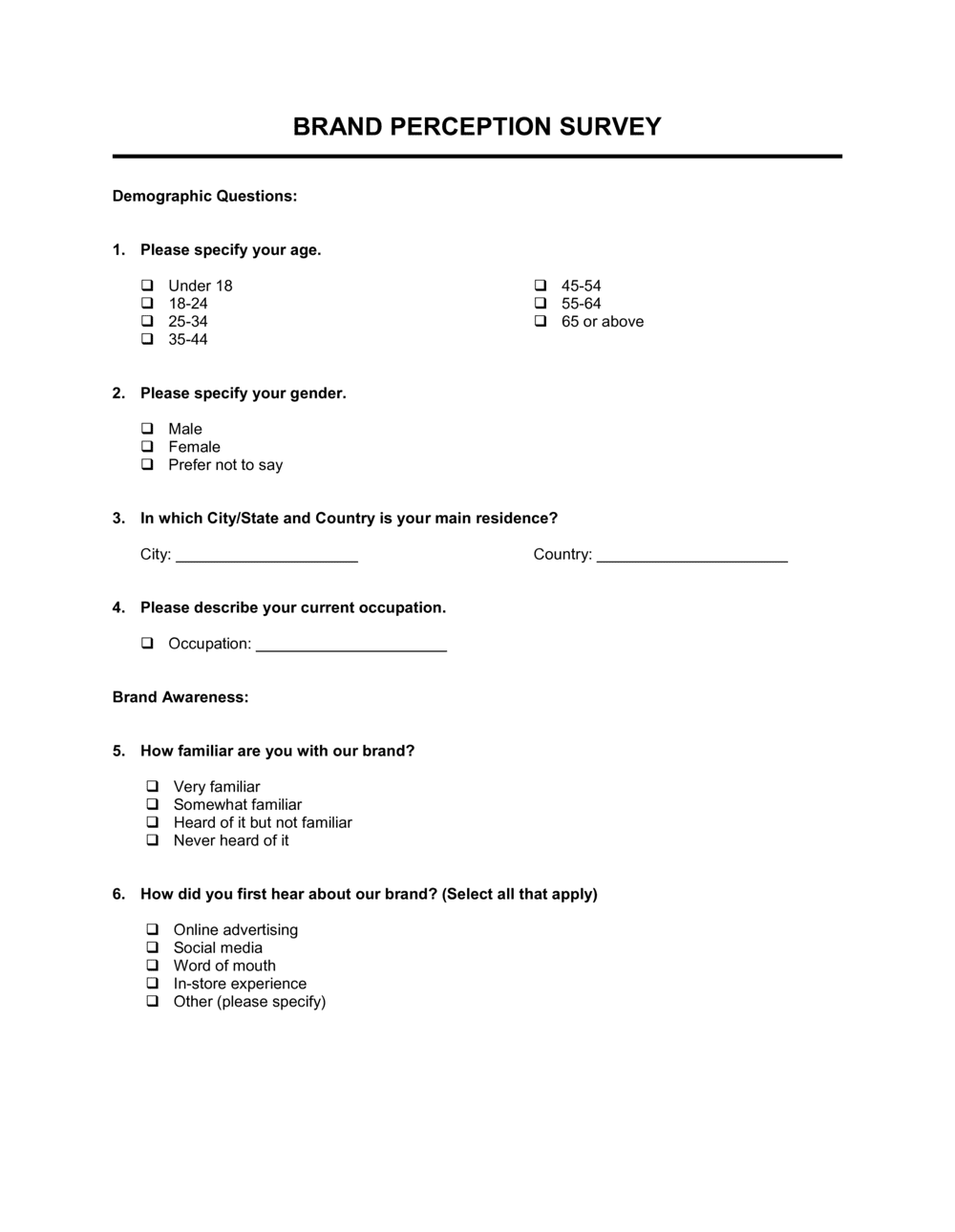
A Brand Perception Survey is a structured research instrument that captures how customers, prospects, and the general public perceive your brand across dimensions such as awareness, quality, trust, and competitive positioning. This free Word download gives you a ready-to-deploy questionnaire with consent language, data-use disclosures, and scored question sets you can edit online and export as PDF or distribute digitally.
When you need it
Use it before a rebrand, after a product launch, following a PR incident, or as part of an annual brand-health audit to track perception changes over time. It is also required when collecting personally identifiable responses that must comply with GDPR, CCPA, or similar data-privacy regulations.
What's inside
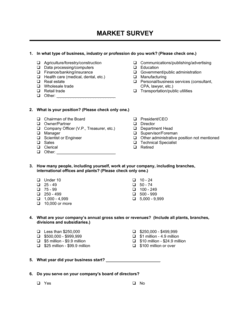
Respondent consent and data-use disclosure, brand awareness questions, brand association and attribute ratings, Net Promoter Score (NPS) block, competitive comparison questions, open-ended sentiment prompts, and a demographic classification section β€” all formatted with Likert scales, multiple-choice, and open-text field types.

What is a Brand Perception Survey?

A Brand Perception Survey is a structured research instrument that measures how customers, prospects, and the general public perceive your brand across dimensions including awareness, quality, trust, and competitive positioning. It combines scored question formats β€” Likert scales, semantic differentials, and Net Promoter Score β€” with open-ended prompts to produce both trackable quantitative metrics and qualitative insight. Critically, a properly formatted brand perception survey also includes respondent consent language, data-use disclosures, and anonymity or confidentiality statements that bring the data-collection process into compliance with privacy regulations such as GDPR, CCPA, and PIPEDA.

Why You Need This Document

Running a brand perception survey without the right structure exposes you on two fronts simultaneously: your research data is unreliable, and your data-collection practice may be non-compliant. Poorly sequenced questions β€” for example, showing respondents your logo before asking unaided recall questions β€” contaminate your awareness baseline and render the data useless for benchmarking. Missing or vague consent language exposes your organization to regulatory scrutiny under GDPR and CCPA, where fines for inadequate transparency disclosures have reached into the millions of euros for larger organizations and generated public reputational damage for smaller ones. Beyond compliance, decisions made without valid brand perception data are expensive: rebrands launched without baseline measurement, campaigns scaled on guesswork, and competitive positioning built on assumptions rather than evidence are among the most common and most avoidable strategic failures in marketing. This template gives you a legally sound, methodologically structured starting point β€” consent block, question sequencing, attribute scales, NPS block, and demographic section β€” so you can collect data that is both actionable and defensible.

Which variant fits your situation?

If your situation is…Use this template
Measuring brand health across a broad general audienceBrand Perception Survey (General)
Tracking NPS and loyalty among existing customers onlyCustomer Satisfaction Survey
Evaluating how employees perceive the internal employer brandEmployee Satisfaction Survey
Researching a new market before entering itMarket Research Survey
Collecting product-specific feedback after purchaseProduct Feedback Survey
Benchmarking brand awareness against named competitorsCompetitive Analysis Template
Assessing perception after a rebranding or name changeBrand Audit Report

Common mistakes to avoid

❌ Placing aided brand awareness before unaided recall

Why it matters: Once a respondent sees your brand name on screen, their unaided recall is primed. Any subsequent 'What brands do you know?' response is contaminated and cannot be used as a true awareness baseline.

Fix: Always sequence unaided recall questions β€” with no brand names visible β€” before any aided-awareness or attribute-rating questions that name the brand.

❌ Vague or missing data-retention statement in the consent block

Why it matters: GDPR Article 13 and CCPA both require organizations to inform respondents how long their data will be kept. Regulators have fined organizations specifically for undefined retention language, even when collection was otherwise lawful.

Fix: State a specific retention period β€” e.g., '24 months from the survey close date' β€” and confirm it aligns with your organization's data-retention policy before publishing the survey.

❌ Using double-barreled attribute questions

Why it matters: Questions like 'This brand is innovative and affordable' ask respondents to evaluate two distinct attributes simultaneously. Respondents cannot disagree with one while agreeing with the other, making responses uninterpretable in analysis.

Fix: Break every double-barreled question into two separate items. Run a quick read-through of all attribute questions asking 'Does this sentence contain the word and?' β€” if yes, split it.

❌ Claiming anonymity when personally identifiable data is collected

Why it matters: If an email address, login, or IP address is captured alongside responses, the survey is confidential, not anonymous. Labeling it 'anonymous' is factually incorrect, potentially deceptive under consumer protection law, and undermines respondent trust.

Fix: Audit every data field collected β€” including metadata your survey platform captures automatically β€” before writing the anonymity statement. Use 'confidential' when any identifier is present.

The 9 key clauses, explained

Respondent Consent and Data-Use Disclosure

In plain language: Informs participants who is collecting their data, what it will be used for, how long it will be retained, and their right to withdraw β€” required for legally compliant data collection under GDPR, CCPA, and similar frameworks.

Sample language
By completing this survey, you consent to [COMPANY NAME] collecting and processing your responses for the purpose of [PURPOSE]. Your data will be stored for [RETENTION PERIOD] and will not be shared with third parties without your consent. You may withdraw at any time by contacting [CONTACT EMAIL].

Common mistake: Omitting a specific retention period and relying on vague language like 'as long as necessary.' Regulators β€” particularly under GDPR β€” treat undefined retention as a compliance failure.

Brand Awareness Questions

In plain language: Measures both unaided recall (open text: 'Name any brands you know in this category') and aided recognition (yes/no on a list of named brands) to establish baseline awareness levels.

Sample language
Q1: Without any prompts, please list any brands that come to mind when you think of [PRODUCT CATEGORY]. Q2: Which of the following brands have you heard of? [LIST OF BRANDS INCLUDING [COMPANY NAME]]

Common mistake: Leading with aided awareness before unaided recall. Once the brand name appears on screen, unaided recall data is contaminated and cannot be trusted.

Brand Association and Attribute Ratings

In plain language: Presents a list of brand attributes β€” quality, innovation, trustworthiness, value, etc. β€” and asks respondents to rate how strongly each applies to the brand on a Likert scale.

Sample language
On a scale of 1 (Strongly Disagree) to 5 (Strongly Agree), please rate the following statements about [BRAND NAME]: '[BRAND NAME] offers high-quality products or services.' '[BRAND NAME] is a brand I trust.'

Common mistake: Using double-barreled questions such as 'This brand is innovative and affordable.' Respondents cannot agree or disagree with two attributes simultaneously, producing unreliable data.

Net Promoter Score Block

In plain language: Asks the standard NPS question β€” 'How likely are you to recommend [BRAND] to a friend or colleague?' on a 0–10 scale β€” followed by an open-text follow-up asking why.

Sample language
Q: On a scale of 0 to 10, how likely are you to recommend [BRAND NAME] to a friend or colleague? 0 = Not at all likely, 10 = Extremely likely. Follow-up: What is the primary reason for your score?

Common mistake: Skipping the open-text follow-up on NPS. The numeric score tells you where you stand; the follow-up tells you why β€” without it, the NPS block generates no actionable insight.

Competitive Comparison Questions

In plain language: Asks respondents to rate the survey brand against named competitors on specific dimensions β€” value, quality, customer service β€” to identify relative strengths and perception gaps.

Sample language
Compared to [COMPETITOR NAME], [BRAND NAME] offers: [1 = Much worse, 3 = About the same, 5 = Much better] in terms of: Quality / Price / Customer Support / Innovation.

Common mistake: Including more than four competitors in a single comparison table. Cognitive load causes respondents to anchor on the first one or two ratings and copy them across, distorting the competitive data.

Open-Ended Sentiment Prompts

In plain language: Two or three free-text questions inviting respondents to describe the brand in their own words β€” producing qualitative data for thematic analysis alongside the quantitative scores.

Sample language
Q: If [BRAND NAME] were a person, how would you describe their personality in three words? Q: What is the one thing [BRAND NAME] could change to improve your perception of them?

Common mistake: Placing open-ended questions at the beginning of the survey. Respondents who encounter effort-intensive questions first abandon the survey at higher rates; place open text near the end.

Demographic Classification Section

In plain language: Collects age range, gender, location, and purchase history to enable segmented analysis β€” allowing the brand to compare perception among buyers vs. non-buyers, or across age cohorts.

Sample language
Which of the following best describes your age? [18–24 / 25–34 / 35–44 / 45–54 / 55+] Have you purchased from [BRAND NAME] in the past 12 months? [Yes / No]

Common mistake: Making demographic questions mandatory. Respondents who prefer not to disclose age or gender will abandon the survey; mark these as optional to protect completion rates and avoid privacy complaints.

Anonymity and Confidentiality Statement

In plain language: States clearly whether responses are anonymous (no identifying data collected) or confidential (identifying data collected but not shared publicly), and who will have access to individual responses.

Sample language
Your responses are [anonymous / confidential]. Individual responses will not be attributed to you personally. Aggregate findings may be used in internal reports and shared with [AUTHORIZED PARTIES]. [COMPANY NAME] is the data controller for this survey.

Common mistake: Claiming responses are 'anonymous' when an email address or login is required to access the survey. Regulators and respondents treat this discrepancy as deceptive β€” use 'confidential' instead.

Third-Party Research Panel Disclosure

In plain language: When respondents are recruited through a paid research panel or data broker, discloses the panel provider's name, the incentive offered, and how the provider's privacy policy intersects with the survey's data-use terms.

Sample language
This survey is administered by [COMPANY NAME] in partnership with [PANEL PROVIDER]. Participants recruited through [PANEL PROVIDER] are subject to both this survey's data-use terms and [PANEL PROVIDER]'s privacy policy, available at [URL]. Participation incentive: [DESCRIPTION OF INCENTIVE].

Common mistake: Omitting the panel provider's privacy policy reference. Under GDPR and CCPA, respondents have a right to know every party that processes their data β€” failing to disclose the panel provider creates a consent chain gap.

How to fill it out

  1. 1

    Define your research objectives before editing a single question

    Write down two to four specific questions you need the survey to answer β€” e.g., 'Do non-customers recognize our logo?' or 'How does our quality perception compare to Competitor X?' Every question in the survey should map directly to one of these objectives.

    πŸ’‘ If you cannot link a question to a research objective, delete it. Surveys longer than 12 minutes see completion rates drop by more than 30%.

  2. 2

    Customize the consent and data-use disclosure

    Replace all [PLACEHOLDERS] in the consent block with your company's legal name, the specific survey purpose, the data retention period, and a real contact email. Confirm the language meets the data-privacy law applicable to your respondents' locations.

    πŸ’‘ If you are surveying EU residents, add a GDPR lawful-basis statement β€” typically 'Legitimate Interests' for brand research or 'Consent' for marketing-linked surveys.

  3. 3

    Set the question order: unaided awareness first, aided second

    Place all unaided recall questions (open text, no brand names visible) at the top of the survey before any question that names your brand. Once respondents see your brand name, their unaided recall data is no longer valid.

    πŸ’‘ Use a page break between the unaided and aided sections in your survey tool to make the sequencing explicit.

  4. 4

    Customize brand attributes to your category

    Replace the default attribute list in the Likert-scale section with the five to eight attributes most relevant to your product category. A software company should measure 'ease of use' and 'reliability'; a food brand should measure 'taste' and 'natural ingredients.'

    πŸ’‘ Run a quick internal workshop with five colleagues to brainstorm the attributes customers actually use to evaluate your category β€” this beats defaulting to generic adjectives.

  5. 5

    Insert your NPS question exactly as standardized

    Use the exact NPS phrasing β€” 'How likely are you to recommend [BRAND] to a friend or colleague?' on a labeled 0–10 scale. Do not reword it. Deviation from the standard phrasing makes your score incomparable to industry benchmarks.

    πŸ’‘ Always include the open-text follow-up immediately after the NPS scale, not at the end of the survey β€” response rates on the follow-up drop significantly when it is separated from the rating.

  6. 6

    Limit competitive comparison to your three or four closest rivals

    Select three to four named competitors respondents are most likely to have used or heard of. Using unfamiliar competitor names produces guessed responses that skew your competitive data.

    πŸ’‘ Pre-screen competitor names in a pilot of 20–30 respondents to confirm awareness before including them in the full survey.

  7. 7

    Mark demographic questions as optional and place them last

    Move the demographic classification section to the final page of the survey and set every question in that section to optional. This protects completion rates and reduces the risk of privacy complaints.

    πŸ’‘ Include a 'Prefer not to say' option for gender and age β€” removing it forces abandonment and can generate bias in your sample.

  8. 8

    Pilot with 10–15 respondents before full deployment

    Send the survey to a small internal or external pilot group. Check for questions that generate confused responses, scales that feel ambiguous, or consent language that prompts pushback. Fix issues before scaling.

    πŸ’‘ Time the pilot completion and add 20% to the result when estimating the 'time to complete' disclosure in your consent block β€” people always underestimate survey length.

Frequently asked questions

What is a brand perception survey?

A brand perception survey is a structured questionnaire that measures how customers, prospects, or the general public perceive a brand across dimensions such as awareness, quality, trust, and competitive positioning. It combines quantitative scales β€” Likert ratings, NPS β€” with open-ended sentiment prompts to produce both trackable metrics and qualitative insight. Organizations use the results to benchmark brand health, guide repositioning decisions, and measure the impact of marketing campaigns.

How many questions should a brand perception survey include?

A complete brand perception survey typically runs 10–20 questions and takes 5–10 minutes to complete. Surveys exceeding 12 minutes see measurable drops in completion rates and data quality β€” respondents begin satisficing, selecting answers without reading carefully. If your research objectives require more coverage, consider splitting the survey into two waves targeting different respondent segments rather than extending a single instrument.

What is the difference between brand awareness and brand perception?

Brand awareness measures whether a person recognizes or recalls a brand β€” it is a binary or scaled measure of mental availability. Brand perception is broader: it captures the quality of that awareness, including the associations, feelings, and judgments a person attaches to the brand. High awareness does not guarantee positive perception; a brand can be widely known but poorly regarded. A comprehensive survey measures both.

How often should a brand perception survey be run?

Most organizations run a full brand perception survey annually as part of a brand-health audit, with a shorter pulse survey β€” four to six questions β€” run quarterly to track NPS and key attribute trends. After a major campaign, product launch, or brand incident, an ad hoc survey within two to four weeks captures the immediate impact while recall is still fresh. Consistency in question wording across waves is critical for valid year-over-year comparisons.

Can I use this survey template for GDPR-compliant research in the EU?

This template includes a consent and data-use disclosure section designed to address GDPR Article 13 transparency requirements. However, full GDPR compliance depends on factors beyond the survey instrument itself β€” including your lawful basis for processing, your data-processing agreements with any survey platform or panel provider, and your organization's broader privacy program. Consider having a data-privacy professional review the consent language before deploying to EU respondents.

What sample size do I need for reliable brand perception data?

For a general brand-health benchmark with a margin of error of plus or minus 5 percentage points at 95% confidence, you typically need at least 385 completed responses from your target population. For segmented analysis β€” comparing buyers vs. non-buyers, or one region vs. another β€” each segment needs to meet that threshold independently. Convenience samples of under 100 respondents produce directional insights only and should not be used to make significant budget or positioning decisions.

What is the difference between a brand perception survey and a customer satisfaction survey?

A customer satisfaction survey measures how satisfied customers are with a specific transaction, product, or service experience β€” it is retrospective and interaction-focused. A brand perception survey measures broader beliefs and associations about the brand as a whole, including among people who have never purchased. Customer satisfaction data is most useful for operational improvement; brand perception data is most useful for positioning and communications strategy.

Do I need a lawyer to use a brand perception survey template?

For internal research or small-sample informal studies, a template with standard consent language is typically sufficient. Legal review is advisable when the survey will be fielded to EU residents, when a third-party research panel is involved, when responses will be used in published reports or competitive advertising claims, or when the organization is in a regulated industry such as financial services or healthcare. A one-hour privacy-law review typically costs $200–$500 and materially reduces regulatory exposure.

How this compares to alternatives

vs Customer Satisfaction Survey

A customer satisfaction survey measures how well a specific transaction or product experience met expectations β€” it is retrospective and interaction-specific. A brand perception survey captures broader beliefs about the brand as a whole, including among non-customers. Use a satisfaction survey to improve operations and a brand perception survey to guide positioning and communications strategy. Both can be run simultaneously with different respondent pools.

vs Market Research Survey

A market research survey is designed to understand market size, customer needs, willingness to pay, or unmet demand β€” it is category-focused rather than brand-focused. A brand perception survey is specifically about how your brand is positioned and regarded relative to alternatives. Use market research to identify opportunities; use a brand perception survey to measure how well you are capturing them.

vs Employee Satisfaction Survey

An employee satisfaction survey measures internal engagement, morale, and employer-brand perception among staff. A brand perception survey targets external audiences β€” customers, prospects, and the general public. Organizations running employer-brand campaigns may use both in parallel, but the consent structures, distribution channels, and analysis frameworks differ significantly.

vs Brand Audit Report

A brand audit report is an internal analytical document that synthesizes brand perception data, competitive intelligence, and visual-identity assessment into strategic recommendations. A brand perception survey is the primary data-collection instrument that feeds into that report. Run the survey first; use the audit report to interpret and act on the findings.

Industry-specific considerations

Consumer Goods and Retail

Tracks shifts in brand trust and quality perception at key purchase moments β€” before a seasonal campaign, after a product recall, or following a packaging redesign.

Technology / SaaS

Measures perception attributes like innovation, reliability, and ease of use against named competitors; often tied to NPS tracking across free and paid user cohorts.

Financial Services

Heavily regulated data-collection environment β€” consent language must reference specific financial-sector privacy obligations; surveys often distinguish between prospects and existing account holders.

Healthcare and Pharmaceuticals

Patient or consumer perception surveys require additional IRB or ethics-board review in many jurisdictions; brand trust and safety perception are the dominant attribute dimensions.

Professional Services

Measures reputation attributes β€” expertise, responsiveness, confidentiality β€” among existing clients and referral sources; NPS drives business-development prioritization.

Media and Entertainment

Audience perception surveys track brand relevance and sentiment across demographic cohorts; unaided awareness is a primary KPI for new show or platform launches.

Jurisdictional notes

United States

Federal law does not impose a single unified framework for survey data collection, but the California Consumer Privacy Act (CCPA) and California Privacy Rights Act (CPRA) impose disclosure, opt-out, and data-deletion rights on surveys targeting California residents. If any respondent data is sold or shared with third parties β€” including research panels β€” a 'Do Not Sell or Share My Personal Information' mechanism is required. Several other states (Virginia, Colorado, Connecticut) have enacted similar statutes with varying thresholds.

Canada

PIPEDA (and Quebec Law 25 as of September 2023) requires organizations to identify the purpose of data collection, obtain meaningful consent, and allow individuals to withdraw consent and access their data. Quebec's Law 25 introduces stricter consent and transparency requirements aligned closely with GDPR, including mandatory privacy impact assessments for high-risk processing. Surveys that transfer response data outside Canada must disclose this to respondents.

United Kingdom

Post-Brexit, the UK operates under UK GDPR and the Data Protection Act 2018. Consent requirements mirror EU GDPR standards β€” freely given, specific, informed, and unambiguous. The UK ICO's guidance on research exemptions allows some flexibility for anonymous surveys, but any survey linking responses to identifiable individuals requires a lawful basis, a privacy notice, and documented retention limits. The Market Research Society (MRS) Code of Conduct also applies to professional research deployments.

European Union

GDPR Articles 12–14 require that survey sponsors inform respondents of the data controller's identity, the legal basis for processing, the retention period, and respondents' rights (access, erasure, portability, objection) before data is collected. 'Legitimate Interests' is the most common lawful basis for brand research where no direct marketing results, but a Legitimate Interests Assessment (LIA) should be documented. Consent-based surveys require freely given, specific, and withdrawable consent β€” pre-ticked boxes are invalid. Cross-border data transfers to non-adequate countries require Standard Contractual Clauses.

Template vs lawyer β€” what fits your deal?

PathBest forCostTime
Use the templateInternal brand-health research, small business surveys fielded to domestic respondents onlyFree2–4 hours to customize and deploy
Template + legal reviewSurveys fielded to EU or California residents, third-party panel deployments, or results used in published reports$200–$500 for a one-hour privacy-law review1–2 days
Custom draftedRegulated industries (healthcare, financial services), large-scale research with IRB requirements, or surveys linked to legal claims or competitive advertising$1,000–$4,000+1–3 weeks

Glossary

Brand Perception
The set of beliefs, feelings, and associations a person holds about a brand, shaped by direct experience, marketing, word of mouth, and media coverage.
Net Promoter Score (NPS)
A single-question loyalty metric asking respondents how likely they are to recommend a brand on a 0–10 scale; scores above 50 are considered strong.
Aided Awareness
Brand recognition measured by asking respondents whether they recognize a brand when shown its name or logo β€” as opposed to unaided recall.
Unaided Awareness
Brand recall measured by asking respondents to name brands in a category without any prompts or cues.
Likert Scale
A symmetric agree-to-disagree rating scale β€” typically 5 or 7 points β€” used to measure attitudes or perceptions with quantifiable scores.
Informed Consent
A respondent's explicit agreement to participate in a survey after being told how their data will be collected, stored, and used.
Brand Salience
How quickly and easily a brand comes to mind when a consumer thinks about a product category β€” the mental availability of the brand.
Brand Equity
The commercial value attributable to the positive perception and recognition of a brand name, beyond the physical attributes of the product or service.
Semantic Differential Scale
A question format presenting two opposing adjectives at opposite ends of a scale (e.g., 'Old-fashioned' vs. 'Innovative'), asking respondents to mark where a brand falls.
Data Controller
The entity β€” typically the survey sponsor β€” that determines the purposes and means of processing respondents' personal data, and bears primary legal responsibility under GDPR and similar laws.
Sample Bias
Distortion in survey results caused by a respondent pool that does not accurately represent the target population β€” for example, surveying only existing customers to measure general brand awareness.

Part of your Business Operating System

This document is one of 3,000+ business & legal templates included in Business in a Box.

  • Fill-in-the-blanks β€” ready in minutes
  • 100% customizable Word document
  • Compatible with all office suites
  • Export to PDF and share electronically

Create your document in 3 simple steps.

From template to signed document β€” all inside one Business Operating System.
1
Download or open template

Access over 3,000+ business and legal templates for any business task, project or initiative.

2
Edit and fill in the blanks with AI

Customize your ready-made business document template and save it in the cloud.

3
Save, Share, Send, Sign

Share your files and folders with your team. Create a space of seamless collaboration.

Save time, save money, and create top-quality documents.

β˜…β˜…β˜…β˜…β˜…

"Fantastic value! I'm not sure how I'd do without it. It's worth its weight in gold and paid back for itself many times."

Managing Director Β· Mall Farm
Robert Whalley
Managing Director, Mall Farm Proprietary Limited
β˜…β˜…β˜…β˜…β˜…

"I have been using Business in a Box for years. It has been the most useful source of templates I have encountered. I recommend it to anyone."

Business Owner Β· 4+ years
Dr Michael John Freestone
Business Owner
β˜…β˜…β˜…β˜…β˜…

"It has been a life saver so many times I have lost count. Business in a Box has saved me so much time and as you know, time is money."

Owner Β· Upstate Web
David G. Moore Jr.
Owner, Upstate Web

Run your business with a system β€” not scattered tools

Stop downloading documents. Start operating with clarity. Business in a Box gives you the Business Operating System used by over 250,000 companies worldwide to structure, run, and grow their business.

Start freeΒ Β·Β No credit card required